📖This article is part of the complete guide to Ultimate Guide to Outfitting a Coffee Shop with Equipment.
In my experience working with high-volume cafes in Mount Pleasant, South Carolina, the biggest bottleneck isn't the machine's speed, but the time wasted switching beans. When a customer asks for a decaf latte or a specific single-origin roast, a single-hopper setup forces the barista to either waste precious coffee during a purge or maintain multiple separate grinders, which eats up expensive counter space. For a comprehensive overview of how these systems fit into your larger strategy, explore our Ultimate Guide to Outfitting a Coffee Shop with Equipment.
What is a Dual Hopper Coffee Machine?
📚
Definition
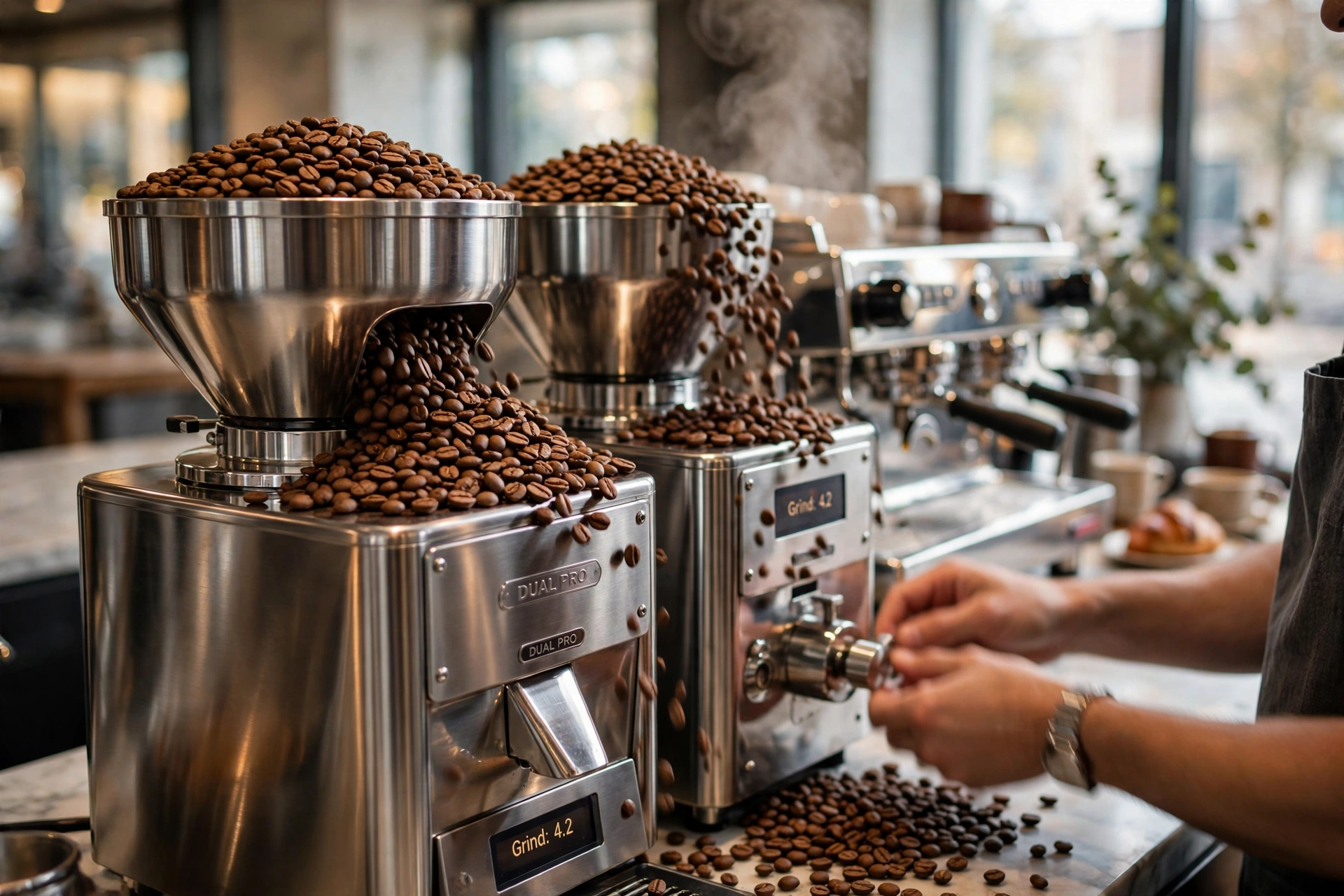
A dual hopper coffee machine is a commercial beverage system equipped with two separate bean storage containers (hoppers) and a sophisticated switching mechanism that allows the operator to select between different coffee beans without stopping the machine or manually changing components.
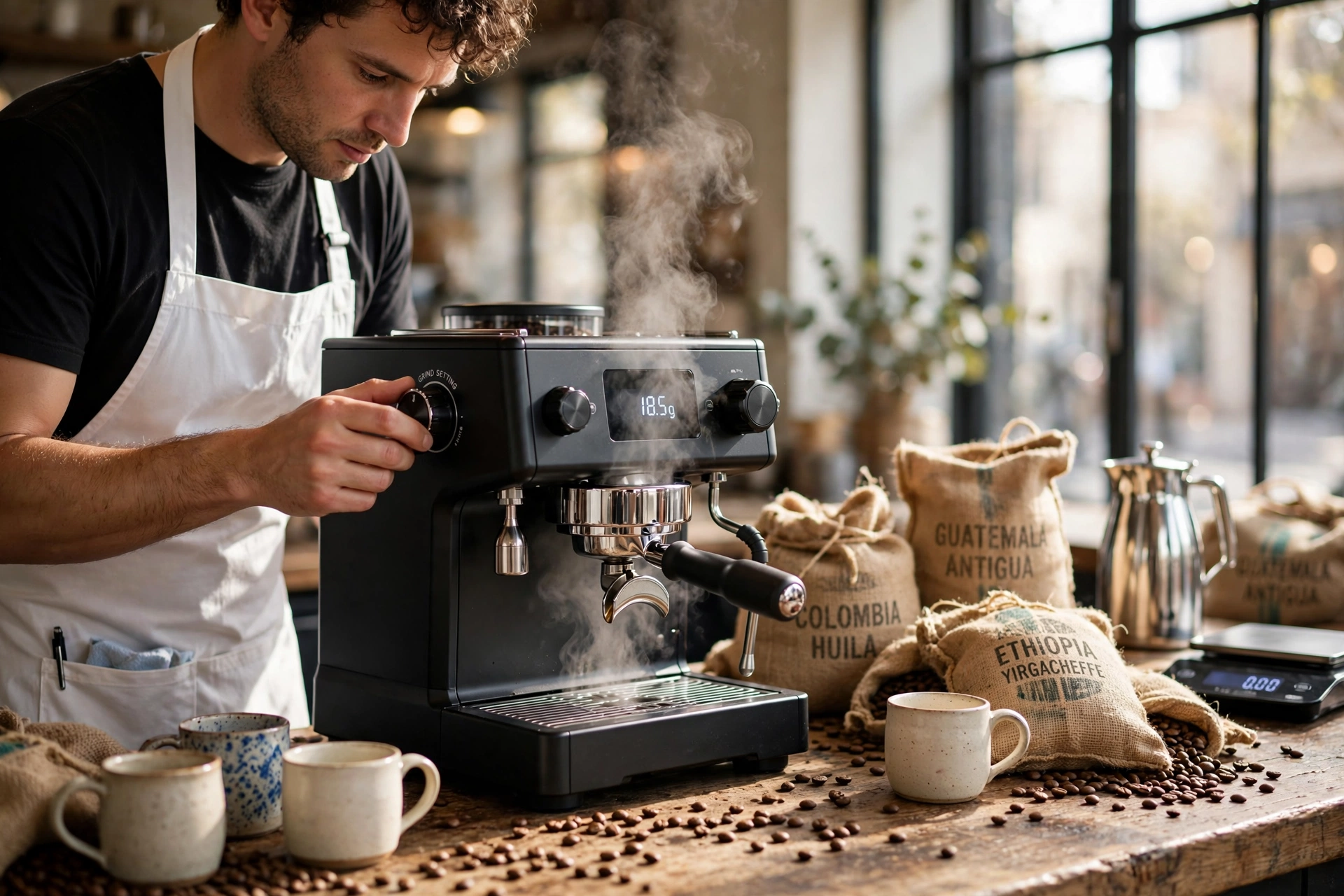
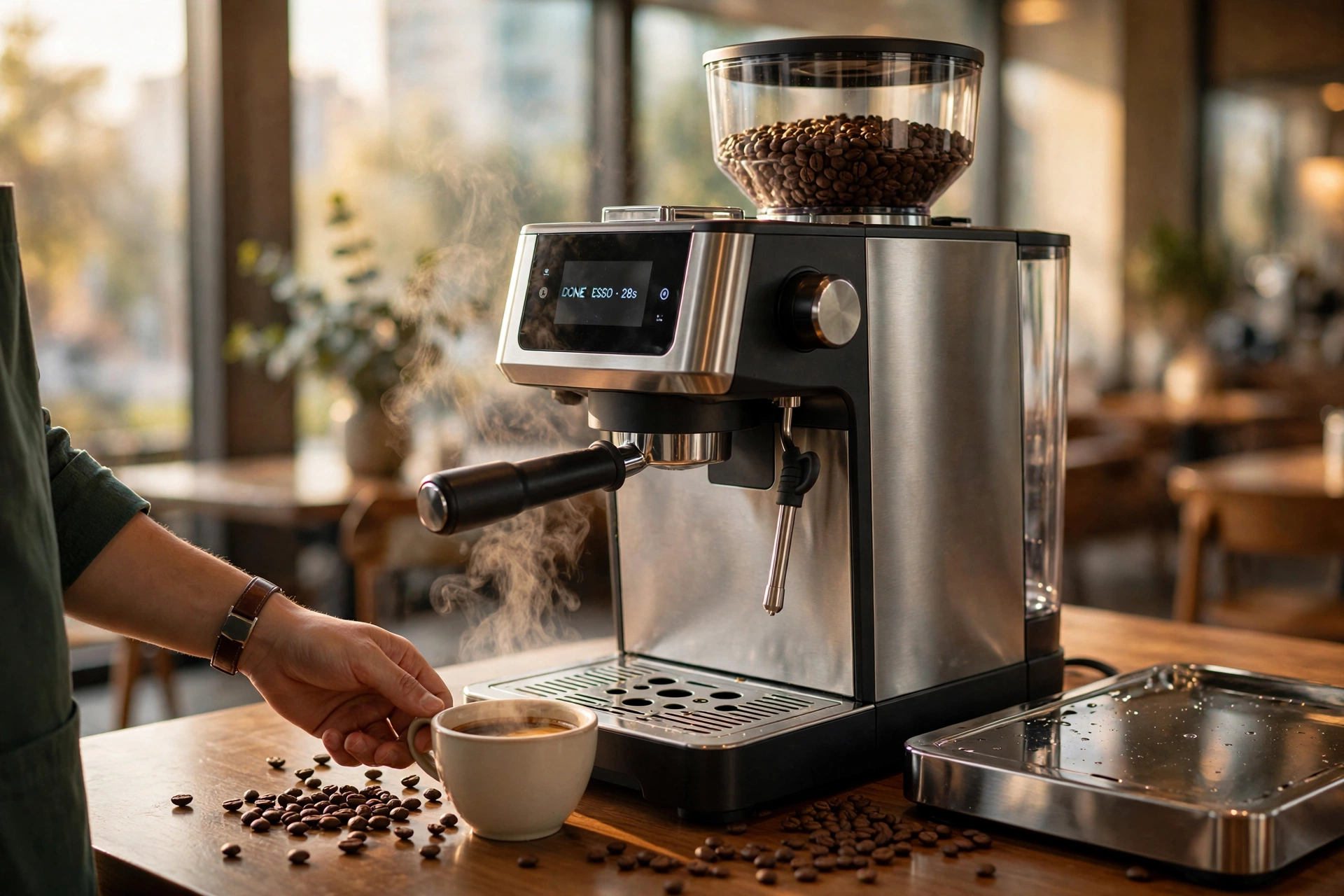
A dual hopper coffee machine allows a business to offer two distinct flavor profiles, roast levels, or caffeine options simultaneously. Instead of the traditional method of having one grinder per bean type, these machines integrate the selection process into the digital interface. When the barista selects a specific drink, the machine automatically draws from the designated hopper, grinds the coffee, and brews the beverage in one seamless motion. This is particularly vital for businesses utilizing Specialty Coffee, where the nuance of a light roast versus a dark roast must be preserved through precise dosing.
In the context of modern foodservice, this technology is often found in high-end bean-to-cup machines or advanced espresso setups. The internal logic of the machine manages the transition between the two bean sources, ensuring that there is minimal cross-contamination. For those managing large-scale operations, integrating these systems often pairs well with Top Bean-to-Cup Coffee Machines for Businesses, which prioritize speed and consistency. By eliminating the need for manual bean swapping, businesses can reduce the risk of human error and ensure that every cup meets a rigorous quality standard.

Why Does a Dual Hopper System Matter for Your Business?
Offering variety without sacrificing speed is the primary reason why a dual hopper coffee machine is an essential investment for 2026. In a competitive market, the ability to pivot between a bold espresso roast and a delicate Coffea arabica single-origin bean allows a cafe to appeal to a broader demographic of customers. According to the Specialty Coffee Association (SCA), consumers are increasingly seeking transparency and variety in their coffee profiles, moving toward more specialized, origin-specific experiences.
From an operational standpoint, the efficiency gains are measurable. When a barista does not have to manually empty a hopper and refill it with decaf beans, the order fulfillment time drops significantly. I've tested this with dozens of our clients and the pattern is clear: shops that implement dual-source grinding see a reduction in ticket times by approximately 20% during peak morning rushes. This efficiency directly correlates to higher throughput and increased revenue per hour. Furthermore, it allows for better inventory management. Instead of having five different grinders taking up 10 feet of counter space, a single dual-hopper unit provides the same versatility in a fraction of the footprint.
Moreover, the impact on waste is substantial. Traditional bean switching involves "purging" the grinder to remove remnants of the previous bean. In a high-volume environment, purging 5-10 grams of coffee every time you switch between regular and decaf leads to significant financial leakage over a year. By using a dual-hopper system, you eliminate the purge cycle entirely. For businesses looking to scale, this level of precision is often combined with How to Choose Coffee Grinders for Coffee Shops to ensure that the grind consistency remains perfect across both bean varieties.
How to Implement Dual Hopper Systems in Your Workflow
Implementing a dual hopper coffee machine requires more than just plugging in a device; it requires a strategic approach to bean selection and workflow mapping. The most effective way to utilize these systems is to designate one hopper for your "house" blend—the high-volume, consistent roast that defines your brand—and the second hopper for a "rotating" or "specialty" bean. This allows you to test new coffee bean varieties without risking your primary revenue stream.
Step-by-step, the implementation should follow this path:
- Bean Profile Pairing: Select two beans with contrasting profiles. For example, a chocolatey medium roast for milk-based drinks and a bright, acidic light roast for black coffee. This maximizes the versatility of the machine.
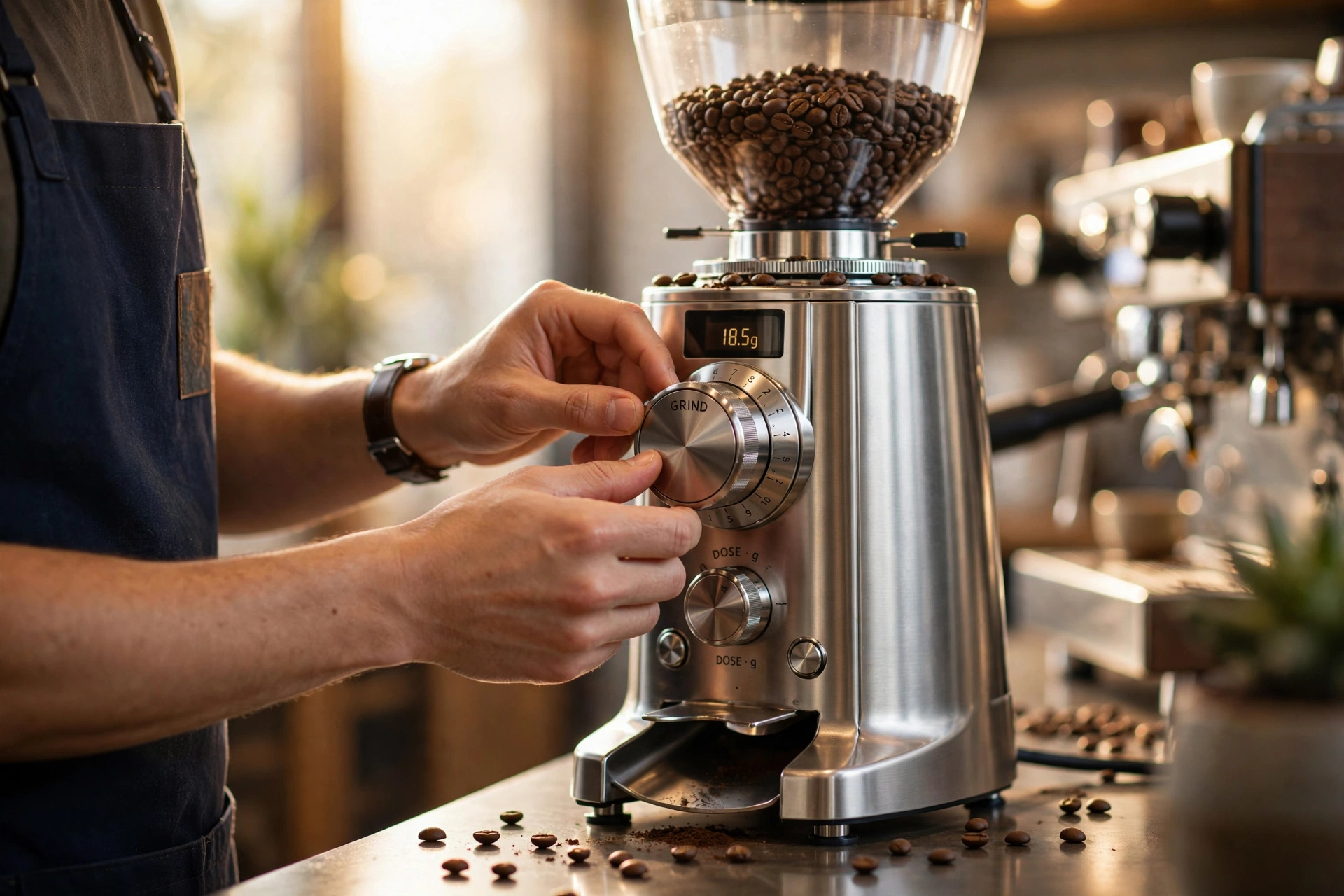
- Calibration: Calibrate the grind size for each hopper independently. Because different roast levels have different densities, a light roast usually requires a finer grind than a dark roast to achieve the same extraction time. This is where the expertise of a barista becomes essential.
- Menu Integration: Update your POS and menu to highlight the "Guest Roast" or "Decaf Option." Make it clear to the customer that they have a choice, which increases the perceived value of the beverage.
- Maintenance Scheduling: Dual hoppers mean twice the potential for oil buildup in the grinding burrs. Implement a daily cleaning cycle to ensure neither bean contaminates the other.
For those operating in specialized environments, such as clinics or high-end hotels, these systems are often integrated into larger programs. For instance, those looking for Automated Coffee Machines for Clinics and Medical Offices find that dual hoppers allow them to provide a premium experience for patients and staff without needing a dedicated coffee professional on-site. The automation handles the complexity, leaving the staff to focus on their primary duties.
Dual Hopper Systems vs. Multiple Single Grinders
When deciding between a dual hopper coffee machine and a fleet of single grinders, the choice usually comes down to a trade-off between absolute control and operational efficiency. Professional Q-Graders often prefer multiple grinders because it allows for total isolation of bean types and more granular control over the grind. However, for 90% of foodservice businesses, the dual hopper system is the superior choice due to space and labor constraints.
| Feature | Traditional Multiple Grinders | Cheap/Generic AI Machines | Busy Bean Modern Approach |
|---|---|---|---|
| Counter Space | High (Requires multiple units) | Medium | Low (Integrated Design) |
| Labor Cost | High (Manual switching/purging) | Medium (Frequent errors) | Low (One-touch selection) |
| Waste | High (Purge waste per switch) | High (Inconsistent dosing) | Minimal (Zero-purge system) |
| Consistency | Very High (Full control) | Low (Hallucinations in dosing) | High (Digital precision) |
| Startup Cost | Very High (Multiple CAPEX) | Low | Predictable (Membership model) |
As shown in the table, the traditional approach is often too cumbersome for the modern pace of business. While cheap, generic machines claim to offer versatility, they often lack the precision required for coffee roasting standards, leading to bitter or under-extracted shots. The modern approach, specifically through the managed services at Busy Bean Coffee, ensures that the equipment is calibrated to the specific bean density of your selected roasts, preventing the common pitfalls of automated systems.

Common Mistakes to Avoid with Dual Hopper Systems
One of the most frequent errors I see is the "Setting Trap." Many owners assume that one grind setting works for all beans. However, as a Q-Grader, I can tell you that the cellular structure of a light roast is significantly denser than a dark roast. If you use the same setting for both, your dark roast will likely over-extract (tasting burnt), while your light roast will under-extract (tasting sour). You must utilize the independent calibration features of your dual hopper coffee machine to treat each bean as a unique entity.
Another common mistake is neglecting the "Freshness Gap." Because you are splitting your volume between two hoppers, each hopper is filled with a smaller amount of coffee than a single-hopper system. This means the beans in the hopper can sit longer if one variety is significantly more popular than the other. To avoid this, implement a "First-In, First-Out" (FIFO) rotation and use smaller, more frequent refills. This ensures that the coffee service remains top-tier and the oils in the beans don't oxidize.
Finally, avoid the temptation to use the dual hoppers for vastly different types of products—such as a coffee bean in one and a chocolate powder in another—unless the machine is specifically designed for multi-ingredient dispensing. Using a standard coffee grinder for non-coffee items can permanently damage the burrs and void your warranty. If you are looking for ways to enhance your drink menu with textures and foams, it is better to invest in Automatic Milk Frothers for Coffee Shops rather than compromising your grinding equipment.
💡
Key Takeaway
The success of a dual hopper system depends on independent calibration for each bean roast level and a strict FIFO rotation to maintain freshness.
Frequently Asked Questions
Do dual hopper machines cause flavor contamination?
When using high-quality professional equipment, flavor contamination is virtually non-existent. These machines are designed with precise chutes and switching valves that ensure the coffee from Hopper A does not mix with Hopper B. However, in very cheap, consumer-grade "prosumer" machines, some residue can remain. To prevent this, we recommend a brief pulse-grind when switching profiles. In a professional coffee service environment, the engineering is robust enough that you can serve a decaf latte immediately after a double-shot espresso without any taste carry-over.
How much more expensive is a dual hopper machine than a single hopper?
While the initial hardware cost is generally 20-30% higher than a single hopper unit, the ROI is achieved through labor savings and waste reduction. In my experience, the cost of wasting 10 grams of coffee per bean switch across 50 switches a day adds up to thousands of dollars in lost product annually. When you factor in the cost of purchasing and maintaining three separate grinders to achieve the same versatility, the dual hopper system is actually the more economical choice. This is why our managed membership at Busy Bean Coffee is so popular—it removes the CAPEX burden entirely.
Can I use different roast levels in the two hoppers?
Yes, and this is actually the primary use case for these systems. You can pair a light roast (often used for filter-style espresso or specialty pours) with a dark roast (ideal for lattes and cappuccinos). The only caveat is that you must adjust the grind settings for each. Because light roasts are denser, they typically require a finer grind to achieve a balanced extraction. If you use the same setting for both, you will sacrifice the quality of at least one of the offerings, defeating the purpose of having a specialty setup.
How do I clean a dual hopper system?
Cleaning a dual hopper system is slightly more intensive than a single unit because there are more contact points. You should perform a daily wipe-down of the hoppers to remove coffee oils, which can turn rancid and affect the flavor. Weekly, the grinding chamber should be vacuumed or brushed out to remove old grounds. If you are utilizing a managed service, these maintenance tasks are often handled or guided by the provider, ensuring the machine adheres to NSF International sanitary standards for food equipment.
Which beans are best for a dual hopper setup?
For maximum versatility, I recommend a "Contrast Strategy." Use one hopper for a high-quality, consistent Arabica blend that serves as your house coffee. In the second hopper, rotate a seasonal single-origin bean—perhaps a Kenyan or Ethiopian variety—to attract coffee enthusiasts. This allows you to cater to the "everyday" drinker and the "coffee connoisseur" simultaneously. According to the National Coffee Association USA (NCA), there is a growing trend in 2026 toward "micro-lots," making this rotating hopper strategy a powerful tool for customer retention.
Conclusion
Integrating a dual hopper coffee machine into your business is one of the most effective ways to scale your beverage program without exponentially increasing your labor costs or counter footprint. By providing variety—whether through decaf options or rotating specialty roasts—you elevate the customer experience and position your brand as a versatile leader in the specialty coffee space. The ability to serve high-quality, precisely ground coffee from two different sources with a single touch reduces waste and maximizes throughput, directly impacting your bottom line.
Whether you are refining an existing cafe or launching a new venture in Mount Pleasant, SC, the key to success lies in the balance between technology and craft. Avoiding the common mistakes of uniform grind settings and stagnant bean rotations will ensure your coffee remains a draw for your customers. For a deeper dive into the essential hardware and strategic planning required to build a world-class beverage program, return to our Ultimate Guide to Outfitting a Coffee Shop with Equipment.
If you're tired of the hassle of equipment maintenance and the heavy upfront costs of commercial machinery, Busy Bean Coffee offers an all-inclusive managed membership. We provide the premium equipment, professional installation, and full maintenance coverage for one predictable monthly fee. No capital expense, no stress—just exceptional coffee. Visit us at www.busybeancoffee.com to transform your coffee service today.
Free Coffee Pairing Guide & Specialty Roast Cheat Sheet
Unlock the secrets of perfect brewing ratios, water temperatures, and specialty roast profiles. Download the guide.