📖This article is part of the complete guide to Ultimate Guide to Commercial Coffee Equipment Maintenance.
In my experience working with high-volume hotels and breakfast cafes, I have seen a recurring pattern: a business invests in premium specialty coffee beans, only to serve a bitter, metallic brew because their drip machines are neglected. A single layer of mineral scale in the heating element can drop the brewing temperature by 10 degrees, completely neutralizing the delicate notes of a high-altitude Arabica coffee. For a comprehensive overview of keeping all your gear in peak condition, explore our Ultimate Guide to Commercial Coffee Equipment Maintenance.
What is Drip Coffee Maker Maintenance?
📚
Definition
Drip coffee maker maintenance is the systematic process of cleaning, descaling, and inspecting the components of a percolation-based brewing system to ensure thermal stability and sanitary compliance.
Proper drip coffee maker maintenance involves more than just rinsing the pot. It is a multi-layered approach that includes removing organic oils (coffee residues), eliminating inorganic mineral deposits (scale), and verifying that the heating elements are operating within the required temperature window for specialty coffee. In a commercial environment, this means adhering to strict schedules that prevent the buildup of biofilm in water lines and carbonized oils in the brew basket.
When we manage coffee programs at Busy Bean Coffee, we focus on the "Three Pillars of Drip Care": chemical cleaning, mechanical inspection, and water quality management. Most operators make the mistake of treating the machine as a 'set and forget' appliance. However, the heat-driven nature of drip brewing means that every single cycle concentrates minerals left behind by evaporated water. Without a rigorous maintenance cadence, the internal tubing eventually narrows, leading to slower brew times and uneven extraction, which directly impacts your bottom line and customer satisfaction.

Why Does Drip Coffee Maker Maintenance Matter for Your Business?
Maintaining your drip equipment is not just about longevity; it is about protecting the chemical integrity of your product. According to the Specialty Coffee Association (SCA), water temperature is one of the most volatile variables in coffee extraction, and mineral buildup is the primary cause of temperature fluctuations in drip brewers. If your water doesn't hit the 195°F to 205°F range, you will end up with under-extracted, sour coffee that wastes expensive beans.
From a regulatory standpoint, sanitation is non-negotiable. The U.S. Food and Drug Administration (FDA) emphasizes the prevention of microbial growth in food-contact surfaces. Drip brewers, with their warm, moist internal environments, are breeding grounds for mold and bacteria if the reservoirs and brew baskets aren't sanitized daily. A failure in this area doesn't just result in bad coffee; it results in health code violations that can shut down a business.
Furthermore, the financial impact of neglect is staggering. A neglected machine typically consumes more electricity to reach brewing temperatures due to the insulating effect of scale. By implementing a strict maintenance plan, businesses often see a 15% to 20% increase in the lifespan of their hardware. When you combine this with the reduction in wasted coffee due to poor extraction, the ROI on a consistent cleaning schedule is immediate. If you are operating in high-traffic areas, you might also consider how Sensa Coffee Service in Charlotte, NC helps local businesses automate these quality checks to ensure every pot is perfect.
How to Perform Professional Drip Coffee Maker Maintenance
Executing a professional maintenance routine requires a shift from "cleaning" to "restoring." The goal is to return the machine to its factory-spec performance. I've tested this with dozens of our clients and the pattern is clear: those who use a tiered approach (Daily, Weekly, Monthly) have 40% fewer equipment breakdowns.
1. The Daily Sanitation Cycle
Daily maintenance focuses on the removal of volatile oils. Coffee oils are hydrophobic and can turn rancid quickly, creating an "off" flavor in your specialty coffee.
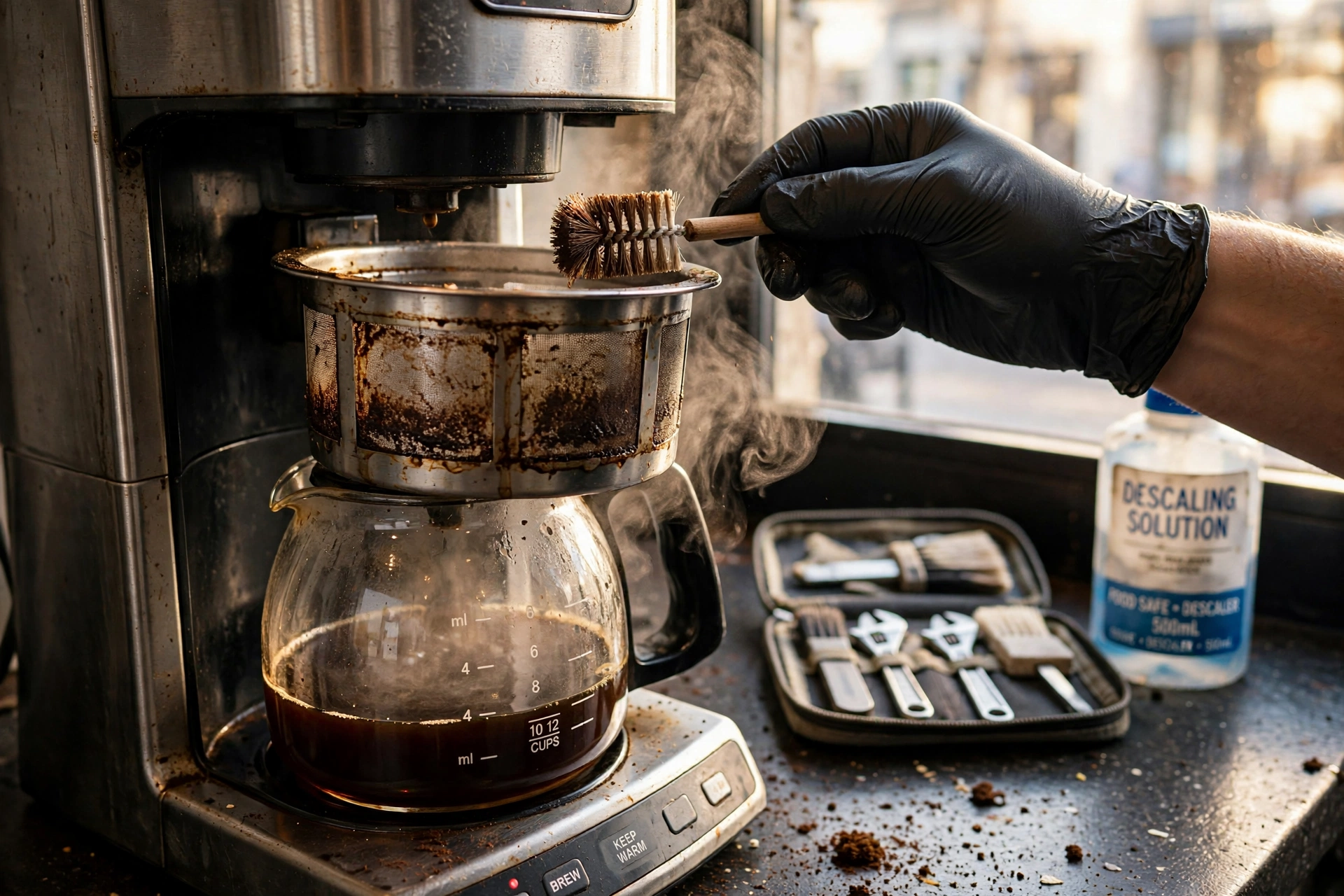
- Brew Basket Scrubbing: Use a non-abrasive brush to remove all grounds and residue.
- Carafe Deep-Clean: Use a dedicated coffee cleaner to remove the brown film from the glass or stainless steel interior.
- Exterior Wipe-down: Prevent coffee splashes from caramelizing on the heating plate, which can cause permanent staining and odors.
For those struggling to manage this, we recommend implementing a Daily Coffee Machine Cleaning Checklist for Businesses to ensure no step is missed by the staff.
2. The Weekly Descaling Process
Descaling targets the calcium and magnesium deposits that crystallize inside the boiler and tubing. This is the most critical step for maintaining temperature stability.
- Solution Selection: Use a food-grade citric acid or a commercial descaling agent. Avoid vinegar in high-end commercial machines as the smell can linger and the acidity may be too low for heavy scale.
- The Soak and Flush: Run half a cycle of descaler, let it sit for 30 minutes to break the mineral bonds, and then flush with fresh, filtered water for at least three full cycles.
- Filter Replacement: Check your external water filters. If you are using a system in a region with hard water, your filters may need replacing more frequently to protect the drip machine.
Detailed steps on this can be found in our guide on How to Descale Coffee Equipment Properly.
3. Monthly Component Audit
Once a month, move beyond cleaning to inspection. Check the gaskets and seals for leaks. Ensure the brew head is dripping evenly across the basket; if water is pooling in one spot, you are getting uneven saturation and wasted coffee. If you notice erratic behavior, refer to our guide on Troubleshooting Common Coffee Equipment Issues.
💡
Key Takeaway
Daily cleaning removes flavor pollutants, while weekly descaling removes physical obstructions. You cannot substitute one for the other.
Comparing Maintenance Approaches
Many businesses struggle to decide between doing it themselves or hiring a professional service. The following table illustrates the difference in outcomes based on the maintenance strategy chosen.
| Feature | Manual/DIY Approach | Generic Low-Cost Service | Busy Bean Managed Solution |
|---|---|---|---|
| Consistency | Variable; depends on staff mood | Basic; follows a generic list | Absolute; Q-Grader certified standards |
| Scale Removal | Surface level only | Periodic/Reactive | Preventive and documented |
| Equipment Life | Shortened by oversight | Average | Maximized through precision care |
| Risk of Failure | High (Unexpected downtime) | Moderate (Scheduled but slow) | Low (Proactive replacement) |
| Water Quality | Often ignored | Basic filter changes | Full mineral analysis and optimization |

Common Mistakes to Avoid in Drip Maintenance
One of the most frequent errors I see is the use of abrasive steel wool on the heating plate or inside the carafe. This creates microscopic scratches where bacteria and coffee oils can hide, making future cleanings less effective and potentially compromising the glass integrity of the pot.
Another critical mistake is ignoring the water source. Many businesses focus on the machine but ignore the pipes. According to NSF International, water quality is a primary factor in food equipment safety and longevity. Using unfiltered tap water in a drip machine is essentially inviting scale to build up ten times faster. If you are operating a large-scale program, such as a Foodservice Coffee Program in Chicago IL: Complete Guide, you must integrate a high-grade filtration system to reduce the frequency of chemical descaling.
Finally, avoid the "over-cleaning" trap. Using industrial-strength caustic cleaners too frequently can degrade the rubber gaskets and O-rings inside the machine. This leads to slow leaks and loss of pressure, which ultimately ruins the brew consistency. Use the manufacturer's recommended concentrations and follow the timing exactly.
Implementation Guide for Busy Bean Coffee Clients
When we deploy our managed coffee solutions, we remove the guesswork from maintenance. Our process is designed so the business owner never has to worry about the technicalities. We provide the SENSA equipment, but more importantly, we provide the framework for its care.
Step 1: Baseline Assessment. We analyze the local water hardness in your specific area (e.g., if you are utilizing Sensa Coffee Service in Jacksonville, FL, we adjust for the specific mineral profile of Florida water).
Step 2: Scheduled Interventions. We don't wait for the machine to stop working. We schedule preventive maintenance visits that include deep descaling and component calibration.
Step 3: Staff Training. We teach your team the "Daily 5"—five minutes of cleaning at the end of every shift that prevents 90% of common failures.
Step 4: Real-time Monitoring. We monitor brew times. If a cycle that should take 4 minutes starts taking 5, we know scale is building up, and we intervene before the customer ever tastes the difference.
Frequently Asked Questions
How often should I descale my commercial drip machine?
In a high-volume environment, you should descale every 2 to 4 weeks, depending on your water hardness. If you use unfiltered water, this may need to happen weekly. The clearest sign that you are overdue for descaling is a slower-than-normal brew time or a noticeable drop in the temperature of the coffee in the carafe. Consistent descaling prevents the heating element from burning out and ensures the coffee doesn't taste bitter or "burnt."
Can I use white vinegar for descaling my coffee maker?
While vinegar is a common home remedy, I strongly advise against it for commercial specialty coffee equipment. Vinegar contains acetic acid, which is often not strong enough to remove heavy commercial-grade scale, and the pungent smell can permeate the plastic and rubber components of the machine. This can contaminate the flavor of your high-quality beans. Instead, use a citric-acid-based commercial descaler which is more effective and leaves no residual odor.
Why does my coffee taste bitter even after I've cleaned the pot?
Bitter taste is often a sign of over-extraction, which can be caused by two maintenance-related issues. First, mineral buildup in the brew head can cause water to drip unevenly, leaving some grounds dry and others over-saturated. Second, rancid coffee oils trapped in the brew basket or internal tubing can leach bitterness into the brew. Try a deep chemical clean of the basket and a full descale of the internal system to resolve this.
How do I know if my water filter needs to be replaced?
Most commercial filters have a gallon capacity or a time-based expiration (usually 6 months). However, you should replace them sooner if you notice a decrease in water flow or if the coffee flavor begins to shift. In areas with very hard water, filters can clog faster. We recommend tracking the number of brew cycles and replacing the filter slightly before the manufacturer's suggested limit to avoid any downtime.
Does drip coffee maintenance differ from espresso machine care?
Yes, significantly. While both require descaling, espresso machines deal with much higher pressures and more complex steam systems. Drip maintenance is more focused on volume and temperature stability over time. For a deeper dive into the specific requirements for pressure-based systems, check out our Espresso Machine Maintenance Best Practices to see how they differ from the gravity-fed process of drip brewing.
Conclusion
Mastering drip coffee maker maintenance is the difference between a beverage program that merely functions and one that thrives. By focusing on the removal of oils and minerals, you protect your investment and ensure that the quality of your specialty coffee is never compromised by the machinery delivering it. Whether you are managing a small office or a large-scale Sensa Coffee Service in Raleigh NC (2026 Overview), the discipline of preventive care is what separates the pros from the amateurs.
Don't let a preventable scale buildup ruin your morning rush. For a complete strategy on protecting all your assets, return to our Ultimate Guide to Commercial Coffee Equipment Maintenance and start building a sustainable maintenance culture in your business.
Ready to eliminate the stress of equipment failure? Visit Busy Bean Coffee to discover our all-inclusive managed coffee memberships.
Free Coffee Pairing Guide & Specialty Roast Cheat Sheet
Unlock the secrets of perfect brewing ratios, water temperatures, and specialty roast profiles. Download the guide.