📖This article is part of the complete guide to Cost of Commercial Coffee Equipment.
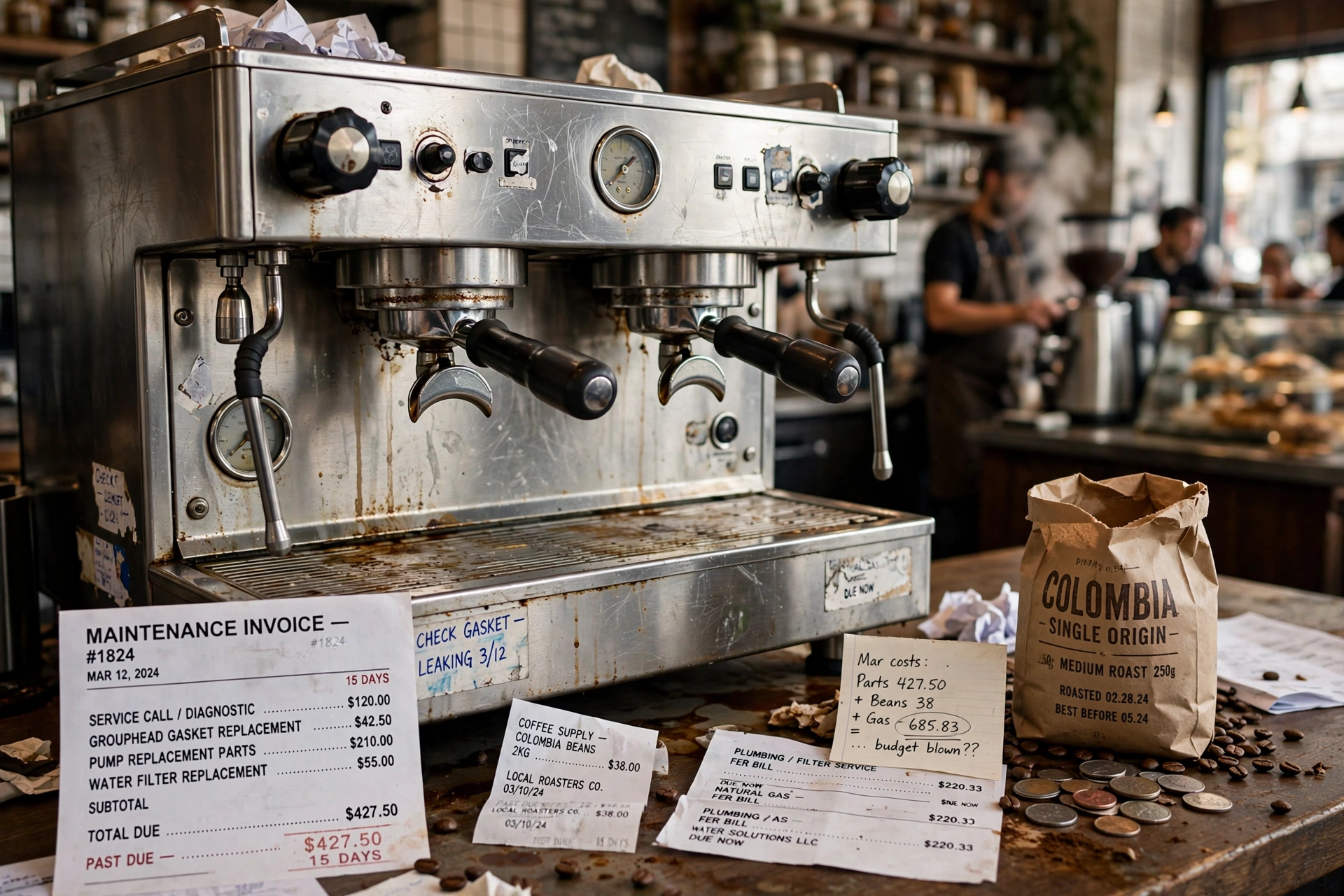
A high-end espresso machine is often the most expensive single piece of hardware in a cafe's inventory, yet most owners only budget for the sticker price. In my experience working with dozens of foodservice operators, the most common shock comes six months after installation when the first gasket fails or the boiler needs descaling, and the owner realizes they have no maintenance fund. The initial purchase is just the entry fee; the real operational cost lies in the long-term commercial espresso machine maintenance cost, which can range from 5% to 15% of the machine's value annually if neglected.
For a comprehensive overview of how these expenses fit into your larger budget, explore our guide on commercial coffee equipment cost.
What is a Commercial Espresso Machine and Its Cost Structure?
📚
Definition
A commercial espresso machine is a high-capacity brewing system designed for continuous use in professional environments, capable of maintaining precise temperature and pressure stability across hundreds of cycles per day.
When discussing the price of these machines, we aren't just talking about the steel box on the counter. The cost structure is divided into three distinct phases: the capital expenditure (CapEx), the installation costs, and the ongoing commercial espresso machine maintenance cost. A basic single-group machine might start around $2,000, while a multi-group, high-performance beast from a top-tier brand can easily exceed $25,000. However, the hardware is only half the story. Water filtration installation, electrical upgrades (many machines require 220V), and professional calibration add an immediate 10% to 20% to the initial price tag.
Beyond the initial setup, the maintenance costs are what determine the longevity of the asset. This includes routine part replacements—such as group gaskets and shower screens—as well as deep chemical cleaning. According to NSF International, adherence to strict sanitary and maintenance standards (like NSF/ANSI 4) is not just about taste, but about preventing catastrophic equipment failure and ensuring food safety. If you ignore these standards, your maintenance costs shift from "preventative" (small, scheduled spends) to "reactive" (expensive, emergency repairs that cause downtime).

Why Does Commercial Espresso Machine Maintenance Cost Matter for Your Business?
Preventative maintenance is the difference between a profitable morning rush and a closed sign on your door. The primary reason these costs matter is that espresso machines are essentially high-pressure boilers. When mineral deposits from water build up, the machine must work harder to maintain temperature, which increases electricity consumption and puts immense strain on the heating elements. This inefficiency manifests as a slow creep in operational costs and a noticeable dip in coffee quality.
From a financial perspective, the impact of downtime is staggering. If a machine fails during a peak Saturday window, the loss isn't just the cost of the repair; it is the lost revenue from every latte and cappuccino not served. For many businesses, the cost of a single day of unplanned downtime exceeds the annual cost of a professional maintenance contract. This is why understanding the commercial espresso machine maintenance cost is fundamental for any operator attempting to protect their margins.
Furthermore, the quality of the espresso depends on the precision of the equipment. According to the Specialty Coffee Association (SCA), precise temperature control and pressure stability are non-negotiable for specialty coffee. When a machine is poorly maintained, you get "channeling" or inconsistent extraction, leading to wasted coffee beans—an expensive mistake when using premium Coffea arabica. In my experience, a business that ignores maintenance usually sees a 10% increase in bean waste due to constant "dialing in" attempts on a malfunctioning machine.
If you are trying to determine if a monthly fee is a better alternative to these unpredictable spikes, check out our analysis on whether an all-inclusive coffee membership is worth it.
How to Manage and Reduce Your Long-Term Espresso Costs
Managing the commercial espresso machine maintenance cost requires a shift from a "fix it when it breaks" mentality to a scheduled prevention cycle. The most effective approach is a tiered maintenance strategy: daily, weekly, and quarterly.
1. Daily Maintenance (The Zero-Cost Layer)
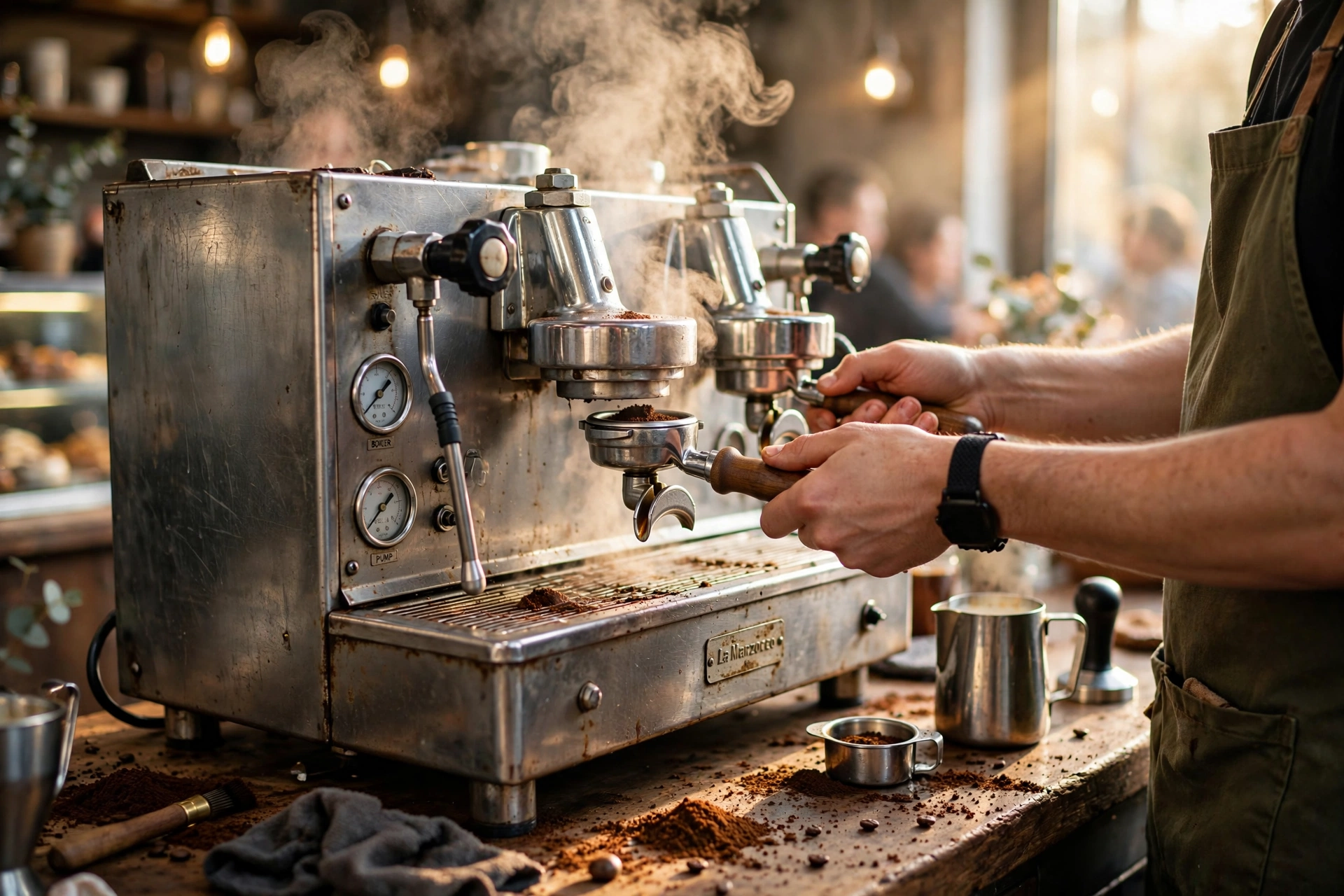
Every barista must perform "backflushing" at the end of each shift using a specialized detergent. This removes coffee oils and residues from the three-way solenoid valve. If this is skipped, the oils rancidify, ruining the flavor of the specialty coffee and eventually clogging the internal plumbing. This process costs pennies in detergent but saves thousands in technician fees.
2. Weekly and Monthly Audits
Once a week, shower screens should be removed and scrubbed. Once a month, the group gaskets should be inspected for leaks. In my experience, replacing a $15 gasket every three months prevents a $500 leak repair later. Many owners overlook this, but the data is clear: proactive part replacement extends the machine's lifespan by at least 3-5 years.
3. Quarterly Professional Calibration
Every three months, a certified technician should inspect the boiler, check the pressure gauges, and verify the temperature stability. This is where the commercial espresso machine maintenance cost becomes a visible line item in the budget, but it is the only way to ensure the machine is operating within manufacturer specifications.
4. Water Quality Management
Water is the most aggressive enemy of an espresso machine. Without a high-grade filtration system, calcium and magnesium build up into "scale" inside the boiler. This scale acts as an insulator, forcing the heating element to run longer and eventually burn out. A professional water treatment system is not an optional accessory; it is a core component of the machine's survival strategy. For those in areas with particularly hard water, such as some regions in South Carolina, the frequency of filter changes must increase to prevent permanent boiler damage.
To see how these maintenance steps compare across different business models, we recommend reviewing the hidden costs of owning commercial coffee equipment.
Espresso Machine Ownership vs. Managed Services
For many business owners, the volatility of maintenance costs is the most stressful part of the operation. To solve this, the industry has shifted toward managed service models. Below is a comparison of how the financial burden shifts depending on the approach you choose.
| Feature | Traditional Ownership | Cheap/Generic Lease | Managed Membership (Busy Bean) |
|---|---|---|---|
| Upfront Cost | Very High (CapEx) | Moderate | Zero to Low |
| Maintenance | Reactive (Pay per visit) | Basic (Limited scope) | Proactive (All-inclusive) |
| Downtime Risk | High (Wait for tech) | Moderate (Contractual) | Low (Priority support) |
| Parts Cost | Owner pays 100% | Mixed / Limited | Included in monthly fee |
| Coffee Quality | Varies by operator | Generic | Consistent Specialty Grade |
As shown in the table, the traditional approach places the entire burden of the commercial espresso machine maintenance cost on the owner. A sudden boiler failure can cost $1,200 in parts and labor instantly. A generic lease might cover some repairs, but often leaves the owner paying for "consumables" like gaskets and filters. A managed membership, like the one provided by Busy Bean Coffee, converts these unpredictable spikes into a predictable monthly operating expense (OpEx), ensuring that a technician is already scheduled before the machine ever breaks.

Common Mistakes to Avoid When Budgeting for Espresso Equipment
One of the most frequent mistakes I see is the "sticker price trap." An owner finds a machine for $8,000 and assumes that is the cost. They fail to account for the 2026 electrical standards for high-efficiency boilers, which may require a dedicated circuit breaker upgrade. In a commercial setting, if your power fluctuates, you can fry the sensitive electronics of a modern espresso machine, leading to a repair bill that could be 20% of the machine's value.
Another critical error is underestimating the cost of the barista's training. A machine is only as good as the person operating it. A barista who does not understand how to properly purge the steam wand or backflush the machine will inadvertently increase the commercial espresso machine maintenance cost by accelerating wear and tear. I've seen machines that should have lasted ten years fail in three simply because the staff wasn't trained on basic daily care.
Finally, many businesses buy equipment that is too small for their projected volume. A single-group machine in a high-traffic restaurant creates a bottleneck. This leads to the machine being run at 100% capacity for 8 hours a day, which drastically increases the frequency of required maintenance. When you push a machine beyond its rated capacity, the commercial espresso machine maintenance cost spikes because components are failing at 2x the normal rate. It is always more cost-effective to buy a slightly larger machine than to overwork a small one.
If you're debating whether to buy a larger machine or lease a high-capacity one, our leasing vs buying guide provides a detailed framework for that decision.
Deep Dive: The Impact of Water Chemistry on ROI
To truly understand the commercial espresso machine maintenance cost, one must understand the chemistry of scale. Limescale is a calcium carbonate precipitate that forms when hard water is heated. In a commercial boiler, this scale builds up on the heating elements. Because lime is a poor conductor of heat, the element must stay on longer to heat the water. This leads to a phenomenon called "dry firing," where the element overheats and burns through.
According to the International Coffee Organization (ICO), the global shift toward higher-quality specialty coffee has led to more sophisticated machinery with tighter tolerances. These machines are even more sensitive to water quality than the "tank-style" machines of the past. For a business, this means that spending $500 on a high-quality water softener today can save $3,000 in boiler replacements over the next three years.
In my experience, the ROI on water filtration is the highest of any investment in a coffee program. When we audit businesses, we find that those with automated water monitoring systems have 40% lower emergency repair costs. This is because they can tell exactly when the resin in their filter is exhausted, rather than guessing based on a calendar. When you align your water chemistry with your maintenance schedule, the commercial espresso machine maintenance cost becomes a manageable, flat line rather than a series of unpredictable peaks.
Frequently Asked Questions
How much should I budget annually for espresso machine maintenance?
For a standard professional setup, you should budget between 5% and 10% of the machine's original purchase price annually for maintenance. This includes the cost of chemical detergents, replacement gaskets, shower screens, and at least two professional technician visits per year for calibration and internal inspection. If you are using a high-volume machine in a small space with poor ventilation, this cost may increase as components wear out faster due to heat stress.
What is the most expensive part of an espresso machine to replace?
The boiler and the pump are typically the most expensive components to replace. A boiler failure usually stems from scale build-up or corrosion, and depending on the machine's complexity (such as multi-boiler systems), the cost can range from $800 to $2,500 including labor. The pump is also critical; if it fails, the machine cannot generate the 9 bars of pressure required for a proper espresso extraction, leading to total operational downtime.
Can I perform all the maintenance myself to save money?
Daily and weekly tasks—like backflushing and cleaning the steam wand—should absolutely be done by the staff. However, quarterly and annual maintenance, such as boiler descaling, pressure valve adjustment, and electrical safety checks, require a certified technician. Attempting to open a high-pressure boiler without proper training is dangerous and often voids the manufacturer's warranty. The risk of a costly mistake far outweighs the savings of avoiding a professional service visit.
How often do I need to replace group gaskets and shower screens?
In a medium-to-high volume environment, group gaskets should be replaced every 3 to 6 months. Gaskets are made of rubber and harden over time due to heat and pressure, which leads to leaks around the portafilter. Shower screens should be cleaned daily and replaced whenever you notice uneven water distribution (channeling) in your coffee puck. Replacing these small parts regularly is the most effective way to keep the commercial espresso machine maintenance cost low.
Does the type of coffee bean affect machine maintenance?
While the beans themselves don't cause mechanical failure, the oils in different roasts can affect the machine. Very dark, oily roasts can leave more residue in the group head and valves, necessitating more frequent backflushing. Using high-quality specialty coffee generally means the beans are roasted more consistently, which helps in maintaining a stable grind and reducing the amount of "fines" that can clog the machine's internal components over time.
Recommended Readings
To deepen your understanding of these topics, we recommend reading the following articles:
- Financing Options for Commercial Coffee Equipment
- How to Calculate the True Cost of Coffee for Your Business
- Coffee Revenue Potential for Restaurants and Cafes
- How Much do Commercial Coffee Brewers Cost in
Conclusion
Understanding the commercial espresso machine maintenance cost is the only way to avoid the "hidden' financial drain that plagues so many new cafes. Whether you choose to manage these costs through a rigorous internal schedule or delegate them to a professional service, the goal remains the same: maximizing uptime and ensuring every shot of espresso meets the high standards of specialty coffee. From the chemistry of your water to the training of your baristas, every detail contributes to the longevity of your investment.
If the unpredictability of these costs feels overwhelming, Busy Bean Coffee offers a streamlined alternative. Our all-inclusive managed coffee membership removes the stress of maintenance and hardware failure, providing you with premium equipment and professional support for one predictable monthly fee. Instead of worrying about boiler leaks and gasket replacements, you can focus on growing your business and serving your customers.
To see how these costs integrate into your total budget, return to our main guide on the cost of commercial coffee equipment or visit us at www.busybeancoffee.com.
Free Coffee Pairing Guide & Specialty Roast Cheat Sheet
Unlock the secrets of perfect brewing ratios, water temperatures, and specialty roast profiles. Download the guide.