Introduction
If you're opening a coffee shop or upgrading your office break room, the price tag on commercial coffee brewers can range from $2,000 to over $20,000. But which one is right for your business? In this guide, we break down the true cost of commercial coffee brewers in 2026, including the often-overlooked expenses that can make or break your budget. Whether you're considering a simple drip brewer or a high-end espresso machine, understanding the complete financial picture is critical. This article is part of our comprehensive Cost of Commercial Coffee Equipment guide, which covers all types of equipment. We’ll focus specifically on brewers, from batch brewers to super-automatic espresso machines, and help you make an informed decision.

What Is a Commercial Coffee Brewer?
📚
Definition
A commercial coffee brewer is any machine designed to produce coffee in high volumes for business use, typically capable of brewing multiple cups or pots per hour. This includes drip brewers, espresso machines, pour-over stations, and combined systems.
Commercial brewers differ from home models in capacity, durability, and cost. They are built to withstand continuous use, often with stainless steel boilers, programmable settings, and NSF certification. The most common types are:
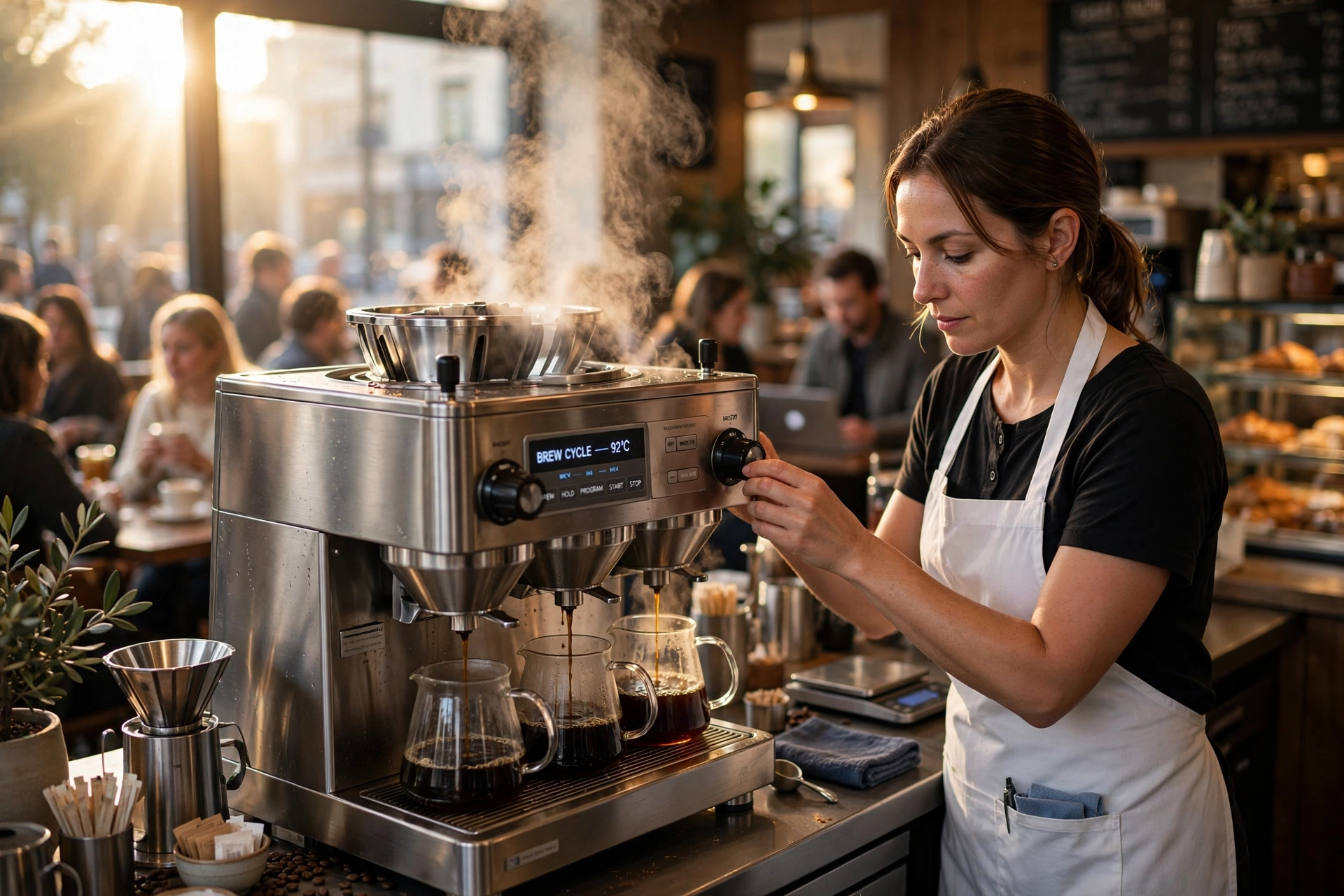
- Batch brewers: Drip machines that brew large quantities (up to 3 gallons) quickly. Prices range from $1,500 to $6,000.
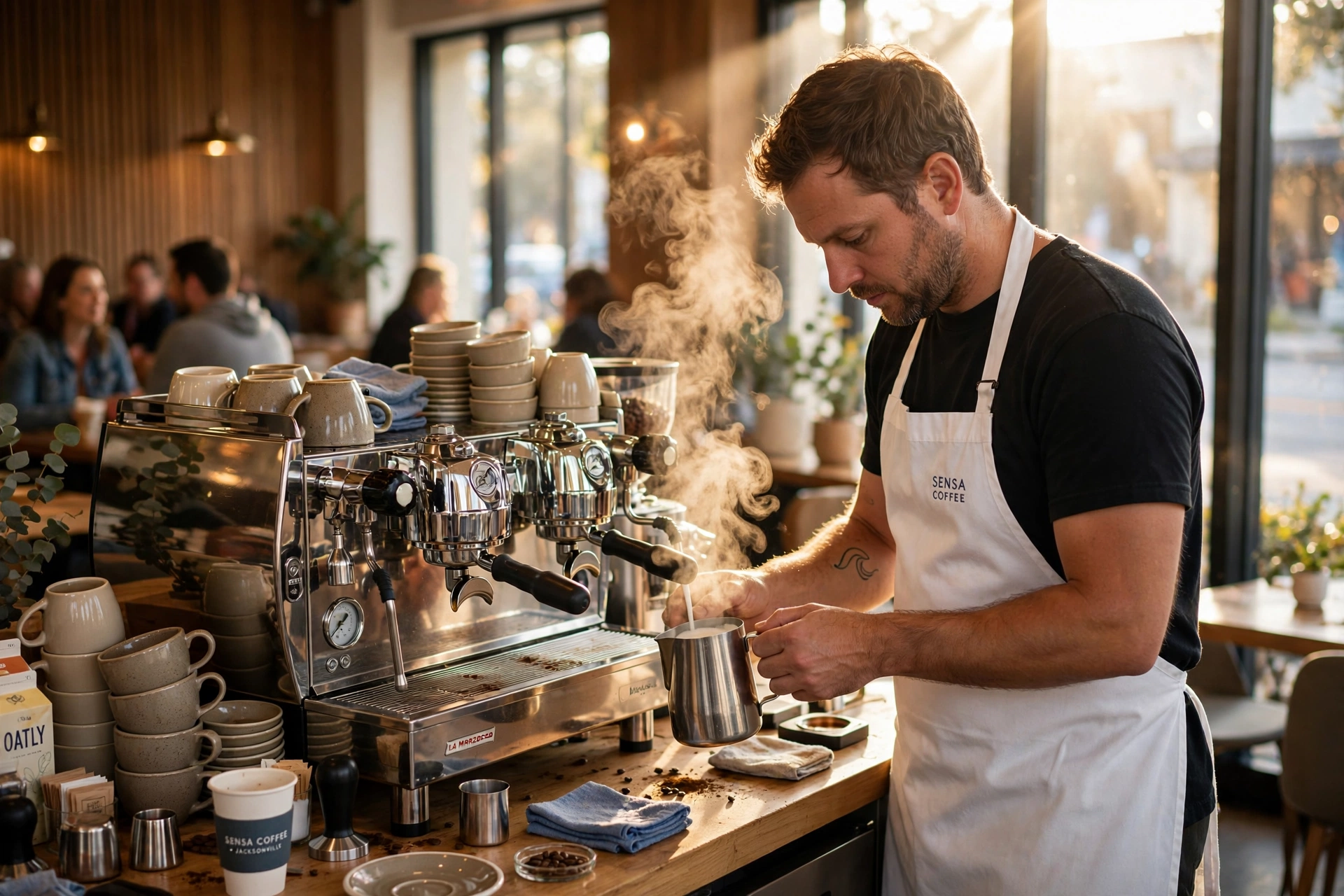
- Espresso machines: Semi-automatic, automatic, or super-automatic. A single-group commercial espresso machine cost starts around $3,000 and can exceed $20,000 for multi-group models.
- Dual-purpose machines: Combine drip and espresso capabilities, often used in smaller cafes. Prices from $5,000 to $15,000.
- Specialty brewers: Pour-over, siphon, or cold brew systems for artisanal shops. Costs vary widely, from $500 for a pour-over stand to $3,000 for a commercial cold brew tower.
In my experience working with hundreds of foodservice businesses, the line between a brewer and an espresso machine often blurs. Many operators need both, and that’s where the total investment can surprise you.
Why the Cost of Commercial Coffee Brewers Matters
Understanding commercial coffee brewer cost isn’t just about the purchase price—it’s about total cost of ownership (TCO). According to the National Coffee Association, 62% of American adults drink coffee daily, making it a staple offering in hotels, restaurants, and offices. However, many businesses underestimate ongoing expenses like maintenance, supplies, and labor.
A Specialty Coffee Association study found that equipment efficiency directly impacts profit margins—each minute of downtime can cost a cafe up to $50 in lost sales. If you choose a cheap brewer that fails frequently, you’ll lose more in repairs and missed revenue than you saved upfront.
Key benefits of getting the cost right:
- Accurate budgeting – Know your full investment, not just the machine price.
- Improved ROI – Higher-priced equipment often has lower lifetime costs due to durability.
- Better customer experience – Reliable machines produce consistent coffee, reducing waste and complaints.
- Easier scaling – A brewer that fits your current volume can grow with you if chosen wisely.
For a deeper dive into the numbers, see our sibling guide on Hidden Costs of Owning Commercial Coffee Equipment.
How to Choose the Right Brewer for Your Budget
Step 1: Define Your Volume
Estimate how many cups you serve per hour. A busy cafe might need a dual-group espresso machine (12,000+ coffees/month) while an office break room may only need 50 cups a day. For the latter, a batch brewer with a thermal carafe ($2,000–$4,000) is sufficient.
Step 2: Compare Purchase vs. Lease
Buying outright gives ownership, but leasing (or all-inclusive memberships) can spread costs. Our article on Commercial Coffee Machine Leasing vs. Buying explains the trade-offs. Many businesses prefer a fixed monthly fee to avoid large capital outlays.
Step 3: Factor in Installation and Setup
Installation costs for a commercial espresso machine cost can add $500–$2,000 for plumbing, electrical work, and ventilation. Batch brewers usually need a dedicated water line, adding $200–$800.
Step 4: Consider Water Filtration
Hard water scales boilers and ruins flavor. A reverse osmosis system costs $1,000–$3,000 installed. Skipping this voids warranties and shortens machine life.
Step 5: Total Cost of Ownership Calculation
Use this simple formula:
TCO = Purchase Price + Installation + Maintenance (over 5 years) + Supplies (filters, detergent) + Energy Costs – Resale Value
For example, a $15,000 espresso machine with $3,000 installation, $5,000 in maintenance over 5 years, and $1,000 in energy costs has a TCO of $24,000. If it lasts 10 years, annual cost is $2,400. A cheaper $5,000 machine might require $8,000 in repairs over 5 years, making it more expensive in the long run.
💡
Key Takeaway
Always calculate TCO over at least 5 years. The cheapest upfront option is rarely the cheapest overall.
Common Mistakes When Buying a Commercial Coffee Brewer
Mistake 1: Ignoring Scalability
I’ve seen owners buy a single-group espresso machine for a high-volume cafe, only to realize they need a second group six months later. The upgrade costs more than buying a larger machine initially. Plan for 1.5x your current peak volume.
Mistake 2: Underestimating Service Costs
Commercial machines need professional cleaning and descaling every 3–6 months. Each visit runs $200–$400. Overlooking this leads to breakdowns and costly emergency repairs.
Mistake 3: Buying Without Testing
You wouldn’t buy a car without a test drive. The same goes for brewers. Demo machines before purchasing. Many reputable suppliers, including Busy Bean Coffee, offer on-site trials. For help, check our How Much Does a Commercial Espresso Machine Cost? guide.
Mistake 4: Focusing Only on the Machine
Grinders, tampers, pitchers, and training add up. A commercial grinder costs $500–$3,000. Factor these into your budget.
Mistake 5: Neglecting Energy Efficiency
An ENERGY STAR certified brewer can save $200–$500 per year on electricity. Over a decade, that’s significant.

Frequently Asked Questions
What is the average cost of a commercial coffee brewer in 2026?
The average cost varies widely by type. A basic batch brewer runs $2,000–$4,000, while a commercial espresso machine cost for a single-group semi-automatic is $3,000–$8,000. Dual-group machines range from $8,000 to $15,000, and super-automatic models can exceed $20,000. Specialty brewers like pour-over stations are $500–$2,000. Always factor in installation and accessories.
How much does a commercial espresso machine cost for a small coffee shop?
For a small coffee shop, a single-group semi-automatic espresso machine typically costs between $4,000 and $8,000. A quality grinder adds $800–$2,000. Total equipment investment for espresso service is around $6,000–$12,000. Leasing or an all-inclusive membership can reduce upfront cost to $500–$1,000 per month.
Is it cheaper to lease or buy a commercial coffee brewer?
Leasing offers lower upfront costs (often $200–$600/month) but higher long-term total cost. Buying gives ownership and lower total cost over 5+ years. However, leasing often includes maintenance and support, which can be valuable. Compare both options using TCO. See our Commercial Coffee Machine Leasing vs. Buying article for a detailed breakdown.
What are the hidden costs of commercial coffee brewers?
Hidden costs include installation (plumbing, electrical), water filtration systems ($1,000–$3,000), ongoing maintenance ($200–$400 per visit), cleaning chemicals, replacement parts (e.g., group gaskets, shower screens), energy consumption, and training for staff. These can add 30–50% to the purchase price over three years.
How long do commercial coffee brewers last?
Batch brewers typically last 5–10 years with proper maintenance. Commercial espresso machines last 7–15 years, depending on build quality and usage. Super-automatic machines may have a shorter lifespan (5–8 years) due to complex electronics. Regular servicing extends life significantly.
What is the ROI of a commercial coffee brewer for a business?
ROI depends on sales volume. A cafe selling 100 cups/day at $4 each generates $146,000/year in coffee revenue. If the brewer costs $15,000 with $5,000 annual operating costs, net profit from coffee is $141,000. Payback period is under 2 months. For offices, ROI is measured in employee satisfaction, retention, and reduced external coffee runs.
Can I get a commercial coffee brewer for under $2,000?
Yes, basic drip brewers and pour-over stations are available under $2,000. However, these are typically not suitable for high-volume environments. For a reliable machine that lasts, budget at least $3,000. Always consider TCO—cheaper machines often require more repairs.
Does Busy Bean Coffee offer all-inclusive pricing for brewers?
Yes, Busy Bean Coffee provides all-inclusive managed coffee memberships that cover premium SENSA equipment, installation, maintenance, and product pricing for a single monthly fee. This eliminates upfront capital expense and includes ongoing service. For details, visit our All-Inclusive Coffee Membership: Is It Worth the Monthly Fee? guide.
Conclusion
Choosing the right commercial coffee brewer requires understanding both the sticker price and the lifetime costs. Whether you’re buying a batch brewer for an office or a multi-group espresso machine for a busy cafe, always calculate TCO, factor in installation and maintenance, and consider alternatives like leasing or all-inclusive memberships. In 2026, the best investment is one that aligns with your volume, quality standards, and budget.
For a complete overview, revisit our main Cost of Commercial Coffee Equipment guide. And if you’re ready to simplify your coffee program, let Busy Bean Coffee help you find the perfect solution at Busy Bean Coffee.
Recommended Readings
To deepen your understanding of these topics, we recommend reading the following articles:
- Best Commercial Coffee Brewers for Restaurants
- Commercial Coffee Brewers for Hotels and Hospitality
- Commercial Coffee Brewers for Office Breakrooms
- Commercial Coffee Brewers for Clinics and Medical Offices
About the Author
Travis Estes is the (Founder) at Busy Bean Coffee. With over a decade in specialty coffee, Travis has helped thousands of businesses—from hotels to offices—optimize their coffee service and equipment investments.
Free Coffee Pairing Guide & Specialty Roast Cheat Sheet
Unlock the secrets of perfect brewing ratios, water temperatures, and specialty roast profiles. Download the guide.