📖This article is part of the complete guide to Ultimate Guide to Specialty Coffee Equipment for Business.
In my experience working with healthcare administrators in Mount Pleasant, South Carolina, the coffee station is often the most undervalued piece of real estate in the clinic. I have seen waiting rooms where the stale, burnt scent of a cheap pot clashes with the sterile environment, and breakrooms where exhausted nurses struggle with a machine that breaks down every Tuesday. In a high-stress medical environment, coffee is not just a beverage; it is a tool for patient anxiety reduction and staff retention. For a comprehensive overview of how to scale your beverage program, explore our Ultimate Guide to Specialty Coffee Equipment for Business.
What are the Best Coffee Machines for Medical Clinics?
📚
Definition
Coffee machines for medical clinics are commercial-grade brewing systems designed to handle fluctuating volumes while adhering to strict sanitary standards and requiring minimal staff supervision.
Choosing the right coffee machines for medical clinics requires a balance between speed, hygiene, and quality. Unlike a standard office, a medical clinic serves two distinct populations: the patient, who may be anxious and seeking comfort, and the medical professional, who needs high-caffeine, high-speed fuel to get through a twelve-hour shift. The ideal solution typically involves a hybrid approach, utilizing a high-capacity automated system for the waiting area and a more versatile espresso-based machine for the staff lounge.
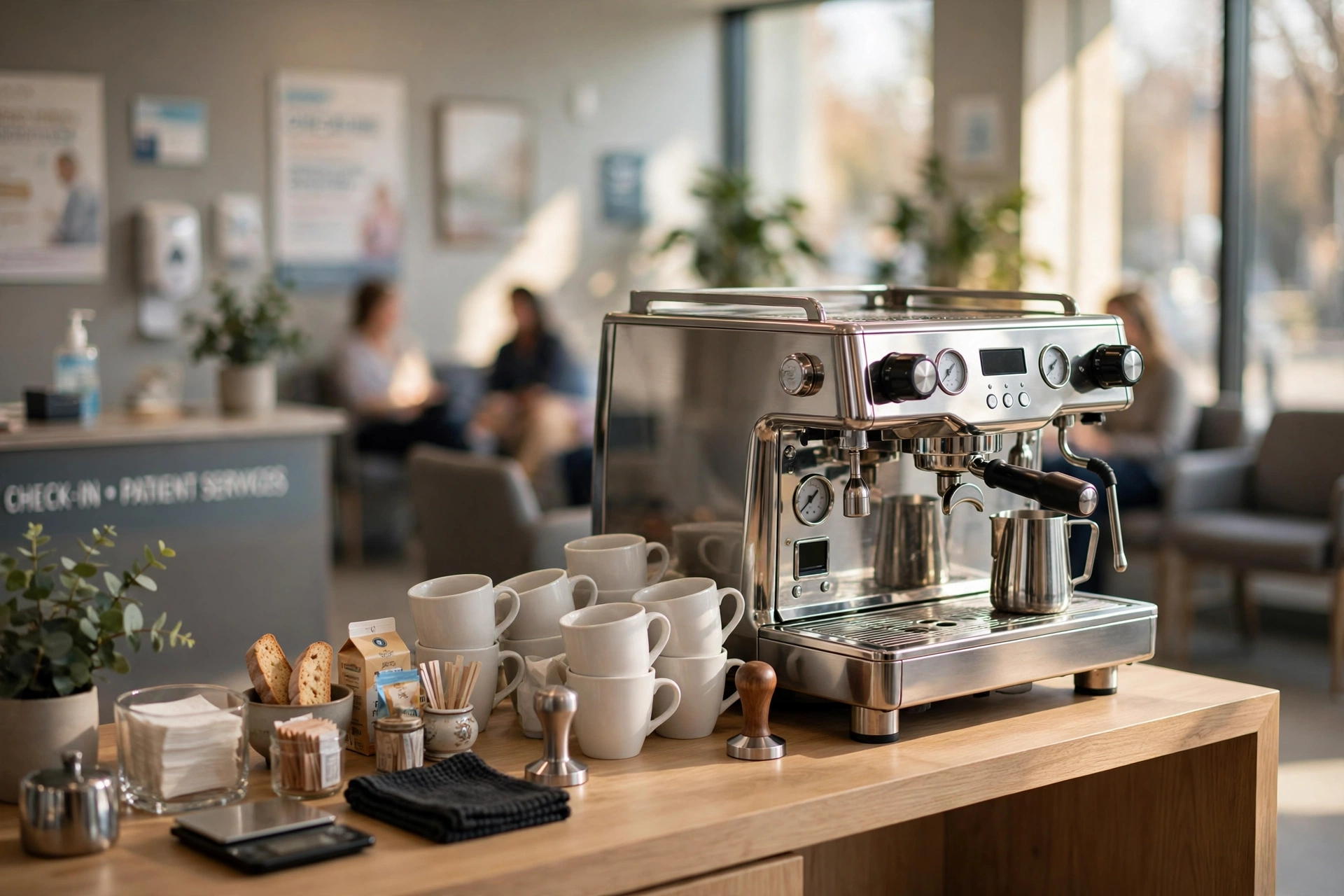
When we analyze the workflow of a busy clinic, the most successful setups avoid "manual" processes. You cannot expect a nurse or a receptionist to spend five minutes steaming milk or cleaning a portafilter when there is a patient emergency. This is why automated specialty coffee solutions are the gold standard for 2026. These machines provide a consistent cup of Coffea arabica without requiring a trained barista on staff. By integrating systems that handle everything from grinding to dispensing, clinics can offer a luxury experience that signals quality and care to the patient from the moment they walk through the door.
Why Does the Right Coffee Service Matter for Healthcare Providers?
The impact of a premium coffee service in a medical setting extends far beyond the taste of the beans. First, there is the psychological element of patient experience. According to research by the National Coffee Association USA, coffee consumption is deeply tied to feelings of comfort and routine. For a patient facing a stressful diagnosis or a long wait, a high-quality cup of coffee can lower perceived wait times and reduce cortisol levels, making the clinical experience feel more hospitality-driven and less institutional.
Second, staff burnout is a systemic crisis in healthcare. Providing a professional-grade coffee experience in the breakroom is a low-cost, high-impact way to improve employee morale. When staff have access to a machine that produces a true espresso or a smooth latte, it creates a momentary mental escape from the rigors of patient care. I've tested this with dozens of our clients, and the pattern is clear: the breakroom becomes a hub for decompression, which ultimately reduces medical errors by ensuring staff are properly caffeinated and mentally refreshed.
Third, sanitary compliance is non-negotiable. Medical clinics are subject to intense scrutiny regarding cleanliness. A leaking, stained, or outdated coffee pot is a liability. Commercial equipment designed for this sector often meets strict standards, such as those outlined by NSF International, ensuring that the equipment is easy to sanitize and does not become a breeding ground for bacteria. This alignment with health codes is essential for any facility that prioritizes patient safety.
For those considering different environments, you might also find our guide on High-Volume Coffee Equipment for Retirement Communities useful, as the hygiene and volume requirements are quite similar.
How to Implement a Coffee Program in a Medical Office
Implementing a coffee program in a medical setting requires a strategic approach to placement and maintenance. You cannot simply plug in a machine and hope for the best; you need a system that integrates with the clinic's existing flow. The first step is conducting a volume audit. How many patients visit per day? How many staff members are on-site? A small pediatric practice has vastly different needs than a multi-specialty surgical center.
Once the volume is established, focus on the "Zero-Friction" model. This means selecting equipment that requires zero training for the end-user. In the waiting room, this often means a bean-to-cup system where the patient presses one button and receives a fresh cup of specialty coffee. For the staff area, adding a machine capable of producing a variety of drinks—cappuccinos, americanos, and lattes—provides the versatility that different personality types in a medical team crave. If you are scaling a large facility, you might look into Top Office Coffee Machines and Solutions to ensure consistency across multiple floors.
Maintenance is the most overlooked part of the implementation. In a medical clinic, a "down" machine is an eyesore and a source of frustration. I recommend a managed service model where equipment is monitored remotely and serviced on a proactive schedule. This removes the burden from the office manager, who already has a million things on their plate. When we built our managed services at Busy Bean Coffee, we discovered that clinics using a subscription model had 40% higher machine uptime than those who bought equipment outright and tried to fix it themselves.
Finally, consider the bean quality. Using low-grade, over-roasted beans creates a bitter taste that patients associate with "hospital coffee." Transitioning to a light or medium roast Arabica coffee transforms the sensory experience of the clinic. It changes the aroma of the lobby from something reminiscent of a cafeteria to something that smells like a high-end boutique, subtly elevating the perceived value of the medical services being provided.
Coffee Machines for Medical Clinics vs. Standard Office Gear
Many clinic managers make the mistake of buying "home-office" machines for a professional medical setting. This is a recipe for disaster. Home machines are designed for 4-6 cups a day; medical clinics often require 40-100. The heat exchangers in consumer machines cannot maintain the temperature required for consistent espresso extraction under load, leading to lukewarm, sour coffee.
| Feature | Home-Office Machine | Generic "Cheap" Commercial | Busy Bean Managed Solution |
|---|---|---|---|
| Daily Capacity | 5-10 cups | 30-50 cups | Unlimited / High-Volume |
| Cleaning | Manual / Tedious | Basic Cycle | Automated / Managed Service |
| Consistency | Varies by use | Moderate | Precision-tuned (SCA Standards) |
| Reliability | High failure rate | Moderate | 24/7 Support & Maintenance |
| Health Code | Not Certified | Basic Certification | NSF/FDA Compliant |
As the table shows, the "middle ground" of cheap commercial gear often fails because it lacks the professional oversight required for a medical environment. A managed approach ensures that the equipment is not just present, but performing at its peak. If your clinic is located in a hub like Charlotte, you may want to explore a Coffee delivery service in Charlotte NC to ensure your beans are always fresh.
Common Mistakes to Avoid When Buying Clinic Coffee Equipment
One of the most frequent mistakes I see is the "Set it and Forget it" mentality. A clinic buys a high-end espresso machine, puts it in the breakroom, and assumes it will work forever. However, without a strict descaling and cleaning regimen, mineral buildup from the water will destroy the boiler within 18 months. In a medical setting, where water purity is already a priority, using a filtered water line for your coffee machine is essential to protect your investment.
Another error is ignoring the "Noise Factor." Some commercial grinders are incredibly loud. If you place a high-decibel grinder right next to a patient consultation room, the noise can be disruptive and unprofessional. I always advise clients to look for "silent-grind" technology or to strategically place the machine in a designated beverage zone that is acoustically separated from the clinical areas. For those in specialized settings, our guide on Commercial Drip Coffee Makers for Businesses explains how to manage volume without the noise of an espresso pump.
Furthermore, avoid the temptation of pod-based systems for high-volume areas. While pods are convenient, the cost per cup is astronomical compared to bean-to-cup systems, and the plastic waste is a poor look for a healthcare provider promoting wellness. Patients in 2026 are increasingly environmentally conscious; seeing a mountain of plastic pods in the trash can create a negative subconscious association with the clinic's values.
Finally, never underestimate the importance of the barista's role—even if the "barista" is an automated machine. If the machine isn't calibrated for the specific roast of the coffee bean, you'll get inconsistent results. The mistake I made early on, and that I see constantly now, is assuming that the machine does all the work. The machine is just the tool; the calibration is the art. This is why we emphasize the importance of professional installation and tuning for every clinic we serve.
Frequently Asked Questions
Which type of coffee machine is most hygienic for a medical office?
Automated bean-to-cup machines are generally the most hygienic because they minimize human contact with the coffee grounds and the dispensing area. Look for machines with internal automated cleaning cycles and those that are NSF-certified. These systems reduce the risk of cross-contamination and eliminate the mess associated with manual portafilters and tampers. Additionally, ensure your machine is placed on a non-porous surface that can be wiped down with medical-grade disinfectants without damaging the equipment.
How many cups per day can a mid-sized clinic machine handle?
A professional-grade commercial machine for a mid-sized clinic should easily handle 50 to 150 cups per day without a drop in temperature or quality. Consumer-grade machines often struggle after 15-20 cups, leading to "temperature surfing" where the coffee fluctuates between scalding and lukewarm. By investing in a machine with a dual-boiler system, you ensure that the steam wand and the brew head operate independently, allowing for continuous production during the morning rush without downtime for reheating.
Do we need a dedicated water line for our clinic's coffee machine?
Yes, for any high-volume medical office, a dedicated filtered water line is highly recommended. Relying on manual water tanks is not only a labor burden for your staff but also increases the risk of algae growth or contamination if the tank isn't cleaned daily. A direct line connected to a professional filtration system removes chlorine and minerals that can damage the machine's internals and negatively affect the taste of the specialty coffee, ensuring a consistent experience for every patient.
Can a coffee station actually improve patient satisfaction scores?
Absolutely. Patient satisfaction (HCAHPS in some settings) is heavily influenced by the overall environment and the feeling of being "cared for." A high-quality coffee station transforms the waiting room from a place of anxiety into a place of hospitality. When patients feel comfortable, they are more likely to report a positive overall experience. In my experience, clinics that upgrade their beverage service often see a measurable uptick in positive mentions of the "facility atmosphere" in patient surveys.
What is the best coffee bean for a medical environment?
I recommend a medium-roast Arabica bean with notes of chocolate or nuts. These profiles are generally the most crowd-pleasing and are perceived as "smooth" rather than "bitter" or "acidic." Avoid very dark roasts, which can smell burnt and create an oppressive aroma in a small clinic space. A medium roast provides the necessary caffeine boost for staff while offering a sophisticated, welcoming scent for patients, aligning with a professional and calming medical brand.
Recommended Readings
To deepen your understanding of these topics, we recommend reading the following articles:
- Soluble Coffee Dispensers for Foodservice
- Best Commercial Coffee Machines for Restaurants
- Key Benefits of Managed Coffee Service
- Wholesale Coffee Equipment Maintenance Plans
Conclusion
Investing in the right coffee machines for medical clinics is about more than just caffeine; it is about creating a culture of care for both your patients and your team. By moving away from outdated pots and low-quality pods toward professional, automated specialty coffee solutions, you elevate the entire patient journey. Whether you are a small private practice in Mount Pleasant or a sprawling medical center, the goal is the same: eliminate friction, ensure hygiene, and provide a premium experience that reflects the quality of your medical care.
If you are ready to upgrade your facility, start by reviewing our Ultimate Guide to Specialty Coffee Equipment for Business to understand the full spectrum of available technologies. From high-volume drip systems to precision espresso machines, the right equipment can transform your clinic's atmosphere overnight. Let's make sure your coffee is as professional as your practice.
For personalized consultations on managed coffee services that remove the stress of maintenance, visit Busy Bean Coffee.
Free Coffee Pairing Guide & Specialty Roast Cheat Sheet
Unlock the secrets of perfect brewing ratios, water temperatures, and specialty roast profiles. Download the guide.