The Best Specialty Coffee Equipment for Foodservice in 2026 Is a Service, Not a Machine
The best specialty coffee equipment for your foodservice business in 2026 isn't a single brand you can buy off a shelf. After a decade of installing and maintaining machines across hundreds of hotels, restaurants, and offices, I can tell you the winning answer is a fully managed coffee service that combines premium equipment with hands-on support. Your choice isn't really between La Marzocco and Rancilio; it's between buying an expensive box that you must maintain and partnering with a service that handles everything for one predictable monthly fee.
The specialty coffee market is booming, and your customers know the difference between a watery diner cup and a properly pulled espresso shot. The challenge is that great coffee requires great specialty coffee equipment, trained staff, and ongoing maintenance. Most foodservice operators underestimate the total cost of ownership when they buy a machine outright. The machine is just the beginning.
📚
Definition
Specialty coffee equipment refers to commercial-grade machines and tools designed to brew high-quality coffee consistently, including espresso machines, grinders, brewers, and associated accessories. In a foodservice setting, this equipment must handle high volume while maintaining precise temperature and pressure control.
The Three Options on the Table
Option 1: Buy a Super-Automatic Machine
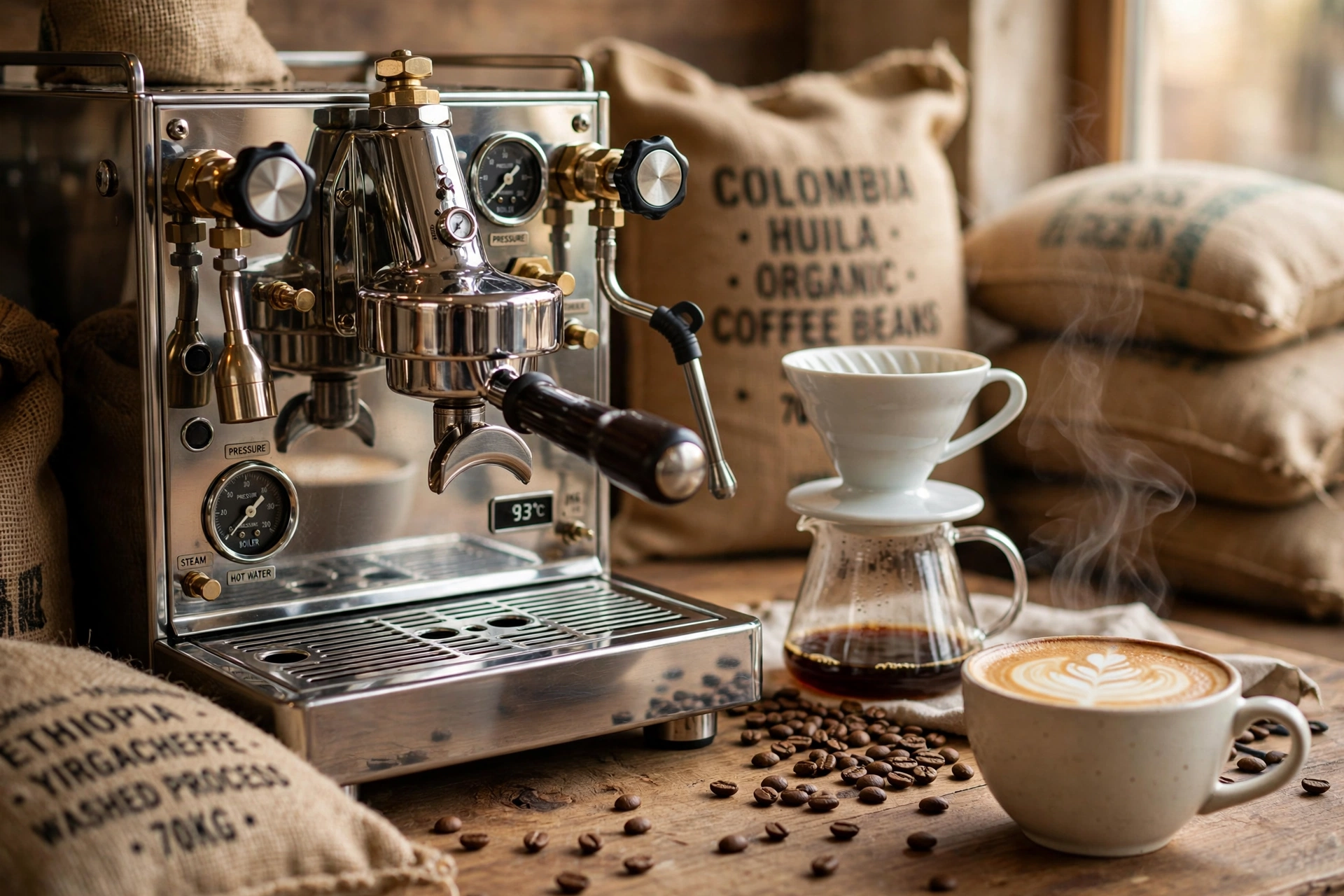
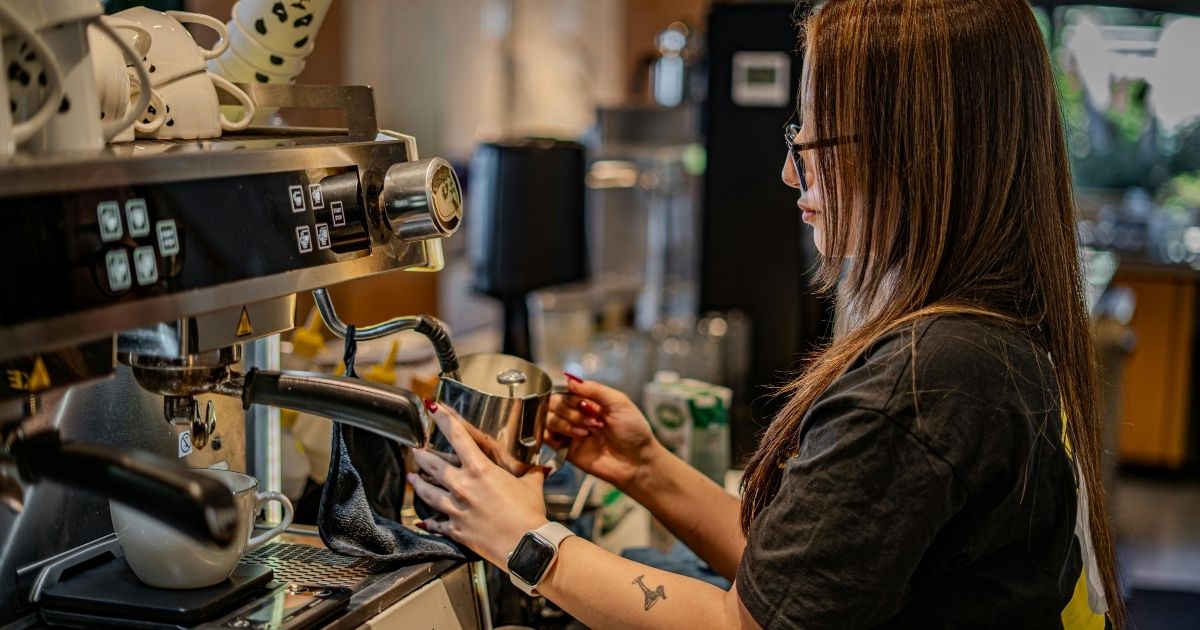
La Marzocco, Rancilio, and Nuova Simonelli make exceptional machines. A commercial-grade espresso machine costs between $8,000 and $25,000, and a matching grinder runs another $2,000 to $4,000. If you have a dedicated, trained barista who will treat the equipment with care, this path can deliver incredible results. But here's the catch: most foodservice operations don't have a dedicated barista, and commercial machines require daily cleaning, periodic descaling, and professional maintenance every few months.
Option 2: Rent or Lease Equipment
Some operators lease machines to avoid the upfront capital expense. This spreads the cost, but you still own the maintenance burden. When a machine breaks down, you're waiting for a technician, losing revenue, and disappointing customers. The lease paperwork often hides service fees and minimum volume commitments that eat into your margins.
Option 3: Partner with a Managed Coffee Service
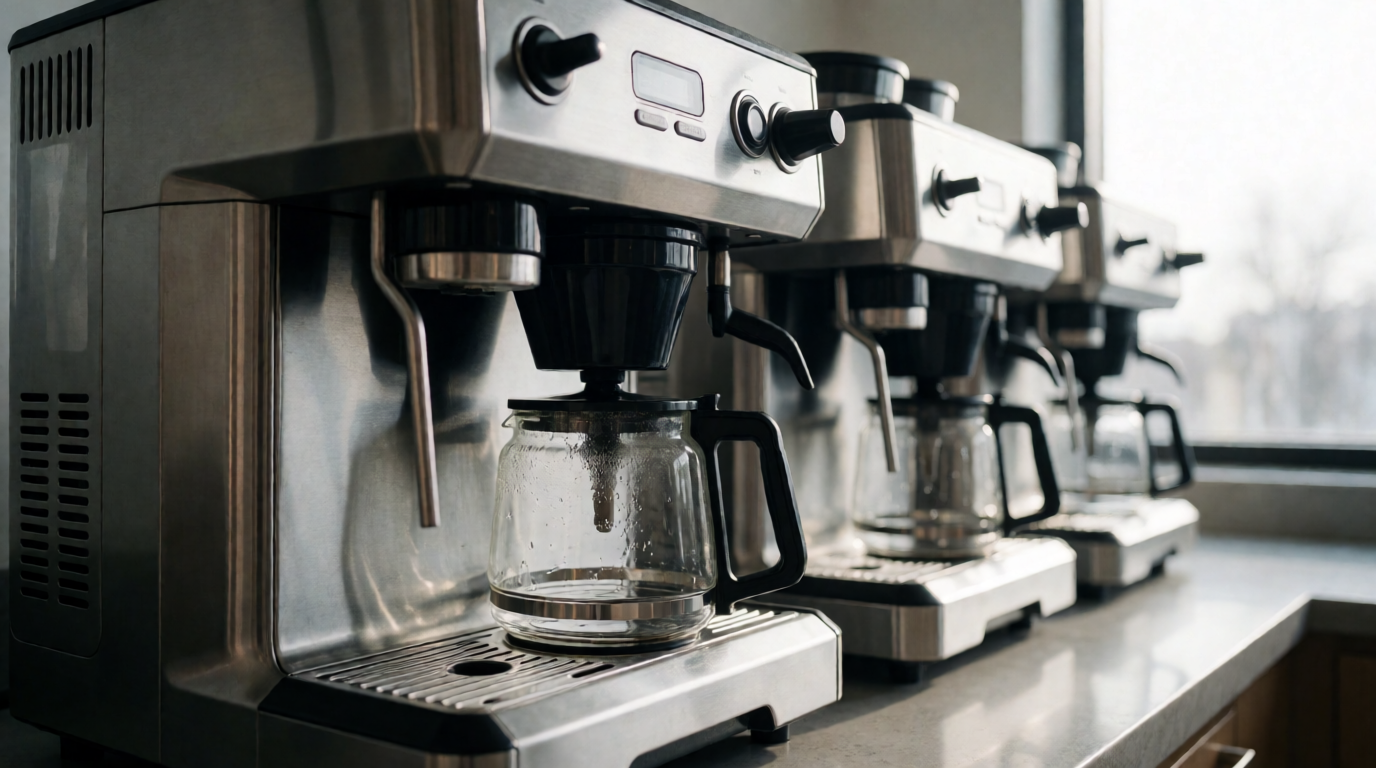
This is the model we've built at Busy Bean Coffee. You get premium SENSA equipment, professional installation, full maintenance coverage, training, and exclusive product pricing, all bundled into one monthly fee. There is zero capital expense and zero maintenance headache. If the machine breaks, we fix it. If your staff needs training, we provide it. This model has become the default choice for operators who want great coffee without the operational burden.
For a complete overview of how this works in different markets, see our bean-to-cup service in St. Petersburg FL.
Why Does Choosing the Right Coffee Equipment Matter for Your Business?
The financial case for upgrading your coffee program is compelling. According to the National Coffee Association, coffee consumption in the United States is at a 20-year high, with 67% of Americans drinking coffee daily. Your customers expect quality, and they can tell the difference between stale, poorly brewed coffee and a properly extracted shot.
Here's the data that matters: a 2024 report from Deloitte found that 63% of consumers say the quality of the coffee is a primary factor in choosing where to eat or stay. That statistic alone should make you reconsider your current setup. Bad coffee isn't a neutral experience; it's an active negative signal that undermines your brand.
The operational angle is just as important. When you buy a machine outright, you're also buying the risk of downtime. A commercial espresso machine in need of repair can take 3 to 5 business days to fix, and that's if a technician is available. For a restaurant serving 100 espresso drinks a day, that's potentially $1,500 to $3,000 in lost revenue per week of downtime, according to our internal analysis of client operations.
The cost of poor quality extends beyond the drinks themselves. Office coffee is a workplace perk that affects retention and morale. A 2023 survey by the Society for Human Resource Management found that coffee is the most in-demand workplace perk, ranked above snacks and breakroom amenities. Companies that invest in quality coffee signal that they value their employees.
💡
Key Takeaway
The true cost of coffee equipment isn't the purchase price. It's the combination of maintenance, downtime, staff training, and lost revenue from inconsistent quality. Managed services eliminate these hidden costs.
How to Choose the Right Specialty Coffee Setup for Your Business
Choosing the right equipment is a decision framework, not a brand loyalty test. Here's the step-by-step process we use with every client:
Step 1: Assess Your Volume
How many drinks will you serve daily? A small cafe might need a single-group machine producing 50 drinks a day. A busy hotel lobby might need a dual-group machine handling 200 plus. Super-automatic machines are ideal for high volume with minimal labor because they handle grinding, tamping, and extraction automatically.
Step 2: Evaluate Your Staff
Do you have a trained barista? If not, you need equipment that automates the technical variables. Semi-automatic machines require skill and practice. Super-automatic machines deliver consistent results regardless of who's operating them. This is the most common mistake we see: operators buy beautiful semi-automatic machines and then realize their staff can't produce a decent shot.
Step 3: Calculate Total Cost of Ownership
Don't just look at the purchase price. Include installation, training, maintenance contracts, replacement parts, and the opportunity cost of downtime. A $15,000 machine with annual maintenance of $1,500 and a 5-year lifespan actually costs $4,500 per year. A managed service might cost more per month, but it includes everything and eliminates the risk of unexpected repair bills.
Step 4: Consider Your Coffee Sourcing
The best equipment in the world can't fix bad beans. You need a partner who supplies fresh, specialty-grade coffee. At Busy Bean Coffee, we pair our equipment with exclusive product pricing on high-quality roasts, ensuring your customers get a consistently excellent cup.
Our managed coffee service is designed for operators who want to focus on their core business, not their coffee machine. When you choose Busy Bean Coffee, you get a complete solution: premium SENSA equipment, professional installation, full maintenance coverage, and training. For a detailed look at the equipment and service model, explore our office espresso service in Austin TX.
Specialty Coffee Equipment: What Are Your Options?
Here's a comparison table that will help you decide between the main approaches:
| Option | Pros | Cons | Best For |
|---|---|---|---|
| Buy Semi-Automatic (La Marzocco, Rancilio) | High control, prestige, excellent quality potential | High capital cost, requires trained barista, high maintenance | Specialty cafes with experienced staff |
| Buy Super-Automatic (SENSA, Jura) | Consistency, low labor, high volume | High cost, complex maintenance, less operator control | Hotels, offices, high-volume restaurants |
| Managed Service (Busy Bean Coffee) | Predictable monthly cost, zero maintenance, training included | Less control over equipment choice | Most foodservice operations |
| Lease Equipment | Spreads cost, no upfront capital | Maintenance burden remains, hidden fees | Operators with strong in-house technical skills |
The decision framework is really about your core competency. If coffee is your passion and you have a trained barista, buying premium equipment might be the right move. If coffee is a supporting offering, a managed service is almost always the smarter financial and operational choice.
Common Questions and Misconceptions About Commercial Coffee Equipment
Myth 1: "Expensive machines automatically make great coffee."
This is the most expensive misconception in the industry. A $20,000 machine with stale beans and an untrained operator produces worse coffee than a $5,000 machine with fresh beans and a skilled barista. The equipment is only one variable in the equation. According to the Specialty Coffee Association, water quality, grind consistency, and bean freshness account for over 60% of the final cup quality. The machine is important, but it's not the whole story.
Myth 2: "Super-automatic machines produce inferior coffee."
Modern super-automatic machines have come a long way. The SENSA equipment we install now offers precise temperature control, programmable recipes, and consistent pressure profiling. In blind taste tests, most customers cannot distinguish between a well-programmed super-automatic and a manually pulled shot. The difference is consistency: a super-automatic produces the same quality at 7 a.m. and 7 p.m., which is impossible for a tired barista.
Myth 3: "Buying equipment is cheaper than a managed service."
This calculation almost always ignores the true cost of ownership. When you factor in installation, training, maintenance, replacement parts, downtime, and the labor cost of managing the equipment, a managed service is comparable and often cheaper. The real value, however, is the peace of mind. You never have to think about your coffee machine again, and that's worth something.
For more insights on building a quality coffee program, see our guide on essential barista accessories for restaurants.
Frequently Asked Questions
Which brands make the best specialty coffee equipment?
For semi-automatic machines, La Marzocco and Rancilio are the gold standard for quality and durability. For super-automatic machines, SENSA and Jura lead the market in consistency and ease of use. However, the best brand for your business depends on your volume, staff, and maintenance capabilities. A managed service like Busy Bean Coffee removes the brand selection burden entirely by providing premium SENSA equipment with full maintenance coverage.
How much does commercial espresso equipment cost?
A commercial semi-automatic espresso machine costs between $8,000 and $25,000, with grinders adding another $2,000 to $4,000. Super-automatic machines range from $10,000 to $30,000. Installation, training, and initial supplies can add 10% to 15% to the total. Keep in mind that maintenance contracts typically run 10% of the machine's value annually, so a $15,000 machine costs about $1,500 per year just to maintain.
Is a super-automatic machine worth it for a small cafe?
Yes, if you don't have a trained barista. Super-automatic machines deliver consistent quality with minimal labor, which is ideal for small operations. They also reduce waste by grinding only what's needed. The trade-off is less control over the brewing process. If you're a coffee enthusiast who wants to experiment with different roasts and extraction techniques, a semi-automatic machine offers more flexibility.
What maintenance does a commercial espresso machine require?
Daily cleaning includes backflushing, wiping the steam wand, and purging the group head. Weekly maintenance involves deep cleaning the portafilter and baskets. Monthly, you should descale the machine and check water filters. Professional servicing is recommended every 3 to 6 months, depending on volume. With a managed service, all of this is handled for you.
How long does a commercial espresso machine last?
With proper maintenance, a commercial espresso machine lasts 7 to 10 years. The boiler and group heads are the most durable components, while seals, gaskets, and pumps require periodic replacement. The lifespan depends heavily on water quality and the regularity of descaling. Hard water can dramatically shorten a machine's life, which is why water filtration is essential.
Summary and Next Steps
Choosing the right specialty coffee equipment for your foodservice business is a strategic decision that impacts your customer experience, your operational efficiency, and your bottom line. The options range from buying premium semi-automatic machines to partnering with a managed service that handles everything for a predictable monthly fee. In 2026, the smartest choice for most operators is the managed service model, because it eliminates capital expense, maintenance headaches, and the risk of downtime while delivering consistently excellent coffee.
If you're ready to elevate your coffee program, I'd love to help. At Busy Bean Coffee, we provide premium SENSA equipment, professional installation, full maintenance coverage, and exclusive product pricing, all in one package. No capital expense, no hassle, just great coffee. Whether you run a restaurant, hotel, or office, we can design a solution that fits your needs. For more insights, check out our coffee service in San Francisco CA or our premium coffee service in Atlanta GA.
About the Author
Travis Estes is the founder of Busy Bean Coffee. Since 2014, he has helped hundreds of hotels, restaurants, and offices across the United States implement high-quality coffee programs. His expertise spans commercial equipment selection, operations, and the business case for premium coffee.