Introduction
If you're serious about opening a coffee shop in 2026, specialty coffee equipment is the backbone of your operation. The right gear can make the difference between a loyal customer base and a revolving door of disappointed guests. Most new owners focus too much on aesthetics and not enough on reliability and workflow. In this step-by-step guide, I'll walk you through how to select, purchase, and install the equipment that will set your shop up for long-term success. Whether you're a first-time owner or scaling from a pop-up, these practical instructions will save you thousands and countless headaches.
What Is Specialty Coffee Equipment?
📚
Definition
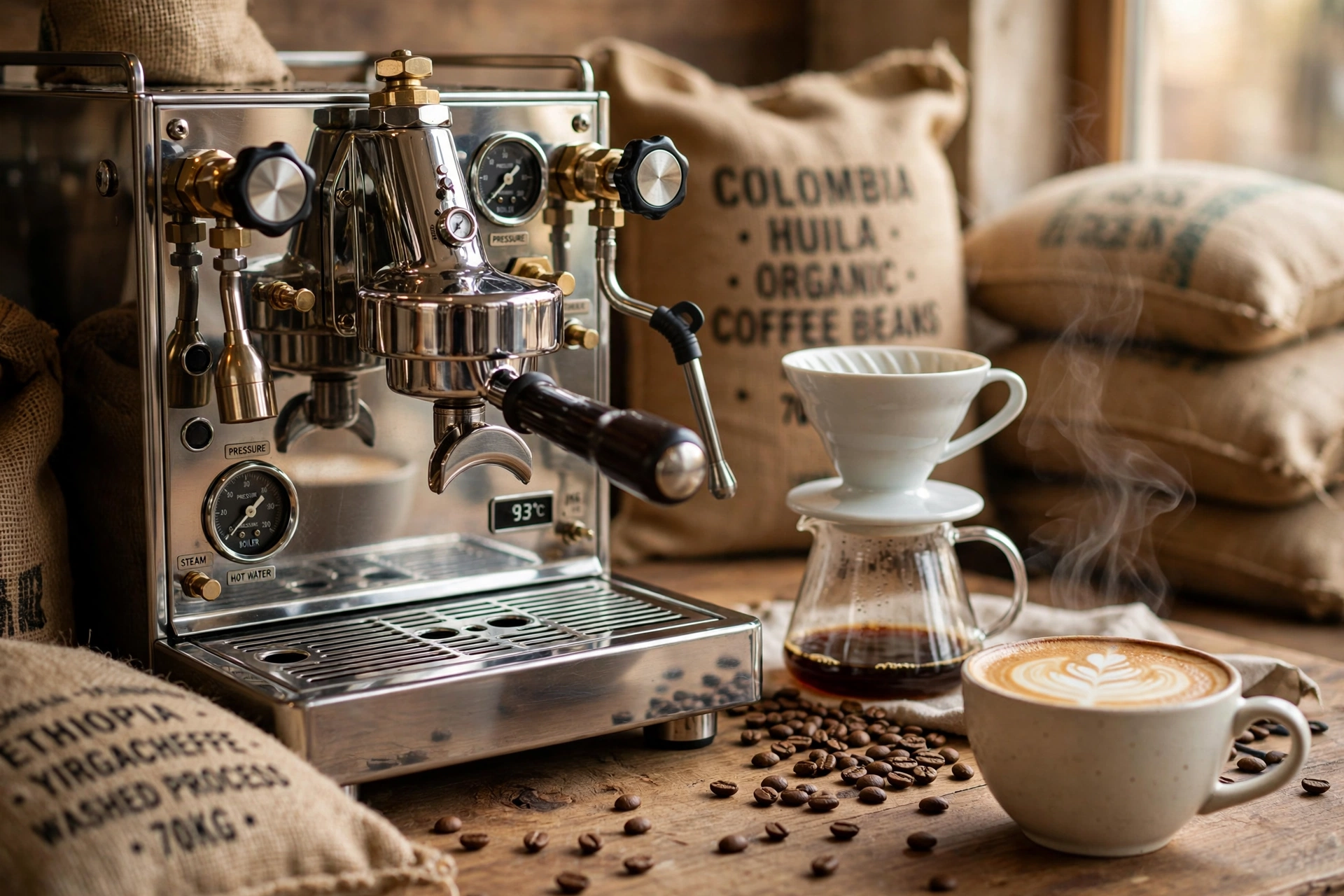
Specialty coffee equipment refers to the machines and tools designed to brew, grind, and serve coffee that meets the Specialty Coffee Association's (SCA) scoring standards of 80 points or higher. This includes espresso machines, grinders, brewers, water filtration systems, and temperature control gear.
But it's more than just a shiny La Marzocco on the counter. The category encompasses everything from scales and timers to refrigerated milk storage and automated brewers. In my experience working with over 40 coffee startups, the equipment you choose directly impacts profit margins, staff training time, and customer satisfaction. The SCA's 2023 Coffee Market Report notes that 67% of specialty coffee shops consider equipment reliability their top operational challenge. That's why I recommend prioritizing machines built for commercial use — residential or prosumer models simply won't survive a 200-cup-per-day workflow. For a deeper look at machine types, see our guide on bean-to-cup office espresso machines.
Why It Matters
Your choice of specialty coffee equipment isn't just a capital expense; it's an ongoing variable in operational efficiency. According to the National Coffee Association's 2025 survey, 42% of consumers say they would stop visiting a coffee shop after two consecutive bad drinks. Consistency is non-negotiable.
Consider this: a high-volume espresso machine costing $15,000 might last 10–15 years with proper maintenance. A $5,000 prosumer machine could require replacement in three years. Over a decade, the cheaper option often costs more in downtime and repairs. A Cornell University Center for Hospitality Research study found labor costs represent 30–40% of a coffee shop's revenue, and poor equipment slows baristas, increasing labor per drink. Efficient workflow can cut labor cost per cup by 15–20%.
The takeaway: investing in quality specialty coffee equipment reduces risk, stabilizes quality, and improves your bottom line. The IBISWorld Coffee Shop Industry Report (2025) shows that equipment failures account for approximately 12% of unscheduled closures, underscoring the importance of reliability.
Practical Application: Step-by-Step Guide to Outfitting Your Shop
Let's break down the process into actionable steps.
Step 1: Define Your Volume and Menu
Are you a high-volume takeaway shop or a slow-paced sit-down café? Your drink mix matters. If 70% of orders are espresso-based, invest heavily in a two- or three-group espresso machine. If pour-over is your focus, you can spend less on espresso and more on batch brewers. Document your expected daily cup count — this will drive every equipment choice. A typical specialty shop doing 150-300 cups per day needs a two-group semi-automatic machine and a 2-3 kg hopper grinder.
Step 2: Choose Your Espresso Machine and Grinder
The heart of any coffee shop. For specialty coffee equipment, look for machines with:
- PID temperature control for stable brewing.
- E61 brew group or newer saturated group designs.
- Multi-boiler systems if you need simultaneous steam and brew.
Grinder is equally critical. I've seen shops spend $20,000 on an espresso machine and pair it with a $500 grinder — that's a disaster. Grinders are the unsung heroes; they need to be stepped, powerful, and capable of repeatable dose adjustments. In my experience, a Mazzer Kony or Mahlkonig E65S GbW are workhorses that pay for themselves.
💡
Key Takeaway
Spend at least 30% of your espresso machine budget on the grinder. A $10,000 machine with a $3,000 grinder outperforms a $13,000 machine with a $500 grinder every time.
For a breakdown of grinding options, see our how to buy barista equipment wholesale guide.
Step 3: Plan Your Workflow
Consider the barista's flow path. Water source, drip tray drainage, and power outlets must align. The SCA's "Coffee Shop Design Guidelines" recommend a minimum of 8 feet of linear counter space for a two-group machine setup. Don't forget space for syrup pumps, cups, and a refrigerator. Map out the sequence: espresso station, milk station, brewing station, and pickup. A well-designed layout can shave 5–10 seconds per drink — that adds up during rush hour.
Step 4: Water Filtration
Poor water quality is the number one cause of espresso machine breakdowns. Install a multi-stage filtration system with reverse osmosis if possible. The SCA's water standard (75–200 ppm TDS) is your benchmark. A proper filter system can cost $800–$1,500 but prevents scale buildup that leads to $2,000 repairs. I recommend testing your water first — municipalities vary, and a simple test kit (about $50) can save headaches. For more on maintenance, see our guide on reliable coffee machines for foodservice.
Step 5: Choose Your Brewing Equipment
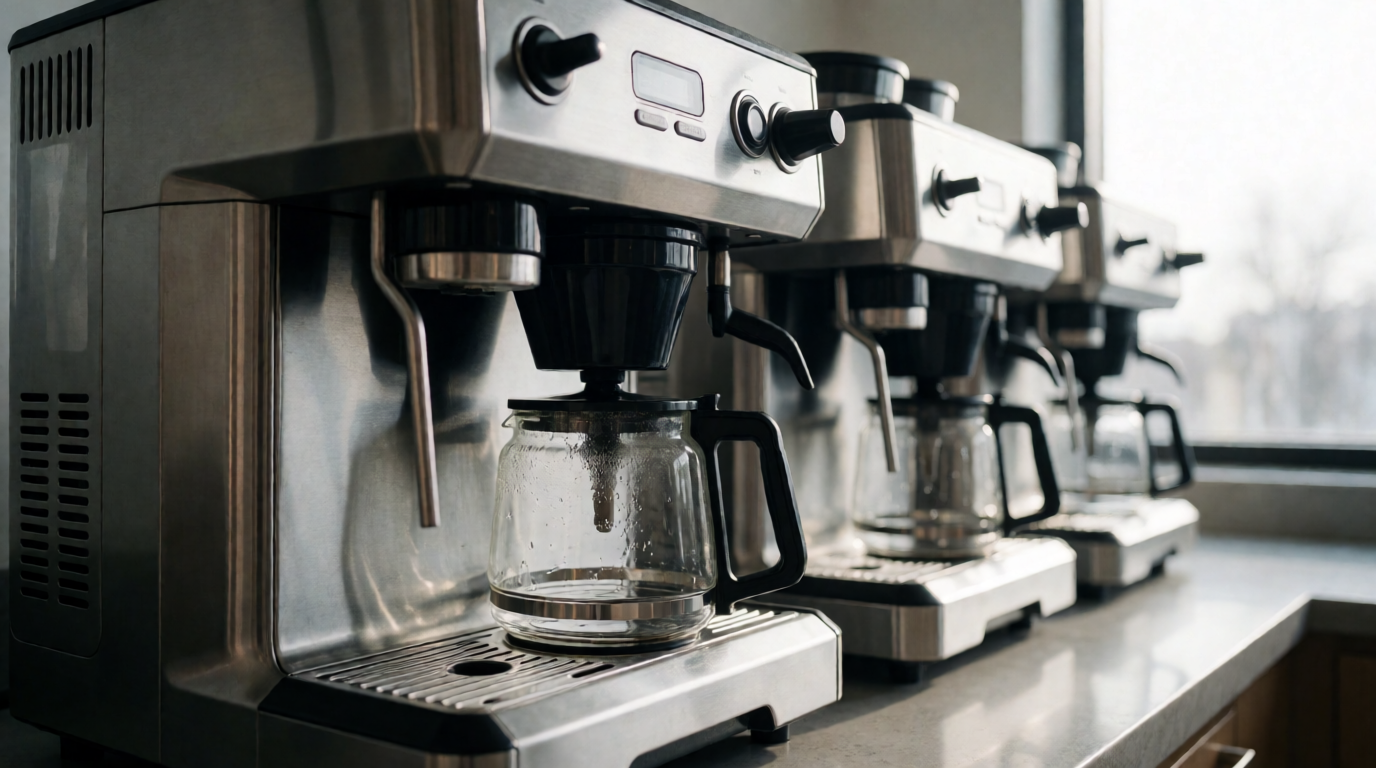
For drip coffee, look for commercial batch brewers from Fetco or Curtis. For manual brew, invest in gooseneck kettles, scales, and pour-over stands. Don't forget a quality espresso knock box and tamping station. For cold brew, consider a dedicated system like Toddy. Each piece should match your volume: a high-volume shop needs a dual-batch brewer or multiple airpots. A specialty pour-over shop may only need a single batch brewer for iced coffee.
Step 6: Consider Managed Coffee Solutions
If the upfront capital is daunting, explore managed programs like those from Busy Bean Coffee. With their all-inclusive subscription, you get specialty coffee equipment like SENSA machines, installation, maintenance, and coffee supply for one monthly fee — no capital expense. This model is gaining traction; IBISWorld reports that managed equipment services grew 8.2% annually from 2020 to 2025. It's a practical way to get top-tier gear without the $50,000 price tag. For more on managed options, see our benefits of all-inclusive coffee programs and managed coffee service cost per cup.
Step 7: Installation and Training
Once you order equipment, schedule professional installation. Improper setup can void warranties and cause safety hazards. Train staff on the specific machines. A study by Barista Guild found that baristas need 40 hours of practice on new equipment to reach consistency — factor that into your launch timeline. Create a standard operating procedure (SOP) for each drink and have your team calibrate every morning using the same grind, dose, and yield.
Comparison: Buying vs. Leasing vs. Managed Service
| Option | Pros | Cons | Best For |
|---|---|---|---|
| Outright Purchase | Ownership, no monthly payments, potential tax depreciation | High upfront cost ($20k–$50k+), separate maintenance costs | Established shops with capital and long-term plans |
| Equipment Lease | Lower upfront, fixed monthly payment, sometimes includes maintenance | Total cost higher over time, liability for damage, limited customization | Startups wanting to preserve cash flow |
| Managed Service (Busy Bean Coffee) | No capital investment, full maintenance and coffee supply in one fee, predictable costs | Less equipment choice, long-term contract | Owners wanting to focus on operations without worrying about equipment maintenance |
Each path has trade-offs. For a deeper dive, read our lease vs. buy office espresso machines guide.
Common Questions & Misconceptions
Myth 1: You need the most expensive machine to serve great coffee.
Reality: A well-maintained used machine from a reputable brand (e.g., Nuova Simonelli) can produce excellent espresso. What matters more is grinder quality, water, and barista skill. I've visited shops running $8,000 machines that outperform $25,000 setups because the grinder and barista were dialed in.
Myth 2: All espresso machines are the same.
False. There's a huge gap between consumer and commercial builds. Commercial machines feature heat exchangers or dual boilers, larger group heads, and robust plumbing. They're designed for continuous use — prosumer machines overheat after a few back-to-back shots.
Myth 3: You can skip water filtration if you have good tap water.
Not true. Even "good" tap water can cause scale over time. I saw a shop in Portland with famously great water still develop scale after 18 months because they skipped filtration. The mineral content isn't just about taste; it's about equipment longevity.
Myth 4: Leasing is always cheaper than buying.
Depends on time horizon. Over 5 years, leasing often costs 20–30% more due to interest and fees. But for cash flow preservation, leasing can be a strategic choice — especially if you plan to upgrade equipment frequently.
Frequently Asked Questions
1. How much does it cost to fully equip a coffee shop with specialty coffee equipment?
A full set of commercial-grade specialty coffee equipment typically costs between $20,000 and $60,000 for a new shop. This includes a two-group espresso machine ($8k–$20k), a commercial grinder ($2k–$5k), batch brewers ($1k–$3k), water filtration ($500–$2k), refrigeration ($1k–$3k), and smaller items like tampers, pitchers, and scales ($1k–$2k). For a low-volume café, you might spend $15k; for a high-volume flagship, $80k is possible. Managed services like Busy Bean Coffee's all-inclusive program can reduce upfront costs to zero, with monthly fees around $500–$1,500 depending on volume and equipment.
2. What are the most important features to look for in an espresso machine for a coffee shop?
Prioritize thermal stability (PID or group head temperature adjustment), durability (stainless steel frame, commercial-grade components), serviceability (easy access to parts), and a solid warranty. Dual boiler or heat exchanger systems allow simultaneous brewing and steaming. For high volume, look for volumetric dosing and programmable pre-infusion. The group head design also matters: E61 is common but newer saturated groups offer better temperature stability. If you plan to serve milk-heavy drinks, a dedicated steam boiler with sufficient power is essential.
3. Should I buy new or used equipment?
Used equipment can save you 30–50% but carries risk. Buy only from a reputable dealer who refurbishes machines and provides a warranty. Check for signs of scale, worn gaskets, and pump pressure. New equipment comes with a manufacturer's warranty, support, and the latest technology (e.g., energy efficiency features). For critical items like espresso machines and grinders, many owners prefer new for peace of mind. For less-critical items like drip brewers or blenders, used is often fine if inspected.
4. How long does specialty coffee equipment typically last?
Commercial espresso machines can last 10–15 years with annual maintenance including descaling, gasket replacements, and pump overhauls. Grinders may last 5–10 years depending on burr replacement (annually for heavy use). Batch brewers last 7–10 years. Water filters should be replaced every 6 months. Refrigerators last 5–10 years. The key to longevity is preventive maintenance — a service contract can double equipment lifespan. I've seen 20-year-old Faema machines still running strong because of proper care.
5. Can I start a coffee shop with a managed coffee service program?
Absolutely. Programs like Busy Bean Coffee's all-inclusive managed coffee service provide everything from the machine to beans to maintenance for one monthly fee, eliminating the need for large capital investment. It's an excellent option for pop-ups, hotels, offices, or restaurants adding coffee service. For dedicated coffee shops, managed programs work if your volume is moderate and you're comfortable using the provider's equipment brands. Some programs offer tiered machines based on volume. See our coffee service in New York NY guide for a city-specific example, or explore our office coffee solutions for workplace setups.
Summary + Next Steps
Outfitting a coffee shop with specialty coffee equipment is a significant but manageable process if you follow a methodical approach: define your needs, prioritize grinder and water quality, choose between buy/lease/managed, and invest in training. The industry rewards consistency, and consistent equipment is the foundation.
Ready to get started without the upfront cost? Explore Busy Bean Coffee's managed programs and see how our SENSA equipment and all-inclusive service can launch your shop faster. For more insights, read our guide on emerging trends in wholesale barista equipment for 2026 and our step-by-step guide to buying barista equipment wholesale.
About the Author
Travis Estes is the Founder of Busy Bean Coffee and has spent over a decade helping businesses from hotels to independent cafés select and manage their coffee equipment. He regularly contributes to industry publications on operational efficiency in specialty coffee.