

📖This article is part of the complete guide to Bean to Cup Coffee Machines.
I remember a client in Mount Pleasant, SC, who spent three years rotating through the cheapest pod machines they could find on Amazon. Every Monday morning, I'd walk into their office and see a mountain of plastic waste and a breakroom that smelled like burnt rubber. They thought they were saving money, but they were actually paying a premium for mediocre caffeine. When we finally swapped them to a professional bean to cup system, the shift in employee morale was almost instant. People stopped leaving the building for ten minutes to hit the local cafe and started collaborating in the breakroom. For a comprehensive overview of the technology, explore our guide on bean to cup coffee machines.
What Defines the Best Bean to Cup Coffee Machines for Offices?
📚
Definition
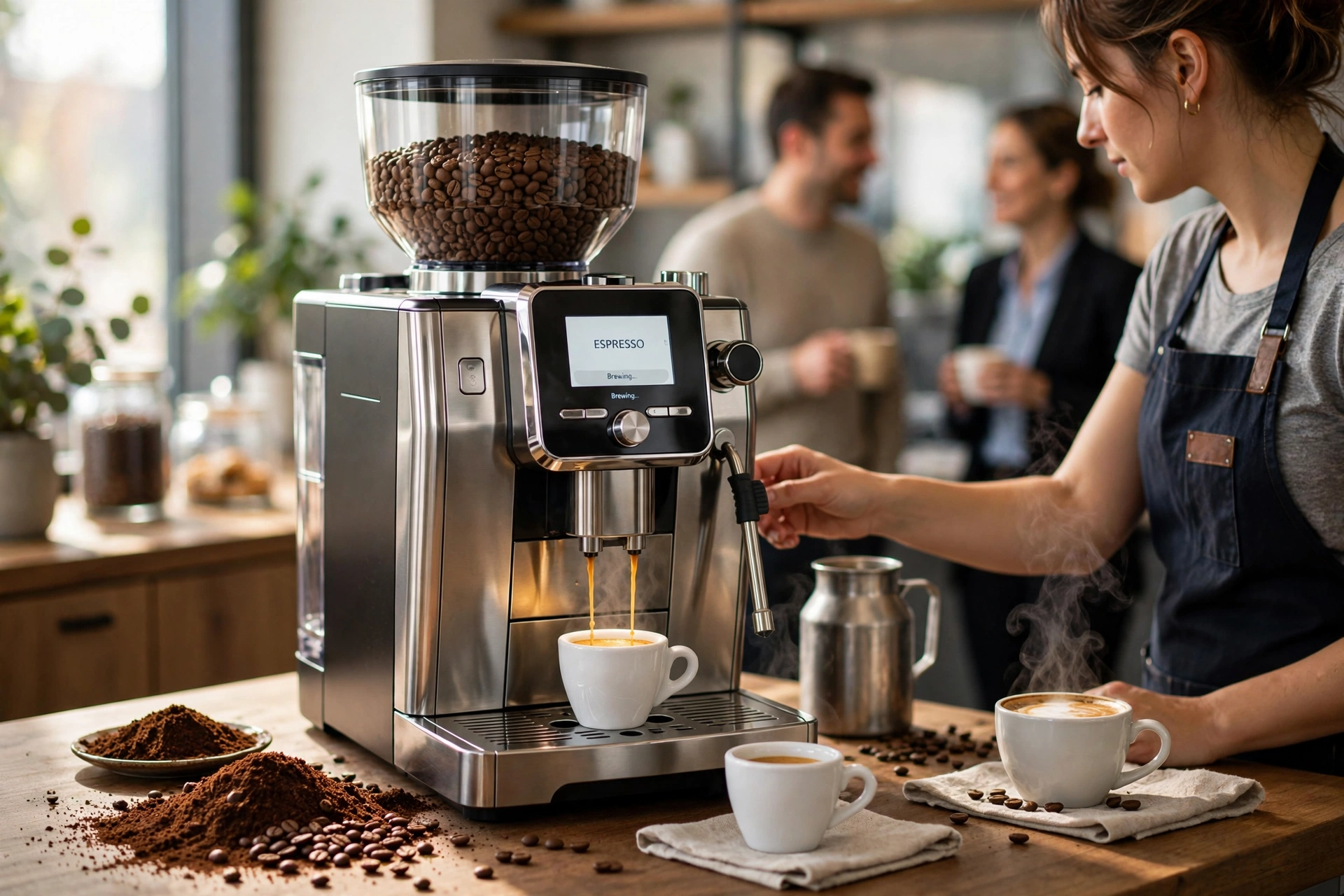
A bean to cup coffee machine is an automated system that grinds whole coffee beans, tamps the grounds, and extracts the espresso in a single, integrated process, delivering a fresh beverage with a single touch.
Finding the best bean to cup coffee machines for offices isn't about finding the most expensive gadget; it is about matching the machine's output capacity and durability to your specific headcount. In a commercial setting, a 'best' machine is one that can handle 50 to 100 cups a day without requiring a technician every two weeks. Most consumer-grade machines fail here because their pumps and grinders aren't designed for the continuous heat cycles required in a busy office.
Professional systems focus on three core pillars: consistency, speed, and ease of maintenance. To achieve the quality of a specialty coffee shop, the machine must maintain precise temperature stability and grind uniformity. If the grind is too coarse, the coffee is watery; too fine, and it becomes bitter. The best office machines use high-grade ceramic or steel conical burrs that maintain their edge despite grinding kilograms of Coffea arabica every month.
In my experience working with foodservice businesses, I've seen that the 'best' machine is often the one that disappears into the background. You don't want your employees to become amateur baristas; you want them to have a high-quality espresso or latte without a learning curve. This is why intuitive touch-screens and programmable drink profiles are essential features for any serious office deployment.

Why Choosing the Right Machine Matters for Your Business
Selecting the wrong equipment leads to more than just bad coffee; it creates a hidden operational drain. When a machine breaks down, you aren't just losing a beverage; you're losing productivity and potentially wasting expensive specialty coffee beans through poor extraction. According to the Specialty Coffee Association (SCA), the quality of the final brew depends heavily on the precision of the equipment and the freshness of the bean. If your machine cannot maintain the correct pressure and temperature, even the most expensive organic beans will taste flat.
From a financial perspective, the shift to bean to cup is a move toward sustainability and cost-efficiency. Pod-based systems have a high cost-per-cup and a devastating environmental impact. By moving to a whole-bean system, you reduce the cost of raw materials while significantly increasing the perceived value of the office perk. A high-quality coffee service is one of the most cost-effective ways to improve employee satisfaction and retention in 2026.
Furthermore, sanitation is a non-negotiable factor. In a shared office environment, the risk of mold and bacteria buildup in the brew group is real. The best machines for offices are those that meet rigorous safety standards. For instance, NSF International provides certifications (such as NSF/ANSI 4) that ensure equipment is designed to be easily cleaned and prevent foodborne illness. A machine that is difficult to sanitize is a liability, not an asset.
💡
Key Takeaway
The right coffee machine transforms a breakroom from a utility space into a hub for organic collaboration and employee wellness.
How to Implement a High-Volume Coffee Service in Your Office
Implementing a professional coffee setup requires a strategic approach to placement and procurement. You cannot simply plug a commercial machine into a standard wall outlet and hope for the best. You need to consider the water source and the waste management flow.
Step 1: Analyze Your Peak Demand
Determine your 'rush hour.' Most offices experience a peak between 8:30 AM and 10:00 AM. If you have 50 employees and 80% of them want a coffee in that window, you need a machine with a high-capacity boiler and a fast recovery time. A machine that takes two minutes to reheat between cups will create a bottleneck that frustrates your team.
Step 2: Prioritize Water Quality
Water is 98% of your coffee. Using unfiltered tap water is the fastest way to kill a bean to cup machine. Mineral buildup (limescale) destroys heating elements and clogs valves. I always recommend a professional filtration system or a direct-plumbed connection with a built-in softener. This doesn't just protect the machine; it ensures the taste of the coffee remains consistent.
Step 3: Select the Bean Profile
Not all beans work in all machines. For an office setting, I recommend a medium-dark roast Arabica. It provides the body and richness needed to cut through milk in lattes and cappuccinos while remaining palatable as a black coffee. Avoid extremely oily beans (very dark roasts), as the oils can gum up the internal grinders of some automated machines.
Step 4: Establish a Maintenance Schedule
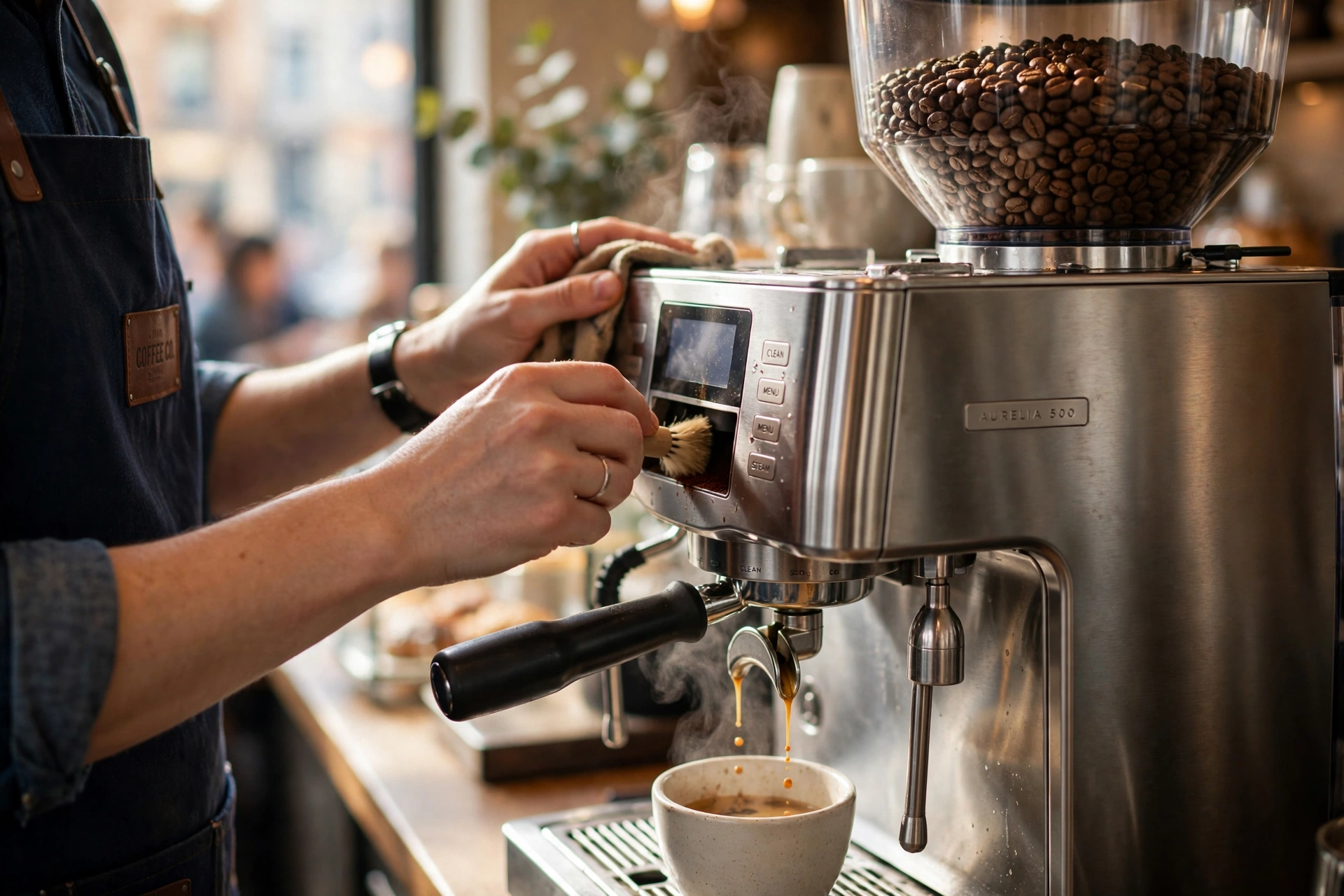
Even the best machines fail if they aren't cleaned. You need a daily checklist: emptying the dreg drawer, rinsing the milk system, and wiping the exterior. For a deeper dive into this process, refer to our Bean to Cup Coffee Machine Maintenance Guide.
Step 5: Evaluate the Service Model
Decide if you want to own the asset or use a managed service. Purchasing a machine gives you ownership but leaves you responsible for every leak and broken part. A managed membership, like what we provide at Busy Bean Coffee, removes the capital expenditure and replaces it with a predictable monthly fee that includes maintenance and premium beans.

Comparing Your Coffee Options: The 2026 Landscape
Many business owners struggle to decide between the convenience of pods, the perceived 'savings' of cheap AI-driven home machines, and a professional managed service. The table below breaks down the real-world experience of each.
| Feature | Traditional Pod Machines | Generic/Home AI Machines | Professional Managed Service (Busy Bean) |
|---|---|---|---|
| Taste Quality | Mediocre / Consistent | Variable / Often Bitter | Premium Specialty Coffee |
| Cost Per Cup | Very High (Pod cost) | Low (Bean cost) | Optimized & Predictable |
| Waste | High (Plastic/Aluminum) | Low (Compostable) | Minimal / Sustainable |
| Reliability | Moderate | Low (Not for high volume) | High (Full maintenance coverage) |
| Effort | Low | High (Manual cleaning) | Zero (Managed solutions) |
When we built our managed service at Busy Bean Coffee, we discovered that the biggest pain point for office managers wasn't the coffee itself, but the 'down-time.' There is nothing more frustrating than a 'Machine Out of Order' sign on a Monday morning. By moving to a professional service, you shift the risk of equipment failure from your balance sheet to our experts.
Common Mistakes When Selecting Office Coffee Machines
One of the most frequent errors I see is the 'Home-to-Office' trap. A business owner buys a high-end consumer machine because it looks sleek in a kitchen, but after three months of use by twenty people, the internal gaskets fail. Consumer machines are designed for 2-4 cups a day; office machines are designed for 50+. If you buy a home machine for an office, you aren't investing; you're gambling on how long it takes to break.
Another mistake is ignoring the 'Milk Logistics.' If you choose a machine with a manual steam wand, you are requiring your employees to act as baristas. While this is great for a boutique agency, in a corporate environment, it leads to wasted milk and messy countertops. The best bean to cup coffee machines for offices utilize automated milk frothing systems that dispense the exact amount of foam and then trigger a self-cleaning cycle to prevent bacteria growth.
Lastly, don't forget to consider the 'Total Cost of Ownership' (TCO). A cheap machine often has expensive proprietary filters or requires specialized cleaning tablets that cost a fortune. When calculating your budget, look beyond the sticker price. Consider the cost of beans, electricity, water filtration, and the cost of labor for cleaning. This is why many companies are now opting for a rental or membership model over a direct purchase, as detailed in our Bean to Cup Machine Cost: Purchase vs. Rental analysis.
Frequently Asked Questions
How many cups per day can a professional bean to cup machine handle?
Professional-grade machines are designed to handle anywhere from 30 to 200 cups per day depending on the model. The key is the boiler capacity and the grinder's duty cycle. Consumer machines typically overheat after 5-10 consecutive drinks, whereas commercial units maintain temperature stability. If your office has more than 20 people, you should specifically seek out equipment rated for 'commercial' or 'office' use to avoid frequent breakdowns and inconsistent brew quality.
Do bean to cup machines require a lot of maintenance?
Yes, they require more attention than a pod machine but less than a manual espresso setup. Basic daily tasks include emptying the waste grounds and cleaning the milk system. Weekly tasks involve deeper cleaning of the brew group and descaling if necessary. However, if you use a managed service like Busy Bean Coffee, the technical maintenance and deep cleaning are handled by professionals, meaning your team only needs to worry about adding beans and water.
What is the difference between Arabica and Robusta for office coffee?
Arabica beans, specifically Coffea arabica, are generally preferred for office environments because they have a smoother, more complex flavor profile with higher acidity and sweetness. Robusta is cheaper and contains more caffeine, but it often tastes woody or burnt. Since most employees prefer a 'cafe-style' experience, using high-quality Arabica beans ensures a premium taste that boosts morale. We always recommend a specialty coffee blend to ensure the best experience.
Is it better to have a plumbed-in machine or a water tank?
For any office with more than 10 employees, a plumbed-in machine is vastly superior. Manually filling a water tank multiple times a day is a chore that often gets neglected, leading to the machine running dry and potentially damaging the pump. Plumbed-in systems allow for continuous operation and, more importantly, allow you to integrate professional water filtration systems that remove impurities and prevent limescale buildup.
How do I know if a machine is 'commercial grade'?
Look for certifications from bodies like the FDA or NSF. Commercial machines will have stainless steel internals, larger boilers, and higher-wattage heating elements. They also typically offer a 'warranty for commercial use,' whereas home machines explicitly void their warranty if used in a business setting. If the manufacturer's guide mentions 'high-volume' or 'office' specifically, it is likely a true commercial unit.
Conclusion
Investing in the best bean to cup coffee machines for offices is about more than just providing a beverage; it is about creating a culture of quality and wellness in your workplace. When you move away from the waste of pods and the inconsistency of home machines, you provide a value-add that employees genuinely appreciate. From the precision of the grind to the sustainability of the beans, every detail contributes to a better workday.
If you are tired of managing the headache of equipment failure and inconsistent taste, it is time to move to a professional managed solution. At Busy Bean Coffee, we provide the equipment, the maintenance, and the specialty coffee beans for one predictable monthly fee, ensuring your team always has a perfect cup ready. For a deeper look at how these systems work, return to our main guide on bean to cup coffee machines.
Ready to upgrade your office experience? Visit us at www.busybeancoffee.com to find the perfect solution for your team.
Free Coffee Pairing Guide & Specialty Roast Cheat Sheet
Unlock the secrets of perfect brewing ratios, water temperatures, and specialty roast profiles. Download the guide.