Why Professional Espresso Machine Service Is Essential for Business Growth
A single malfunctioning group head or a clogged solenoid valve can cost a high-volume café upwards of $500 per hour in lost revenue during a morning rush. In my experience working with hospitality groups, the difference between a profitable quarter and a stressful one often comes down to the reliability of the equipment. Many owners view maintenance as a cost center, but in reality, it is a risk-mitigation strategy. When we implemented comprehensive service plans for our clients, we discovered that the cost of preventive care is typically 70% lower than the cost of emergency "fire-fighting" repairs that require overnight shipping of parts and expedited technician fees.
According to National Coffee Association USA (NCA), the demand for specialty coffee continues to rise, meaning consumer expectations for quality and consistency are higher than ever. A machine that is slightly out of calibration produces "sour" or "bitter" shots, which directly impacts your customer retention rates.
💡
Key Takeaway
Professional espresso machine service is a strategic investment that prevents catastrophic equipment failure, ensures beverage consistency, and protects the overall ROI of your coffee program.

What Is Professional Espresso Machine Service and How Does It Work?
📚
Definition
Professional espresso machine service is the systematic process of cleaning, calibrating, inspecting, and repairing commercial brewing equipment by certified technicians to ensure it meets manufacturer specifications and safety standards.
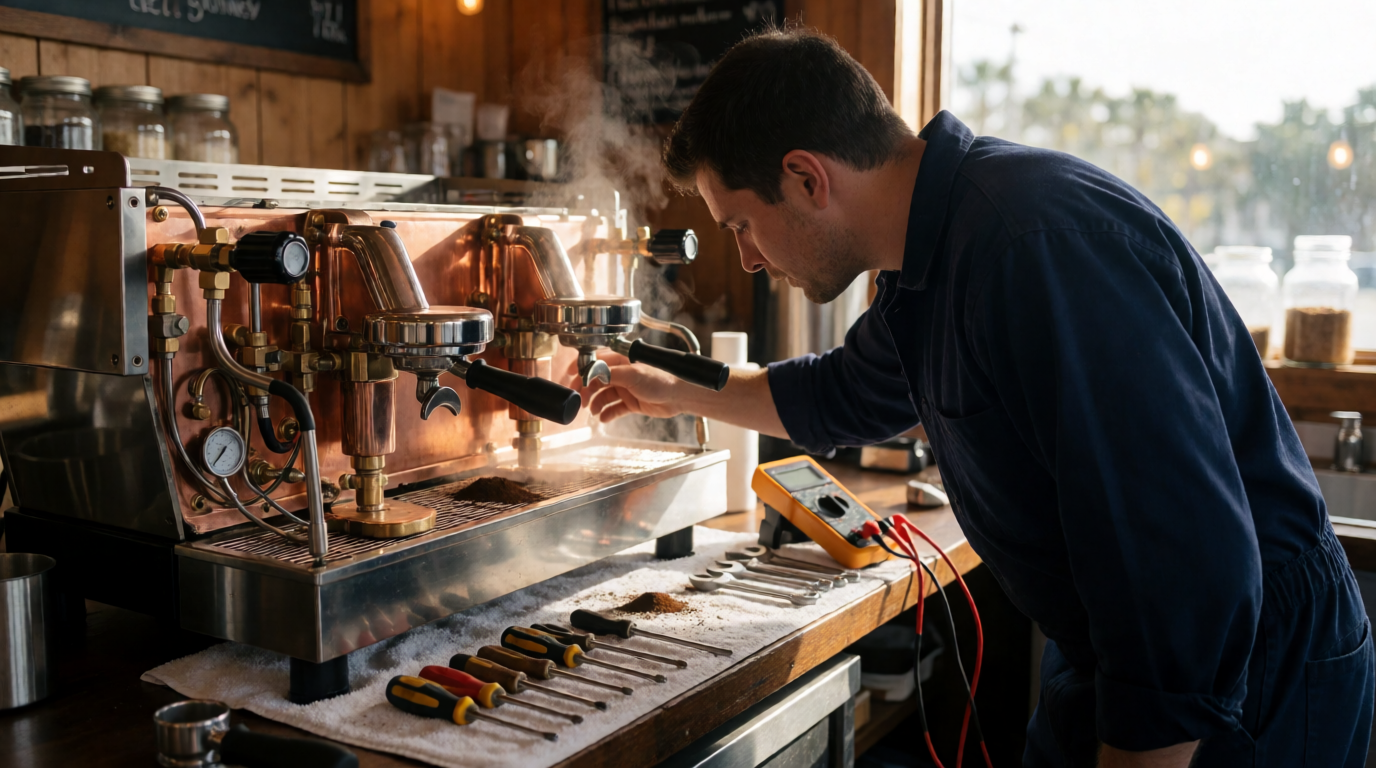
Professional espresso machine service works by addressing the three primary enemies of coffee equipment: mineral scale, organic oils, and mechanical wear. Unlike basic daily cleaning performed by a barista, professional service involves "deep-tissue" maintenance. This includes opening the chassis to inspect boiler gaskets, testing the pump's flow rate, and ensuring the heat exchanger is operating within a precise temperature window.
In the specialty coffee industry, we use the term "calibration" to describe the alignment of the machine's output with the intended extraction profile. A technician doesn't just "fix" a leak; they analyze the water chemistry and the pressure profile to ensure that the Coffea arabica beans are being extracted optimally. This process requires specialized tools, such as digital refractometers and pressure gauges, which are not available in a standard DIY kit.
For businesses in high-growth areas, such as those utilizing a Sensa Coffee Service in Charlotte, NC, this professional oversight is what allows a business to scale from one location to five without a dip in quality. Without this rigorous technical approach, mineral buildup—especially in regions with hard water—will inevitably lead to boiler failure or restricted flow, which can render a $15,000 machine useless in a matter of months.
Why Does Professional Espresso Machine Service Matter for Your Business?
The impact of professional maintenance extends far beyond simply "keeping the lights on." It affects every metric from labor productivity to utility bills.
1. Elimination of Quality Drift
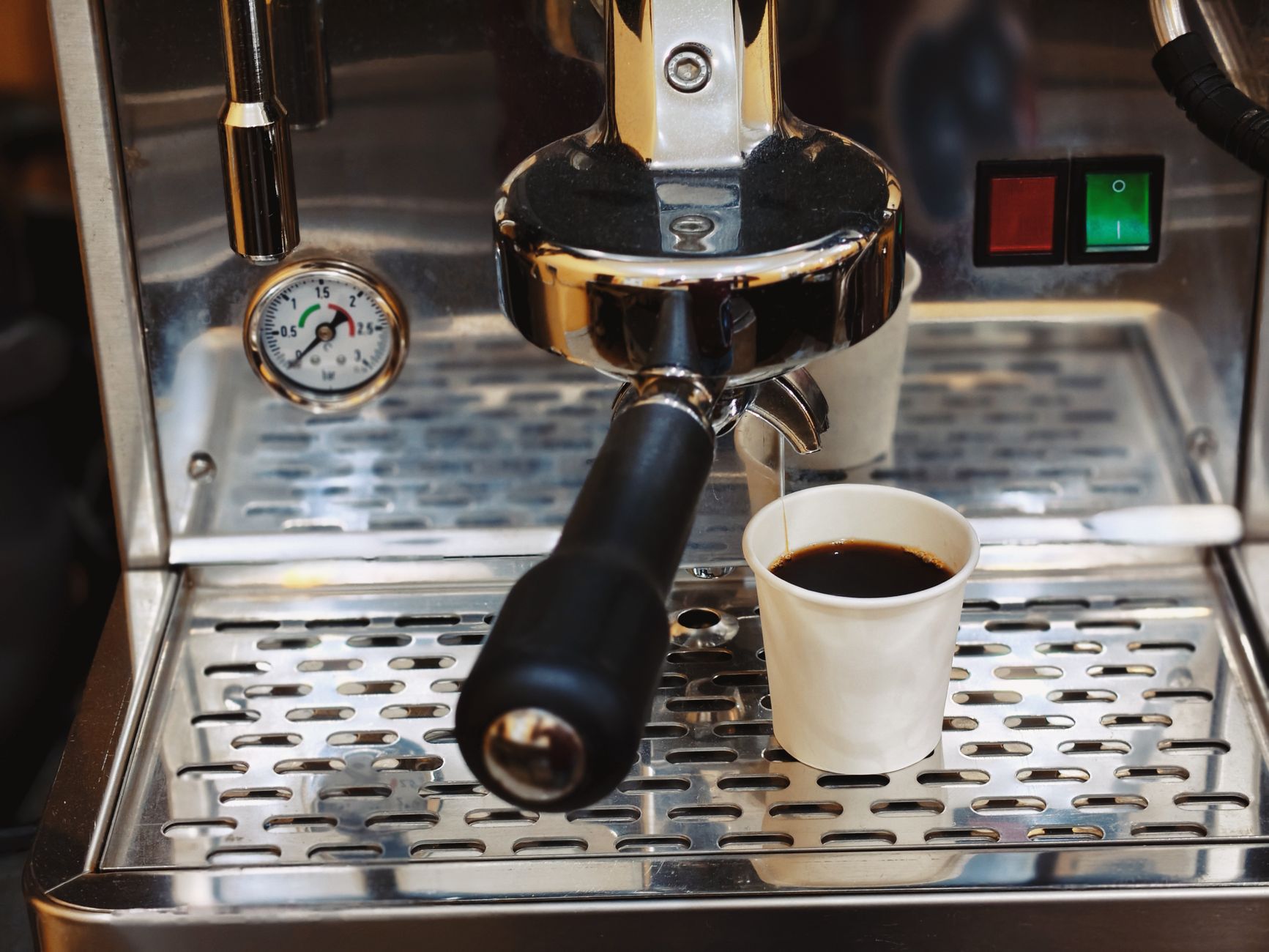
Espresso is a chemistry experiment performed in real-time. A deviation of just 2 degrees Celsius in water temperature or a 0.5 bar drop in pressure can completely change the flavor profile of a shot. Professional service prevents "quality drift," ensuring that the espresso tastes the same on Tuesday morning as it does on Saturday afternoon. When we calibrate machines, we aren't just looking at the machine; we are looking at the synergy between the espresso machine and the coffee roasting profile.
2. Dramatic Reduction in Operational Downtime
Equipment failure is rarely a surprise; it is usually the result of a series of small, ignored warnings. According to reports from NSF International, properly maintained food equipment is significantly less likely to suffer from critical failures that lead to health code violations or total operational shutdowns. For a business running an automatic coffee machine for hotels and hospitality, a breakdown in the lobby can lead to a cascade of negative guest reviews that take years to erase.
3. Extension of Asset Lifecycle
Commercial espresso machines are high-capital assets. A machine that is ignored will likely need a total overhaul every 3 years. Conversely, a machine under a professional service contract can easily last 7 to 10 years. This effectively doubles the lifespan of your investment.
4. Energy and Water Efficiency
Scale buildup inside a boiler acts as an insulator. This means the heating element must work harder and run longer to reach the target temperature. A descaled, professionally tuned machine consumes significantly less electricity. According to industry benchmarks, a scaled boiler can increase energy consumption by up to 15% to 25%.
5. Adherence to Safety and Sanitary Standards
The U.S. Food and Drug Administration (FDA) emphasizes the importance of equipment sanitation to prevent biofilm buildup. Professional technicians don't just clean the surfaces; they sanitize the internal lines and check that safety valves are functioning correctly to prevent dangerous pressure explosions.
How Do You Implement Professional Espresso Machine Service Step by Step?
Implementing a professional service regimen requires moving from a "reactive" mindset (fixing things when they break) to a "proactive" mindset (preventing things from breaking).
Step 1: Establish a Baseline Audit
Begin with a full system audit. A professional technician should assess the current state of your gaskets, screens, and boiler health. This audit creates a roadmap for the next 12 months of service. For those operating a Sensa Coffee Service in Raleigh NC, this baseline is essential for budgeting annual maintenance costs.
Step 2: Create a Tiered Maintenance Schedule
Not all tasks happen at the same frequency. I recommend a three-tier approach:
- Daily/Weekly (Staff): Backflushing and surface cleaning.
- Quarterly (Professional): Gasket replacement, calibration, and deep descaling.
- Annually (Professional): Full boiler inspection, electrical safety check, and pump overhaul.
Step 3: Optimize Water Filtration
The quality of your water is the single most important factor in how often you need service. If you are using a foodservice coffee program in Rock Hill SC, you must match your filtration system to the local water hardness. Professional service includes replacing filters and testing the TDS (Total Dissolved Solids) to prevent scale before it starts.
Step 4: Staff Training on "First-Line" Care
Your baristas are the first line of defense. Train them to recognize "early warning signs," such as a slow-leaking group head or a change in the sound of the pump. When staff know how to maintain the machine daily, the professional technician can spend more time on optimization and less time on basic cleaning.
Step 5: Integrate a Managed Service Provider
The most efficient way to handle this is through an all-inclusive membership. By partnering with Busy Bean Coffee, you eliminate the need to call for repairs; we monitor your equipment and arrive before the failure happens. This is the same model we use for our Sensa Coffee Service in Mount Pleasant SC, ensuring the business never loses a single shot of espresso.
💡
Key Takeaway
A structured maintenance plan—combining daily staff care, quarterly professional tuning, and a high-quality filtration system—is the only way to guarantee 99% equipment uptime.

Professional Service vs. DIY Maintenance: Which is Better?
Many business owners are tempted to save money by performing "DIY" maintenance. However, this often leads to a "false economy" where small savings today lead to massive expenses tomorrow.
| Feature | Traditional DIY Approach | Generic "Cheap" Repair | Busy Bean Professional Service |
|---|---|---|---|
| Technical Depth | Surface cleaning only | Patch-work repairs | Comprehensive system optimization |
| Risk Level | High (Voided warranties) | Moderate (Temporary fixes) | Low (Certified expertise) |
| Equipment Life | Shortened (Hidden scale) | Variable | Maximumimized (Preventive care) |
| Consistency | "Guesswork" extraction | Inconsistent profiles | Precision calibration |
| Cost Pattern | Low upfront / Huge spikes | Frequent small payments | Predictable monthly fee |
As seen in the table, the "Generic" approach often involves technicians who can fix a leak but cannot calibrate a machine for specialty coffee standards. Only a professional Q-Grader or certified technician understands how mechanical settings affect the flavor of the Arabica coffee bean.
Real-World Examples: The Impact of Professional Care
Case Study 1: High-Volume Café in Mount Pleasant, SC
A client operating a busy waterfront café was experiencing weekly downtime due to pump failures. They were using a local "handyman" for repairs. After switching to Busy Bean Coffee’s managed service, we discovered their water filtration was incorrectly configured for the local mineral content. We installed a customized filtration system and implemented a quarterly calibration cycle. The result: Zero unplanned downtime in 2026 and a 12% increase in beverage throughput.
Case Study 2: Boutique Hotel in Atlanta, GA
A luxury hotel utilizing Sensa Coffee Service in Atlanta GA noticed their coffee quality was fluctuating between different shifts. A professional audit revealed that the temperature stability of their machines had drifted by 4 degrees. After a full professional recalibration and staff training, their guest satisfaction scores regarding "morning coffee" rose by 20%, directly impacting their overall hotel rating.
Case Study 3: Medical Clinic in a High-Traffic Urban Area
A large medical facility using automated coffee machines for clinics suffered from frequent clogging. By moving to a professional service plan, they reduced their machine-related complaints by 80%. The professional service shifted the focus from "fixing a clog" to "preventing the clog" through better water treatment and scheduled descaling.
Common Mistakes in Espresso Machine Maintenance
In my years of roasting and grading, I have seen the same five mistakes repeated across thousands of businesses.
- The "It Still Works" Fallacy: Many owners wait for a total failure before calling a technician. By the time a machine stops working, the cost of repair is often 5x higher than a preventive service visit would have been.
- Ignoring the Water Filter: Replacing the espresso machine's gaskets while ignoring the water filter is like changing the oil in a car but never replacing the air filter. If the water is hard, the new parts will fail just as quickly as the old ones.
- Using "Generic" Descaling Agents: Cheap, caustic descalers can eat through the aluminum or copper in your boiler. Always use manufacturer-approved chemicals that are safe for the specific metallurgy of your machine.
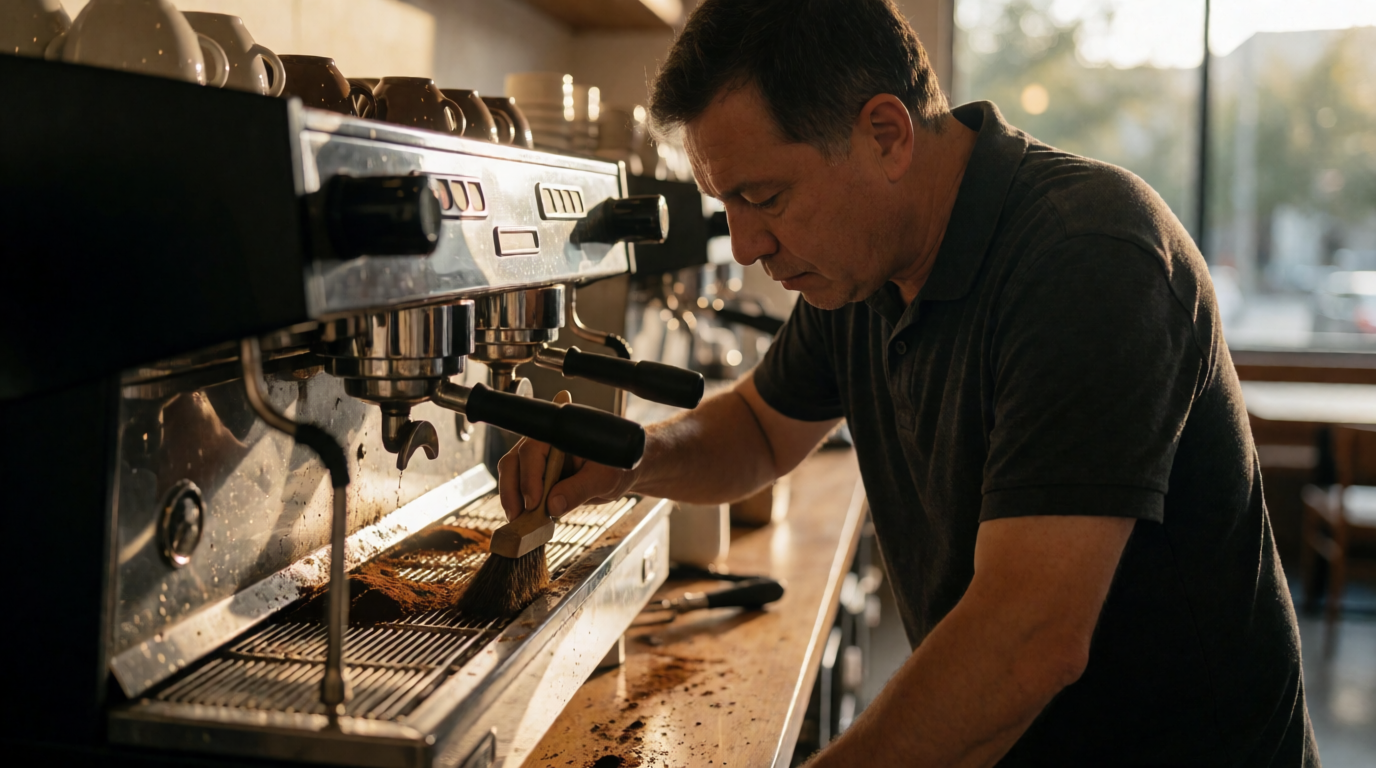
- Over-Cleaning (The "Scrubbing" Mistake): Using abrasive brushes or steel wool on group heads or steam wands can scratch the surfaces, creating microscopic crevices where bacteria and old coffee oils can hide, leading to "off" flavors.
- Neglecting the Grinder: An espresso machine is only as good as the grind. Many forget that professional service must include the grinder—replacing burrs and calibrating the micron size to match the roast.
Frequently Asked Questions
How often should professional espresso machine service be performed?
For most commercial environments, a professional service visit should occur every 3 to 6 months. High-volume locations—such as those in busy city centers—should lean toward the 3-month mark. This frequency allows technicians to replace gaskets and seals before they leak and to ensure the boiler is not accumulating scale. As noted by the Specialty Coffee Association (SCA), precision in temperature and pressure is essential for specialty grade coffee, and this precision can only be maintained through regular professional calibration.
Can I just perform DIY maintenance and skip the professional service?
While daily cleaning (like backflushing and scrubbing) is a DIY task, it is not a substitute for professional service. Many critical components, such as the boiler's internal heating elements, pressure valves, and internal wiring, cannot be accessed without specialized tools. Attempting to perform these repairs yourself can void your warranty and, more importantly, create significant safety risks, including electrical shorts or pressure-related accidents. Professional service ensures the machine meets NSF International safety standards.
What is the difference between a "repair" and "service"?
A repair is reactive; it happens after something has already broken (e.g., replacing a burnt-out heating element). Service is proactive; it is a scheduled set of tasks designed to prevent the breakdown from happening in the first place. For example, a "service" involves checking the integrity of a gasket and replacing it before it leaks, whereas a "repair" involves fixing the water damage caused by a gasket that was allowed to fail. Businesses that prioritize service over repair typically see a 30% reduction in long-term equipment costs.
Why does my machine still taste "bitter" after I've cleaned it?
Bitterness is often a sign of "over-extraction," which can be caused by several technical issues that only a professional service can fix. It could be that your water temperature is too high (thermal drift), your pump pressure is inconsistent, or your grinder burrs are worn down and producing "fines" (dust-like particles) that block the water flow. A professional technician will use a refractometer to measure the Total Dissolved Solids (TDS) and adjust the machine's internal settings to bring the flavor back into balance.
How does professional service impact the cost of my coffee program?
While professional service has an upfront cost, it lowers the "Total Cost of Ownership" (TCO). By extending the life of a machine from 4 years to 8 years, you halve your annual capital expenditure. Furthermore, reducing downtime prevents the loss of high-margin sales during peak hours. For those using a Business Coffee Membership in Boston MA, these costs are bundled into a predictable monthly fee, eliminating the "sticker shock" of emergency repairs and making the coffee program a predictable line item in the budget.
Recommended Readings
To deepen your understanding of these topics, we recommend reading the following articles:
Conclusion
Professional espresso machine service is the invisible backbone of every successful coffee operation. It is the difference between a business that struggles with inconsistent quality and one that is recognized as a destination for specialty coffee. By focusing on preventive care, optimizing water chemistry, and partnering with experts who understand the nuances of Coffea arabica extraction, you protect your investment and your brand reputation.
At Busy Bean Coffee, we believe that no business owner should have to worry about whether their machine will wake up in the morning. Our managed coffee solutions provide the peace of mind that comes with professional, proactive care. Whether you are running a boutique hotel, a medical office, or a high-volume café, the goal remains the same: perfect coffee, every single time.
Ready to stop worrying about equipment failure and start focusing on growth? Explore our managed coffee solutions today and ensure your business is brewing at its peak potential.
Free Coffee Pairing Guide & Specialty Roast Cheat Sheet
Unlock the secrets of perfect brewing ratios, water temperatures, and specialty roast profiles. Download the guide.