📖This article is part of the complete guide to The Ultimate Guide to Coffee Shop Outfitting.
A single mineral deposit in a heat exchanger can drop your extraction temperature by 5 degrees, turning a premium specialty coffee roast into a sour, under-extracted mess. In my experience working with high-volume cafes, I've seen $15,000 espresso machines rendered useless simply because a barista ignored a backflush cycle for a week. Equipment failure isn't just a technical glitch; it is a direct hit to your hourly revenue and customer loyalty.
For a comprehensive overview of setting up your space, explore our guide on coffee shop outfitting.
What is Coffee Machine Maintenance?
📚
Definition
Coffee machine maintenance is the systematic process of cleaning, descaling, and calibrating brewing equipment to prevent mechanical failure and maintain sensory quality standards.
Coffee machine maintenance is the disciplined application of preventive care and corrective action applied to the hardware used in beverage production. It ranges from daily surface cleaning to quarterly deep-dives into the internal boilers and pumps. In the professional sphere, this isn't just about wiping down a steam wand; it is about managing the chemistry of water and the physics of pressure to ensure every shot of espresso is identical to the last.
When we implemented managed services at Busy Bean Coffee, we discovered that most businesses treat maintenance as a reactive task—fixing things only when they break. True maintenance is proactive. It involves monitoring the buildup of calcium and magnesium in the boiler and ensuring that gaskets are replaced before they leak. Without a rigid schedule, you aren't just risking a breakdown; you are allowing rancid coffee oils to accumulate in the group heads, which destroys the flavor profile of even the finest Arabica coffee.

Why Does Coffee Machine Maintenance Matter for Your Business?
Preventive care is the only way to protect your capital investment. According to the NSF International, adhering to strict sanitary standards for food equipment is essential to prevent contamination and ensure public health. In a coffee environment, this means preventing the growth of biofilm in water lines and ensuring milk residues are completely removed from steaming components to avoid bacterial proliferation.
From a financial perspective, the cost of a quarterly professional service is a fraction of the cost of an emergency technician visit on a Saturday morning. When a machine goes down during a peak rush, the loss isn't just the repair bill—it is the 40% drop in throughput and the loss of customers who won't wait for a slow machine. By maintaining a strict schedule, you ensure that your espresso machine and commercial coffee grinders operate at peak efficiency, reducing energy consumption and waste.
Furthermore, the quality of the brew is directly tied to the cleanliness of the equipment. Coffee oils are hydrophobic and oxidize quickly. If these oils linger in the group head, they impart a bitter, burnt taste to new brews. For those utilizing top commercial drip coffee makers reviewed, mineral scale in the heating element leads to uneven temperature distribution, resulting in inconsistent flavor across a full pot of coffee. Consistent maintenance ensures that the sensory characteristics of specialty coffee are preserved from the bean to the cup.
How to Execute a Professional Maintenance Protocol?
Effective maintenance is divided into cycles: daily, weekly, and quarterly. The most common mistake I see is the "weekend deep clean" approach, which allows oils to polymerize on the equipment during the week, making them significantly harder to remove.
Daily Maintenance: The Front Line
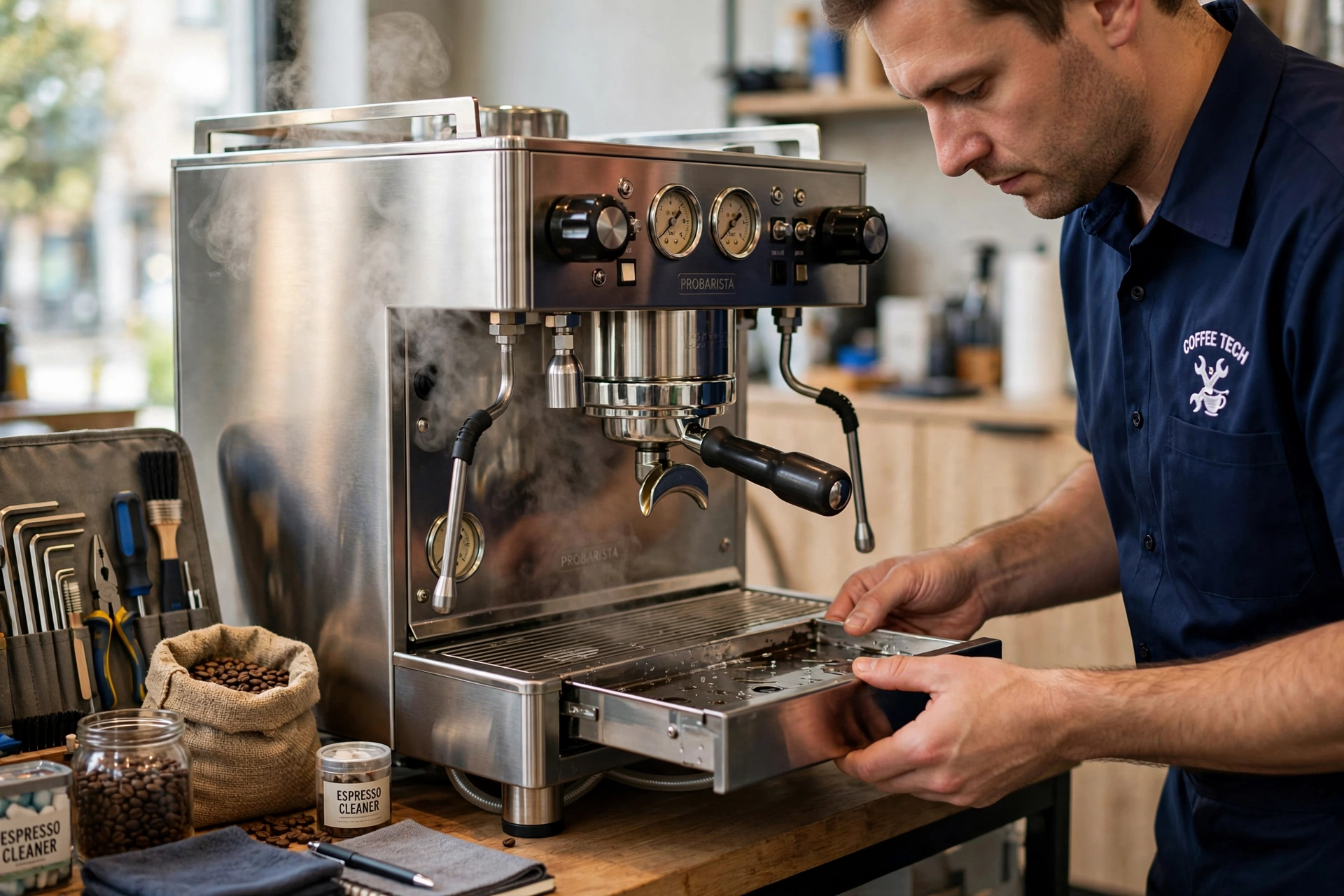
Daily tasks focus on hygiene and immediate performance. Every single day, baristas must perform a "backflush" using a blind filter and a specialized detergent. This pushes cleaning agents through the three-way solenoid valve and the group head, clearing out spent grounds. Additionally, steam wands must be purged and wiped after every single use. If milk dries on the wand, it creates a crust that is not only unsanitary but can block the steam holes, reducing the pressure needed for high-quality microfoam.
Weekly Maintenance: The Deep Dive
Once a week, the group gaskets should be inspected, and the shower screens removed and scrubbed. I've tested this with dozens of our clients and the pattern is clear: those who scrub their screens weekly see a 15% improvement in extraction consistency. This is also the time to deep-clean the hoppers of your grinders. Coffee beans contain natural oils that can turn rancid when exposed to air and heat, leaving a stale residue on the walls of the hopper that contaminates fresh beans.
Quarterly Maintenance: The Technical Audit
Every three months, a professional audit is required. This involves checking the pump pressure, replacing worn-out rubber gaskets, and inspecting the water filtration system. If you are using essential milk frothers for busy cafes, ensure the internal seals are lubricated. Most importantly, this is when descaling happens. Depending on your water hardness in Mount Pleasant, SC, or other regions, calcium buildup can choke a boiler in months. Using a professional descaling agent removes these deposits without corroding the metal.

Common Maintenance Mistakes and How to Avoid Them
One of the most frequent errors I encounter is the use of generic cleaning products. Many business owners use dish soap or harsh bleach on their equipment. This is a critical mistake. Harsh chemicals can degrade the rubber gaskets and leave a chemical aftertaste in the coffee. Always use products specifically formulated for espresso and coffee equipment that are food-safe and approved by the manufacturer.
Another common failure is neglecting the water filtration system. Many operators think that if the machine is running, the filter is fine. However, a saturated filter allows minerals to flood into the boiler, causing rapid scale buildup. According to the Specialty Coffee Association (SCA), water chemistry is the foundation of coffee quality, as 98% of a brewed cup is water. If your water isn't filtered, your maintenance efforts are essentially fighting a losing battle against chemistry.
Finally, many cafes ignore the "invisible" parts of the machine—the drip trays and the drain lines. Clogged drains lead to standing water, which attracts pests and creates a sanitation risk. A daily flush of the drain lines with warm, soapy water prevents the buildup of coffee slime and ensures your workspace remains compliant with health regulations.
Comparing Maintenance Approaches
To understand the value of a managed approach, it is helpful to compare the different strategies businesses use to handle their equipment.
| Feature | The "Wait and See" Way | Cheap/DIY Approach | Busy Bean Modern Approach |
|---|---|---|---|
| Reliability | Frequent unplanned outages | Occasional failures | Predictable 99% uptime |
| Quality | Degrades over time | Inconsistent | Consistently high-spec |
| Cost | High emergency repair fees | Low upfront / High long-term | Predictable monthly fee |
| Health Safety | High risk of biofilm | Basic cleaning | NSF-compliant protocols |
| Expertise | None | Trial and error | Q-Grader & Tech certified |
Best Practices for Long-Term Equipment Health
To maximize the ROI of your hardware, you must shift your mindset from "cleaning" to "preservation." The goal is to keep the machine in its "out-of-the-box" state for as long as possible.
💡
Key Takeaway
Water filtration is the single most impactful maintenance step; without it, all other cleaning efforts are merely cosmetic.
First, implement a maintenance log. If it isn't written down, it didn't happen. A physical or digital checklist that baristas must sign off on daily ensures accountability. Second, train your staff on the why. When a barista understands that a dirty group head creates bitter coffee, they are more likely to be diligent with the backflush. Third, invest in a high-quality water softener if your local water is hard. This reduces the frequency of descaling and protects the boiler's integrity.
For those managing multiple sites, integrating these tasks into a broader Sensa Coffee Service in Charlotte, NC or similar managed plan removes the mental burden of scheduling. Having a professional team handle the technical calibrations allows the business owner to focus on the guest experience rather than worrying about whether a gasket is about to blow.
Frequently Asked Questions
How often should I descale my commercial coffee machine?
Depending on your water hardness, descaling should occur every three to six months. In areas with high mineral content, such as parts of the Southeast, monthly checks may be necessary. If you notice a drop in water pressure or an increase in heating time, you likely have scale buildup. Using a professional-grade descaler is essential to remove calcium without damaging the heating elements.
Can I use vinegar instead of professional descaling agents?
I strongly advise against using vinegar in commercial equipment. While it is a common home remedy, the acetic acid in vinegar is often too weak to remove heavy commercial scale and can leave a lingering smell and taste in the boiler. Professional agents are formulated to be more effective and are completely rinsable, ensuring your specialty coffee flavor remains untainted.
What is the sign that my group gaskets need replacing?
The most obvious sign is a leak around the portafilter during brewing. If water is spraying out from the sides of the group head or dripping from the top of the handle, the rubber gasket has likely hardened or cracked. Gaskets should generally be replaced every six months as a preventive measure to avoid messy leaks during a rush.
Why is my espresso machine tasting bitter despite cleaning?
Bitterness often comes from "seasoned" oils that have baked onto the internal components. Even if the surface looks clean, there may be old coffee residue in the three-way valve or the shower screen. A deep chemical backflush and a thorough scrub of the shower screen usually resolve this. Additionally, check your grinder calibration to ensure you aren't over-extracting.
How does water filtration affect maintenance?
Water filtration removes minerals like calcium and magnesium that cause scale. Without a filter, these minerals precipitate out of the water as it heats, forming a rock-like layer inside your boiler. This reduces heat efficiency and eventually blocks water flow entirely. A properly maintained filter extends the life of your machine by years and ensures consistent brew temperature.
Conclusion
Coffee machine maintenance is not an optional chore; it is a fundamental part of your business's operational strategy. By implementing a strict daily, weekly, and quarterly protocol, you protect your equipment from premature failure and ensure that every customer receives a high-quality beverage. Whether you are managing a small boutique cafe or a high-volume foodservice operation, the cost of prevention is always lower than the cost of failure.
If you are still in the planning phase of your business, remember that maintenance starts with the right equipment and layout. For a complete roadmap on everything from machine selection to workflow optimization, visit our The Ultimate Guide to Coffee Shop Outfitting.
Ready to eliminate the stress of equipment failure? At Busy Bean Coffee, we provide all-inclusive managed solutions that take the guesswork out of maintenance, ensuring your business stays caffeinated and profitable.
Free Coffee Pairing Guide & Specialty Roast Cheat Sheet
Unlock the secrets of perfect brewing ratios, water temperatures, and specialty roast profiles. Download the guide.