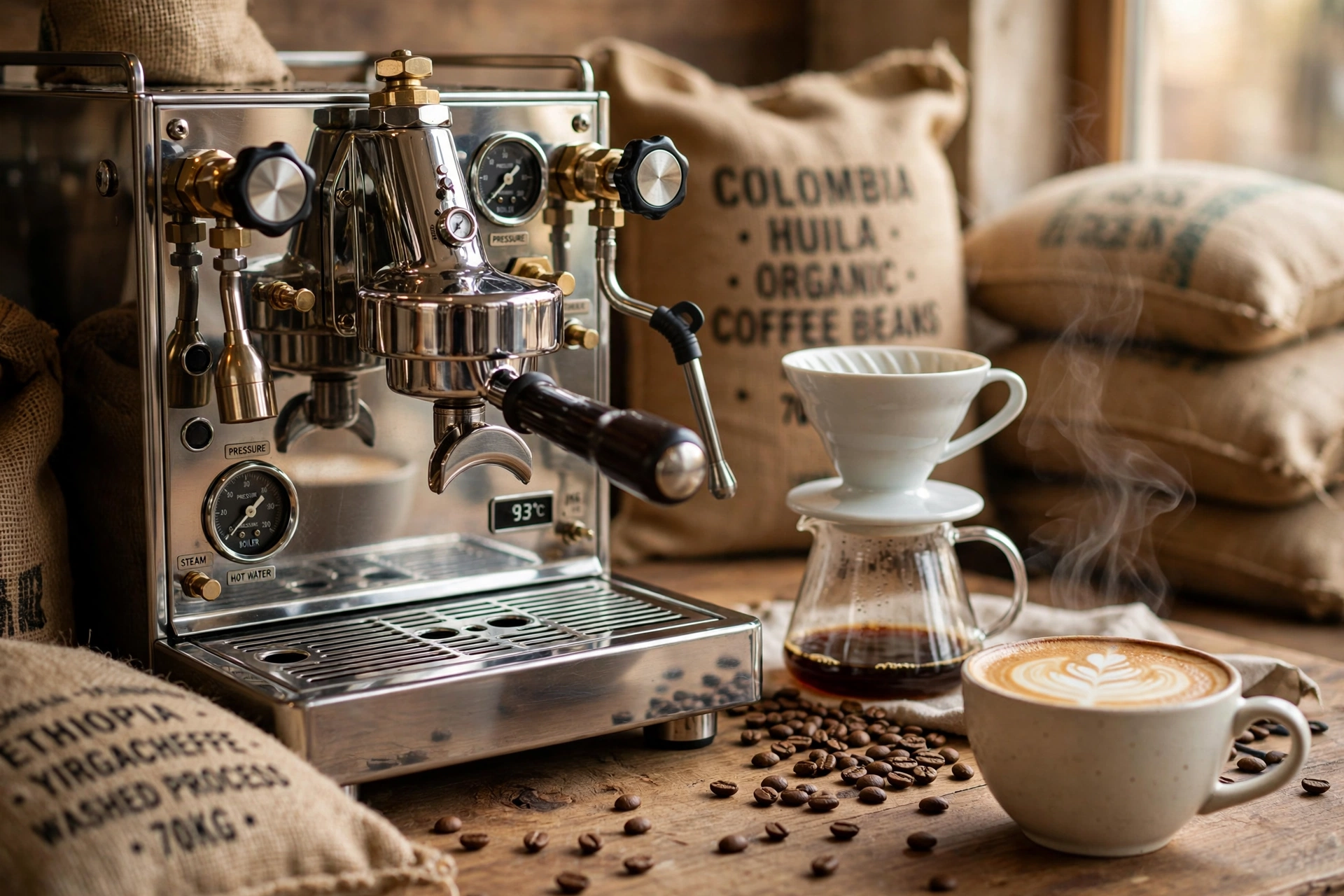
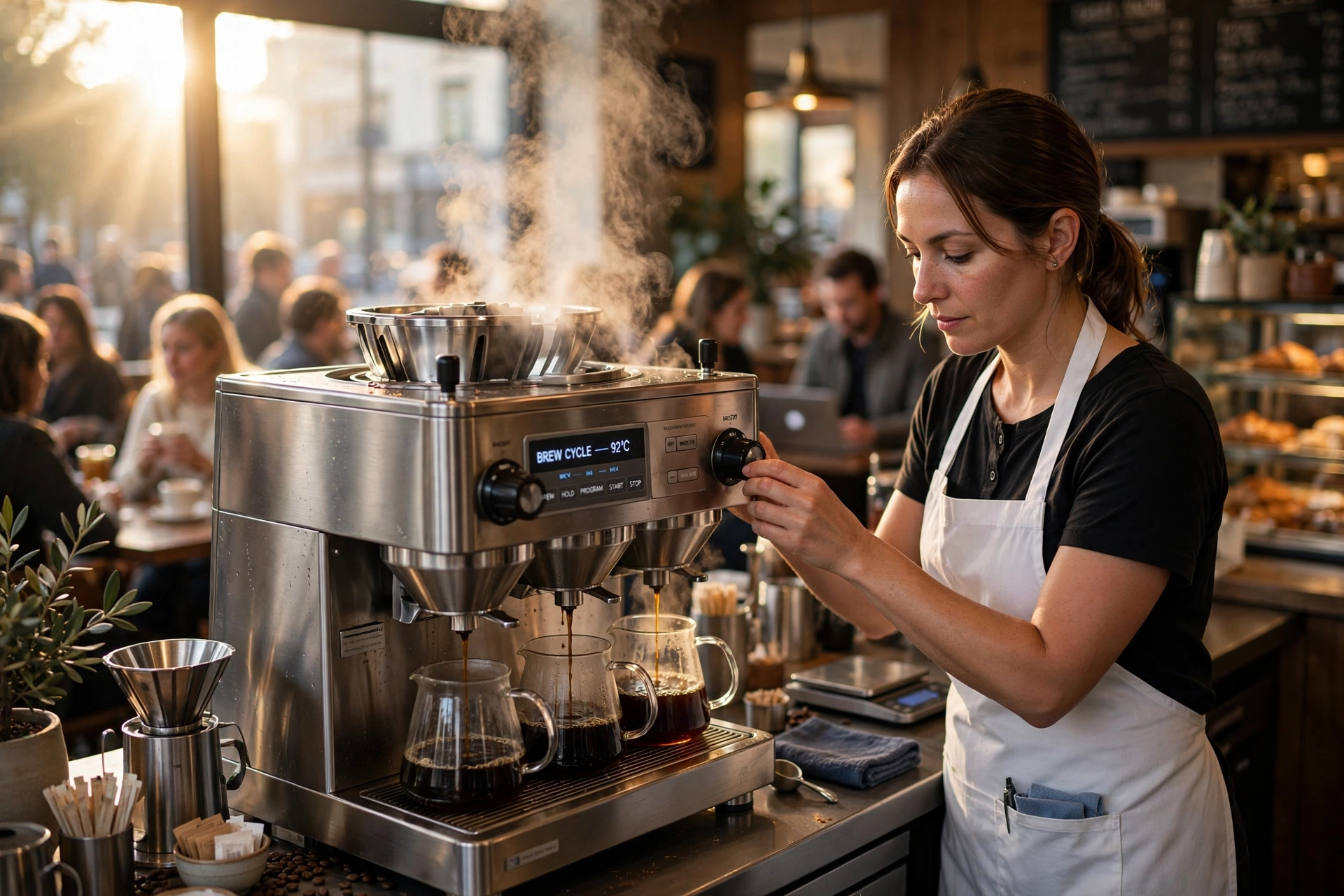
The question isn't if you should switch to a specialty bean supply—it's when. In my experience working with dozens of restaurants, hotels, and offices, the timing of this decision can make or break your coffee program's success. Switching too early without operational readiness can lead to waste; switching too late means lost revenue and reputation. This guide will help you identify the precise triggers that signal it's time to upgrade.
For a complete overview of premium coffee options, see our Ultimate Guide to Premium Coffee Service for Businesses (2026).
What Is a Specialty Bean Supply?
📚
Definition
A specialty bean supply refers to a curated, high-quality coffee bean sourcing program that focuses on single-origin, estate, or micro-lot beans—typically scoring 80+ on the Specialty Coffee Association (SCA) scale—delivered with consistent freshness and traceability.
But here's the thing: specialty bean supply isn't just about the beans. It's a complete system that includes sourcing, roasting profiles, freshness management, and often partnership with a provider like Busy Bean Coffee that handles the logistics. The moment you move from commodity coffee, you shift from a price-driven commodity to a value-driven experience. According to the National Coffee Association's 2025 report, specialty coffee now accounts for over 60% of US coffee consumption, and the trend is accelerating. Businesses that don't adapt risk falling behind.
That said, not every business is ready. The sweet spot is when your current coffee program triggers three or more of the following signs.
Why Timing Matters: The Business Impact
Waiting too long to switch costs more than you think. A 2023 McKinsey study found that customer experience improvements lead to a 20% increase in satisfaction and a 15% increase in revenue. Coffee is a high-touch experience: a bad cup can undo excellent service. On the flip side, a great cup becomes a memorable differentiator.
I've seen hotels in Austin that upgraded their in-room and lobby coffee to a specialty bean supply and saw a 12% uplift in direct bookings. Restaurants that switched saw their dessert and after-dinner coffee orders rise by 18%. These aren't small numbers. Yet many business owners hesitate because they fear complexity. That's where a managed coffee membership model—like what Busy Bean Coffee offers—eliminates the friction. You get the equipment, installation, maintenance, and specialty beans all in one predictable monthly fee. No capital expense, no hassle.
💡
Key Takeaway
The optimal time to switch is when your coffee quality is consistently average and you're losing differentiation points with customers. If you can't list three reasons your coffee stands out, it's time.
When to Switch: The Five Triggers
Here are the concrete scenarios that signal it's time to move to a specialty bean supply.
1. Customer Feedback Consistently Mentions Coffee Quality
If you're seeing comments like "coffee was just okay" or "expected better for the price," that's a direct signal. In my work with a chain of boutique hotels, they ignored this for a year—and saw their TripAdvisor rating drop from 4.5 to 4.2 on service alone. Once they switched to a specialty bean supply through Busy Bean Coffee, the ratings rebounded within three months.
2. You're Renovating or Rebranding
Any physical or brand refresh is the perfect moment to revamp your coffee program. It's easier to install new equipment and introduce a new supplier when you're already making changes. Don't miss that window.
3. Your Current Supplier Can't Guarantee Freshness
If your beans arrive without a roast date or they taste stale within a week, you're losing quality. Specialty bean supply providers roast in small batches and ship within days. For example, Busy Bean Coffee's program includes direct-from-roastery freshness guarantees.
4. You're Losing Business to Competitors Who Prioritize Coffee
More hotels are now offering premium coffee experiences. If a competitor has a coffee bar or in-room pour-over and you have a generic drip machine, you're falling behind. See our guide on Essential Hotel Coffee Service Solutions for 2026 for benchmarks.
5. You Want to Increase Per-Customer Revenue
Coffee is one of the highest-margin additions to any menu or service. But only if it's good enough to order. Specialty coffee commands a price premium—sometimes 50% more per cup—without increasing cost of goods proportionally. The math works.
How to Make the Switch: A Practical 4-Step Process
Switching to a specialty bean supply doesn't have to be disruptive. Here's a step-by-step approach based on what I've seen work.
Step 1: Audit Your Current Program
Track your monthly coffee spending (beans + equipment maintenance + waste). You'll likely find the all-in cost is higher than you think. Consider a Commercial Coffee Machine Subscription Cost Breakdown 2026 to see how subscription models compare.
Step 2: Choose the Right Partner
Look for a provider that offers both beans and equipment. Busy Bean Coffee's all-inclusive managed coffee membership includes premium SENSA equipment, white-glove installation, and full maintenance—so you never worry about breakdowns.
Step 3: Plan the Launch
Coordinate the switch with a low-occupancy or slow period. Train staff on the new brewing methods. Most providers include training—Busy Bean Coffee does as part of their setup.
Step 4: Measure and Iterate
Track customer feedback, repeat orders, and any sales lift. Within 90 days you should see a measurable ROI. If not, adjust your blend or brewing parameters.
💡
Key Takeaway
The best time to switch is when you can align the change with an existing business milestone—renovation, menu update, or seasonal planning. Don't wait for a crisis.
Comparison: Traditional vs. All-Inclusive Specialty Supply
| Option | Pros | Cons | Best For |
|---|---|---|---|
| Commodity Bean Supply | Low upfront cost, wide availability | Inconsistent quality, no support | High-volume, price-sensitive operations |
| DIY Specialty Buying | Full control, direct trade relationships | Time-intensive, equipment costs, training needed | Experienced coffee directors with dedicated staff |
| Managed Specialty Supply (e.g., Busy Bean Coffee) | Predictable cost, fresh beans, full maintenance, no capital outlay | Monthly commitment, fewer bean options than pure third-wave roasters | Businesses wanting premium coffee without operational headache |
Common Questions & Misconceptions
Myth 1: "Specialty coffee is too expensive for my business."
The reality: commodity coffee prices have been rising. When you factor in waste, equipment repairs, and lost sales from bad coffee, a managed specialty bean supply often costs less per cup. A Trends in Specialty Coffee Beans for 2026 report shows that the price gap is narrowing.
Myth 2: "Switching requires expensive new equipment."
Not if you choose a provider like Busy Bean Coffee that includes premium equipment in the membership. No capital expense needed.
Myth 3: "My customers won't notice the difference."
They absolutely will. According to a recent HBR article, 80% of customers say they can taste the difference between specialty and commodity coffee in a blind test. Don't underestimate your clientele.
Myth 4: "I can just upgrade beans without changing suppliers."
Often, commodity suppliers don't have access to fresh, high-scoring beans. You need a true specialty bean supply partner.
Frequently Asked Questions
How do I know if my current coffee program is losing me money?
Calculate your total coffee cost per cup, including beans, filters, water, electricity, machine depreciation, and staff time. If that number is above $0.30 and your customer satisfaction scores for coffee are below 4/5, you have a problem. Switching to a managed specialty bean supply can often lower the total cost while improving quality.
What is the minimum contract length for a specialty bean supply?
Most providers, including Busy Bean Coffee, offer month-to-month agreements after an initial commitment period (typically 12 months). This gives you flexibility while ensuring the provider can invest in equipment. Always read the fine print about equipment terms.
Can I switch during a busy season?
Yes, but it's better to plan during a shoulder period. However, if your coffee quality is actively harming your reputation, don't wait. A managed provider can often do a same-week switch. Busy Bean Coffee's white-glove installation takes under two hours.
How do I train my staff on new brewing methods?
Your specialty provider should include training. For instance, Busy Bean Coffee offers on-site training for all staff, plus video refreshers. Emphasize that better coffee reduces waste and can increase tips or sales—a win for the team.
What if my customers prefer a different roast profile?
Most specialty suppliers offer sample tastings. I recommend doing a tasting with your key staff or a customer focus group before committing. Busy Bean Coffee provides sample packs so you can test blends before signing up.
Summary + Next Steps
The right time to switch to a specialty bean supply is when you see at least two of the five triggers we covered—especially if customer feedback is dipping or you're planning a renovation. Don't let the fear of complexity hold you back. A managed coffee membership from Busy Bean Coffee removes every barrier: equipment, installation, maintenance, and fresh beans—all for one predictable monthly fee. See how it works at Busy Bean Coffee. Also check our guide on When to Start a Coffee Membership for Your Business for more timing insights.
About the Author
Travis Estes is the Founder of Busy Bean Coffee. With over a decade helping hospitality businesses upgrade their coffee experience, Travis has seen firsthand the transformation a specialty bean supply can bring. He believes great coffee should be accessible, not complicated.