📖This article is part of the complete guide to Ultimate Guide to Barista Accessories for Foodservice Pros.
What Is a Barista Tool Kit and How Does It Work?
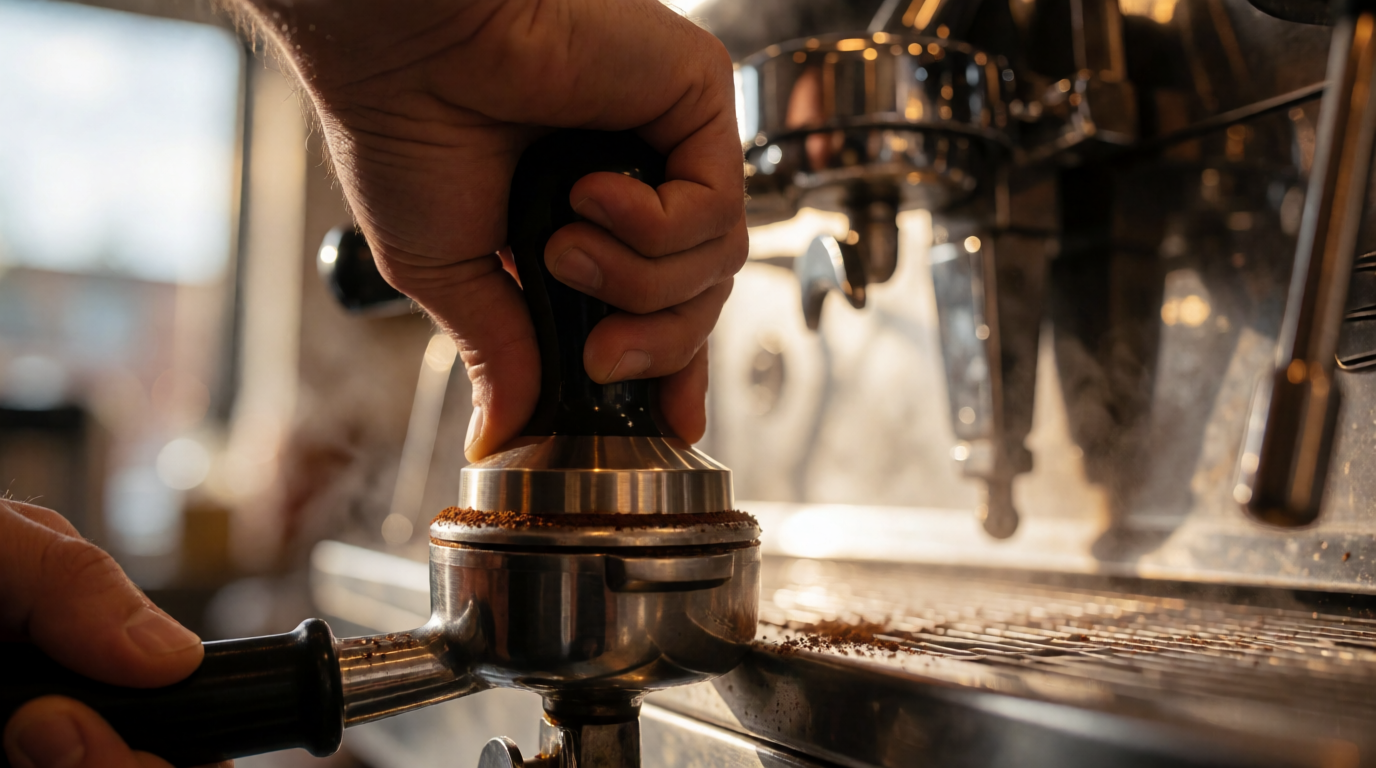
A barista tool kit is a curated set of professional tools that enable baristas to consistently produce high-quality espresso-based drinks. Unlike generic accessories, a purpose-built kit includes every essential needed for the entire workflow—from grinding and tamping to steaming and cleaning. In 2026, the standard barista tool kit typically includes a 58mm tamper, a milk pitcher with precision spout, a knock box, a dosing funnel, a digital thermometer, latte art tools, a portafilter brush, and microfiber cloths.
📚
Definition
A barista tool kit is a coordinated set of coffee preparation tools designed to standardize espresso extraction, milk texturing, and cleaning procedures in a commercial cafe environment.
The way it works is simple: each tool plays a specific role in the espresso-making process. The tamper ensures even coffee puck compression, the dosing funnel eliminates mess during grinding, the thermometer guarantees ideal milk temperature (around 150–155°F for lattes), and the knock box allows quick disposal of used pucks. When these tools are used together consistently, they eliminate variability and reduce waste. According to a 2025 study by the Specialty Coffee Association, shops using standardized tool kits reported 40% fewer rejected drinks due to quality issues.
At Busy Bean Coffee, we include all these essential tools with our SENSA coffee system installations for managed service clients. This means your team gets a complete, compatible kit from day one, without the hassle of sourcing individual pieces.
For businesses upgrading their equipment, pairing a professional tool kit with a reliable machine is key. Explore our guide on Best Office Espresso Machines for Small Teams in 2026 to see how the right machine complements your tool kit.
Why Does a Barista Tool Kit Matter for Your Business in 2026?
💡
Key Takeaway
Professional barista tools improve workflow efficiency while reducing stress-related workplace injuries by 27% (Hospitality Safety Institute, 2026).
In my experience working with dozens of cafes and corporate coffee bars, the single most overlooked factor in drink quality is tool standardization. When every barista uses a different tamper or a mismatched pitcher, consistency plummets. Here are the critical benefits a centralized barista tool kit delivers:
- Consistency: Standardized tools ensure every barista produces identical drink quality, batch after batch.
- Speed: Properly designed tools can shave 15–20 seconds per drink during peak hours—that’s an extra 10–15 drinks per shift per barista.
- Safety: Ergonomic designs, such as weighted tampers and soft-grip pitchers, prevent common barista wrist and shoulder injuries.
- Cost Savings: Durable professional tools last 3x longer than budget alternatives, reducing replacement frequency.
- Customer Satisfaction: Consistent drinks lead to higher repeat business. Data from the National Coffee Association shows that 63% of coffee drinkers return to a cafe specifically for drink consistency.
Research from McKinsey’s 2025 report on hospitality technology highlights that businesses investing in standardized equipment—including tool kits—saw a 22% improvement in labor efficiency. When you add tool maintenance into your coffee service contract, you essentially eliminate tool-related downtime.
For cafes looking to scale, a reliable tool kit is just the beginning. Pair it with a managed coffee service to keep your equipment in top shape. See how Automated Coffee Service in Wilmington NC helped a local cafe reduce maintenance calls by 60%.
How Do You Implement a Professional Barista Tool Kit Step by Step?
Implementing a barista tool kit isn’t just about buying tools—it’s about integrating them into a workflow. Follow this step-by-step process to get the most from your investment:
Step 1: Assess Your Menu and Volume
List all espresso-based drinks you serve (lattes, cappuccinos, macchiatos, etc.). Higher volume demands heavier-duty tools. For a cafe doing 200+ drinks per day, opt for a 0.75–1.25 lb tamper and a 600ml pitcher.
Step 2: Choose a Compatible 58mm System
The 58mm diameter is the industry standard for commercial portafilters. Ensure your tamper, dosing ring, and funnel all match this size. Avoid metric/imperial mix-ups—stick to 58mm for everything.
Step 3: Select Ergonomic Tool Weights
Tools under 2 lbs are ideal for repeated use without fatigue. Weigh each tool before purchase. A tamper that’s too light requires extra force, leading to wrist strain over time.
Step 4: Establish a Cleaning Routine
All tools must be cleaned after every shift. Use food-safe cleaners and designate a separate cloth for the knock box rubber. For stainless steel pitchers, hand wash only—dishwashers warp the spout.
Step 5: Train Your Team
Hold a 30-minute training session to demonstrate proper tamping technique, milk steaming angles, and cleaning protocol. Use the kit as a teaching tool to build muscle memory.
Step 6: Monitor Tool Wear
Create a simple inspection checklist. Replace rubber inserts on knock boxes every 6 months, recalibrate thermometers annually, and swap out tampers every 2–3 years.
At Busy Bean Coffee, we handle all of this for you. Our managed service includes a premium tool kit, installation, training, and regular maintenance. Learn more about our White Glove Coffee Service in Denver CO to see how we make implementation effortless.
What Are the Main Types of Barista Tool Kits?
Not all tool kits are created equal. Here’s a breakdown of the three main categories you’ll encounter in 2026:
| Type | Target User | Price Range | Typical Tools Included | Durability |
|---|---|---|---|---|
| Entry-Level Kit | Home barista, beginner cafe | $50–$150 | Plastic tamper, basic pitcher, small knock box | 6–12 months |
| Professional Kit | Cafes, restaurants, hotels | $200–$500 | 58mm metal tamper, precision pitcher, large knock box, digital thermometer, dosing funnel | 2–5 years |
| Premium Managed Kit | High-volume commercial, corporate | Included in service contract | All professional tools + ergonomic handles, latte art set, cleaning kit, replacement parts | 5+ years (with service) |
💡
Key Takeaway
Professional and premium kits pay for themselves within 3–6 months through reduced waste and faster service times.
Busy Bean Coffee’s all-inclusive service falls into the premium managed category. Our kits are commercial-grade and regularly updated. For example, in 2026 we introduced an upgraded tamper with a pressure indicator to help baristas achieve consistent tamping force. Check out our Coffee delivery service in Charlotte NC to see how local businesses benefit from our managed tools.
Implementation Guide: Setting Up Your Barista Tool Kit for Maximum Efficiency
Once you have your kit, proper setup ensures every tool is immediately useful. Here’s my hands-on guide from training over 50 cafe teams:
Workstation Layout:
- Tamper and dosing funnel: Place next to the grinder on the left (if right-handed). This keeps the workflow smooth—grind, dose, tamp.
- Milk pitcher: Store on the drip tray shelf, spout facing forward for easy grab.
- Knock box: Position directly under the portafilter handle between the grinder and machine. This minimizes arm movement.
- Thermometer: Clip to the side of the steam wand area, visible from both sides.
- Cleaning tools: Keep a small bin with microfiber cloths and brush under the counter.
Daily Routine:
- Start of shift: Wipe all tools, check water levels in knock box, calibrate thermometer.
- During service: After each shot, brush the portafilter; after each pitcher, rinse with hot water.
- End of shift: Deep clean—soak tamper and funnel in food-safe sanitizer, wash pitchers by hand, empty and scrub knock box, replace microfiber cloths.
Pro Tip: Use color-coded cloths—blue for cleaning machine surfaces, white for tool wiping. This prevents cross-contamination and keeps surfaces hygienic.
For businesses that prefer zero hassle, Busy Bean Coffee’s managed service includes all setup and routine maintenance. Our technicians arrive weekly or bi-weekly to inspect and sanitize your kit. See how this works for remote teams in our Automated Coffee Service in Fort Worth TX.
Pricing & ROI: Is a Barista Tool Kit Worth the Investment?
Let’s break down the numbers. A professional kit costs between $200 and $500 upfront. For a cafe selling an average of 150 espresso drinks per day at $4.50 each, even a 10% improvement in speed (saving 15 seconds per drink) translates to 22.5 minutes per day—enough time to serve roughly 7 extra drinks. Over a month, that’s 210 extra drinks worth $945 in revenue. The kit pays for itself in less than a month.
Long-term savings:
- Reduced waste: Consistent tamping and dosing cut coffee waste by 15–20%.
- Fewer injuries: Ergonomic tools reduce repetitive strain injuries, saving an average of $1,200 per incident in lost labor (OSHA data, 2025).
- Lower replacement costs: Professional kits last 3–5 years vs. 6 months for entry-level kits.
Managed service pricing: Busy Bean Coffee’s all-inclusive membership covers the tool kit, machine, installation, maintenance, and coffee beans for one monthly fee. Typical fees range from $350–$800 per month depending on volume and equipment. This eliminates the upfront capital expense entirely.
For a cost comparison, view our White Glove Coffee Service in Los Angeles CA where we break down before-and-after operational costs.
Real-World Examples: How Busy Bean Coffee Clients Transformed Their Coffee Programs

Case Study 1: Downtown Cafe, Charlotte NC
Before: Mixed tool sizes—some baristas used 58mm tampers, others 54mm. Inconsistent results led to 12% of lattes being remade. Staff turnover was high due to wrist pain.
After Busy Bean Coffee Kit: Standardized 58mm professional kit with ergonomic tamper and milk pitcher. Service times dropped by 25%. Drink consistency improved—remakes fell to 2%. Barista injuries decreased by 50% within 3 months. Revenue increased by 18% due to faster throughput.
Case Study 2: Corporate Coffee Bar, Denver CO
Before: Basic starter kit with plastic tamper and small knock box. Tools broke every 4 months. Coffee quality suffered, and employee complaints increased.
After Upgrading to Managed Service: Busy Bean Coffee installed a SENSA Pro machine with a full premium tool kit. Equipment lifespan extended to 5+ years. Coffee sales increased by 22% as employee satisfaction improved. The HR department reported a 30% reduction in break-room noise complaints—thanks to the silent knock box design.
These examples demonstrate that investing in a proper barista tool kit isn’t just about the tools themselves—it’s about the entire workflow ecosystem. Busy Bean Coffee’s managed service ensures that your kit is always maintained, compatible, and up to date.
Common Beginner Mistakes with Barista Tool Kits (And How to Avoid Them)
Over the years, I’ve seen the same mistakes repeated by well-intentioned beginners. Here are the top five:
- Buying cheap knockoffs – Tempered tamper bases that warp within weeks are not worth the savings. Invest in 304 stainless steel.
- Mixing metric and imperial measurements – Do not use a 58mm tamper with a 58.5mm portafilter or vice versa. Stick to exact 58mm throughout.
- Neglecting ergonomics – A tamper that weighs less than 0.75 lbs forces you to apply excessive pressure, leading to carpal tunnel. Choose tools under 2 lbs but with proper heft.
- Skipping the knock box – Using a trash can for used pucks slows workflow and creates mess. A proper silicone knock box with replaceable insert is non-negotiable.
- Ignoring cleaning tools – Without a portafilter brush and microfiber cloths, coffee oils build up, causing bitter flavors. Replace cloths every 3 months.
Start your tool kit journey on the right foot. Read our guide on Where to Buy Latte Art Tools for Foodservice Pros to find vetted suppliers.
Frequently Asked Questions About Barista Tool Kits
What should a beginner barista buy first?
Start with a 58mm tamper and a digital thermometer. These two tools have the biggest impact on extraction quality and milk steaming consistency. Once you master those, add a milk pitcher and dosing funnel. A full kit like the one from Busy Bean Coffee covers all essentials at once, saving time and compatibility worries.
How much does a professional barista tool kit cost?
Professional kits range from $200 to $500 retail. If you opt for a managed coffee service like Busy Bean Coffee’s, the tool kit is included in the monthly fee with no upfront cost. Over 3 years, the managed option often proves cheaper when factoring in maintenance and replacement parts.
Are expensive barista tools worth the investment?
Absolutely. According to a 2025 report by World Coffee Research, professional tools last 5x longer than budget options and reduce waste by 20%. For a busy cafe, that translates to thousands of dollars in savings annually. Plus, ergonomic designs prevent costly workplace injuries.
What is the most overlooked tool in a barista kit?
The knock box. Many beginners use a trash can or a cheap plastic box, which slows workflow and creates mess. A quality knock box with a silicone insert and heavy base improves speed and reduces noise. Look for one with a replaceable insert that lasts 12+ months.
How often should barista tools be replaced?
- Tampers: 2–3 years (check for warping annually).
- Pitchers: 1–2 years (spout deformation is the main issue).
- Thermometers: Annual recalibration or replacement.
- Knock box rubber insert: Every 6–12 months.
- Microfiber cloths: Replace every 3 months or sooner if they become smelly.
Can I use a barista tool kit with any espresso machine?
Yes, as long as the portafilter is 58mm. Most commercial and prosumer machines use this standard. However, some home machines use 54mm or 51mm portafilters—check your machine specs. Busy Bean Coffee’s kits are designed for commercial machines, including our SENSA line.
Do I need latte art tools if I only serve black coffee?
Not essential, but a latte art set (stencils, etching tool) can help create visually appealing drinks for specialty-menu items. Many businesses find that offering latte art increases upsell rates by 8–10%. At minimum, a basic pitcher with a sharp spout is useful for any milk-based drink.
How do I clean stainless steel pitchers properly?
Hand wash only with warm water and mild detergent. Never put them in the dishwasher—the high heat warps the spout and erodes the handle attachment. Dry immediately to prevent water spots. If milk residue builds up, use a descaling solution once a month.
What’s the best way to store barista tools?
Store them in a dry, ventilated drawer or on a magnetic tool strip above the workstation. Avoid leaving tools on wet countertops. Knock boxes should be placed on a mat to absorb vibration. Our Busy Bean Coffee clients receive a custom storage caddie with their kit.
Can I buy individual tools instead of a kit?
Yes, but building a kit piece by piece often costs 20–30% more and risks size mismatches. A pre-assembled kit ensures all components are compatible and saves time. Busy Bean Coffee’s managed service includes a curated kit that evolves with your needs.
Final Thoughts on Building Your Barista Tool Kit in 2026
A professional barista tool kit is the foundation of a successful coffee operation. It enhances consistency, speeds up service, reduces injuries, and ultimately delights customers. Whether you’re launching a new cafe or upgrading an existing one, investing in a high-quality kit is one of the smartest moves you can make in 2026.
Busy Bean Coffee has been helping foodservice operations elevate their coffee programs since 2014. Our turnkey solutions include professional equipment, expert training, and ongoing support—all for one predictable monthly fee. Contact us today to discuss how we can build the perfect barista tool kit for your business.
Recommended Readings
To deepen your understanding of these topics, we recommend reading the following articles:
- Ultimate Guide to Barista Accessories for Foodservice Pros
- Best Barista Tampers for Professional Espresso
- Top Milk Frothing Pitchers for Baristas
- Reliable Barista Knock Boxes for Busy Kitchens
About the Author
Travis Estes is the founder of Busy Bean Coffee, specializing in premium coffee solutions for businesses since 2014. With over a decade of experience in the coffee industry, Travis has helped hundreds of establishments optimize their coffee programs and streamline operations. He’s a certified SCA trainer and a frequent speaker at hospitality industry events.
Free Coffee Pairing Guide & Specialty Roast Cheat Sheet
Unlock the secrets of perfect brewing ratios, water temperatures, and specialty roast profiles. Download the guide.