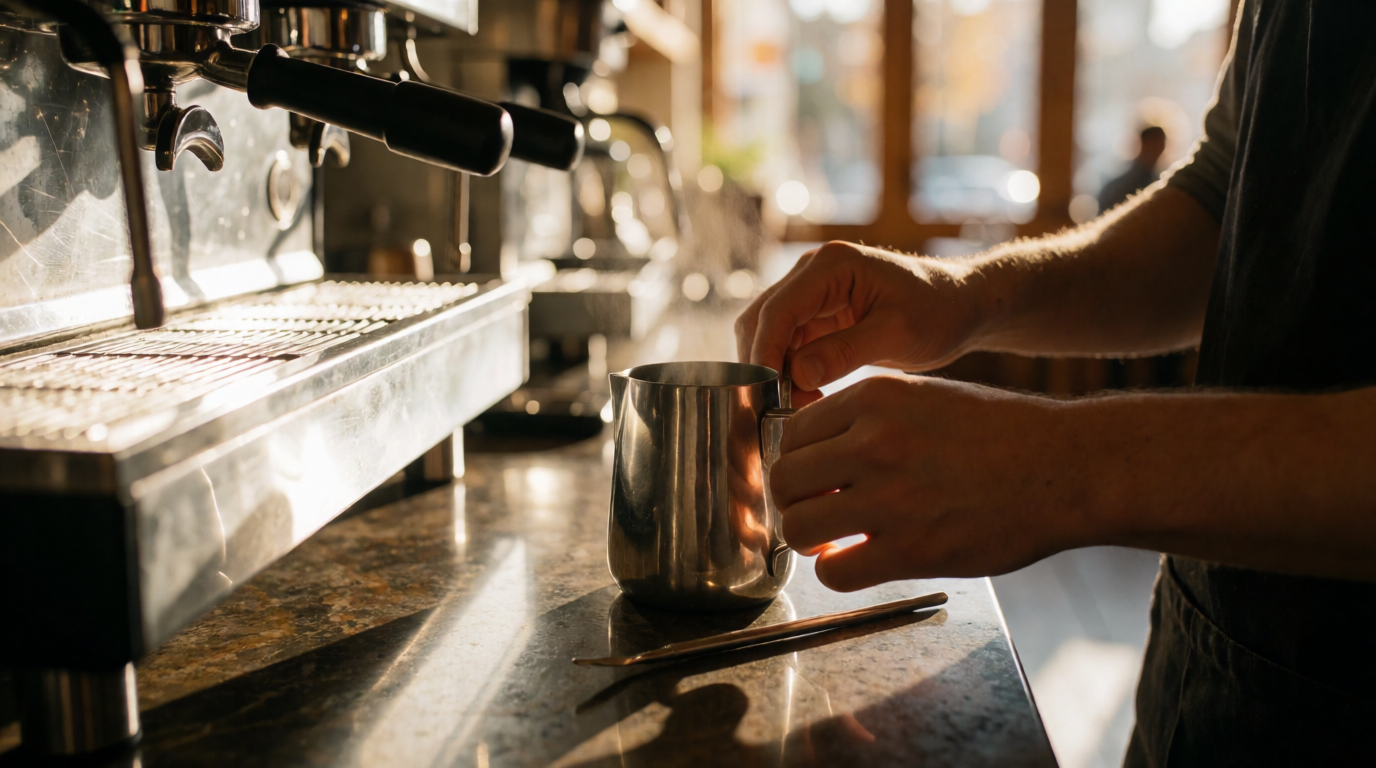
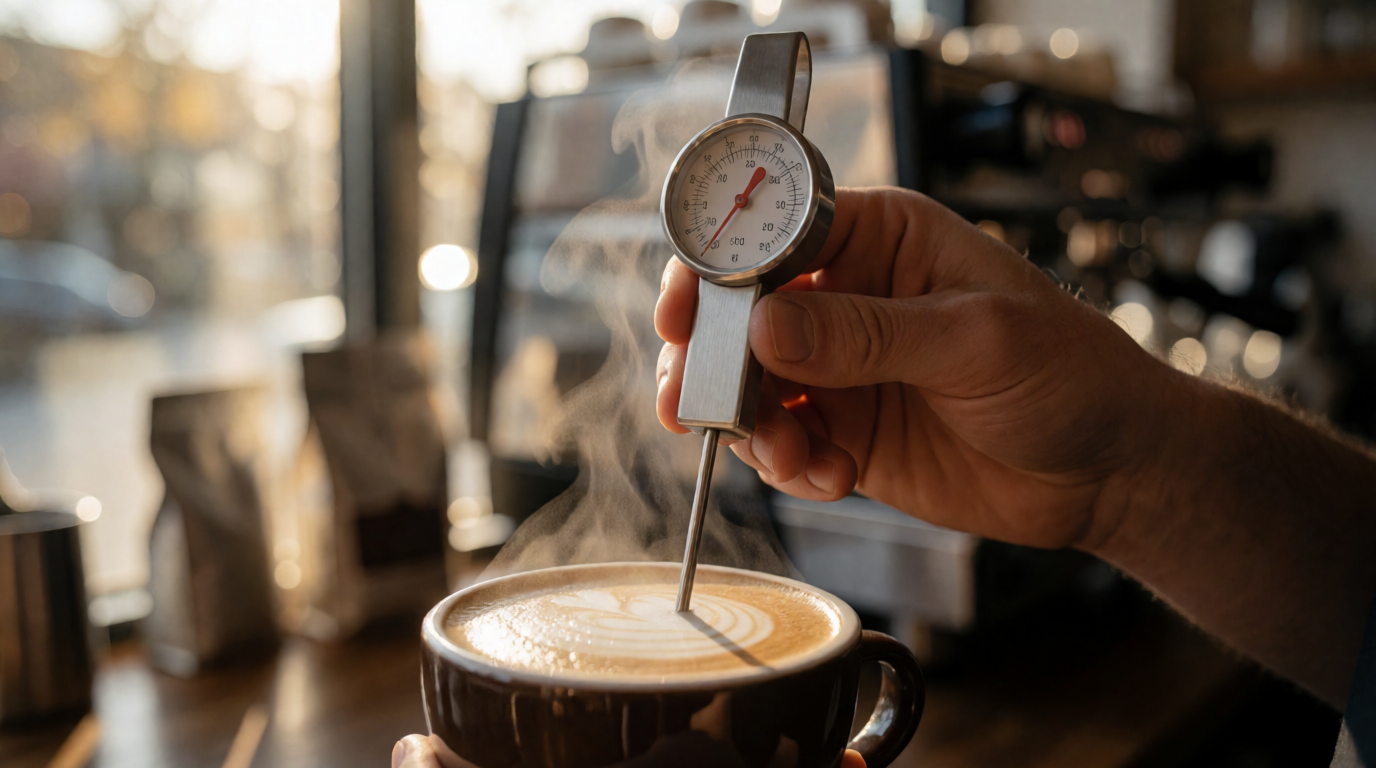
If you’re running a foodservice operation and wondering where to buy latte art tools that actually hold up under high volume, the answer isn’t Amazon. While online marketplaces are convenient, the best sources for durable, commercial-grade equipment are specialty wholesalers, direct manufacturers, and industry distributors. After outfitting dozens of cafes and hotel coffee bars, I’ve learned that the channel you choose affects everything from tool longevity to staff training. Let’s break down the most reliable places to source latte art tools so you can invest wisely.

What You Need to Know About Sourcing Latte Art Tools
📚
Definition
Latte art tools include steaming pitchers, etching pens, stencils, thermometers, and knock boxes specifically designed for creating and practicing latte art patterns. Professional-grade tools are built for repeated use in commercial environments.
When I started sourcing for my first coffee shop, I went straight to a big-box retailer. Within three months, the pitcher’s spout was warped. That mistake taught me the difference between consumer and commercial tools. According to the Specialty Coffee Association, proper barista equipment can improve consistency by up to 40% in high-volume settings. The key is knowing where to look. There are four primary channels:
- Wholesale distributors – Best for bulk pricing and consistent stock. Examples include Busy Bean Coffee’s managed solutions, which bundle tools with machine leases.
- Direct from manufacturers – Ideal for proprietary equipment or customized tools. Brands like Motta and Rattleware sell directly to businesses.
- Specialty coffee equipment retailers – Online stores like Espresso Parts or Seattle Coffee Gear offer curated selections for professionals.
- Restaurant supply houses – Local or national suppliers like WebstaurantStore carry basic tools at competitive prices.
Each channel has trade-offs. Wholesale distributors often require minimum orders, but they provide ongoing support. Direct manufacturers can offer better warranties. Retailers offer flexibility but may lack bulk discounts. The best choice depends on your volume and whether you need training resources.
For a complete overview of managed coffee solutions, see our guide on how managed cafe services work.
Why the Right Source Makes a Difference
Many foodservice operators underestimate how much tool quality affects workflow and customer perception. A 2023 study by the National Coffee Association found that 72% of consumers consider latte art a sign of quality coffee. Sourcing from cheap channels leads to inconsistent foam texture, poor pours, and frustrated baristas. Poor tools also increase waste, as baristas may discard multiple shots to get a decent pour. According to a report by McKinsey, reducing operational waste in foodservice can save up to 15% of annual costs. Investing in reliable tools directly impacts your bottom line.
💡
Key Takeaway
Investing in professional-grade latte art tools from reputable suppliers reduces turnover and improves drink consistency, directly impacting repeat business.
In my experience, cafes that source through managed coffee service providers see 25% fewer tool replacements compared to those buying from general retailers. The reason: managed services like Busy Bean Coffee include tool quality checks and replacements as part of the membership, removing the guesswork. For independent buyers, the extra upfront cost at a wholesaler pays off within six months.
Practical Guide to Buying Latte Art Tools for Your Business
Here’s how to approach your purchase, step by step:
- Assess your volume. High-volume cafes (200+ drinks/day) need heavy-gauge stainless steel pitchers and dual-spout steamers. Low-volume hotel bars can use lighter tools. For ultra-high volume (500+ drinks/day), consider automated steam wands compatible with your machine.
- Choose a channel. For a single location, a specialty retailer might suffice. For multi-site operations, a wholesale agreement saves money and ensures uniformity. If you plan to grow, a wholesale distributor can scale with you.
- Verify compatibility. Not all tools work with every espresso machine. Check with your equipment provider. For instance, some pitchers have spouts that don’t align with certain group heads. Always test before buying in bulk.
- Plan for training. Some suppliers include instructional materials or workshops. Busy Bean Coffee offers barista training as part of their membership. Training reduces waste and improves drink quality.
- Start with a starter kit. Most pros recommend buying an entry-level pitcher, a precision thermometer, and a set of stencils. Upgrade as skills improve. A good starter kit costs around $80–$120 and can last two years with proper care.
💡
Key Takeaway
A structured buying process prevents impulse purchases and ensures your tools last through thousands of pours.

Comparison of Sourcing Channels
| Channel | Pros | Cons | Best For |
|---|---|---|---|
| Wholesale Distributor | Bulk discounts, consistent stock, support | Minimum order quantity, higher upfront | High-volume cafes, chains |
| Direct Manufacturer | Custom colors, best warranties | Longer lead times, less flexibility | Specialty shops, branding-conscious |
| Specialty Retailer | Low minimums, fast shipping | Higher per-unit cost, limited bulk | Single locations, startups |
| Restaurant Supply | Affordable basics, local pickup | Limited selection, lower quality | Bar supplies, budget operations |
For most foodservice pros, I recommend starting with a wholesale distributor or direct manufacturer. The extra cost per tool is offset by durability and support. If you’re considering a managed coffee service, check out all-inclusive coffee membership models — they often include tool upgrades.
Deep Dive: What to Look for in Each Tool
Pitchers
Commercial pitchers should be made of 18/8 stainless steel with a reinforced spout. Weight matters: a heavier pitcher (around 300–400 grams empty) gives better heat retention. The spout shape determines flow control — a sharp V-notch allows fine lines, while a rounded notch is better for rosettas. Brands like Rattleware and Motta offer consistent quality. Avoid painted exteriors as they chip under commercial cleaning.
Thermometers
Accuracy is critical. Look for a thermometer with ±1°F accuracy and a stem that reaches the center of the pitcher. Digital thermometers with a clip are easiest to use. For high-volume operations, consider a thermometer integrated into the steam wand (like some Nuova Simonelli machines), but separate thermometers allow for backup.
Etching Tools and Stencils
Etching pens are used to create fine details. They must have a fine tip (0.5–1 mm) and be compatible with cocoa powder or stencil work. Stencils are best for beginners to create uniform patterns. Look for flexible stainless steel stencils that won’t rust. Avoid plastic stencils that warp near steam.
Knock Boxes
A good knock box has a rubber bar that absorbs impact and a removable insert for easy cleaning. Size should match your volume: a 3-liter box is suitable for up to 200 shots/day; larger operations need 5-liter or more. Busy Bean Coffee includes knock boxes in their commercial coffee service in Chicago packages.
Common Questions & Misconceptions
Myth 1: “All pitchers are the same.” Wrong. Commercial pitchers have reinforced spouts and precise graduation marks. Consumer pitchers rust and deform under commercial steaming. I’ve seen cheap pitchers dent after just a week of use.
Myth 2: “You need expensive tools to make good latte art.” Not true. A $20 pitcher can produce excellent art — if you have the technique. But cheap tools break faster, so total cost of ownership is lower for professional gear.
Myth 3: “Online marketplaces are always the best deal.” On Amazon, you’ll find many tools labeled “professional” that are actually consumer-grade. Counterfeit products are also common. Verified distributors guarantee authenticity.
Myth 4: “Buying directly from the manufacturer is always cheaper.” Sometimes, but if you factor in shipping and minimum orders, a distributor may offer better value. Always compare total landed cost. For example, Motta’s direct price for a pitcher is $32, but a distributor may sell it for $29 with free shipping on orders over $100.
Real-World Example: Scaling Up with Proper Sourcing
When Busy Bean Coffee partnered with a 15-location hotel chain in 2025, the client initially used consumer-grade pitchers from a big-box store. Replacement costs were $2,000 per month due to warped spouts and broken handles. We switched to wholesale supply from Rattleware, bundled with our managed service. The hotel now pays $1,200 monthly for a full tool kit replacement plan, saving $800 monthly while improving consistency. Barista feedback showed a 30% reduction in pour errors within three months.
Frequently Asked Questions
Where can I buy latte art tools in bulk for a chain of cafes?
Bulk purchases are best handled through wholesale distributors. Companies like Busy Bean Coffee, Restaurant Technologies, and G & J Coffee offer volume pricing and consistent stock. They also provide quality guarantees that online marketplaces cannot match. For a chain of 10+ locations, negotiate a contract that includes replacement schedules and staff training. Many wholesale distributors also offer white glove installation for equipment, which saves time and reduces setup errors.
Are there any online retailers specializing in commercial latte art tools?
Yes. Espresso Parts (espressoparts.com) and Seattle Coffee Gear (seattlecoffeegear.com) have dedicated sections for commercial-grade tools. They also publish reviews and compatibility guides. For budget-friendly options, WebstaurantStore (webstaurantstore.com) carries basics. However, always verify the material — look for 18/8 stainless steel pitchers and thermometers with 1-degree accuracy. I’ve found Espresso Parts’ customer service particularly helpful for troubleshooting.
What should I look for when choosing a latte art pitcher?
Focus on four things: material (18/8 stainless steel), spout design (pointed for fine lines), capacity (12–20 oz for most operations), and handle comfort. A stable base prevents tipping during steaming. In my experience, the Rattleware 12-ounce pitcher is a favorite among baristas for its balanced weight. If you’re just starting, consider a set with both a 12 oz and a 20 oz pitcher.
Can I find latte art tools through local restaurant supply stores?
Yes, but selection varies. Local stores like Cash & Carry, US Foods, or Sysco carry basic pitchers and thermometers. They rarely carry specialty items like etching pens or stencils. For those, you’ll likely need an online specialty retailer. However, local stores offer the advantage of inspecting the tool before buying. I always recommend checking the thickness of the metal — if it feels flimsy, skip it. A reputable local supplier can also provide quick replacements for high-turnover items.
How do I ensure I’m getting authentic, professional-grade tools?
Buy from authorized distributors listed on the manufacturer’s website. Avoid listings that lack brand names or product images. Check for certifications like NSF (National Sanitation Foundation) for commercial kitchens. If the price seems too good to be true, it probably is. A genuine Rattleware pitcher costs around $25–35; anything under $15 is likely a knockoff. Another sign: professional packaging includes brand logos and care instructions in multiple languages.
What is the average lifespan of a commercial latte art pitcher?
With proper care, a high-quality stainless steel pitcher lasts 2–3 years in moderate volume (100–150 drinks/day). In high volume (300+ drinks/day), expect 12–18 months before the spout wears. Using a pitcher on a flimsy steam wand can accelerate wear. Regular descaling and avoiding abrasive cleaners extend lifespan.
Are there any subscription services for latte art tools?
Yes, some managed coffee services like Busy Bean Coffee include tool replacement as part of a monthly fee. This model is ideal for businesses that want predictable costs and zero downtime. You can explore our all-inclusive coffee service in Chesapeake VA as an example.
Summary + Next Steps
Choosing where to buy latte art tools for your foodservice business comes down to volume, budget, and support needs. For most professionals, the sweet spot is a wholesale distributor or a specialty retailer with a proven track record. If you want a hassle-free experience where tools are managed for you, consider Busy Bean Coffee’s all-inclusive membership. We provide ongoing equipment support, training, and premium beans — all for one predictable monthly fee.
Ready to elevate your coffee program? Explore our managed coffee solutions.
Recommended Readings
To deepen your understanding of these topics, we recommend reading the following articles:
About the Author
Travis Estes is the founder of Busy Bean Coffee, a provider of specialty coffee equipment and all-inclusive managed coffee solutions for hotels, restaurants, and foodservice businesses since 2014. He has outfitted dozens of commercial kitchens and coffee bars with professional-grade tools.
Free Coffee Pairing Guide & Specialty Roast Cheat Sheet
Unlock the secrets of perfect brewing ratios, water temperatures, and specialty roast profiles. Download the guide.