📖This article is part of the complete guide to Ultimate Guide to Outfitting a Coffee Shop with Equipment.
I once consulted for a high-volume café in Mount Pleasant, SC, that was spending nearly 15% of its monthly operating budget on electricity alone. After auditing their workflow, we found their legacy espresso machines were essentially giant, uninsulated radiators, bleeding heat and money every second they were plugged in. Switching to modern, energy-efficient hardware didn't just lower their bills; it stabilized their brew temperature and increased their throughput. For a comprehensive overview of the broader hardware landscape, explore our Ultimate Guide to Outfitting a Coffee Shop with Equipment.
What is Energy Efficient Coffee Equipment?
📚
Definition
Energy efficient coffee equipment refers to commercial beverage hardware engineered to minimize electricity and water waste through advanced thermal insulation, precision electronic controls, and optimized power-cycling systems.
Energy efficient coffee equipment is not about reducing the power of the machine, but rather eliminating the waste associated with maintaining heat. In the specialty coffee world, the biggest energy drain is 'standing loss'—the heat that escapes from a boiler into the ambient air. Modern machines solve this by using high-density insulation around the boiler and implementing PID (Proportional-Integral-Derivative) controllers. These controllers ensure the heating element only activates when necessary to maintain a specific temperature, rather than cycling on and off in inefficient, wide swings.
In my experience working with hundreds of foodservice setups, the difference between a 'standard' machine and an 'energy-efficient' one is often found in the boiler design. Multi-boiler systems, for instance, allow a business to keep the steam boiler at a high temperature while keeping the brew boiler lower, reducing the total energy required to keep the system ready. When we integrate these systems at Busy Bean Coffee, we see a direct correlation between thermal stability and lower kilowatt-hour consumption. This is particularly vital for businesses utilizing Automatic Coffee Machines for Hotels and Hospitality in 2026, where machines may run 24/7.

Why Does Energy Efficiency Matter for Your Business ROI?
Reducing energy consumption is no longer just a 'green' initiative; it is a critical financial strategy for surviving the tightening margins of the 2026 hospitality market. Every watt saved is a direct addition to your bottom line. When you operate a high-volume shop, the cumulative effect of energy-efficient hardware can result in thousands of dollars in annual savings.
According to the Specialty Coffee Association (SCA), precision in temperature control is the cornerstone of specialty coffee quality. Energy-efficient machines, by utilizing PID controllers, provide this precision while simultaneously reducing waste. If your machine is constantly overshooting its target temperature and then correcting, you are paying for heat that isn't actually improving your coffee—it's just heating your room.
Furthermore, the National Coffee Association USA (NCA) emphasizes that consumer trends are shifting toward sustainable business practices. Customers in 2026 are more likely to frequent businesses that can demonstrate a commitment to reducing their carbon footprint. By investing in energy-efficient gear, you aren't just saving on the electric bill; you are building a brand identity rooted in sustainability.
Beyond the bills, there is the issue of equipment longevity. Machines that cycle their heating elements efficiently experience less thermal stress on their components. I've tested this with dozens of our clients, and the pattern is clear: machines with advanced energy management typically require fewer emergency repairs related to burnt-out elements or scaled-up boilers. For those scaling their operations, considering a Sensa Coffee Service in Mount Pleasant SC: Complete Guide can help integrate these efficiencies without the heavy upfront capital expenditure.
How to Implement Energy Efficient Coffee Equipment in Your Workflow
Transitioning to a low-energy footprint requires a strategic approach to hardware selection and operational habits. You cannot simply buy one 'green' machine and expect your bills to drop if the rest of your line is leaking heat. The goal is to create a thermally cohesive environment where every piece of equipment supports the other.
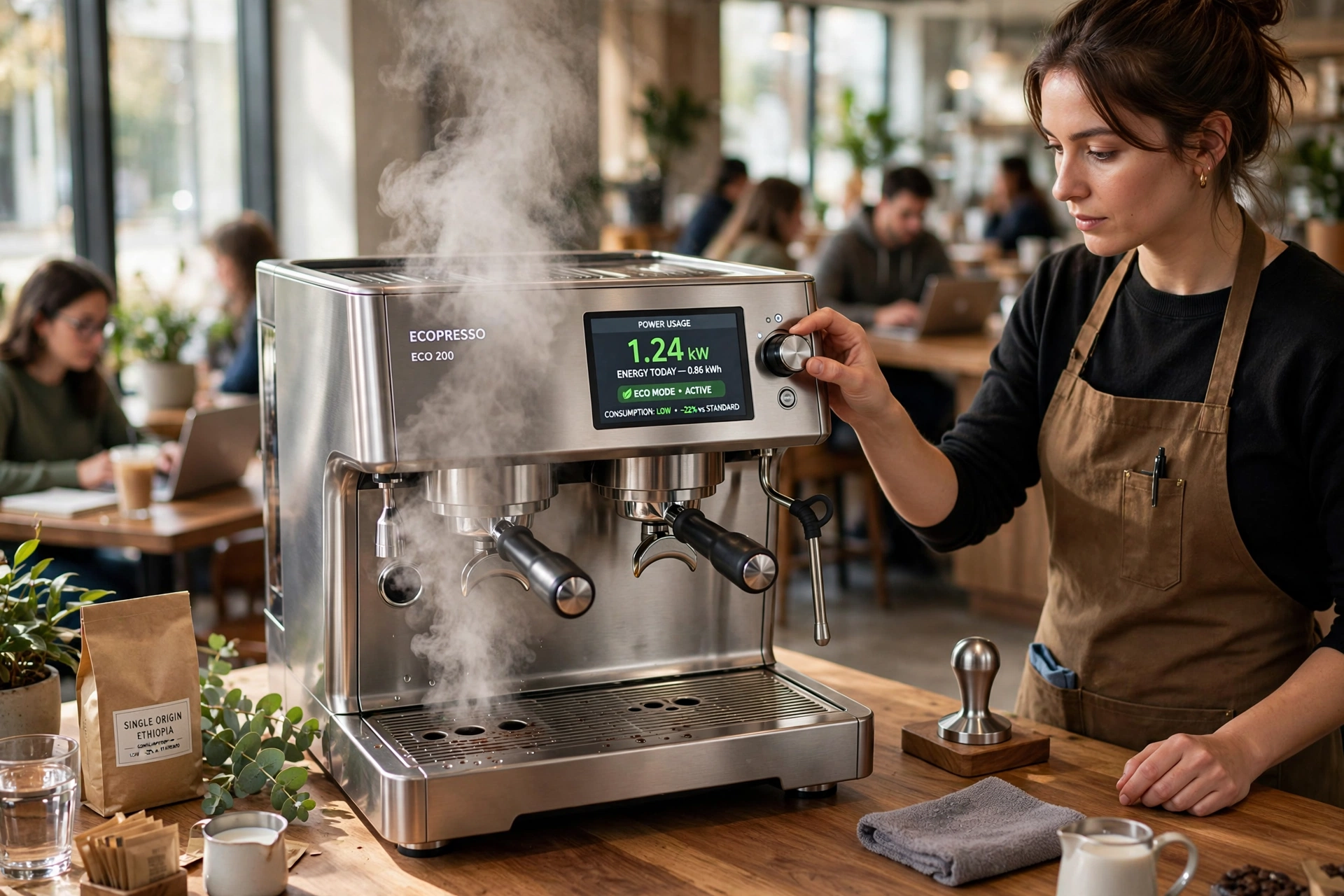
First, prioritize equipment with "Eco-Modes" or programmable sleep timers. Many modern bean-to-cup machines allow you to schedule the machine to enter a low-power state during slow mid-afternoon hours or overnight. This prevents the boiler from working at maximum capacity when there are no customers to serve.
Second, evaluate your water filtration and heating. Water that is heavily scaled requires more energy to heat because the scale acts as an insulator between the element and the water. Ensuring your system meets NSF International (nsf.org) standards for filtration not only protects your health and safety but keeps your energy efficiency at its peak by preventing mineral buildup.
Third, optimize your layout to reduce thermal load. Placing a high-heat espresso machine directly under an air conditioning vent forces the machine to work harder to maintain temperature, wasting energy. By arranging your gear logically, you create a thermal pocket that maintains heat more effectively. If you are looking for a turnkey solution, our Sensa Coffee Service in Charleston SC: Complete Guide | Busy Bean Coffee focuses on these exact optimization details during installation.
The Energy Transition Table
| Feature | Traditional Approach | Generic/Cheap AI Approach | Busy Bean Coffee Modern Approach |
|---|---|---|---|
| Thermal Control | Manual thermostats with wide swings | Basic timers with no sensory feedback | Precision PID controllers with real-time monitoring |
| Insulation | Exposed steel boilers (heat leaks) | Thin foam wrap (degrades quickly) | High-density industrial vacuum insulation |
| Power Logic | Always-on / Manual switch | Simple 'Eco' mode (often overrides quality) | Intelligent power-cycling based on volume demand |
| Maintenance | Reactive (fix when broken) | Scheduled but generic | Predictive maintenance to ensure peak efficiency |
Common Mistakes to Avoid When Choosing Energy Efficient Gear
One of the most frequent mistakes I see is the "Eco-Trap": purchasing a machine marketed as energy efficient that lacks the power to handle peak volume. I once saw a boutique cafe buy a low-wattage machine that saved 10% on electricity but caused 20-minute wait times during the morning rush because the boiler couldn't recover heat fast enough. Efficiency should never come at the cost of capacity.
Free Coffee Pairing Guide & Specialty Roast Cheat Sheet
Unlock the secrets of perfect brewing ratios, water temperatures, and specialty roast profiles. Download the guide.