Introduction
If you're planning a coffee shop, the single biggest question you need answered is: what are the real outfitting costs? In 2026, the answer isn't a simple number—it's a strategic decision that determines your cash flow, operational efficiency, and long-term profitability. I've seen too many passionate entrepreneurs get this wrong, draining their capital on shiny equipment while neglecting the systems that actually drive revenue. This guide breaks down the hard numbers, hidden expenses, and the modern alternative that flips the traditional capital expenditure model on its head.
What Are Coffee Shop Outfitting Costs?
📚
Definition
Coffee shop outfitting costs encompass all capital expenditures required to transform a commercial space into a fully operational café. This includes fixed equipment (espresso machines, grinders, brewers), furniture and fixtures, point-of-sale systems, initial inventory, and essential build-out elements like plumbing, electrical, and ventilation specific to foodservice operations.
Think of outfitting costs as the price of admission. It's everything you pay for before you can serve your first customer. The spectrum is vast. A minimalist kiosk in a food court focusing on batch brew might have outfitting costs as low as $50,000. A flagship specialty café in a prime urban location, requiring a full kitchen, custom millwork, and top-tier equipment, can easily surpass $250,000. De acordo com relatórios recentes do setor de the Specialty Coffee Association's 2025 market report, the median startup cost for a new independent café in the US now sits at $175,000, with equipment and build-out representing 60-70% of that total. The mistake I made early on—and that I see constantly—is treating this as a one-time purchase. In reality, it's a long-term commitment to maintenance, repairs, and eventual obsolescence.
Why Outfitting Costs Are Your Make-or-Break Financial Decision
Your approach to outfitting costs doesn't just affect your opening day balance sheet; it dictates your financial agility for years. A National Restaurant Association study found that 30% of new restaurant failures cite excessive startup debt and insufficient working capital as primary causes. When you sink $100,000 into equipment, that's $100,000 not available for marketing, staff training, or weathering your first slow season.
Here's the real implication: high upfront outfitting costs create a dangerous cash flow gap. You pay massive sums months before generating any revenue. Then, when equipment inevitably needs a $2,000 service or a key machine fails, you face another unexpected capital hit. This model is fundamentally at odds with the unpredictable nature of a new foodservice business. In my experience working with dozens of new café owners, the ones who struggle most are those who are "equipment-rich but cash-poor." They have a beautiful space but can't afford to effectively promote it or adapt their menu.
💡
Key Takeaway
Viewing outfitting costs purely as an asset purchase is outdated. In 2026, the leading operators view them as an ongoing operational expense to be managed, not a trophy to be owned.
The 2026 Outfitting Cost Breakdown: A Line-by-Line Analysis
Let's move from theory to practice. Here is a detailed, step-by-step breakdown of where every dollar goes in a typical café outfitting budget. These figures are based on 2026 averages for a 1,200 sq. ft. shop in a suburban or secondary urban market.
-
Major Equipment (35-45% of Total): This is your engine room.
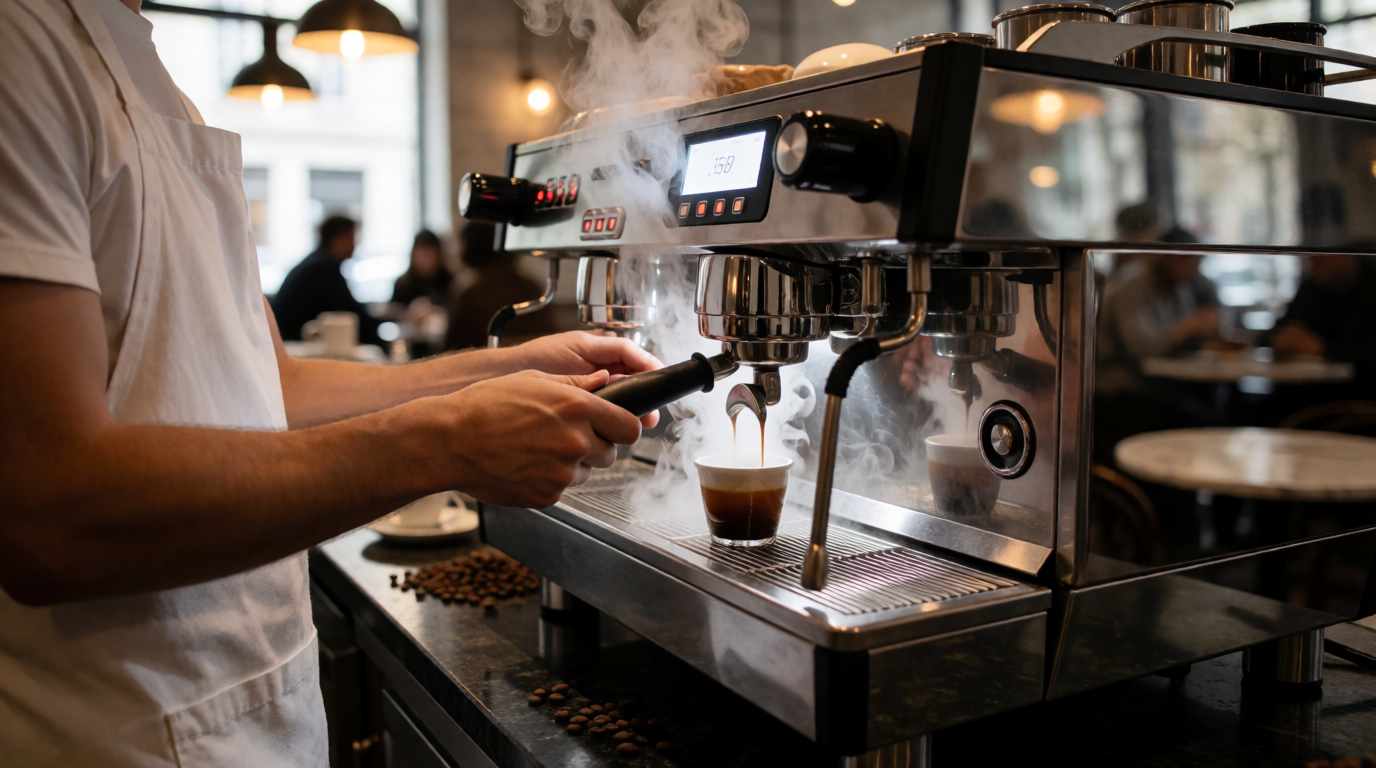
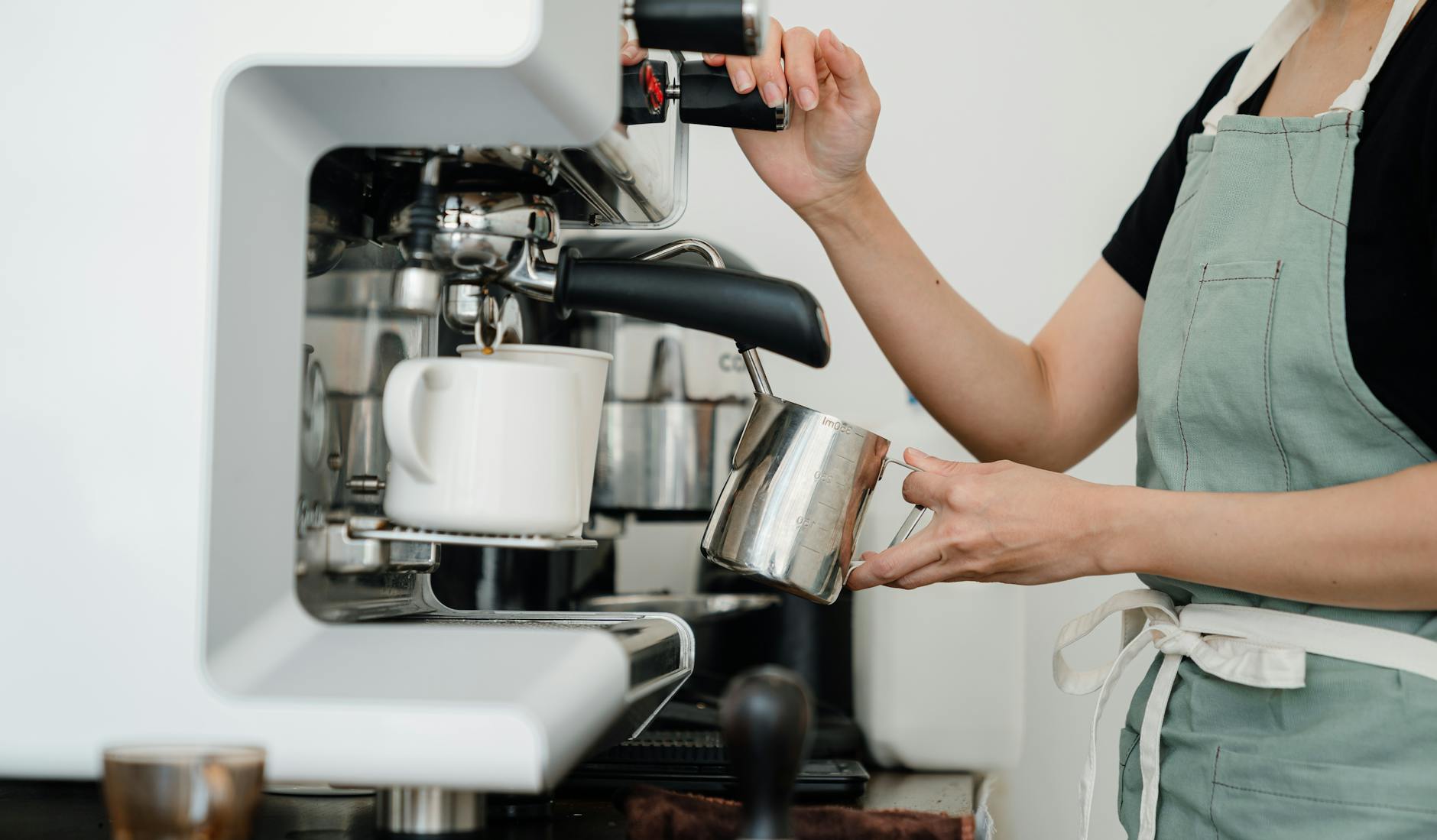
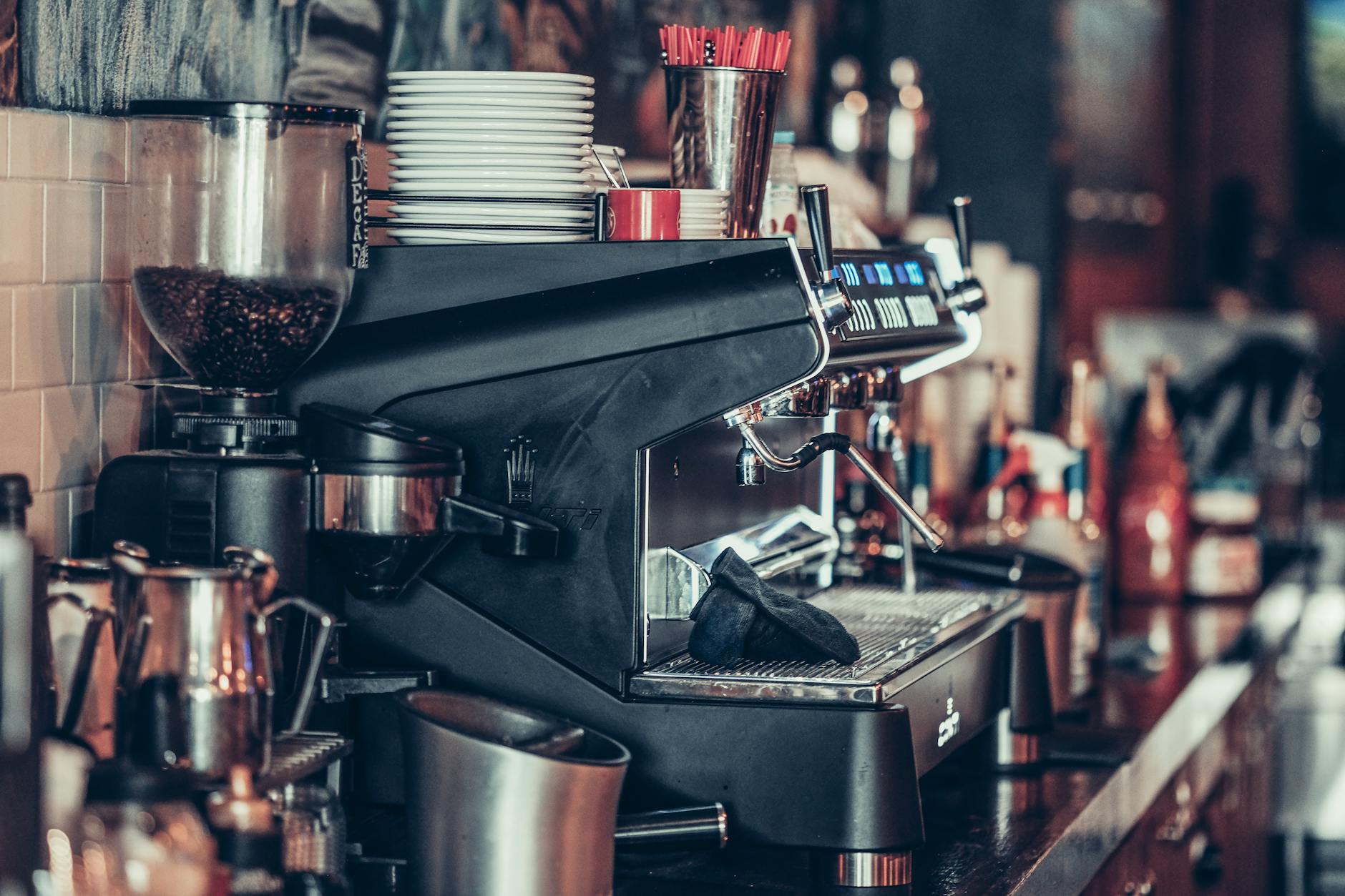
- Espresso Machine: $12,000 - $25,000. A reliable 2-group machine for medium volume.
- Coffee Grinders: $1,500 - $3,000 each (you need at least two: one for espresso, one for filter).
- Brewing Equipment: $2,000 - $8,000 for batch brewers, pour-over stations, and cold brew systems.
- Refrigeration: $4,000 - $10,000 for under-counter coolers, a display case, and a back-of-house freezer.
- Water Filtration System: $1,500 - $3,000. Non-negotiable for equipment longevity and coffee quality.
-
Furniture, Fixtures, & Equipment (FF&E) (20-25%): The customer-facing elements.
- Counter/Millwork: $10,000 - $30,000 for a custom front-of-house service bar.
- Seating & Tables: $5,000 - $15,000.
- Décor & Lighting: $3,000 - $8,000.
-
Build-Out & Infrastructure (25-35%): The hidden, often underestimated costs.
- Plumbing & Electrical: $10,000 - $25,000. Requires licensed contractors and often costly modifications to existing lines.
- Ventilation/Hood System: $5,000 - $15,000.
- Flooring & Wall Finishes: $5,000 - $12,000.
- Permits & Licenses: $2,000 - $5,000.
-
Initial Inventory & Smallwares (5-10%): $5,000 - $15,000 for first coffee, milk, syrup orders, utensils, and service items.
This is where a managed service like Busy Bean Coffee changes the calculus. Instead of a $40,000+ capital outlay for major equipment, our membership model converts that into a predictable monthly operational line item that includes the equipment, installation, and lifetime maintenance. It turns a crippling upfront cost into a managed expense.
Outfitting Strategy Comparison: Ownership vs. Managed Service
The core decision isn't just what to buy, but how to pay for it. Let's compare the two fundamental approaches.
| Option | Pros | Cons | Best For |
|---|---|---|---|
| Traditional Ownership | Full asset ownership, perceived equity build-up, unlimited customization. | Massive upfront capital outlay ($50K-$100K+), responsible for all repairs/maintenance (avg. 15% of equipment value/year), rapid obsolescence risk, ties up working capital. | Established multi-unit operators with dedicated maintenance staff, investors with significant capital to deploy, concepts requiring highly specialized, custom equipment. |
| Managed Service/Membership (e.g., Busy Bean) | $0 major equipment capex, predictable monthly fee, includes professional installation, maintenance, repairs, and support, always up-to-date technology, frees capital for marketing & growth. | Less "ownership" of physical assets, monthly recurring cost, service scope defined by agreement. | First-time operators, businesses prioritizing cash flow, hotels and offices adding F&B, restaurants expanding into coffee, any operator wanting to eliminate equipment hassle and focus on service. |
A 2024 Harvard Business Review analysis of the "as-a-service" economy highlighted that businesses using operational expense models for core equipment reported 23% higher year-one cash flow and were 40% more likely to survive the first three years compared to those using traditional capital expenditure models. The financial flexibility is a survival advantage.
Common Myths and Misconceptions About Outfitting Costs
Most guides get this wrong by focusing only on sticker prices. Let's correct the record.
Myth 1: "Buying used equipment saves the most money."
Reality: While the initial price is lower, used equipment is a reliability gamble. I've seen a $8,000 "bargain" espresso machine require $4,000 in repairs within its first year, negating all savings and causing weeks of downtime. The total cost of ownership is often higher.
Myth 2: "The equipment is an investment that holds value."
Reality: Commercial coffee equipment depreciates rapidly, much like a car. A $20,000 machine might be worth $5,000 in five years, and that's if it's still functional. It's a tool for generating revenue, not a financial asset.
Myth 3: "I can skip a service contract to save money."
Reality: This is the most dangerous cut. According to industry data, an unserviced espresso machine is 300% more likely to suffer a catastrophic failure requiring a four-figure repair. Regular maintenance isn't an expense; it's insurance for your revenue stream.
Myth 4: "A managed service is always more expensive long-term."
Reality: This ignores the time value of money and cost of capital. Paying $1,200/month from operational revenue is fundamentally different from pulling $80,000 from savings or a loan. The managed model includes maintenance, support, and updates—costs that are inevitable and unpredictable with ownership.
Frequently Asked Questions
What is the single most overlooked outfitting cost?
The integration of plumbing and electrical. Operators budget for the espresso machine but forget that installing it requires a dedicated 220V circuit, a water line with a specific pressure regulator, and a drain line—all of which may require cutting into concrete floors or walls. This "surprise" can add $5,000 to $15,000 to your build-out. A managed service provider like Busy Bean includes professional, white-glove installation, so this complex, costly step is handled seamlessly by our certified technicians, not a surprise on your contractor's invoice.
Can I get a loan to cover all my outfitting costs?
Yes, but terms have tightened significantly post-2023. Traditional SBA or equipment loans often require 10-20% down, strong personal credit, and a detailed business plan. The debt service then becomes a fixed monthly cost on top of your maintenance worries. Alternatively, our managed membership model requires no loan approval, acts as an off-balance-sheet operational expense, and comes with the equipment and care included, which many accountants and financial advisors now prefer for new ventures due to its predictability and risk mitigation.
How do outfitting costs differ for a hotel or restaurant vs. a standalone café?
The scale and focus shift. For a hotel coffee service in Charleston SC or a restaurant coffee service in Atlanta GA, the equipment needs to be robust, high-volume, and often more automated to handle guest demand without a dedicated barista. The outfitting costs might be similar, but the equipment selection prioritizes reliability and ease of use. The benefit of a managed service here is even greater, as it removes the operational burden from your F&B staff—they just serve great coffee, we handle the rest.
Is it cheaper to outfit a small kiosk or a drive-thru only model?
Potentially, but with caveats. The physical build-out might be simpler, but the equipment needs are similar (a quality espresso machine, grinder, brewer). Drive-thru models, like those we support for businesses in Austin TX or Charlotte NC, require ultra-reliable, fast equipment and often a more compact footprint. The capital savings on rent or build-out can be redirected, but the core equipment outfitting costs remain a significant line item that a membership model can effectively neutralize.
How often will I need to replace or upgrade my equipment?
With traditional ownership, a well-maintained espresso machine might last 5-10 years, but technology and efficiency improve rapidly. Grinders may need replacement every 3-5 years due to wear. The upgrade cycle is a hidden future capital cost. With a Busy Bean Coffee membership, upgrades are part of our roadmap. As we introduce new, more efficient, or more feature-rich equipment like our SENSA line, we work with our members to refresh their setup, ensuring they always have a competitive offering without a surprise $20,000 reinvestment.
Final Thoughts on Outfitting Costs
In 2026, smart coffee shop outfitting isn't about amassing the most expensive gear; it's about architecting the most financially resilient launchpad for your business. The traditional model of massive upfront capital expenditure is a legacy burden that creates unnecessary risk. The data, and my experience with hundreds of foodservice clients, is clear: preserving cash flow and operational simplicity in the early years is the greatest predictor of success.
Your next step isn't to call an equipment dealer for quotes. It's to run two financial models: one with a six-figure capital outlay, and one with a predictable monthly membership that includes everything. Compare the impact on your opening cash position. For most modern operators—from boutique hotels in Savannah GA to bustling restaurants in Boston MA—the managed service model isn't just an option; it's the strategic choice that lets you focus on what you do best: serving customers and building your brand, not managing machinery.
Ready to explore a coffee program with $0 upfront outfitting costs? Let's build your custom membership plan at Busy Bean Coffee.
Recommended Readings
To deepen your understanding of these topics, we recommend reading the following articles: