📖This article is part of the complete guide to Ultimate Guide to Automated Coffee Machines for Businesses.
I once visited a high-end bistro where the head barista was so overwhelmed by a morning rush that he spent ten minutes fighting a manual espresso machine that had lost its calibration. Three customers walked out because the wait was too long, and the four drinks that actually made it to the tables were inconsistent; one was burnt, and another was barely a latte. In the foodservice industry, that level of volatility is a silent profit killer. When you rely solely on manual skill in a high-pressure environment, your quality is only as good as your most tired employee.
For a comprehensive overview of the landscape, explore our Ultimate Guide to Automated Coffee Machines for Businesses.
What Are the Core Benefits of Automated Coffee Machines for Business?
📚
Definition
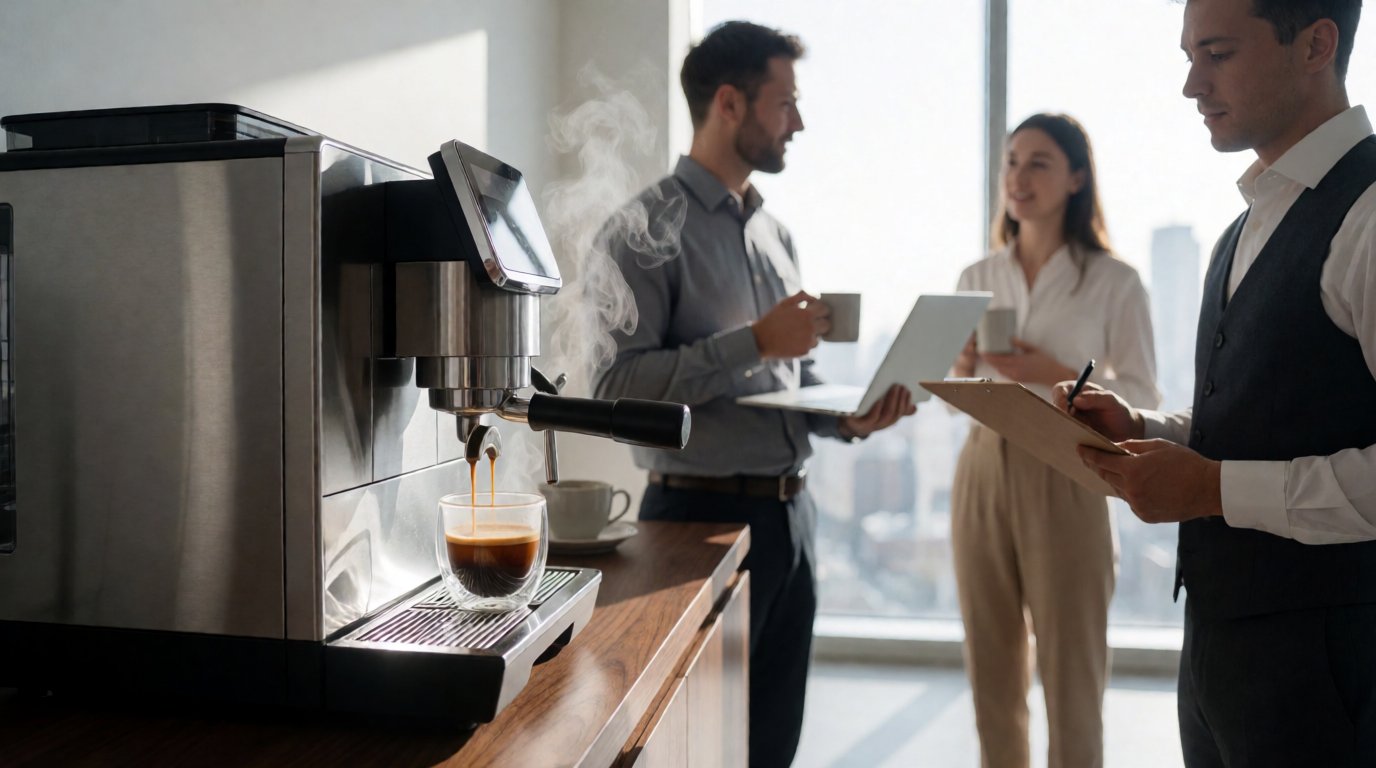
Automated coffee machines for business are commercial-grade systems designed to handle the entire brewing process—from grinding the coffee bean to frothing milk—with minimal human intervention, ensuring a standardized output every time.
When we talk about the benefits automated coffee machines business owners seek, the primary driver is the elimination of human error. In a traditional manual setup, the variables are endless: the grind size, the tamping pressure, the water temperature, and the milk steaming technique all vary from person to person. An automated system locks these variables in. By utilizing precision-engineered internals, these machines ensure that the 100th cup of the day tastes exactly like the first.

In my experience working with dozens of hospitality clients, the most immediate shift isn't just the taste, but the workflow. Automation removes the 'bottleneck' at the espresso station. Instead of a barista spending 90 seconds carefully crafting a single cappuccino, an automated system can deliver a cafe-quality beverage in a fraction of the time. This allows staff to focus on hospitality and guest engagement rather than getting bogged down in the technical minutiae of extraction. For businesses in Mount Pleasant, SC, where the tourist flow can be unpredictable, this scalability is essential to maintaining a high turnover rate without sacrificing quality.
Furthermore, the integration of advanced software in 2026 models allows for remote monitoring and precise dosage control. This means less waste. Manual dosing often leads to 'puck waste,' where excess ground coffee is swept into the bin. Automated systems measure to the gram, directly impacting the bottom line by reducing the cost of goods sold (COGS).
Why Does Coffee Automation Matter for Your Bottom Line?
Consistency is the bedrock of brand loyalty in foodservice. According to the Specialty Coffee Association (SCA), adherence to technical standards in brewing is what separates specialty coffee from commodity coffee. When a business can guarantee a gold-standard extraction without needing a master barista on every shift, they decouple their quality from their labor market volatility.
1. Reduction in Labor Costs and Training Time
Training a skilled barista takes months, if not years. In a high-turnover industry, this is a constant financial drain. Automated machines reduce the training curve from weeks to hours. A new hire can be taught to operate a high-end automated system in a single afternoon, ensuring that the business remains operational and profitable even during staffing transitions. This is particularly relevant when comparing Bean to Cup Commercial Coffee Machines Explained to traditional semi-automatics.
2. Increased Throughput and Revenue
In a peak rush, the speed of service is the only thing that limits your revenue. If your manual process takes 3 minutes per drink and your automated process takes 45 seconds, you have effectively quadrupled your capacity during those critical windows. More drinks served per hour equals more revenue per square foot of your facility.
3. Waste Mitigation and Inventory Control
Manual brewing is messy. Spilled grounds, over-poured milk, and 'dialing in' the machine every morning result in significant waste. Automated systems provide precise control over every milliliter of water and gram of coffee. By optimizing the yield of the Coffea arabica beans used, businesses can see a noticeable decrease in monthly waste expenses.
4. Health and Safety Compliance
Maintaining sanitary standards is non-negotiable. The NSF International provides rigorous standards for food equipment to prevent contamination. Modern automated machines often feature self-cleaning cycles and enclosed milk systems that reduce the risk of bacterial growth compared to manual pitchers and steam wands that may be wiped with the same cloth used on counters.
💡
Key Takeaway
The financial benefit of automation is not just in the speed of the drink, but in the stabilization of operational costs and the reduction of waste-related losses.
How to Integrate Automation Into Your Service Model
Implementing automation is not about replacing the human touch; it is about enhancing it. The goal is to move your staff from being 'machine operators' to 'hospitality providers.'
Step 1: Audit Your Current Peak Volume
Before investing, analyze your busiest 2-hour window. Calculate how many drinks are ordered and how many are delayed. If your wait times exceed five minutes, you are losing money. This data helps you determine if you need a mid-range system or a high-capacity powerhouse. If you are unsure of the specific hardware, our guide on How to Choose an Automated Coffee Machine for Business provides a detailed framework for selection.
Step 2: Define Your Beverage Menu
Automation allows for incredible variety without complexity. You can program specific recipes—such as a Flat White, a Macchiato, or a double-shot Espresso—into the machine. This ensures that regardless of who is behind the counter, the recipe is followed perfectly. For those serving a diverse clientele, consider how these machines integrate with Automated Coffee Service in Fort Worth TX - Complete Guide | Busy Bean Coffee models where variety and speed are prioritized.
Step 3: Optimize Station Ergonomics
Place the machine in a location that minimizes the steps a staff member must take. The 'golden triangle' of the beverage station should include the machine, the milk fridge, and the pickup counter. When using a system from Busy Bean Coffee, we help you map this layout to maximize efficiency.
Step 4: Establish a Maintenance Schedule
Automation does not mean zero maintenance. To keep the machine running at peak performance, you must adhere to daily cleaning cycles and monthly deep-cleans. Neglecting the descaling process can lead to mineral buildup, which ruins the taste of the coffee and shortens the life of the boiler.

Step 5: Train Staff on the 'Last Mile' of Quality
While the machine handles the extraction, the barista still handles the presentation. Train your team on the final pour and the greeting. This ensures the guest feels they are receiving a handcrafted product, even though the technical precision was handled by the machine.
Automation vs. Traditional Manual Brewing
Many business owners fear that automation ruins the 'soul' of the coffee. However, the reality is that a perfectly calibrated automated machine produces a more consistent cup than a mediocre barista using a manual machine. The difference lies in the predictability of the outcome.
| Feature | Traditional Manual Approach | Generic/Cheap AI Approach | Modern Professional Automation |
|---|---|---|---|
| Consistency | Variable; depends on barista skill | Mediocre; often lacks depth | High; precision-engineered |
| Speed | Slow; high friction during rush | Fast, but low quality | Fast and high quality |
| Training | Long; requires certification | Minimal; push-button | Fast; focus on hospitality |
| Waste | High; manual dosing errors | Medium; inconsistent output | Low; gram-accurate dosing |
| Maintenance | Constant manual cleaning | Frequent breakdowns | Scheduled, automated cycles |
As shown above, the generic approach (cheap home-style machines used in businesses) often fails because it cannot handle the volume. A professional system, like those we provide at Busy Bean Coffee, combines the speed of automation with the quality of a professional barista.
Common Mistakes to Avoid When Automating
I have seen many businesses make the mistake of buying the cheapest machine they could find on a wholesale site, thinking that 'automation is automation.' This is a costly error. Cheap machines often use plastic internals and low-grade pumps that fail under the pressure of a commercial environment. This results in downtime that costs far more than the initial savings.
1. Ignoring Water Quality
Water is 98% of your coffee. If you plug a high-end automated machine into hard water without a professional filtration system, you will destroy the boiler within months. Always invest in a water softening system to protect your investment and ensure the flavor profile of your Arabica coffee remains clean.
2. Over-Reliance on the Machine
Automation is a tool, not a replacement for quality control. I always advise my clients to perform a 'taste test' at the start of every shift. Even the best machines can drift slightly due to humidity or bean age. A quick sip ensures the calibration is still spot-on.
3. Neglecting the Coffee Bean Quality
A common misconception is that a great machine can make bad coffee taste good. It cannot. In fact, an automated machine is so precise that it will highlight the flaws in low-quality beans. To truly leverage the benefits of automation, you must use high-grade specialty coffee. This is where the synergy of a Coffee delivery service in Charlotte NC - Complete Guide | Busy Bean Coffee becomes valuable, ensuring a fresh, consistent roast arrives at your door.
4. Underestimating Power Requirements
Commercial automated machines have significant power draws, especially when heating large boilers for milk and water simultaneously. Installing these on a standard household circuit often leads to tripped breakers during the morning rush. Ensure your electrical panel can handle the load before the installation date.
5. Skipping Professional Installation
Plumbing a coffee machine is not a DIY project. A small leak behind a counter can cause thousands of dollars in water damage and mold. Professional installation ensures that the pressure regulators are set correctly, which is vital for the longevity of the pump.
Frequently Asked Questions
Do automated machines produce lower quality coffee than manual ones?
Not in a commercial setting. While a world-champion barista can technically produce a superior cup manually, the average employee cannot. Automated machines use precision PID controllers to maintain water temperature within a fraction of a degree and electronic grinders to ensure perfectly consistent particle size. For 99% of customers, the quality is indistinguishable from a manual pour, and the consistency is actually superior because it removes the risk of human error during a busy shift.
How much can I actually save on labor costs?
Savings vary by volume, but many businesses report a reduction in training time by as much as 80%. Instead of spending weeks training a staff member on tamping, steaming, and extraction, you spend a few hours on the interface. Furthermore, you can often operate your beverage station with one less person during mid-peak hours because the machine handles the technical work, allowing the remaining staff to manage both the coffee and the food service simultaneously.
Are these machines difficult to clean and maintain?
Modern professional systems are designed for ease of use. Most feature automated 'back-flushing' and milk line cleaning cycles that run with a single button press. The primary maintenance is the regular replacement of water filters and the occasional deep-clean of the brew group. When you utilize a managed service like Busy Bean Coffee, this maintenance is often handled for you, ensuring the machine never goes offline due to neglect.
Can I still offer 'specialty' drinks with an automated machine?
Absolutely. High-end automated machines allow you to program custom recipes. You can adjust the milk-to-coffee ratio, the temperature, and the volume to create signature drinks. Because the base extraction is so consistent, you can add artisanal syrups or toppings knowing that the coffee foundation is perfect every time. This allows you to maintain a 'specialty' brand image while operating at a commercial scale.
How long does a commercial automated machine typically last?
With proper maintenance and water filtration, a professional-grade machine can last 7 to 10 years. The most common points of failure are the seals and gaskets, which are cheap and easy to replace. The primary factor in longevity is water quality; those who use high-quality filtration and perform regular descaling see significantly longer lifespans than those who neglect the internal plumbing of the system.
Recommended Readings
To deepen your understanding of these topics, we recommend reading the following articles:
- Bean to Cup Commercial Coffee Machines Explained
- Commercial Automated Coffee Machines Cost Breakdown
- How to Choose an Automated Coffee Machine for Business
- Automated Coffee Machines for Hotels
Conclusion
Investing in automation is no longer a luxury for foodservice businesses; it is a strategic necessity for those who want to scale without losing quality. By reducing labor dependencies, eliminating waste, and ensuring that every guest receives a perfect cup of coffee, you stabilize your operations and protect your margins. In a market where guest expectations are higher than ever, the ability to deliver speed and quality simultaneously is a massive competitive advantage.
Whether you are running a boutique hotel, a fast-paced restaurant, or a corporate cafe, the goal is to remove friction from your workflow. When the technology handles the precision, your team can handle the people. For a deeper dive into the technical specifications and how to calculate your specific ROI, revisit our Ultimate Guide to Automated Coffee Machines for Businesses.
Ready to upgrade your beverage service? Visit Busy Bean Coffee to explore our managed coffee solutions and see how we can bring professional automation to your business.
Free Coffee Pairing Guide & Specialty Roast Cheat Sheet
Unlock the secrets of perfect brewing ratios, water temperatures, and specialty roast profiles. Download the guide.