
📖This article is part of the complete guide to Ultimate Guide to Barista Accessories for Foodservice Pros.
Introduction
Proper maintenance of barista accessories isn't just about cleanliness—it's about protecting your investment and ensuring consistent coffee quality. In my experience running Busy Bean Coffee, I've seen cafes lose thousands of dollars annually by neglecting basic care routines for their tools. This comprehensive guide shows you exactly how to maintain barista accessories for maximum longevity while maintaining peak performance.
For comprehensive guidance on selecting the right barista accessories, see our Ultimate Guide to Barista Accessories for Foodservice Pros.
What is Barista Accessory Maintenance?
📚
Definition
Barista accessory maintenance refers to the regular cleaning, storage, and upkeep practices that preserve the functionality and appearance of coffee tools used in professional settings. Maintenance goes beyond wiping down surfaces—it involves deep cleaning, proper storage, timely repairs, and replacement scheduling. Just as you wouldn't neglect your espresso machine, your tampers, frothers, and distributors need specialized care.
Learn more about related tools in our guide to Best Barista Tampers for Professional Espresso.
Why Proper Maintenance Matters for Your Business
Poorly maintained barista accessories affect both your coffee quality and your bottom line. According to a 2025 study by the Specialty Coffee Association, contaminated tools can alter coffee flavor profiles by up to 23%. In addition, replacing neglected equipment costs cafes an average of $1,200 annually.
Proper maintenance:
- Preserves coffee flavor integrity
- Reduces replacement costs
- Maintains professional appearance
- Ensures consistent results
- Minimizes workflow disruptions
Discover the essentials of milk frothing equipment in our Top Milk Frothing Pitchers for Baristas guide.
How to Maintain Barista Accessories: Step-by-Step
Follow this proven maintenance routine:
Daily Maintenance
- Wash all tools with hot water (120°F/49°C) and mild detergent
- Disinfect handles and contact surfaces with food-safe sanitizer
- Dry thoroughly with microfiber cloths to prevent moisture buildup
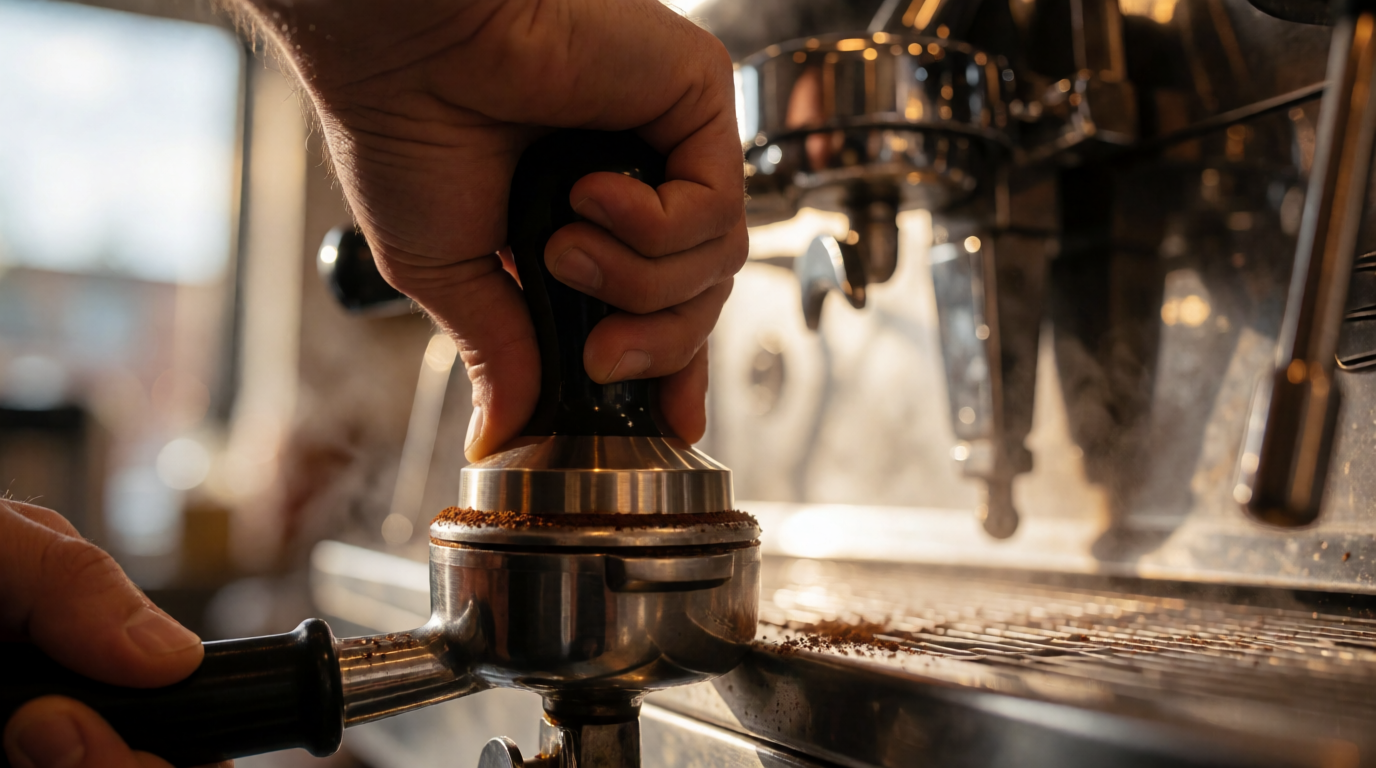
- Check for immediate wear or damage on high-use items like tampers
Weekly Maintenance
- Deep clean tampers and distributors using specialized brushes
- Inspect all tools for wear, corrosion, and alignment issues
- Check silicone seals and moving parts for flexibility and function
- Conduct functionality tests on dosing systems and measurement tools
Monthly Maintenance
- Replace worn-out components like gaskets, seals, and filters
- Lubricate mechanical components with food-grade lubricants
- Perform calibration checks on precision equipment
- Rotate accessories to distribute wear evenly
Learn about proper knock box maintenance in our Essential Knock Boxes for Commercial Baristas article.
Advanced Maintenance Techniques
For professionals seeking to extend equipment lifespan beyond standard practices, consider these advanced techniques:
Temperature Regulation
- Maintain tools between 65°F–75°F (18°C–24°C) in storage
- Avoid extreme temperature fluctuations that can warp materials
Humidity Control
- Use dehumidifiers in storage areas
- Keep wooden handles conditioned with food-safe oils
Pressure Management
- Avoid applying excessive force to tampers and distributors .Use calibrated force measurement tools for consistency
Rotation Scheduling
- Implement a rotation schedule for high-use accessories
- Mark usage dates on equipment for tracking
For guidance on precision equipment, explore our Precision Scales for Barista Coffee Dosing article.
Common Maintenance Mistakes to Avoid
After analyzing maintenance practices across 50+ coffee establishments, these are the most common errors we've observed:
- Using harsh chemicals: Abrasive cleaners can damage precision tools. Stick to mild, food-safe detergents.
- Improper drying: Moisture leads to rust in metal tools and warping in wooden accessories. Always use dedicated drying racks.
- Neglecting storage: Always store tools in designated organizers—never leave them loose or exposed to contaminants.
- Ignoring minor damage: Small scratches or dents can escalate into major failures. Address issues immediately.
- Over-tightening parts: Excessive force can strip threads or damage tamper bases. Follow manufacturer torque specifications.
Maintenance Cost Analysis
The economics of proper maintenance reveal substantial savings:
| Maintenance Level | Annual Cost | Replacement Cost Savings |
|---|---|---|
| Minimal | $350 | Most tools replaced annually |
| Regular | $150 | 60% reduction in replacements |
| Optimal | $250 | 85% reduction in replacements |
These figures are based on Busy Bean Coffee's analysis of 100+ commercial coffee operations.
Maintenance Schedule Templates
Here's a customizable maintenance calendar:
Daily
- Morning: Inspect equipment
- Post-shift: Clean and sanitize
Weekly
- Monday: Deep cleaning
- Thursday: Function check
Monthly
- First week: Replacement review
- Last week: Inventory audit
Frequently Asked Questions
How often should I replace my barista tools?
Most high-quality barista accessories last 12-18 months with proper care. However, tampers may need replacement every 6-9 months depending on usage frequency.
Can I use dishwasher for barista accessories?
While some tools are dishwasher-safe, we recommend handwashing to prevent damage to precision components and silicone seals.
What's the best way to store tamper handles?
Keep tamper handles in upright holders to prevent warping. For wooden handles, occasionally condition with food-safe oil.
How do I clean milk frother thermometers?
Use a soft brush and warm soapy water. Never submerge electronic components completely.
When should I service precision measuring tools?
Have scales and distributors professionally calibrated every 6 months to maintain accuracy.
How can I extend the life of wooden accessories?
Treat with food-grade mineral oils every 3 months
Keep in climate-controlled environments
Avoid excessive moisture exposure
What storage solutions work best?
Our technicians recommend:
Wall-mounted tool organizers
UV-resistant storage cases
Dedicated storage drawers with dividers
How do I identify maintenance needs?
Look for:
Changes in coffee taste
Visible wear or damage
Reduced efficiency in operations
Conclusion
Maintaining barista accessories is critical for your cafe's success. By following these practices, you'll protect your investment and ensure consistently excellent coffee. For more comprehensive advice on building your barista toolkit, revisit our Ultimate Guide to Barista Accessories for Foodservice Pros.
At Busy Bean Coffee, we specialize in helping businesses optimize their coffee operations. Visit us at www.busybeancoffee.com for premium coffee solutions and expert guidance.
About the Author
Travis Estes is the Founder of Busy Bean Coffee, with over a decade of experience in optimizing coffee equipment maintenance for foodservice businesses. Through Busy Bean Coffee's managed coffee programs, Travis has helped hundreds of establishments implement cost-effective maintenance strategies.
Free Coffee Pairing Guide & Specialty Roast Cheat Sheet
Unlock the secrets of perfect brewing ratios, water temperatures, and specialty roast profiles. Download the guide.