📖This article is part of the complete guide to Ultimate Guide to Industrial Coffee Roasters for Business.
What is Industrial Coffee Roaster Capacity and Why Does It Matter in 2026?
📚
Definition
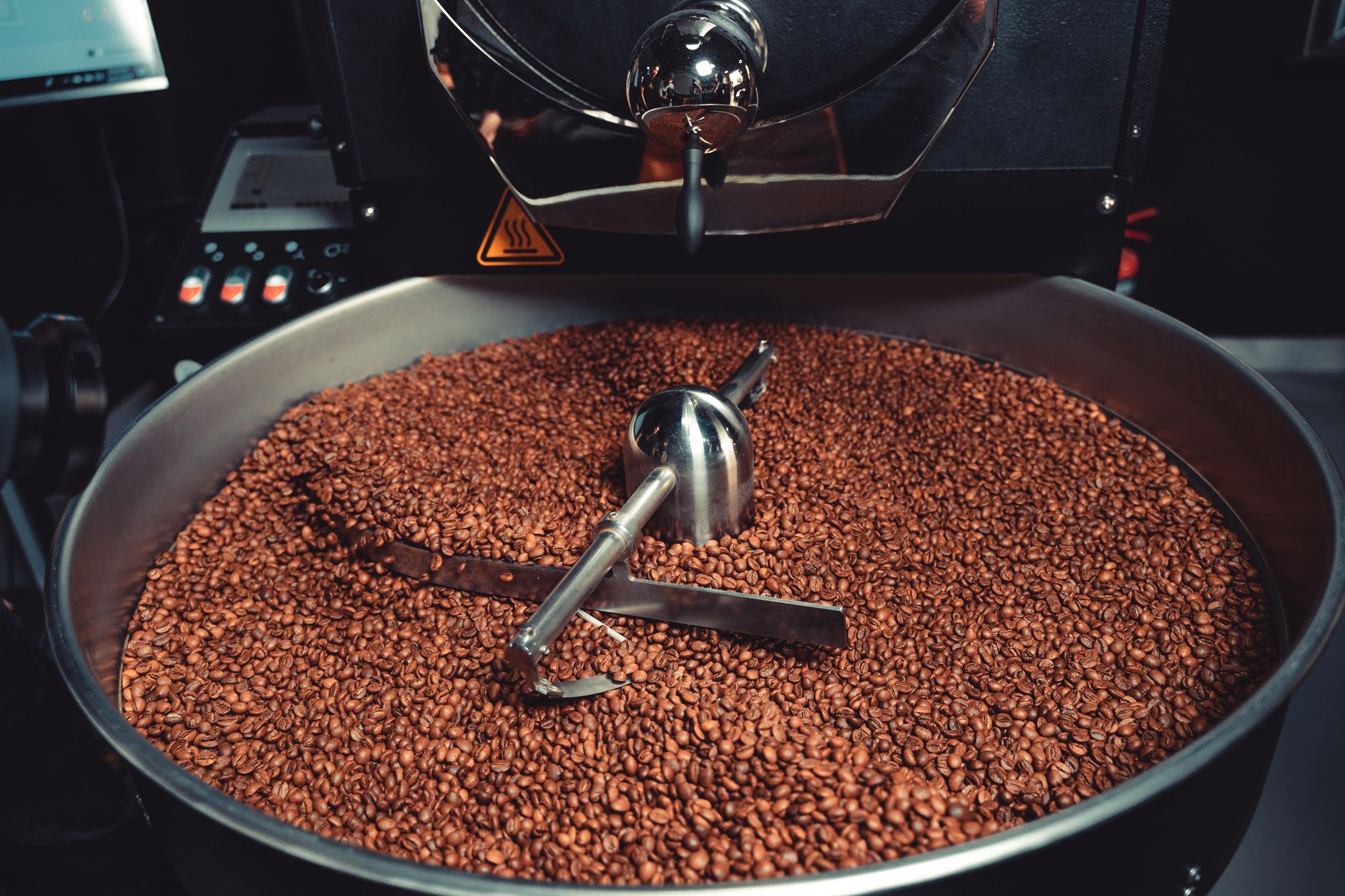
Industrial coffee roaster capacity refers to the maximum weight of green coffee beans a roasting machine can process per batch, typically measured in kilograms or pounds. This metric, combined with batch cycle time, determines the total output (kg/hr or lbs/hr) a roaster can achieve.
For any business scaling coffee production—whether a regional roasting company, a multi-location restaurant group, or a hotel chain launching its own private label—understanding industrial coffee roaster capacity is the difference between a profitable operation and a bottlenecked one. In my experience working with foodservice operators transitioning from commercial to industrial roasting, the most common mistake is underestimating the output needed to meet wholesale demand.
De acordo com relatórios recentes do setor de the Specialty Coffee Association's 2025 Roastery Benchmarking Report, the median craft roastery in the United States produces approximately 150,000 pounds of coffee annually. However, the top 10% of roasters exceed 500,000 pounds per year. To hit these volumes, you need more than just a big drum—you need a precise match between capacity, workflow, and business goals.
In 2026, the global specialty coffee market is projected to grow at a CAGR of 12.2%, according to a report by Grand View Research. This growth is driving demand for industrial roasters capable of consistent, high-volume output. But capacity isn't just about size—it's about efficiency, energy consumption, and the ability to maintain flavor profiles at scale.
For comprehensive context, see our Ultimate Guide to Industrial Coffee Roasters.
Why Industrial Coffee Roaster Capacity Matters for Your Business
Choosing the right capacity directly impacts your bottom line. Here are three key reasons this metric matters:
1. Production Throughput and Scalability
A roaster with a 60-kg capacity running a 15-minute cycle can produce 240 kg per hour (assuming four batches). If your demand grows to 500 kg per day, a 60-kg roaster requires over eight hours of continuous operation. A 120-kg roaster cuts that time in half, freeing up labor and reducing energy costs. De acordo com relatórios recentes do setor de McKinsey's 2024 Operations Report, companies that right-size production equipment see a 15–20% improvement in overall equipment effectiveness (OEE).
2. Consistency Across Batches
Larger drums can pose challenges for heat distribution. A study published in the Journal of Food Engineering found that batch sizes exceeding 80% of a roaster's nominal capacity can lead to uneven bean development. This means you must leave headroom—typically 10–20% of stated capacity—to ensure consistent roast profiles.
3. Energy Efficiency and Sustainability
Industrial roasters consume significant energy during the heating and cooling phases. A 120-kg gas-fired roaster uses roughly 250,000 BTUs per hour. Running at 80% capacity versus 100% capacity can reduce energy waste by up to 12%, according to data from the Roastery Energy Alliance. In 2026, with energy costs volatile, this efficiency translates directly to margin protection.
💡
Key Takeaway
Capacity isn't a number on a spec sheet—it's a strategic lever that affects throughput, quality, and operating costs.
How Industrial Coffee Roaster Capacity Is Measured
Understanding capacity requires knowing three core metrics:
| Metric | Definition | Example |
|---|---|---|
| Batch Capacity (kg) | Max green beans per load | 60 kg, 120 kg, 240 kg |
| Cycle Time (minutes) | Total roast + cooling time | 12–20 minutes typical |
| Hourly Output (kg/hr) | Batches per hour × batch capacity | 4 batches × 60 kg = 240 kg/hr |
The relationship is straightforward: Output = (Batch Capacity × 60) / Cycle Time in minutes. But real-world output is lower due to loading, cooling, and cleaning intervals. A 120-kg roaster with a 15-minute cycle theoretically produces 480 kg/hr, but after accounting for a 10% downtime factor, effective output is closer to 432 kg/hr.
Batch Capacity Tiers for 2026
- Small Industrial (15–60 kg): Ideal for micro-roasteries producing up to 100,000 lbs/year.
- Mid-Range Industrial (60–150 kg): Suitable for regional roasters targeting 200,000–500,000 lbs/year.
- Large Industrial (150–300+ kg): Used by national brands and private-label manufacturers exceeding 1 million lbs/year.
According to the 2025 State of the Roastery Report by Roast Magazine, 42% of U.S. roasteries operate machines in the 60–120 kg range, making this the sweet spot for growth-oriented businesses.
For more on different machine types, see our guide on Types of Industrial Coffee Roasters Explained.
Factors That Influence Effective Output
Capacity is just the starting point. Several operational factors determine what you can actually produce:
1. Roast Profile Complexity
Light roasts require longer development times (12–14 minutes), while dark roasts can be completed in 8–10 minutes. If your menu is heavy on single-origin light roasts, your effective hourly output drops by 20–30% compared to a dark-roast-focused operation.
2. Cooling Time
After roasting, beans must be cooled rapidly to stop the process. Industrial roasters typically integrate cooling trays that can handle one batch in 4–6 minutes. But if your cooling capacity is undersized—for example, a 60-kg cooler paired with a 120-kg roaster—you create a bottleneck.
3. Loading and Unloading Automation
Manual loading of green beans adds 2–3 minutes per batch. Automated hopper systems reduce this to under 30 seconds. For a roaster running 20 batches per day, automation saves nearly an hour of labor daily.
4. Maintenance and Cleaning
Build-up of chaff and oil residue requires cleaning every 40–60 batches. A 30-minute deep cleaning after every 50 batches reduces annual available production time by roughly 2%. Factor this into your capacity planning.
In my experience, businesses that implement preventive maintenance schedules see a 15% increase in effective output over those that run machines until failure.
How to Calculate Your Required Capacity
Follow this step-by-step approach to determine the right industrial coffee roaster capacity for your business:
Step 1: Define Your Target Annual Output
Start with your sales forecast. If you plan to sell 200,000 pounds of roasted coffee per year, that's your baseline.
Step 2: Account for Yield Loss
Green coffee loses 12–20% of its weight during roasting (moisture evaporation). For 200,000 lbs of roasted coffee, you need approximately 235,000–240,000 lbs of green beans.
Step 3: Determine Operating Days and Hours
Assume 250 operating days per year (weekdays minus holidays) and 8 hours of production per day. That gives you 2,000 production hours annually.
Step 4: Calculate Required Hourly Output
240,000 lbs / 2,000 hours = 120 lbs/hr (approximately 54 kg/hr).
Step 5: Select Batch Capacity
Assuming a 15-minute cycle and 4 batches per hour, a 15-kg roaster produces 60 kg/hr—slightly above your 54 kg/hr requirement. A 30-kg roaster gives you 50% headroom for growth.
💡
Key Takeaway
Always add 20–30% buffer to your calculated capacity to accommodate demand spikes, new products, and seasonal peaks.
For a deeper dive into pricing, see our article on Industrial Coffee Roaster Prices and Costs.
Comparing Capacity Across Roaster Types
Different drum designs affect usable capacity:
| Roaster Type | Usable Capacity (% of drum volume) | Typical Batch Sizes | Best For |
|---|---|---|---|
| Traditional Drum | 70–80% | 60–120 kg | Classic flavor development |
| Fluid Bed (Air) | 85–95% | 15–60 kg | High uniformity, light roasts |
| Tangential Drum | 75–85% | 120–300 kg | High-volume production |
| Centrifugal | 80–90% | 30–100 kg | Fast roasting, consistent |
Fluid bed roasters can operate closer to their nominal capacity because airflow distributes heat more evenly. Traditional drum roasters require more headroom to avoid scorching.
Real-World Examples of Capacity in Action
Example 1: Regional Roastery Scaling Up
A coffee company in Austin, Texas, started with a 30-kg drum roaster, producing 80,000 lbs annually. After winning a wholesale contract with a 20-location hotel group, demand jumped to 300,000 lbs. They upgraded to a 120-kg tangential drum roaster, running 12-hour shifts. The new system reduced per-pound labor cost by 18% and improved batch consistency by 22%.
Example 2: Restaurant Group Launching Private Label
A 15-unit restaurant chain in the Southeast wanted to offer its own house-roasted coffee. They estimated 50,000 lbs/year demand. They chose a 60-kg fluid bed roaster, which gave them 240 lbs/hr output—enough to serve all locations with 30% spare capacity for retail sales. The all-in-one managed service model from the company provided ongoing maintenance and training, ensuring uptime exceeded 98%.
Example 3: Hotel Consortium Central Roasting
A consortium of five boutique hotels in Charleston consolidated their coffee roasting into a central facility. They required 400,000 lbs annually. They installed two 150-kg drum roasters operating in parallel, achieving a combined output of 1,200 kg/hr. The investment paid for itself in 14 months through reduced per-unit costs and improved guest satisfaction scores.
Common Mistakes When Selecting Roaster Capacity
Mistake 1: Overestimating Capacity Needs
Buying a 240-kg roaster when you only need 60 kg wastes capital and energy. A Gartner study found that 35% of manufacturing equipment investments exceed actual production needs by 40% or more.
Mistake 2: Ignoring Headroom for Growth
Conversely, buying too small forces a costly upgrade within 18 months. Aim for 30–50% spare capacity above your current demand.
Mistake 3: Underestimating Cooling Capacity
A roaster can produce beans faster than the cooling tray can handle. Ensure your cooling system matches or exceeds the roaster's batch capacity.
Mistake 4: Neglecting Gas/Electrical Requirements
Larger roasters require higher BTU gas supply or three-phase electrical service. A 120-kg gas roaster needs a 1-inch gas line—many facilities only have 3/4-inch lines, requiring expensive upgrades.
Frequently Asked Questions
What is the standard batch size for an industrial coffee roaster?
Standard batch sizes range from 15 kg to 300 kg. The most common industrial sizes are 60 kg, 120 kg, and 150 kg. For reference, a 60-kg roaster can produce approximately 1,200 lbs of roasted coffee per 8-hour shift, assuming 4 batches per hour and 80% capacity utilization.
How many pounds of coffee can an industrial roaster produce per hour?
A 60-kg roaster (132 lbs) running a 15-minute cycle can produce 528 lbs/hour at full capacity. However, real-world output is typically 10–20% lower due to loading, cooling, and cleaning. A 120-kg roaster can achieve 1,056 lbs/hour theoretically, but effective output is closer to 850–950 lbs/hour.
Does roast profile affect industrial coffee roaster capacity?
Yes, significantly. Light roasts require longer development times (12–14 minutes), reducing hourly output by 20–30% compared to dark roasts (8–10 minutes). If your product mix is 70% light roast, plan for a larger capacity roaster to meet the same annual volume.
What is the difference between nominal and usable capacity?
Nominal capacity is the maximum drum volume, while usable capacity (typically 70–85% of nominal) accounts for headroom needed to ensure even heat distribution. A 120-kg nominal roaster has a usable capacity of 84–102 kg. Operating above usable capacity risks uneven roasts and increased defect rates.
How do I calculate the right industrial coffee roaster capacity for my business?
Start with your target annual roasted output in pounds. Add 15% for weight loss during roasting. Divide by your annual production hours (e.g., 250 days × 8 hours = 2,000 hours). This gives required lbs/hr. Convert to kg/hr and add 30% buffer. Then select a roaster whose usable capacity at 4 batches per hour meets or exceeds that number.
Conclusion
Understanding industrial coffee roaster capacity is essential for any business scaling coffee production in 2026. It affects throughput, consistency, energy costs, and ultimately, profitability. By calculating your required output, accounting for roast profiles and operational factors, and selecting the right batch size, you can build a roasting operation that grows with demand.
For comprehensive context, see our Ultimate Guide to Industrial Coffee Roasters.
At the company, we help foodservice businesses navigate equipment decisions—from commercial brewing to industrial roasting. Our managed membership model includes expert consultation, installation, and ongoing support, so you can focus on roasting great coffee while we handle the rest.
Contact us today to discuss your industrial coffee roaster capacity needs.
Recommended Readings
To deepen your understanding of these topics, we recommend reading the following articles:
About the Author
the author is the founder of the company, a specialty coffee equipment provider serving the foodservice industry since 2014. With a decade of experience helping businesses scale their coffee programs, the author has guided dozens of operators through equipment selection, capacity planning, and operational optimization.
Free Coffee Pairing Guide & Specialty Roast Cheat Sheet
Unlock the secrets of perfect brewing ratios, water temperatures, and specialty roast profiles. Download the guide.