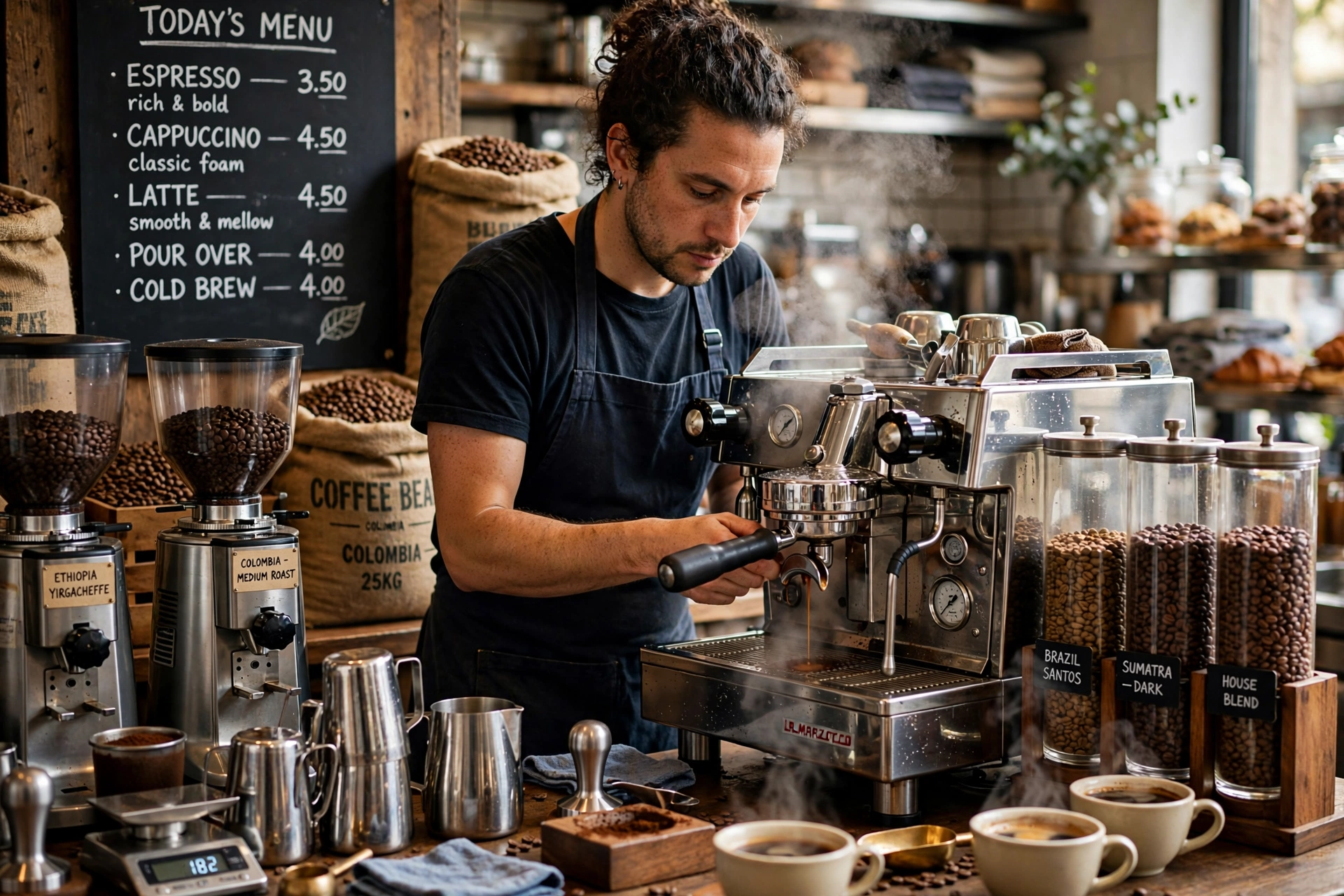
Why Professional Cafe Equipment Supply is the Foundation of Profitability
A single malfunctioning espresso machine during a morning rush can cost a mid-sized cafe upwards of $500 in lost revenue within two hours, not including the long-term damage to customer loyalty. When business owners overlook the strategic importance of a dedicated cafe equipment supply, they aren't just buying hardware; they are accepting a higher risk of operational downtime and inconsistent product quality. The reason professional supply chains matter is that they shift the burden of maintenance, calibration, and sourcing from the owner to the expert, ensuring that the focus remains on the guest experience rather than troubleshooting a boiler leak.
In my experience working with hospitality groups, the most expensive mistake a founder can make is purchasing "prosumer" gear from a big-box retailer to save $2,000 upfront. I have seen dozens of clients enter the second year of operation only to find their equipment cannot handle the volume, leading to a total system replacement that costs triple the original "savings." A professional supply partnership ensures that every piece of gear is rated for commercial duty and backed by a service level agreement that prevents the aforementioned revenue hemorrhage.
For those operating in high-traffic urban centers, integrating a professional Sensa Coffee Service in Charlotte, NC allows for a seamless transition from setup to scaling, eliminating the guesswork involved in equipment procurement.
What is Professional Cafe Equipment Supply and How Does it Differ from Retail?
To understand the value proposition, we must first distinguish between a retail transaction and a professional supply ecosystem. A retail purchase is a one-time exchange of money for a product. In contrast, a professional supply arrangement is a continuous operational partnership designed to optimize the lifecycle of the machinery.
📚
Definition
Cafe equipment supply is the end-to-end procurement, installation, calibration, and maintenance of commercial-grade beverage hardware, tailored to the specific volume and workflow requirements of a foodservice business.
Professional supply focuses on "Duty Cycle." A home machine might be designed to pull four shots an hour; a commercial machine from a professional supplier is engineered to pull four hundred. This involves higher-grade heating elements, industrial pumps, and materials like reinforced stainless steel that can withstand the caustic nature of constant cleaning agents.
Furthermore, professional suppliers provide the critical "missing link" of calibration. A machine is only as good as the barista's ability to dial in the roast. According to the Specialty Coffee Association (SCA), precise temperature control and pressure stability are the non-negotiable variables for achieving a specialty-grade extraction. A professional supplier doesn't just drop a box at your door; they ensure the water filtration is matched to the local mineral content and the grind settings are optimized for the specific Coffea arabica beans you are roasting.
This level of detail is what separates a "coffee shop" from a "specialty cafe." When you utilize a managed service, such as the Sensa Coffee Service in Raleigh NC (2026 Overview), you are essentially outsourcing the technical volatility of your business to experts who live and breathe espresso machine thermodynamics.

Why Does the Quality of Your Equipment Supply Directly Impact Your Bottom Line?
The relationship between equipment quality and profitability is not linear; it is exponential. When equipment fails, the cost is not just the repair bill; it is the "opportunity cost" of every customer who walks out the door because their latte took ten minutes to prepare.
Data from industry benchmarks suggests that equipment downtime in the first year of operation can reduce a cafe's net profit margin by as much as 15% due to lost sales and emergency repair premiums. Using a professional cafe equipment supply reduces this risk through preventative maintenance. While a retail customer waits for a part to arrive from overseas, a professional partner typically maintains a local inventory of critical components.
Moreover, efficiency is a primary driver of labor costs. A poorly designed equipment layout or an underpowered machine forces baristas to work harder, not smarter. For instance, an automated coffee machine can reduce the training time for new staff from weeks to days, ensuring that the quality of the beverage remains consistent regardless of who is behind the counter. This is particularly vital for those implementing automatic coffee machines for hotels and hospitality in 2026, where staff turnover is traditionally high.
The National Coffee Association USA (NCA) has highlighted that consumer demand for "specialty" experiences is continuing to grow. This means customers are no longer satisfied with "burnt" coffee from a low-end machine. They can taste the difference between a machine with a PID controller (which maintains a steady temperature) and one that fluctuates. If your equipment cannot deliver that consistency, you lose the ability to charge a premium price for your beverages.
The consequence of not acting on a professional supply strategy is "Technical Debt." Much like in software, technical debt in a cafe occurs when you make a quick, cheap decision today that requires a massive, expensive correction tomorrow. By the time a business owner realizes their equipment is insufficient, they are often too deep into their daily operations to shut down for the necessary upgrades, leading to a slow decline in quality and customer retention.
Practical Application: Implementing a High-Performance Equipment Strategy
Building a cafe is not about buying the most expensive machine; it is about matching the equipment to the projected volume and the specific menu. Here is the professional approach to implementing a supply strategy that scales.
First, conduct a "Volume Analysis." Calculate your peak hour transactions. If you expect 60 customers per hour, a single-group machine will create a bottleneck that destroys your customer experience. You need a multi-group setup or a high-efficiency automated system that can handle the load without sacrificing the integrity of the brew.
Second, prioritize the "Water Chain." The most overlooked part of cafe equipment supply is water filtration. Coffee is 98% water. If your water is too hard, it will scale your boilers; if it is too soft, the coffee will taste flat. A professional supplier will test your local water and install a reverse osmosis or carbon filtration system tailored to your specific zip code. This is a fundamental step for anyone setting up a foodservice coffee program in Chicago IL: Complete Guide, where water chemistry can vary wildly between neighborhoods.
Third, integrate a managed membership model. The traditional "buy and pray" method of equipment ownership is dead. The modern approach is a managed membership, like the one offered by Busy Bean Coffee. Instead of a massive capital expenditure (CapEx), you move to an operational expenditure (OpEx) model. This includes the equipment, professional installation, and full maintenance coverage for a predictable monthly fee.
💡
Key Takeaway
Shifting from equipment ownership to a managed service model eliminates the risk of catastrophic failure and removes the need for large upfront capital, allowing you to invest that money into marketing and staff training instead.
When we implement these systems at Busy Bean Coffee, we focus on the "Golden Triangle" of workflow: the distance between the grinder, the machine, and the milk station. Reducing a barista's movement by just two steps per drink can increase total output by 10-15% during peak hours. This is the difference between a line that moves and a line that leaves.
Comparing Equipment Procurement Models
When deciding how to source your gear, you generally face three paths. Most owners lean toward the first two because they seem cheaper, but the data tells a different story.
| Feature | Retail/Prosumer Purchase | Generic Commercial Lease | Managed Membership (Busy Bean) |
|---|---|---|---|
| Upfront Cost | Medium | Medium | Low/Zero |
| Maintenance | Self-managed (Slow) | Reactive (Wait for break) | Proactive (Preventative) |
| Consistency | Variable | Moderate | High (SCA Standard) |
| Scaling | Difficult/Expensive | Moderate | Seamless |
| Best For | Home hobbyists | Low-volume kiosks | Growth-oriented cafes/hotels |
The "Generic Commercial Lease" often hides the true cost in the fine print, where maintenance is an extra charge and the equipment is outdated. The "Retail" route is a recipe for disaster in a commercial environment, as these machines are not built for the thermal stress of continuous operation. The Managed Membership approach is the only one that aligns the supplier's incentives with the owner's success: if the machine is down, the supplier is responsible.
For businesses in South Carolina, such as those utilizing a foodservice coffee program in Rock Hill SC: Complete Guide, the ability to have a technician on-site within hours rather than weeks is the primary reason for choosing a managed supply partner.

Common Misconceptions About Cafe Equipment
There are several myths that persist in the industry, often propagated by low-cost equipment sellers. Let's correct these with data and experience.
Myth 1: "A more expensive machine automatically makes better coffee."
Most guides get this wrong by focusing on the price tag. In reality, a $20,000 machine with poor water filtration and a barista who hasn't been trained on "dialing in" will produce inferior coffee compared to a $5,000 machine used by a professional. The equipment is the tool; the system (supply, filtration, training) is what creates the quality.
Myth 2: "I can just call a general plumber or electrician to fix my espresso machine."
This is a dangerous assumption. Commercial espresso machines are complex hybrids of electrical, hydraulic, and thermal systems. A general technician may not understand the precision of a PID controller or the specific pressure requirements of a steam boiler. Using non-certified technicians often voids warranties and, more importantly, can lead to unsafe pressure levels in the boiler.
Myth 3: "Automatic machines are 'cheating' and the coffee is worse."
This is a lingering bias from the 1990s. Modern automated coffee machines, especially those provided through a high-end cafe equipment supply, use precision grinding and volumetric dosing that often outperforms a tired or inexperienced human barista. For clinics or offices, such as those using automated coffee machines for clinics and medical offices, automation is the only way to ensure 100% consistency for every single cup.
Frequently Asked Questions
Why should I choose a managed equipment service over buying my own machines?
Buying your own machines creates a significant capital drain and leaves you responsible for all maintenance. In a managed service, you shift the risk. When a pump fails or a seal leaks, you aren't scrambling to find a technician and paying emergency rates; the service is already covered in your monthly fee. This provides financial predictability and ensures your business never stops producing revenue due to technical failure. In my experience, the peace of mind provided by knowing a technician is already scheduled for preventative maintenance is worth more than the equity of owning a depreciating asset.
How does the right equipment supply affect the taste of the coffee?
The taste of specialty coffee is determined by the stability of the variables: temperature, pressure, and grind size. Cheap equipment has "temperature swing," where the water gets too hot or too cold between shots, leading to sour or bitter coffee. Professional equipment utilizes stable boilers and precision thermal probes to keep the water at exactly the required temperature. When combined with high-grade water filtration, this allows the nuanced flavors of the coffee bean to emerge, which is the only way to satisfy a discerning customer base in 2026.
What is the most common equipment failure in a high-volume cafe?
The most common failures are related to water quality and seal wear. Limescale buildup from hard water is the "silent killer" of espresso machines, clogging heat exchangers and causing boilers to overheat. This is why a professional supply strategy emphasizes filtration over everything else. Secondarily, rubber gaskets and seals degrade under high heat and pressure. A professional supply partner implements a schedule to replace these parts before they fail, rather than waiting for a leak to flood your station during a Saturday morning rush.
Will automated machines replace the need for skilled baristas?
Automated machines do not replace the need for a "coffee professional," but they do change the role. Instead of spending 80% of their time on the repetitive task of tamping and dosing, the barista becomes a "quality controller" and "hospitality expert." They focus on the guest experience and the fine-tuning of the roast. In high-volume environments, automation is an essential tool that prevents barista burnout and ensures that the 100th customer gets the exact same quality as the first.
How do I know if my current equipment is outdated?
If you are noticing inconsistent taste, longer-than-usual brew times, or an increase in "emergency" repairs, your equipment has likely reached its end-of-life for your current volume. Another sign is "energy creep"; older machines are significantly less efficient and can drive up your monthly utility bills. If you are still using machines that lack digital temperature control or automatic volumetric dosing, you are likely losing 10-20% of your potential efficiency. Upgrading to a modern Sensa Coffee Service in Mount Pleasant SC: Complete Guide can immediately recoup these costs through lower waste and faster service.
Final Thoughts on Cafe Equipment Supply
The difference between a cafe that struggles to break even and one that scales into a regional success often comes down to the reliability of its infrastructure. A professional cafe equipment supply is not an expense; it is an insurance policy against downtime and a guarantee of quality. By focusing on duty cycle, water chemistry, and managed maintenance, you remove the technical friction that prevents your business from growing.
Whether you are launching a new location or optimizing an existing one, the goal should always be the removal of volatility. The most successful operators in the industry don't spend their mornings worrying about whether their machines will start; they spend their time focusing on their customers and their coffee.
To secure your operations and ensure a world-class beverage experience, explore the managed solutions at Busy Bean Coffee Blog. From high-performance gear to all-inclusive memberships, we provide the foundation your business needs to thrive in the competitive specialty coffee market. For more localized insights, check out our Sensa Coffee Service in Charleston SC: Complete Guide | Busy Bean Coffee.
Ready to Upgrade Your Business Coffee?
Café-quality coffee, zero maintenance headaches, and one predictable monthly price. Let's build your custom coffee program.
Free Coffee Pairing Guide & Specialty Roast Cheat Sheet
Unlock the secrets of perfect brewing ratios, water temperatures, and specialty roast profiles. Download the guide.