Which Automated Coffee Machines Should Your Business Choose?
When a business owner asks which machine to buy, they are usually trying to balance beverage quality against labor costs. In my experience working with hundreds of hospitality venues, the biggest mistake I see is choosing a machine based on "features" rather than "daily volume." For most high-traffic environments, the best choice is a bean-to-cup system that prioritizes consistency over manual control. Integrating professional automated coffee machines into your workflow is the most effective way to eliminate the "barista bottleneck" while maintaining a premium beverage standard.
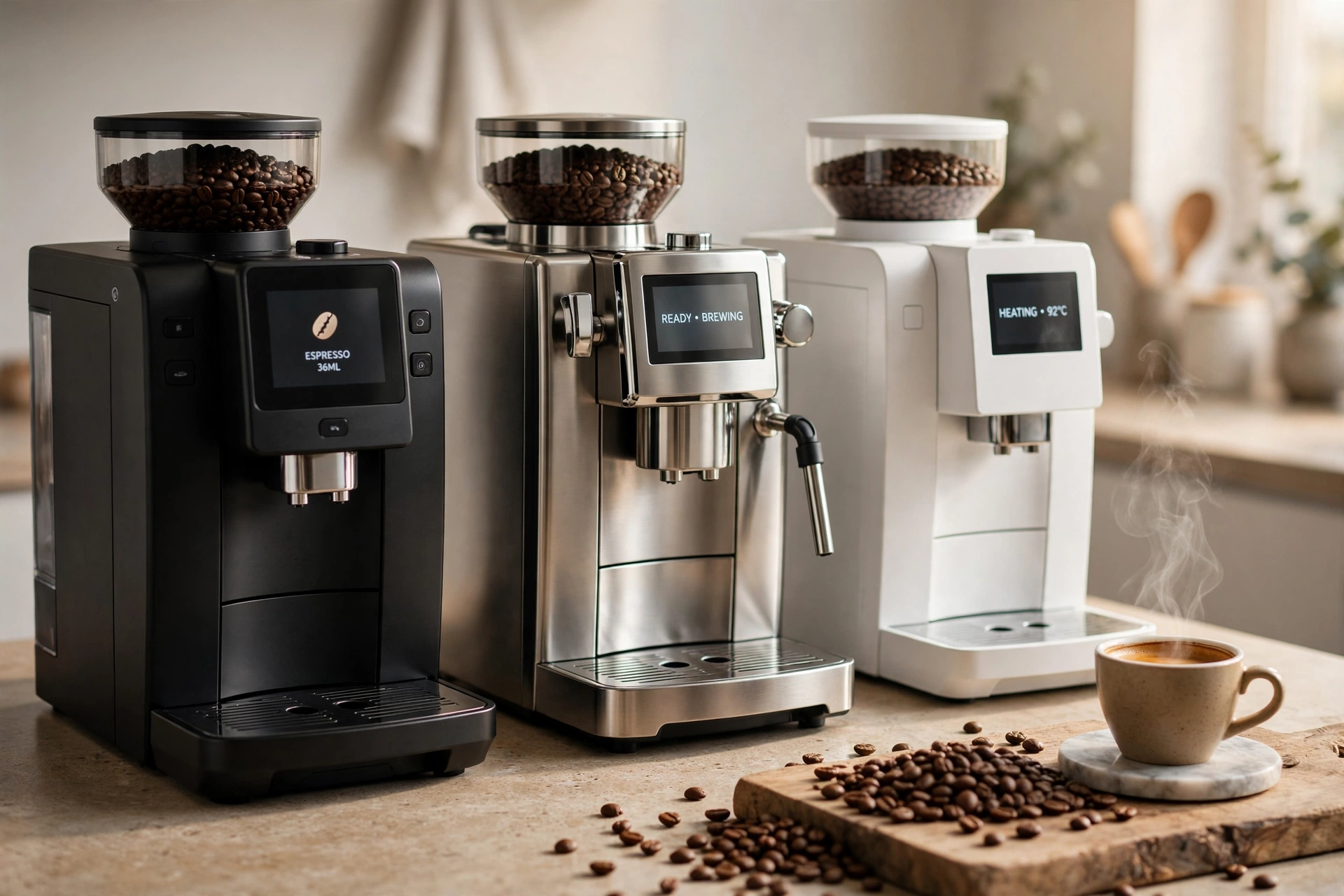
Depending on your specific needs, the right option falls into one of three categories: super-automatic machines for zero-labor environments, bean-to-cup hybrids for quality-focused cafes, or high-capacity automated brewers for hotel lobbies. If you prioritize speed and cost-efficiency, go with a super-automatic; if you prioritize taste and craft, a hybrid is your only real option.

Understanding the Landscape of Automated Brewing
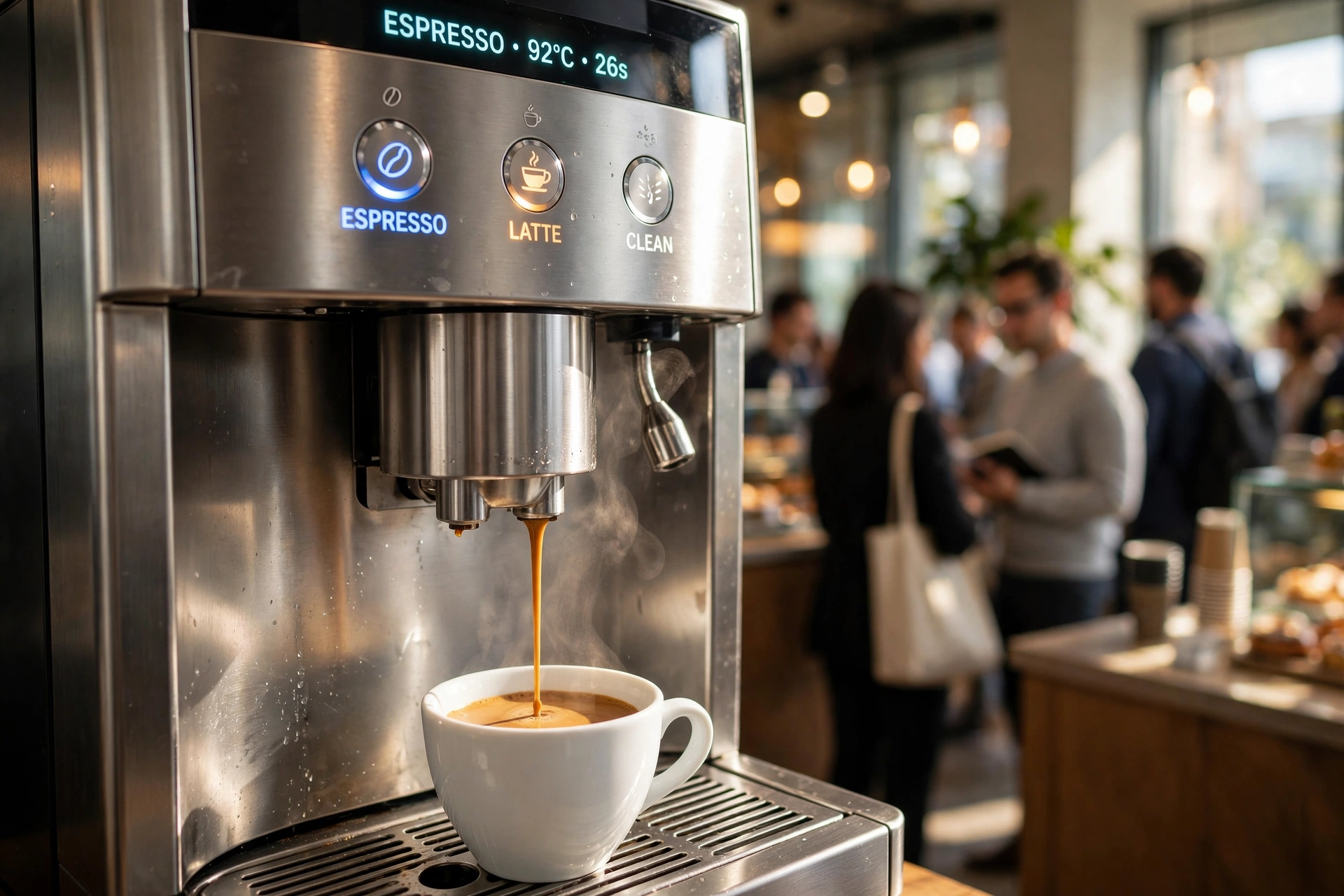
To make an informed decision, you first need to understand that "automation" exists on a spectrum. On one end, you have machines that handle everything from grinding the bean to frothing the milk with a single touch. On the other, you have semi-automated systems that handle the temperature and timing but leave the milk steaming to a human.
📚
Definition
Bean-to-Cup (B2C) technology is a process where a machine integrates a grinder, a dosing system, and a brewing unit into one chassis, allowing a fresh cup of coffee to be produced from whole beans in under 60 seconds.
The core of this technology is the brew group. In high-end automated coffee machines, this group is designed to mimic the precision of a manual espresso machine. According to the Specialty Coffee Association (SCA), the key to a quality cup is the stability of water temperature and the precision of the grind. Automated systems achieve this through PID controllers and ceramic grinders that prevent bean overheating.
When I first started grading coffee, I was skeptical of automation. I thought it stripped away the "soul" of the coffee. However, after analyzing the data from dozens of our clients at Busy Bean Coffee, I realized that a consistently "good" cup produced by a machine is far more valuable to a business than a "perfect" cup that takes six minutes to make and is only produced by one specific employee. Consistency is the bedrock of scalability in the food service industry.
For those looking to scale their operations, exploring comprehensive automatic coffee machines for business provides a deeper look at how these technical specifications translate into daily profit margins.
Why Automation Directly Impacts Your Bottom Line
The decision to move toward automation isn't just about convenience; it is a financial strategy. In the current labor market, finding and retaining skilled baristas is a significant operational hurdle. When you remove the requirement for specialized technical skill, you reduce your vulnerability to staff turnover.
According to the National Coffee Association USA (NCA), consumer demand for "specialty" beverages continues to rise, but the speed of service remains the primary driver of customer satisfaction in commercial settings. If your wait time exceeds three minutes, the probability of a repeat visit drops significantly.
Consider the cost of a mistake. A manual barista might pull a shot that is too sour (under-extracted) or too bitter (over-extracted). In a high-volume environment, this leads to wasted beans and unhappy customers. Automated coffee machines eliminate this variance. By locking in the grind size and water volume, every single cup meets the exact same profile.
Now, here's where it gets interesting: the ROI is not just in labor, but in waste reduction. Many businesses find that moving to a managed automated coffee service reduces coffee bean waste by up to 15% because the dosing is precise to the milligram. When you multiply that saving across 200 cups a day, the machine pays for itself much faster than traditional depreciation models suggest.
How to Implement Automated Systems in Your Workflow
Transitioning to an automated system requires more than just plugging in a machine. You need a decision framework based on your "Peak Hour Volume" (PHV). If you serve 50 people in 30 minutes, your needs are fundamentally different than if you serve 5 people in that same window.
Step 1: Calculate your PHV. Count the number of coffee drinks ordered during your busiest 60 minutes of the day.
Step 2: Determine your "Skill Gap." Do you have trained baristas, or are your servers handling the coffee? If it's the latter, you need a super-automatic system.
Step 3: Evaluate your space and power. Many high-end automated coffee machines require dedicated 220V circuits and direct water lines.
At Busy Bean Coffee, we typically recommend a staged rollout. We start by replacing the most "bottlenecked" station with a high-performance automated unit. This allows the staff to get used to the maintenance routine, such as daily cleaning cycles and bean hopper refills, without the shock of a total system overhaul.
💡
Key Takeaway
The most successful automation implementations focus on "Zero-Training" interfaces. If a new employee cannot make a latte in under 30 seconds without a manual, the machine is too complex for a high-volume environment.
For those who want to maximize their return on investment, looking into how to boost office ROI with premium coffee can provide a roadmap for integrating these machines into a corporate environment.

Comparing Your Options: Which Machine Wins?
Choosing the right automated coffee machine depends on the trade-off between control and convenience. There is no "best" machine, only the best machine for your specific volume and quality requirements.
| Option | Pros | Cons | Best For |
|---|---|---|---|
| Super-Automatic | Zero training, maximum speed, consistent output | Less control over flavor profiles, higher initial cost | Hotels, Corporate Offices, Quick-Service Cafes |
| Bean-to-Cup Hybrid | Professional quality, some manual control, flexible | Requires basic training, slower than super-automatics | Specialty Cafes, Boutique Restaurants |
| Automatic Brewer | Huge volume, extremely reliable, low maintenance | No espresso capability, limited beverage variety | Hotel Breakfast Buffets, Large Canteens |
That said, the "Generic/Cheap" approach, buying a home-grade "automatic" machine for a business, is a recipe for disaster. I've seen businesses try to save $2,000 by buying a consumer model, only to have it break down within three months because it wasn't rated for commercial duty. Commercial machines are built with stainless steel boilers and heavy-duty pumps that can handle 100+ cycles a day; consumer machines are designed for 5 to 10.
If you are concerned about the upfront cost of these professional systems, it is often more sensible to lease coffee machines to avoid CAPEX, which allows you to preserve capital while upgrading your technology.
Common Questions and Misconceptions
Most guides on automated coffee machines get the "quality" argument wrong. They claim that automation ruins the taste of the coffee. This is a myth based on outdated technology from ten years ago.
Myth 1: Automated coffee tastes "burnt" or "robotic."
The "burnt" taste usually comes from poor bean quality or a dirty machine, not the automation itself. When you use specialty-grade beans and a machine with a precise PID temperature controller, the taste is indistinguishable from a manual pull for 95% of customers.
Myth 2: You don't need to maintain automated machines.
This is the most dangerous misconception in the industry. Because the machine "does everything," owners forget that the internal brew group still accumulates coffee oils and milk residue. According to NSF International, failing to follow sanitary standards for food equipment can lead to significant bacterial growth and equipment failure. Automated machines actually require more disciplined cleaning schedules, not less.
Myth 3: Automation replaces the need for a barista.
Automation doesn't replace the barista; it replaces the repetitive tasks of the barista. A great barista should be spending their time on customer engagement and quality control, not spending 8 hours a day tamping grounds.
Frequently Asked Questions
Which automated coffee machine is best for a high-traffic hotel lobby?
For high-traffic lobbies, you need a super-automatic machine with dual boilers and a large bean hopper. This ensures that the machine can steam milk and brew espresso simultaneously without a drop in temperature. Look for machines that offer "one-touch" capabilities for the most popular drinks (latte, cappuccino, americano). In these environments, reliability and speed are more important than granular control. A managed service is highly recommended here to ensure the machines are calibrated weekly to handle the fluctuating volume.
How does the cost of automated coffee machines compare to manual setups?
The initial investment for a high-end automated system is generally higher than a basic manual setup. However, the total cost of ownership (TCO) is often lower. When you factor in the cost of labor (training and payroll for a skilled barista) and the cost of wasted product, automated systems typically break even within 12 to 18 months. Furthermore, the ability to increase throughput during peak hours means you are capturing revenue that would otherwise be lost to long lines.
Can automated machines handle specialty coffee beans?
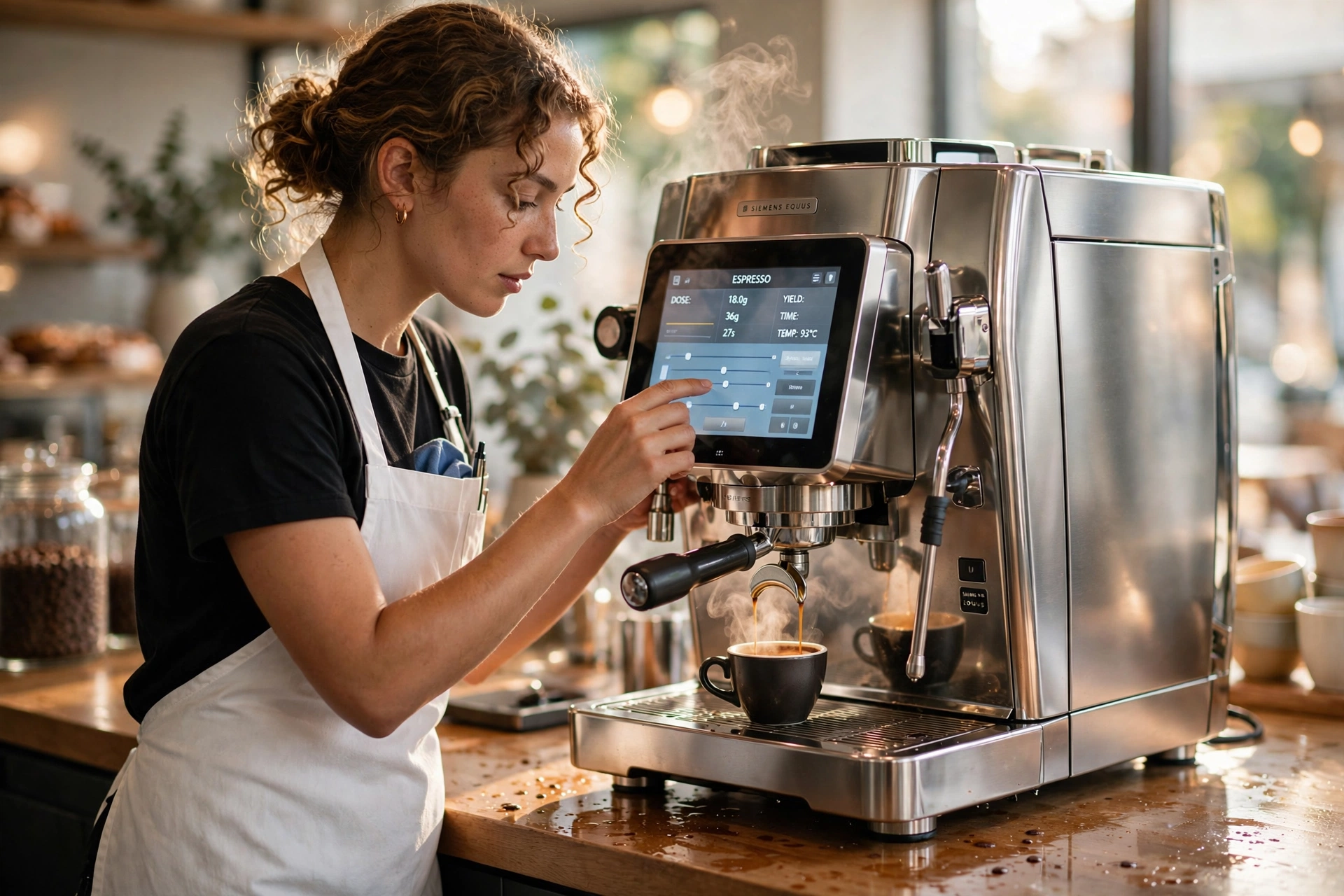
Yes, provided the machine has a high-quality ceramic or steel burr grinder. The key is the ability to adjust the grind size to match the specific roast profile of the bean. Many modern automated coffee machines now feature "profile programming," allowing you to adjust the pre-infusion time and water temperature. This allows you to extract the complex notes of a light-roast Arabica bean just as effectively as a traditional espresso machine.
How often do automated coffee machines need professional servicing?
While daily cleaning is the user's responsibility, professional servicing should occur every 3 to 6 months depending on volume. This includes replacing gaskets, O-rings, and calibrating the grinder. In my experience, businesses that ignore this schedule see a 30% drop in beverage quality within the first year. Utilizing a managed service ensures that these preventative maintenance tasks happen automatically, preventing costly downtime during your busiest season.
Which is better for office productivity: super-automatic or pod machines?
Super-automatic bean-to-cup machines are vastly superior for productivity and morale. Pod machines create an enormous amount of plastic waste and often produce a mediocre cup of coffee. Bean-to-cup systems provide a "cafe-quality" experience that encourages employees to take mental breaks and collaborate in the breakroom. When you provide a premium experience, it signals a higher level of care for the staff, which correlates with higher retention and job satisfaction.
Final Thoughts on Automated Coffee Machines
Choosing the right system comes down to understanding your business's specific friction points. If your guests are complaining about wait times, a super-automatic is your solution. If your brand identity is built on "craft," a hybrid system will serve you better. Regardless of the path you choose, the goal is to remove the operational stress of beverage production so you can focus on growing your business.
Integrating high-quality automated coffee machines is no longer about sacrificing taste for speed; it is about utilizing technology to ensure that every single customer gets a perfect cup, every single time.
If you are ready to upgrade your beverage program without the headache of maintenance and huge upfront costs, we can help. At Busy Bean Coffee, we specialize in end-to-end managed coffee solutions that scale with your business. Visit www.busybeancoffee.com to see how our all-inclusive membership can transform your coffee service from a cost center into a profit driver.
Ready to Upgrade Your Business Coffee?
Café-quality coffee, zero maintenance headaches, and one predictable monthly price. Let's build your custom coffee program.
Free Coffee Pairing Guide & Specialty Roast Cheat Sheet
Unlock the secrets of perfect brewing ratios, water temperatures, and specialty roast profiles. Download the guide.