Why Should Your Business Invest in Automated Coffee Machines?
Running a high-volume foodservice operation often reveals a frustrating paradox: the more you grow, the more you struggle to maintain beverage consistency. I have seen countless restaurant managers lose an average of 12 to 15 minutes of labor per hour simply because their staff is bogged down by manual espresso preparation during a rush. The primary reason businesses transition to automated coffee machines is to decouple beverage quality from staff skill levels, ensuring that a latte served at 7:00 AM is identical to one served at 2:00 PM. For a comprehensive overview of the technology, explore our guide on automated coffee machines for business.
By eliminating the human variable in grinding, tamping, and milk frothing, these systems remove the "skill gap" that typically leads to wasted product and inconsistent customer experiences. When you automate the process, you aren't just buying a machine; you are buying time and predictability in your margins.
The Mechanics of Consistency: What Are Automated Coffee Machines?
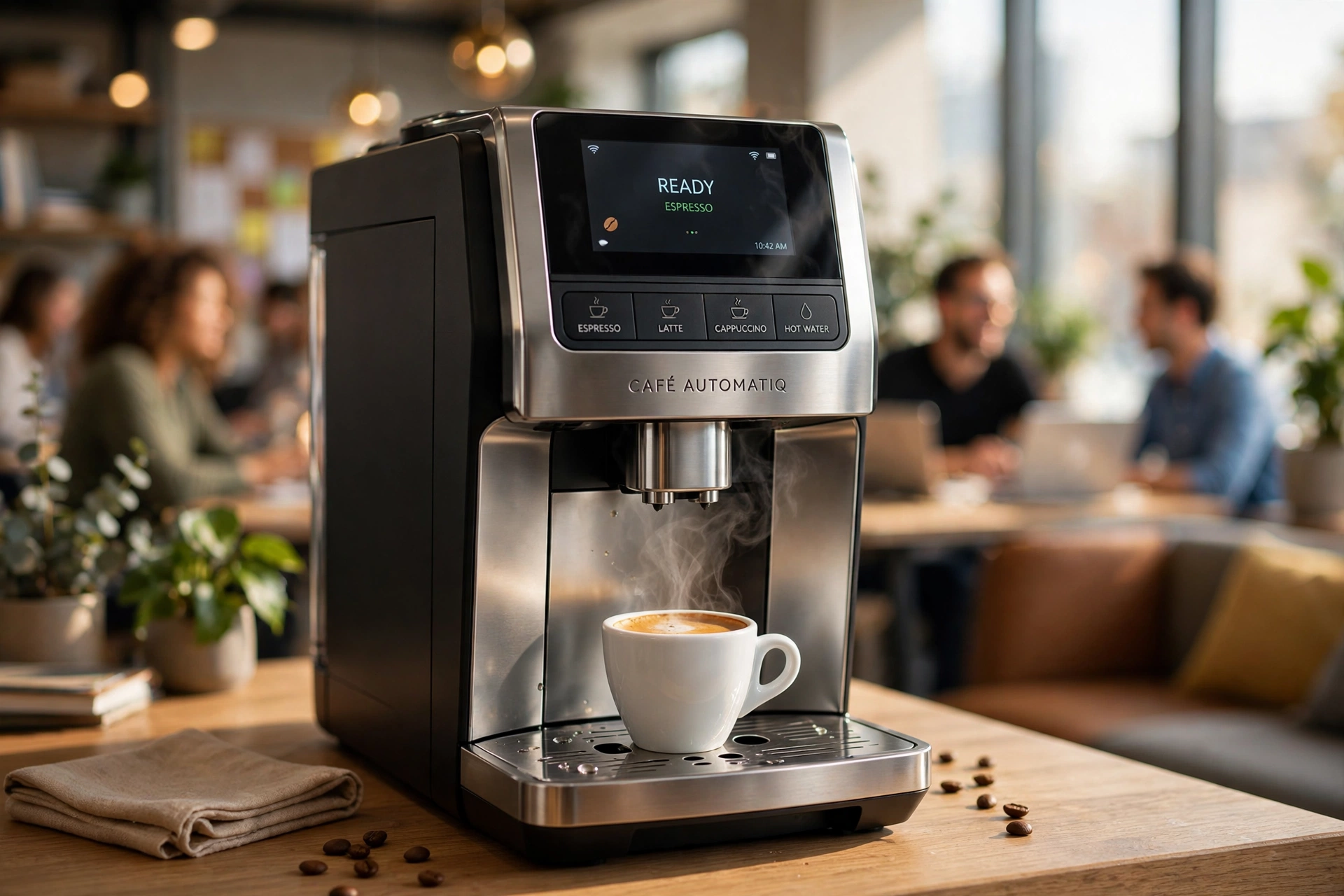
To understand the benefit, we first need to clarify what we are talking about. Many people confuse "automatic" with "pod machines," but in a professional context, we are discussing bean-to-cup systems that handle the entire workflow internally.
📚
Definition
Automated coffee machines are professional-grade systems that integrate grinding, dosing, tamping, and brewing into a single, programmable sequence, often including automated milk texturing to produce specialty beverages without manual barista intervention.
In my experience working with diverse hospitality groups, the biggest leap occurs when a business moves from a semi-automatic setup to a fully automated one. A semi-automatic machine requires a trained barista to distribute the coffee, tamp it with a specific pressure, and steam milk by hand. If the barista is tired or inexperienced, the shot is pulled too fast (under-extracted) or too slow (over-extracted), resulting in a bitter or sour drink.
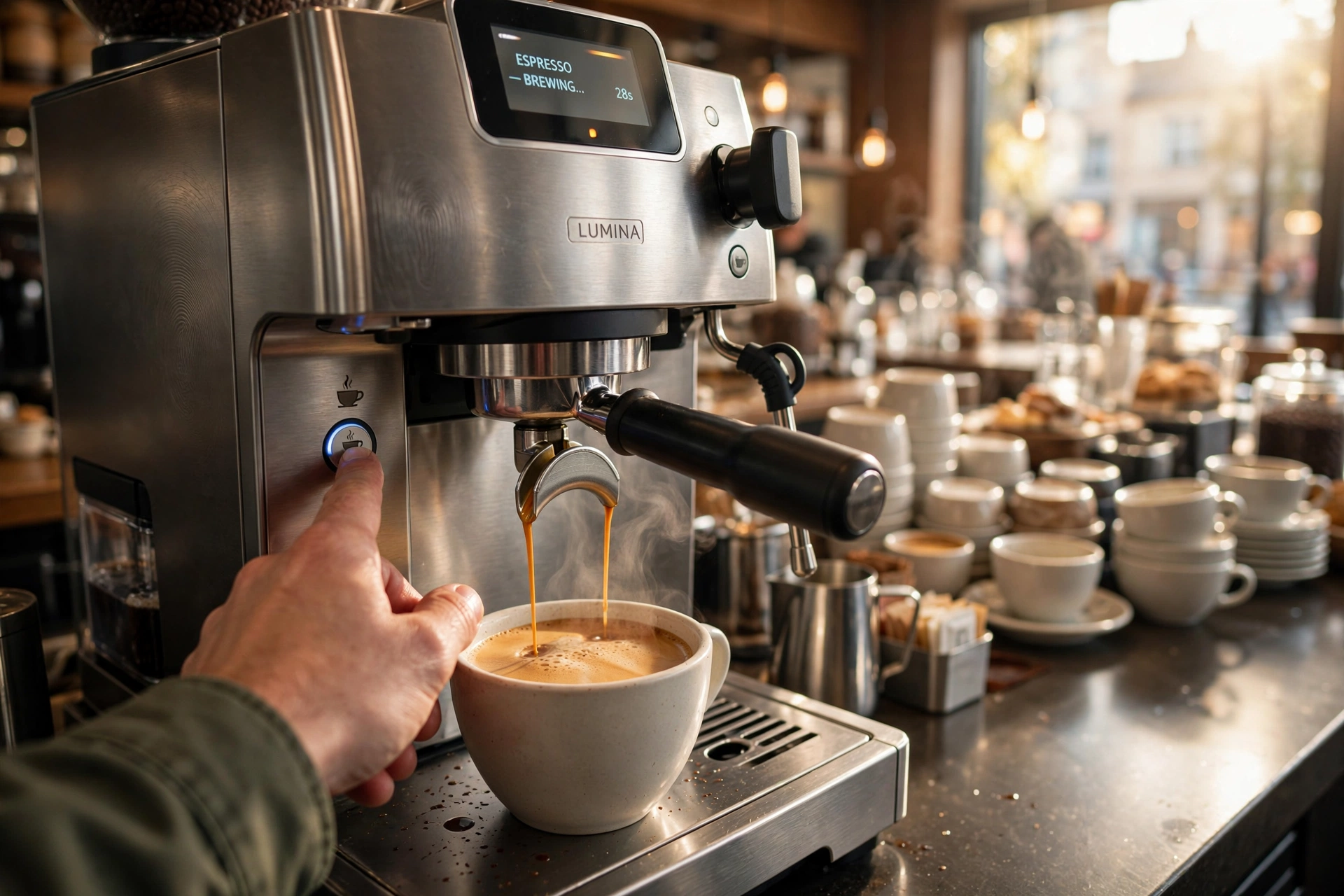
Automated systems utilize precision volumetric dosing and calibrated grinders to ensure every gram of coffee bean is extracted perfectly. According to the Specialty Coffee Association (SCA), precise control over water temperature and pressure is fundamental to achieving a "specialty" grade cup. Automation locks these variables in place, meaning the machine adheres to the gold standard every single time, regardless of who presses the button.
This level of precision is particularly vital when using Coffea arabica, as the nuanced flavor profiles of high-altitude beans can be easily destroyed by a few degrees of temperature fluctuation. By removing the manual element, you protect the integrity of the bean and the reputation of your brand.
Why Does Automation Matter for Your Bottom Line?
The financial argument for automation isn't just about labor costs; it is about waste reduction and throughput. In a manual environment, "dialing in" a grinder can waste pounds of coffee per week as baristas attempt to find the right grind size. Automated systems maintain a more stable calibration, significantly reducing this operational waste.
According to research from the National Coffee Association USA (NCA), consumer demand for specialty coffee continues to rise, but the labor shortage in the hospitality sector has made finding skilled baristas increasingly difficult and expensive. When you cannot find a qualified professional, your only two choices are to lower your quality or automate your process.
Consider the cost of a "wrong" drink. A single wasted latte costs the business the price of the milk, the coffee, and the labor time spent making it. In a high-volume cafe, a 5% error rate can translate to thousands of dollars in lost revenue annually. Automated coffee machines virtually eliminate this error rate. Furthermore, the speed of service increases. A manual latte might take 90 to 120 seconds of focused labor; an automated machine can deliver the same quality in 40 seconds.
The consequences of not acting are clear: you either suffer from inconsistent product quality that drives customers away, or you overpay for scarce labor to maintain a standard that a machine can achieve more reliably. This is why many businesses are now looking to save 100% upfront cost by leasing their equipment, allowing them to scale without a massive capital expenditure.
Implementing Automation: A Practical Application Guide
Transitioning to an automated system requires more than just plugging in a machine. To get the maximum ROI, you need a strategic implementation plan. The mistake I made early on, and that I see constantly with new clients, is treating the machine like a "set it and forget it" appliance. Even the best automation requires a foundation of quality.
First, you must select a roast profile that complements the machine's extraction logic. Because automated machines are designed for consistency, they perform best with a stable, high-quality roast. I always recommend a managed coffee solution where the roasting and equipment are synced. This is where Busy Bean Coffee excels; we don't just provide the hardware, we provide the end-to-end beverage service that ensures the beans are optimized for the specific machinery installed.
Once the equipment is in place, the focus shifts to staff training. Even though the machine does the heavy lifting, your team needs to understand basic maintenance, such as cleaning the milk circuits and emptying the dregs. If you neglect the daily cleaning cycle, the "automated" quality quickly degrades into a burnt, metallic taste.
💡
Key Takeaway
Automation does not replace the need for quality control; it shifts the focus from "how to make the drink" to "how to maintain the system."
For those looking to scale quickly, the best approach is to integrate a managed membership. This removes the burden of maintenance and technical troubleshooting from your staff. If you are unsure where to start, you can check out the 7 trusted places to buy automated coffee machines to compare different vendor models, but a managed service is almost always the more sustainable path for growing businesses.
Comparing Your Options: Manual vs. AI-Driven vs. Managed Automation
Not all automation is created equal. Some businesses opt for "cheap" automation, which often results in a product that tastes like vending machine coffee. Others go for high-end, managed systems.
| Feature | Traditional Manual | Generic/Cheap Automation | Managed Automation (Busy Bean) |
|---|---|---|---|
| Consistency | Variable (Depends on Barista) | Moderate (Basic profiles) | Absolute (Precision calibrated) |
| Labor Cost | High (Requires skilled staff) | Low (Unskilled staff) | Lowest (Includes maintenance) |
| Waste | High (Dialing-in waste) | Moderate (Basic dosing) | Minimal (Optimized yield) |
| Upfront Cost | Moderate to High | Low to Moderate | Zero to Low (Membership model) |
| Quality | Potentially Highest | Lowest | High (Specialty Grade) |
| Best For | Boutique Coffee Shops | Small Offices/Breakrooms | Restaurants, Hotels, High-Volume Cafes |
Now, here's where it gets interesting: the "generic" approach often fails because it lacks a professional coffee roasting partner. A machine is only as good as the beans inside it. If you put commodity-grade beans into a $10,000 machine, you get expensive, mediocre coffee. A managed approach ensures that the roast profile is matched to the machine's pressure and temperature settings.
Common Misconceptions About Automated Coffee
There is a lingering belief in the industry that "automation equals low quality." Most guides get this wrong by grouping professional bean-to-cup machines with home pods or old-school vending machines.
Myth 1: You can't get "real" espresso from an automated machine.
This is simply false. Modern professional espresso machines use precision pumps and PID temperature controllers that are more accurate than a human can ever be. As long as you use specialty coffee, the result is indistinguishable from a manual pull to 99% of customers.
Myth 2: Automated machines are too expensive to justify.
The "cost" is often viewed as the purchase price. However, if you calculate the cost of labor, the cost of wasted beans during manual calibration, and the cost of lost customers due to inconsistent drinks, the automated machine usually pays for itself within 6 to 12 months.
Myth 3: They are impossible to clean.
In reality, they are easier to clean. While a manual machine requires scrubbing group heads and manually purging steam wands, automated systems have built-in cleaning cycles that use detergents to sanitize the internal plumbing.
That said, the risk is complacency. If a manager assumes the machine "does everything," they may overlook the water filtration system. According to NSF International, water quality and filtration are the most critical factors in equipment longevity and taste. If you don't treat your water, you'll have limescale buildup that no amount of automation can fix.
Frequently Asked Questions
Will automated coffee machines replace my baristas?
No, they redefine the barista's role. Instead of spending 90% of their time fighting with a grinder and steam wand, your staff can focus on customer engagement, plating, and overall hospitality. Automation removes the stress of the "rush," allowing your team to provide a better guest experience. In my experience, staff satisfaction actually increases when they aren't overwhelmed by the technical pressure of manual production during peak hours.
How does the taste compare to a traditional manual espresso?
When using high-quality specialty coffee, the taste is nearly identical. The key is the "recipe" programmed into the machine. A professional setup allows you to adjust the grind, water temperature, and milk texture to match a specific roast profile. Because the machine removes human error, you actually get a more consistent "perfect" cup than you would with a manual machine operated by a rotating cast of part-time employees.
Are these machines difficult to maintain for non-experts?
They are designed for simplicity. Most professional automated systems feature intuitive touchscreens that alert the operator when it is time to empty the grounds or refill the beans. The more complex maintenance, such as deep descaling or part replacement, is typically handled by the service provider. If you use a managed service like Busy Bean Coffee, the maintenance is entirely handled for you, meaning your staff only needs to handle basic daily cleaning.
Do I need to buy expensive beans for an automated machine to work?
You don't necessarily need "expensive" beans, but you do need "fresh, roasted-for-purpose" beans. Using old, stale, or oily beans can clog the internal grinders of an automated machine. Using a professional coffee service ensures you receive beans with the correct roast profile and freshness, which prevents mechanical failures and ensures the flavor remains vibrant and balanced.
How much time can a business actually save with automation?
Based on data from various clients, a business can save between 10 to 20 minutes of labor per hour during peak periods. When you multiply that by 8 hours a day over a year, you are looking at hundreds of labor hours reclaimed. This time can be redirected toward increasing table turnover or improving the quality of other menu items, directly impacting the bottom line.
Final Thoughts on Automated Coffee Machines
The decision to integrate automated coffee machines into your business is not about replacing the art of coffee; it is about scaling that art so every customer receives the same high-quality experience. Whether you are running a boutique hotel in Mount Pleasant, SC, or a high-volume restaurant, the goal is the same: remove the friction between the bean and the cup.
By eliminating the skill gap and reducing operational waste, automation allows you to focus on what actually matters: your guests and your growth. If you are tired of inconsistent drinks and stressed staff, it is time to move toward a managed solution.
Ready to elevate your beverage program without the stress of equipment management? Visit Busy Bean Coffee to discover our all-inclusive managed coffee memberships. You can also learn how to start a coffee program for your business to maximize your 2026 ROI.