What Are Automated Coffee Machines and How Do They Work?
The friction between high-volume demand and beverage quality is a constant struggle for hospitality managers. In my experience working with hotels and high-traffic cafes, the biggest bottleneck is rarely the coffee bean quality, but rather the human variable in the brewing process. This is where automated coffee machines solve the problem by integrating grinding, tamping, and brewing into a single, programmable workflow. These systems ensure that a latte served at 7:00 AM is identical in strength and temperature to the one served at 2:00 PM, removing the risk of operator error and significantly reducing waste.
📚
Definition
Automated coffee machines, often referred to as super-automatic machines, are integrated systems that handle the entire coffee-making process, from grinding whole beans to frothing milk, via a pre-set electronic program, requiring minimal manual intervention from the user.
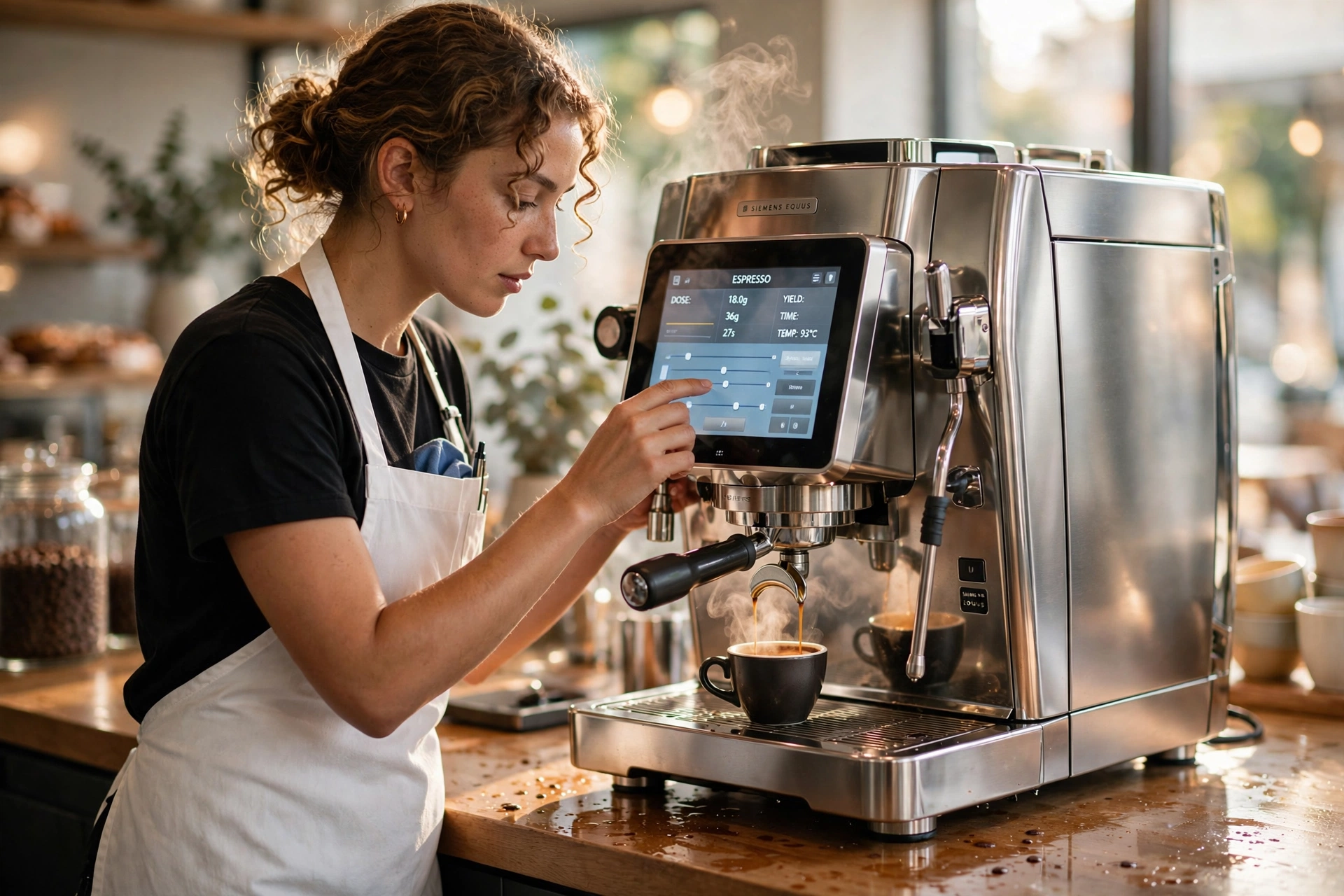
To understand the mechanism, you have to look at the internal architecture. A high-end automated system utilizes a precision burr grinder to pulverize the coffee bean to a specific micron level, then moves the grounds into a brew group where they are compressed. Water is then pumped through the puck at a precise pressure and temperature. When these systems are calibrated correctly, they can mimic the output of a trained barista without the labor cost. For businesses looking to scale without increasing headcount, exploring financing options for commercial coffee equipment allows them to deploy these advanced systems without a massive upfront hit to their cash flow.

Why Does Automation Matter for Commercial Revenue?
The economic impact of switching to automation is found in the reduction of "Cost of Goods Sold" (COGS) and the elimination of training lag. When a business relies on manual machines, they are vulnerable to the "learning curve" of new staff. According to the Specialty Coffee Association (SCA), precision in dose, yield, and temperature is the foundation of quality; when a human makes a mistake in any of these, the drink is poured down the drain. In a high-volume environment, a 5% waste rate due to poor tamping or incorrect dosing can cost a business thousands of dollars annually.
Beyond waste, there is the issue of throughput. A manual workflow involves several distinct steps: grinding, dosing, leveling, tamping, brewing, and steaming. An automated system collapses these into a single button press. This allows a single employee to manage both the coffee station and the register, which is essential for businesses implementing outfitting a small coffee shop on a budget. By increasing the number of transactions per hour, the ROI on the machine is realized much faster.
Moreover, consistency is a primary driver of customer retention. Research from the National Coffee Association USA (NCA) indicates that consumers prioritize consistency and convenience in their daily coffee habits. If a customer receives a bitter shot because a trainee under-extracted the coffee, they are less likely to return. Automated systems remove this variance. As NSF International notes, the standardization of equipment also aids in maintaining rigorous sanitary standards, as automated cleaning cycles reduce the risk of milk residue buildup in steam wands.
How Do You Implement Automated Systems for Maximum ROI?
Implementing automated coffee machines is not as simple as plugging them in and walking away. To truly maximize the return on investment, you need a strategic deployment plan that focuses on bean selection and maintenance. The mistake I made early on, and that I see constantly with new owners, is treating an automated machine like a "black box" that doesn't need tuning. Even the best machine will produce mediocre coffee if the grind setting isn't adjusted for the humidity of the day.
The first step is the calibration of the grinder. Because automated machines often have built-in grinders, you must ensure the coffee roasting profile of your beans matches the machine's settings. For example, a dark roast requires a slightly different grind size than a light roast to avoid over-extraction. Once the grind is set, you must program the "recipe", the exact amount of water and the duration of the brew.
Now here's where it gets interesting: the integration of a managed service. At Busy Bean Coffee, we provide an all-inclusive membership that handles the installation and the ongoing calibration. Instead of guessing why your coffee tastes sour, our experts handle the technical adjustments. This is especially vital for those who want to avoid the headaches of unexpected breakdowns, which is why we emphasize preventing coffee machine failures through proactive servicing.
💡
Key Takeaway
Automation is a tool for consistency, not a replacement for quality. The highest ROI comes from pairing a super-automatic machine with premium specialty coffee beans and a professional maintenance schedule.
To maintain these systems, you should follow a strict daily and weekly regimen. Daily, this includes purging the steam wands and emptying the dregs tray. Weekly, it involves deep-cleaning the brew group with specialized detergents. If you neglect this, the oils from the Coffea arabica beans will build up, creating a rancid taste that no amount of expensive beans can fix. For a more detailed approach to longevity, our guide on maintenance commercial coffee makers provides a 5-step framework to extend the life of your equipment by up to 20%.

Automated vs. Semi-Automatic vs. Manual: Which is Best?
Choosing the right equipment depends entirely on your labor model and your volume goals. A manual machine offers the most control but requires a highly skilled barista. A semi-automatic machine automates some parts (like the pump) but leaves the tamping and milk steaming to the human. An automated machine handles everything.
| Feature | Manual/Semi-Auto | Generic "Pod" Auto | Professional Automated |
|---|---|---|---|
| Consistency | Variable (Human dependent) | High (but low quality) | High (Precision calibrated) |
| Labor Cost | High (Requires training) | Low (Push button) | Low (Push button) |
| Coffee Quality | Potentially Elite | Mediocre/Processed | High (Freshly ground) |
| Speed | Slow | Fast | Very Fast |
| Best For | Boutique Third-Wave Cafes | Small Offices | Hotels, Fast-Casual, High-Volume |
Most guides get this wrong by suggesting that "automation equals lower quality." That is only true if you are using pods or pre-ground coffee. When you use a professional-grade automated system that grinds fresh beans on demand, the quality is nearly indistinguishable from a manual pull for 95% of consumers. The real difference is in the efficiency. While a manual setup is a craft, a professional automated setup is a business engine.
If you are operating in a high-pressure environment, such as a hotel lobby, the reliability of the machine is more important than the "theater" of a manual pull. This is why we recommend focusing on high-volume coffee reliability standards when selecting your hardware.
Common Misconceptions About Automated Brewing
There is a persistent myth in the industry that automated coffee machines cannot produce "real" espresso. This stems from the early days of automation when machines used inconsistent pressure and poor-quality grinders. However, modern engineering has closed that gap. Today's professional systems use PID controllers to maintain temperature within 0.1 degrees of the target, which is often more precise than what a human can achieve.
Another common misconception is that automated machines are "maintenance-free." In reality, they require more specific types of maintenance because they have more moving parts. A manual machine is basically a boiler and a group head; an automated machine has a grinder, a dosing mechanism, a compacting unit, and a computer. If the grinder fails, the whole system stops. This is why we always advise clients to look at leasing vs buying coffee equipment to ensure they have a service contract that covers these complex internals.
Finally, many believe that automation kills the "coffee experience." While it's true that you lose the visual appeal of a barista tamping a puck, you gain a frictionless experience for the customer. In a busy breakfast rush, a customer doesn't care about the tamping process; they care that their drink is hot, tastes great, and is ready in under 60 seconds.
Frequently Asked Questions
Do automated coffee machines actually produce "specialty" quality coffee?
Yes, provided the machine uses a high-quality burr grinder and you are using specialty coffee beans. The quality of the espresso is determined by the "four Ms": Macinazione (grind), Miscela (blend), Macchina (machine), and Mano (hand). Automation effectively replaces the "Mano" with a computer. As long as the grind is calibrated and the beans are fresh, the resulting cup meets the standards for specialty coffee. The key is ensuring the machine is regularly tuned to the specific roast profile of your beans.
How much longer do automated machines take to maintain than manual ones?
In terms of daily effort, they take less time because many cleaning cycles are automated. However, the "deep" maintenance is more complex. A manual machine might just need a group head scrub, while an automated machine requires cleaning the brew unit and replacing gaskets in the internal dosing system. Because they are more complex, we recommend a professional service every quarter to ensure the internals remain scale-free. This prevents the costly downtime associated with pump failures.
Can I use any coffee bean in an automated machine?
You can, but you shouldn't. The biggest enemy of automated coffee machines is "oily" beans, typically found in very dark, Italian-style roasts. These oils can clog the grinder and build up residue on the sensors, leading to malfunctions. I always recommend a medium-dark or medium roast with a matte finish. This ensures the longevity of the grinder and provides a cleaner flavor profile that appeals to a wider range of customers in a commercial setting.
Are automated machines more expensive to operate over time?
Initially, the capital expense is higher, but the operational cost is often lower due to reduced labor. If a machine saves you just 10 hours of labor per week, it pays for itself within months. Additionally, by using an all-inclusive service like those provided by Busy Bean Coffee, you turn a variable maintenance cost into a predictable monthly fee. This allows for better budgeting and ensures that you aren't hit with a $1,000 repair bill unexpectedly.
How do I know if my automated machine is under-extracting or over-extracting?
You look for the "visual and taste cues." Under-extraction happens when the water flows too quickly through the coffee, resulting in a sour, salty taste and a thin crema. Over-extraction occurs when the water flows too slowly, leading to a bitter, burnt taste and a dark, thick crema. In an automated system, you fix this by adjusting the grind size. A finer grind slows the flow (fixing under-extraction), while a coarser grind speeds it up (fixing over-extraction).
Final Thoughts on Automated Coffee Machines
Transitioning to automated coffee machines is not about removing the art of coffee; it is about scaling the excellence of it. For any foodservice business, the goal is to provide a premium experience without creating a bottleneck in service. When you remove the volatility of human error, you create a reliable revenue stream and a consistent customer experience.
Whether you are looking for a No Capex Coffee Service in Mount Pleasant SC or seeking to optimize a high-volume hotel lobby, the shift toward precision automation is the only way to stay competitive in 2026. Don't let your coffee program be the weakest link in your guest experience.
If you're ready to upgrade your beverage game without the stress of equipment ownership, visit Busy Bean Coffee Blog to discover our all-inclusive managed coffee solutions.
Ready to Upgrade Your Business Coffee?
Café-quality coffee, zero maintenance headaches, and one predictable monthly price. Let's build your custom coffee program.
Free Coffee Pairing Guide & Specialty Roast Cheat Sheet
Unlock the secrets of perfect brewing ratios, water temperatures, and specialty roast profiles. Download the guide.