Why Should Your Business Invest in Automated Coffee Machines?
In my experience working with high-volume hospitality groups in Mount Pleasant, SC, the most expensive part of a coffee program isn't the beans or the electricity; it is the labor waste and the inconsistency of the pour. When a barista is rushed or a staff member is untrained, the result is a discarded drink and a frustrated customer. The shift toward automated coffee machines is driven by the need to eliminate this variance, ensuring that a latte tastes exactly the same at 6:00 AM as it does at 6:00 PM, regardless of who is behind the counter.
For those managing a commercial environment, the core "why" is simple: automation decouples quality from human error. By digitizing the precision of water temperature, pressure, and grind timing, businesses can deliver a specialty-grade beverage while reducing operational friction. For a comprehensive overview of these technologies, explore our guide on automated coffee machines for business.
Understanding the Mechanics of Modern Coffee Automation
To understand why automation is a strategic asset, we must first define what is actually happening inside the machine. Unlike traditional manual setups that rely on the "feel" of a barista, automated systems use volumetric dosing and precise thermal PID controllers to maintain stability.
📚
Definition
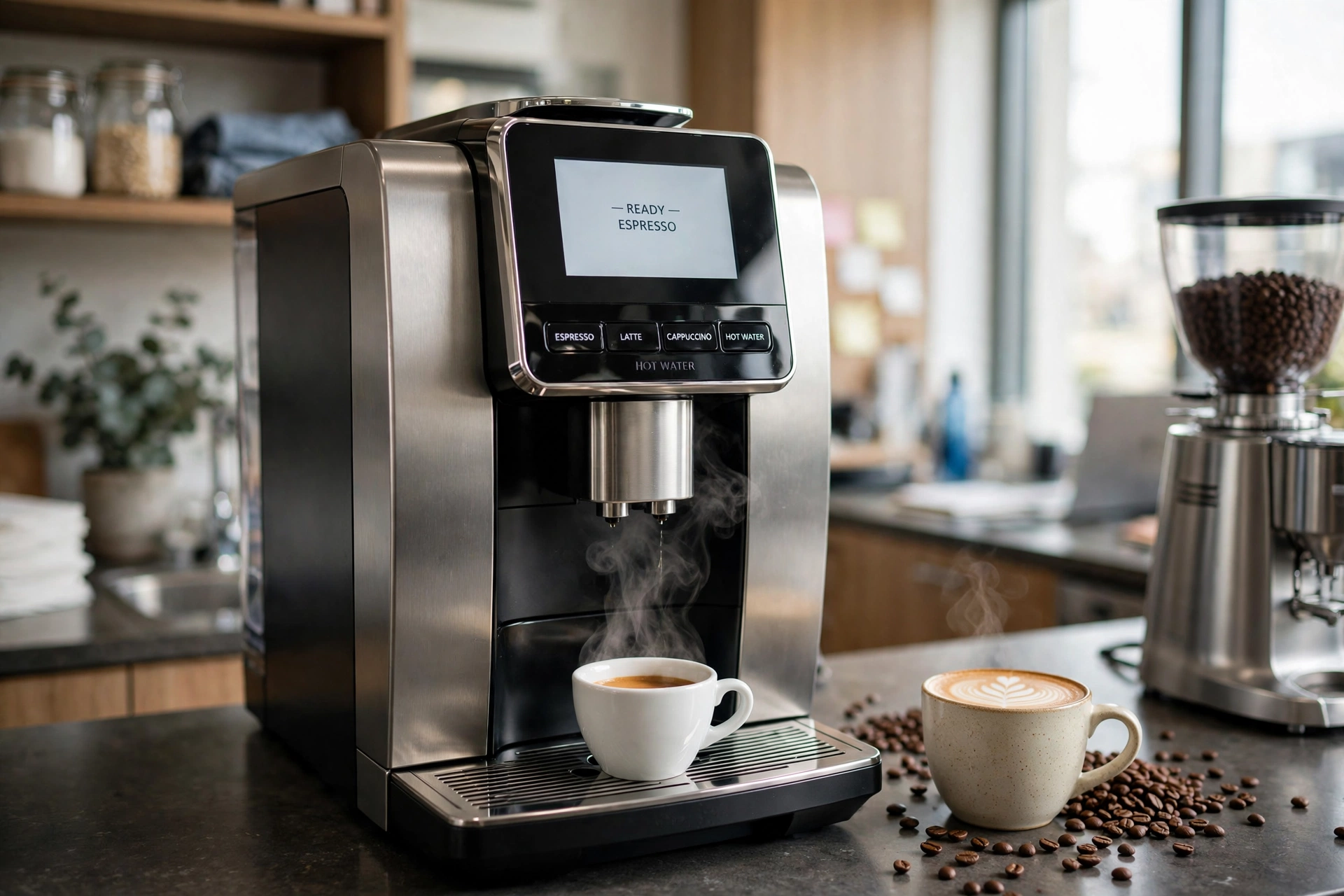
Automated coffee machines are commercial-grade beverage systems that integrate grinding, tamping, and brewing into a single, programmable sequence, removing the need for manual intervention to achieve a consistent extraction.
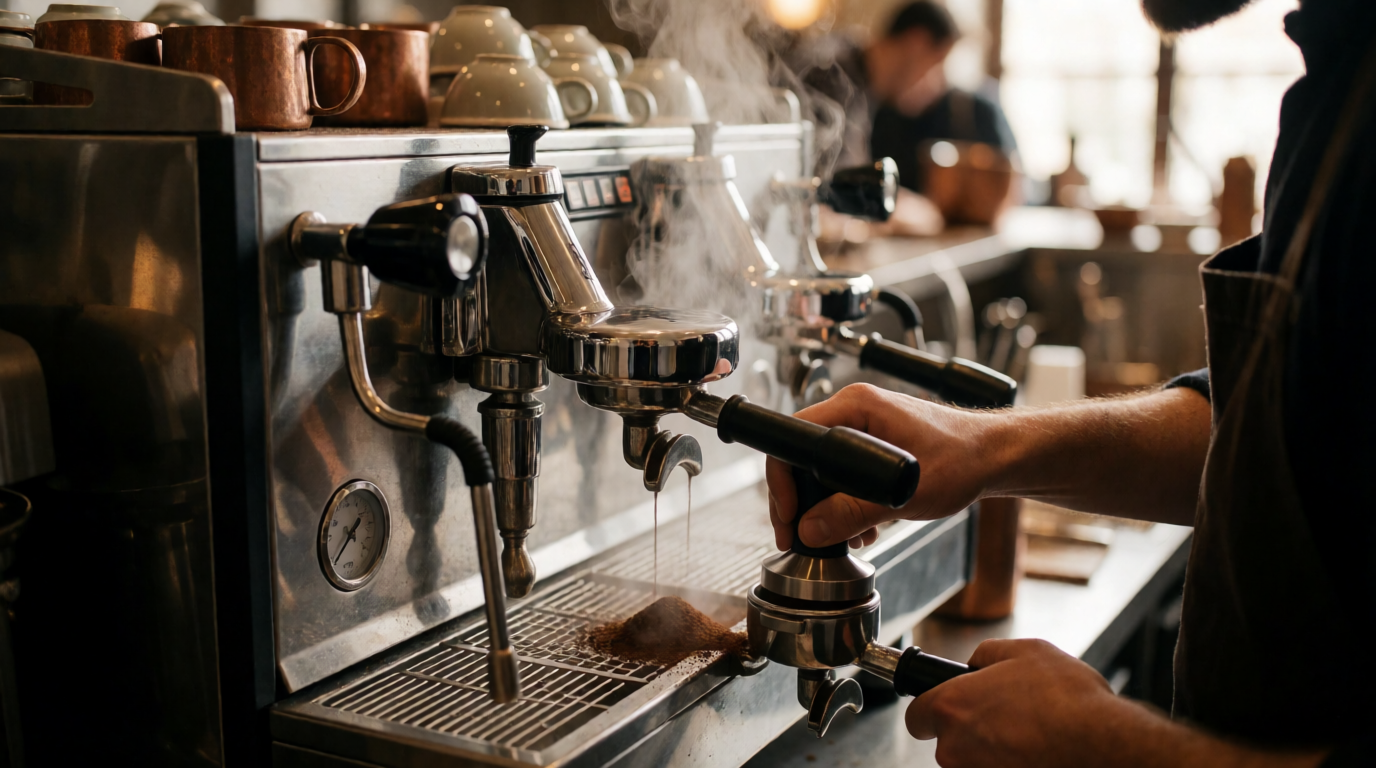
The primary goal here is the standardization of the "Golden Ratio" of coffee to water. In a manual setting, a slight change in the tamping pressure can lead to "channeling," where water finds a path of least resistance and fails to extract the full flavor profile of the coffee bean. Automated systems solve this by utilizing motorized tamping and calibrated dispensing.
According to the Specialty Coffee Association (SCA), the precision of water temperature (ideally between 195°F and 205°F) is one of the most critical factors in preventing bitterness or sourness. Automated machines maintain these temperatures within a fraction of a degree, something that is nearly impossible to sustain in a fast-paced environment without constant manual monitoring. This level of control ensures that the chemical compounds of Coffea arabica are extracted perfectly every time.
Now, here's where it gets interesting: the technology has evolved beyond just "pressing a button." We are now seeing "bean-to-cup" integration where the machine communicates with the grinder in real-time, adjusting the grind size based on the humidity of the room. This is a massive leap from the traditional method, where a barista would have to manually "dial in" the machine every morning, often wasting pounds of expensive specialty coffee in the process.
The Business Impact: Why Consistency Equals Revenue
The decision to move to automation is rarely about the coffee alone; it is about the bottom line. When you analyze the cost of inconsistency, you find a hidden drain on profitability. Every incorrectly made drink is a loss of raw materials and a loss of potential customer loyalty.
Data from the National Coffee Association USA (NCA) indicates that consumer expectations for "premium" experiences are at an all-time high. In a competitive market like Mount Pleasant, SC, a customer will not return to a cafe if their espresso is burnt one day and watery the next. Automation eliminates this risk.
The consequences of not acting on this trend are significant. Businesses relying solely on manual labor face two primary risks: labor volatility and training bottlenecks. When a skilled barista leaves your company, they take their "intuition" with them. If your quality depends on that individual, your business is vulnerable. By implementing automated systems, the "intuition" is programmed into the machine.
Consider the numbers. If a cafe serves 300 drinks a day and wastes just 5% due to human error, that is 15 drinks daily. Over a year, that is over 5,000 wasted beverages. When you factor in the cost of high-grade beans and the labor time spent remaking those drinks, the ROI on an automated system becomes clear. This is why many of our clients are now looking at a price guide for automated coffee machines to plan their 2026 upgrades.
Furthermore, the speed of service increases dramatically. A manual double-shot espresso can take several minutes from grind to pour if the barista is meticulous. An automated system reduces this to seconds. In a high-traffic breakfast rush, a 30-second reduction per drink can increase total throughput by 15% to 20%, directly impacting top-line revenue.
Practical Application: Implementing Automation in Your Workflow
Transitioning to an automated system isn't as simple as plugging in a new machine; it requires a shift in how you view your coffee service. The goal is to use automation to handle the precision, allowing your staff to focus on the "hospitality" aspect of the business.
Here is the most effective way to integrate these systems:
- Audit Your Peak Volume: Before choosing a machine, track your hourly drink volume. A machine that can handle 50 drinks per hour is useless if your morning rush demands 120.
- Standardize Your Menu: Identify your most popular drinks. Program these as "presets" in the machine so that your staff only needs to select the beverage type.
- Implement a Maintenance Schedule: Automation reduces labor but increases the need for technical upkeep. Without a strict cleaning cycle, the internal valves can clog, leading to inconsistent pressure. This is where coffee machine maintenance plans become essential.
- Train for Quality Control: Even with automation, staff must know how to identify a "bad" shot. They should be trained to recognize the visual cues of a proper crema, even if the machine did the work.
At Busy Bean Coffee, we've found that the most successful implementations involve the SENSA Fresh Brewer for high-volume drip coffee alongside automated espresso units. This hybrid approach ensures that both the "quick coffee" crowd and the "specialty latte" crowd are served with maximum efficiency.
💡
Key Takeaway
The primary value of automation is not the replacement of the barista, but the liberation of the barista from repetitive, error-prone tasks, allowing them to focus on customer engagement and beverage presentation.
The mistake I made early on, and that I see constantly, is treating the automated machine as a "set it and forget it" appliance. Automation is a tool, not a magic wand. If you put low-quality beans in an automated machine, you will simply get consistently bad coffee. The synergy between high-end coffee roasting and automated precision is where the real magic happens.
Comparing Your Options: Manual vs. Generic vs. Professional Automation
Not all automation is created equal. There is a vast difference between a consumer-grade "pod" machine and a professional managed coffee solution. The former focuses on convenience at the cost of quality; the latter focuses on quality at the scale of convenience.
| Feature | Traditional Manual Approach | Generic/Cheap AI Approach | Professional Automation (Busy Bean) |
|---|---|---|---|
| Consistency | Variable (Dependent on Skill) | High (But often bland) | Absolute (Specialty Grade) |
| Waste | High (Due to dialing-in) | Low (Pre-measured) | Minimal (Precision Dosing) |
| Labor Cost | High (Requires expert staff) | Low (No skill needed) | Optimized (Hospitality focused) |
| Drink Quality | Potentially Elite | Mediocre | Consistently Premium |
| Best For | Boutique "Slow" Cafes | Low-traffic breakrooms | Restaurants, Hotels, High-Volume Cafes |
As the table demonstrates, the "Generic AI" approach, often seen in cheap office machines, sacrifices the soul of the coffee. These machines often over-extract the beans to hide poor quality, resulting in a burnt taste. Professional automation, however, replicates the exact movements of a master barista, including the precise pre-infusion of water to bloom the coffee.
For businesses that want the best of both worlds without the massive upfront capital, we often recommend exploring why you should lease coffee machines in 2026. This allows you to access top-tier automation while maintaining a healthy cash flow for other operational needs.
Common Questions & Misconceptions
There is a persistent myth in the industry that "automated coffee is inferior." Most guides get this wrong because they compare professional automation to home-grade machines.
Myth 1: "Automation kills the art of coffee."
Actually, automation preserves the art by ensuring the technical foundation is perfect. The "art" happens in the milk texturing, the latte art, and the customer interaction. By removing the stress of the extraction process, the barista can actually spend more time on the craft.
Myth 2: "Automated machines are too expensive to justify."
This is a failure of accounting. If you look at the cost of the machine as a standalone expense, it looks high. If you look at it as a reduction in labor waste and an increase in throughput, the machine usually pays for itself within 12 to 18 months. Those who want a detailed breakdown should check our ROI guide for starting a coffee program.
Myth 3: "They are harder to maintain than manual machines."
In reality, they are easier to maintain if you have a system. While they have more electronic components, the cleaning cycles are often automated. The real risk is neglecting the water filtration. According to NSF International, scale buildup is the number one killer of commercial equipment. Automated machines often have built-in alerts to tell you exactly when to descale, whereas manual machines require you to remember.
Frequently Asked Questions
Does using automated coffee machines affect the flavor of specialty coffee?
No, provided the equipment is professional-grade. In fact, automation often improves flavor by eliminating human errors like over-extraction or incorrect water temperature. When you use high-quality coffee beans and precise automation, the result is a cleaner, more consistent cup that highlights the unique origin notes of the bean. The key is ensuring the machine allows for the adjustment of variables like grind size and temperature to match the specific roast profile of your coffee.
How much labor can I actually save by switching to automation?
While automation might not allow you to remove a staff member entirely, it significantly reduces the "labor hours per drink." In a manual setup, a barista spends a large portion of their time on technical tasks: grinding, leveling, tamping, and timing. Automation compresses these steps into a single action. This means one person can handle a rush that would typically require two or three people in a manual environment, effectively reducing your labor cost per transaction.
Are automated machines suitable for high-end restaurants in Mount Pleasant, SC?
Absolutely. High-end diners expect a premium experience, and nothing ruins a meal like a mediocre cup of coffee. Professional automation allows a restaurant to offer a "cafe-quality" espresso without needing a dedicated, full-time barista on the payroll. By integrating managed coffee services, restaurants can ensure their equipment is always calibrated and their beans are always fresh, maintaining a luxury standard with minimal operational overhead.
What happens if an automated machine breaks down during a rush?
This is the primary fear for many owners. However, the risk is mitigated through professional service agreements. Unlike manual machines, where a broken lever might be a quick fix, electronic failures require expertise. This is why we emphasize maintenance plans that include rapid response times and preventative care. Having a managed service means you have a safety net, often including loaner machines, ensuring your revenue stream is never interrupted.
Can I still offer "custom" drinks with an automated system?
Yes, and often more accurately. Most professional systems allow you to program custom recipes for different drink sizes or strength preferences. Whether it is a ristretto or a long black, the machine follows the programmed recipe exactly. This means your "signature" drinks will taste identical across different shifts and different locations, which is essential for brand scaling.
Final Thoughts on Automated Coffee Machines
The transition to automated coffee machines is not about replacing the human element; it is about optimizing it. By removing the volatility of manual extraction, businesses can guarantee a premium product while drastically reducing waste and labor stress. In a market where consistency is the primary driver of repeat customers, automation is no longer a luxury, it is a competitive necessity.
Whether you are upgrading a small office or managing a large-scale foodservice operation, the goal remains the same: delivering a perfect cup every single time. For those ready to eliminate the guesswork and scale their beverage program, Busy Bean Coffee provides the equipment, the beans, and the managed support to make it happen.
To learn more about our all-inclusive managed coffee memberships, visit Busy Bean Coffee today.