📖This article is part of the complete guide to Coffee Machine Maintenance Service Guide 2026.
Which Coffee Equipment Maintenance Model is Right for Your Business?
A single day of downtime for a high-volume espresso machine can cost a hospitality business upwards of $1,200 in lost revenue and customer frustration. Deciding which approach to coffee equipment maintenance to adopt depends entirely on your volume, technical capacity, and risk tolerance. For most foodservice operators, the choice is between reactive "break-fix" repairs, scheduled preventative maintenance, or a fully managed membership model. While the break-fix method seems cheapest upfront, it is the most expensive long-term strategy due to emergency premiums and unpredictable equipment failure.
In my experience working with dozens of hotel and restaurant groups, the most common mistake is treating a professional espresso machine like a home appliance. Commercial gear is designed for continuous duty, but without a rigorous maintenance framework, scale buildup and pump failure are inevitable. For businesses operating in high-traffic areas, such as those utilizing Sensa Coffee Service in Charlotte, NC, the shift toward managed services has become the industry standard in 2026 to eliminate the "emergency repair" panic.
Understanding the Mechanics of Professional Coffee Equipment Maintenance
To choose the right model, you must first understand what is actually being maintained. Commercial coffee systems are complex hybrids of hydraulic pressure, thermal dynamics, and electronic controls. Maintenance is not just "cleaning"; it is the preservation of these three systems to ensure consistency in every cup.
📚
Definition
Preventive Maintenance (PM) is a systematic approach to equipment care that involves regularly scheduled inspections, cleaning, and part replacements to prevent failures before they occur.
Preventive maintenance focuses on the "invisible" killers of coffee machines: mineral scale and oxidation. When water passes through a boiler, minerals precipitate and form a hard crust on heating elements. This doesn't just affect the taste; it forces the machine to work harder to maintain temperature, leading to premature element burnout. According to the Specialty Coffee Association (SCA), maintaining precise temperature stability is the single most important factor in extracting the complex flavors of specialty coffee, and scale is the primary enemy of that stability.
Now here's where it gets interesting: the level of maintenance required varies wildly by machine type. A manual espresso machine requires meticulous gasket and screen replacement, whereas automatic coffee machines for hotels and hospitality in 2026 often feature integrated cleaning cycles. However, integrated cycles are not a replacement for professional descaling. I've seen "self-cleaning" machines completely fail because the operator assumed the internal program handled the heavy lifting, ignoring the external water filtration system that was actually the root cause of the failure.

Why Maintenance Models Impact Your Bottom Line
The financial implications of your maintenance choice are far more significant than the monthly cost of a technician. When a machine fails during a Saturday morning rush, you aren't just paying for a repair; you are paying for the loss of every single transaction that would have occurred during that downtime.
Data from the National Coffee Association USA (NCA) suggests that beverage quality and availability are primary drivers of customer loyalty in foodservice. A machine that produces "burnt" tasting coffee due to scale buildup or an "off" temperature doesn't just waste beans; it drives customers to your competitors. In a tight market, especially for those implementing a foodservice coffee program in Chicago IL: Complete Guide, consistency is the only way to maintain a high average order value.
The cost of neglect is exponential. A $150 quarterly filter change prevents a $2,500 boiler replacement. In my experience, businesses that ignore the "small" maintenance tasks see their equipment lifespan drop by nearly 40%. This is a capital expenditure disaster. If you are replacing a $15,000 machine every five years instead of every ten, your operational costs are effectively inflated by thousands of dollars per year.
Furthermore, sanitation is a regulatory requirement. The U.S. Food and Drug Administration (FDA) maintains strict guidelines regarding food-contact surfaces. Old gaskets that have developed cracks or "pitting" in the metal can harbor bacteria. Regular maintenance ensures that your equipment meets health code standards, avoiding the risk of costly fines or forced closures during surprise inspections.
Practical Application: Implementing a Maintenance Framework
Regardless of which model you choose, there is a baseline of care that every business must execute. If you are managing your own gear, you need a documented checklist. If you are using a managed service like Busy Bean Coffee, this is handled for you, but understanding the process allows you to hold your providers accountable.
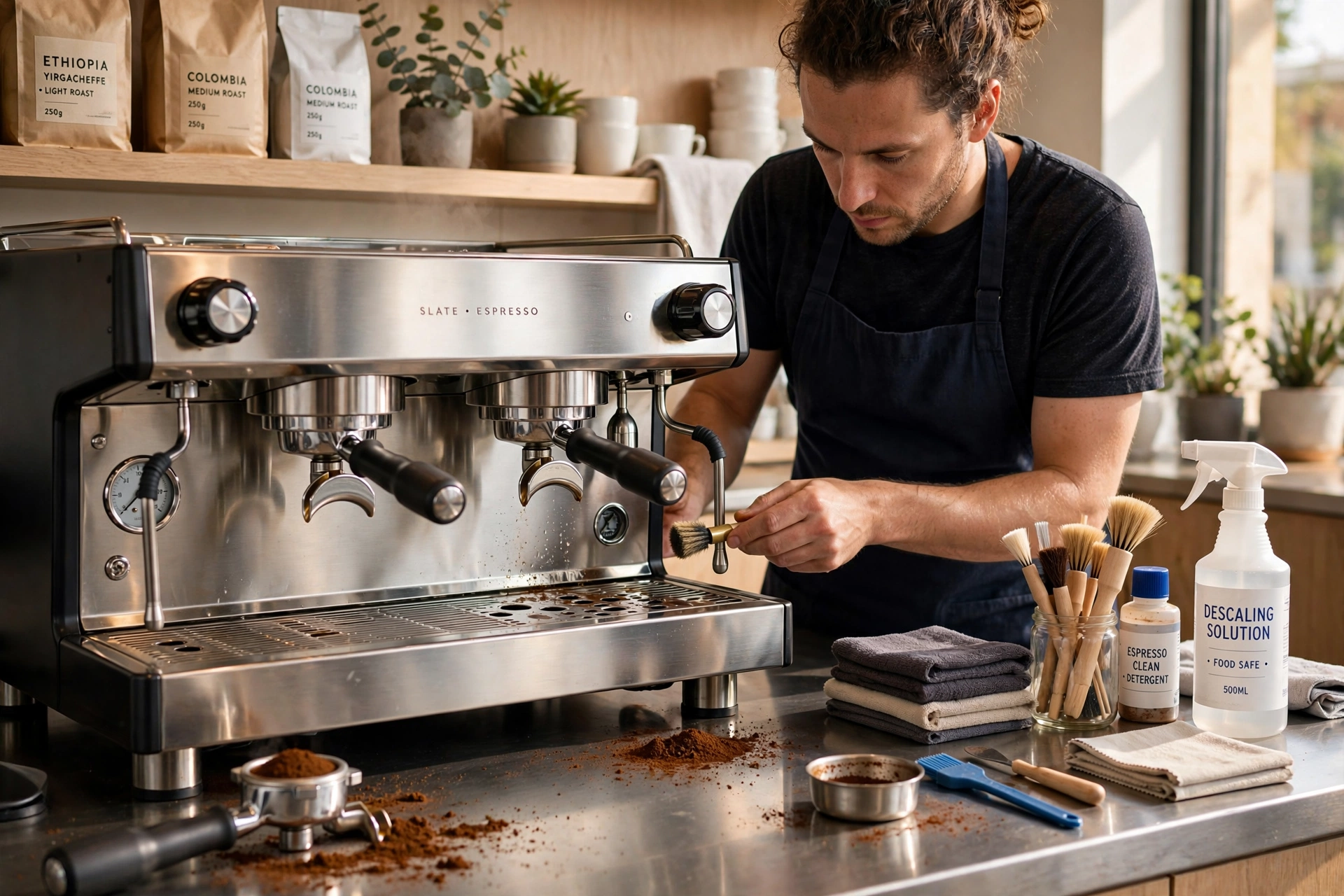
Daily Tasks (The Barista Level):
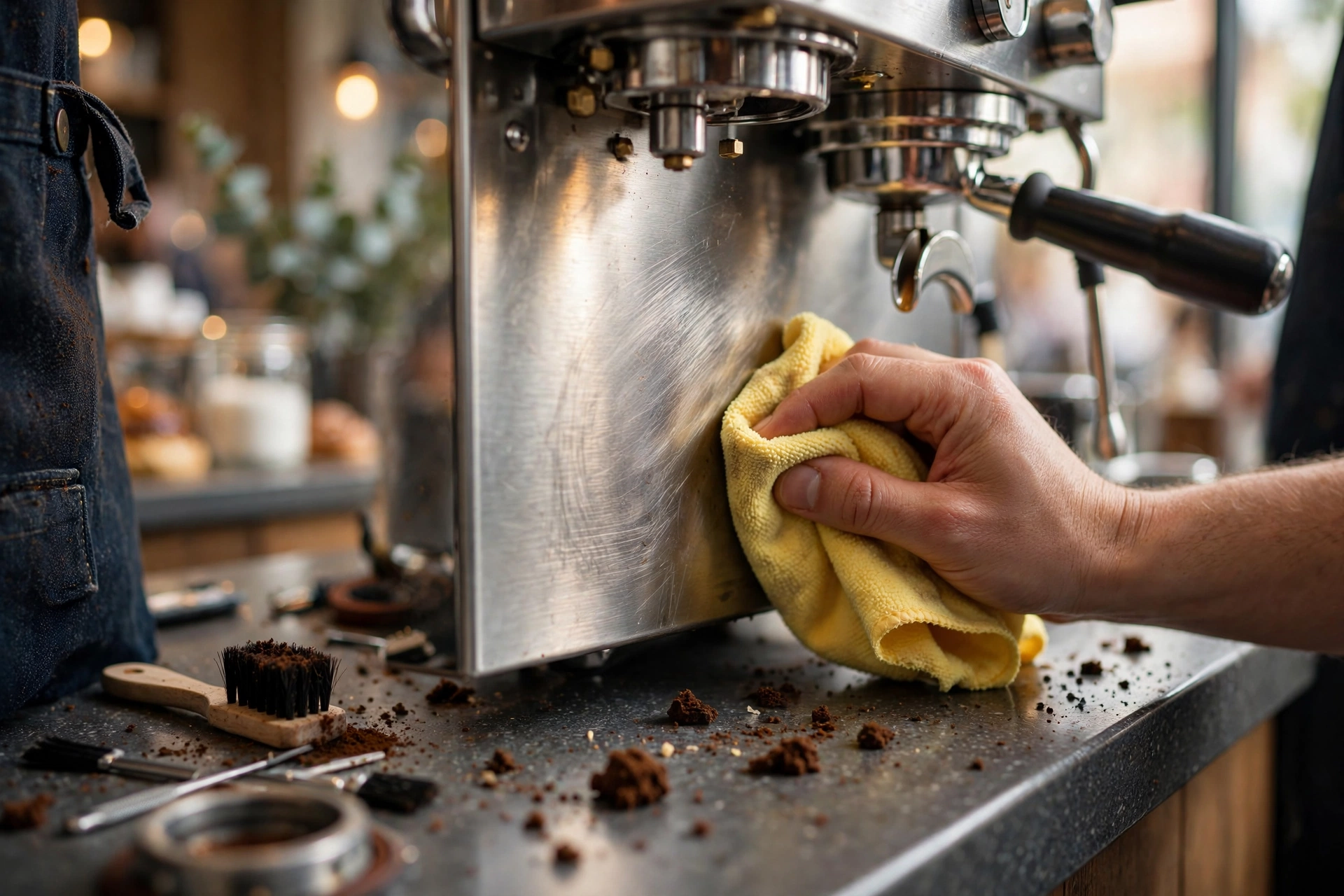
- Backflushing: Using a detergent to clear the group heads of old oils and coffee particulates.
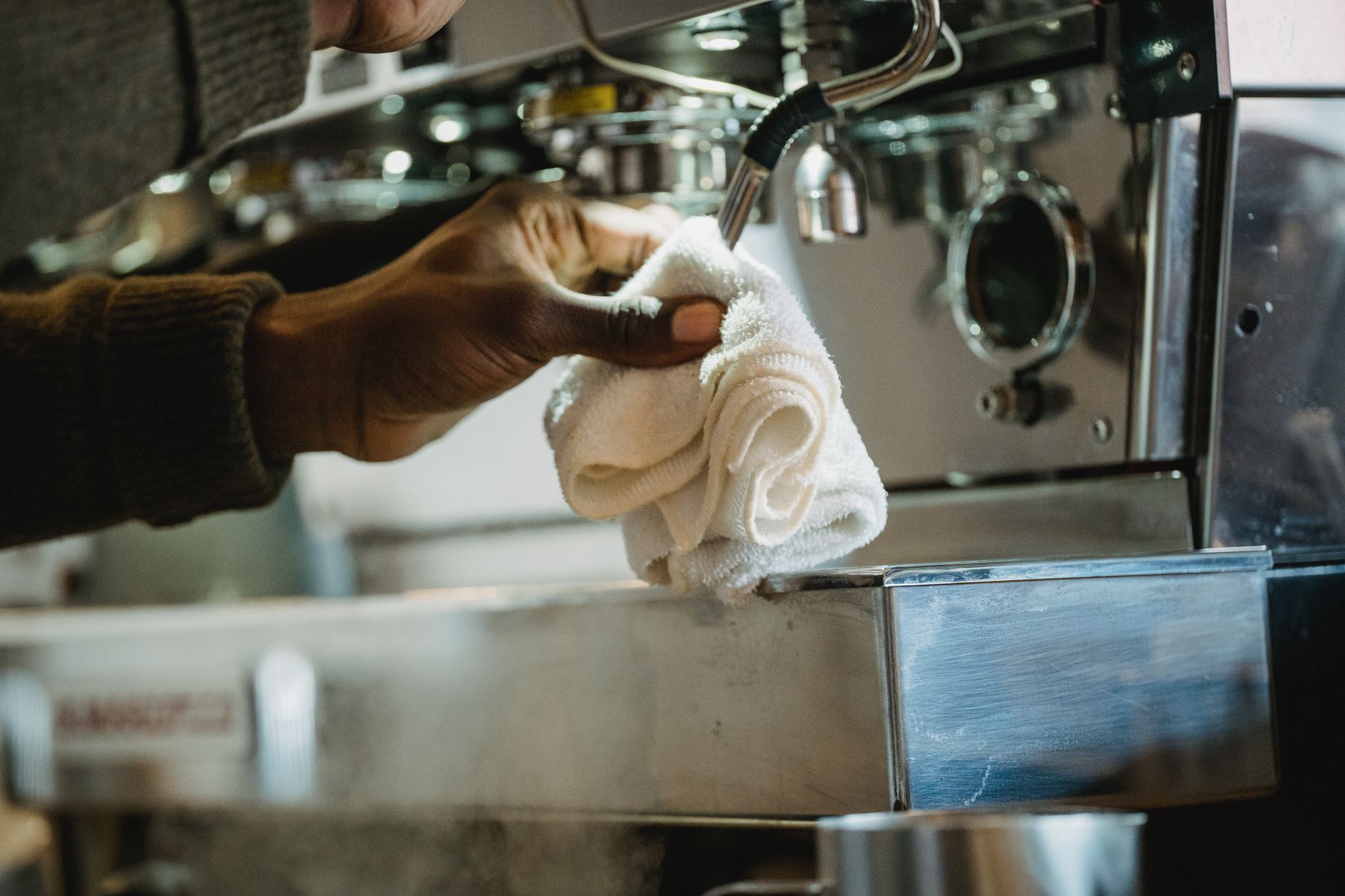
- Steam Wand Purge: Cleaning the wand after every single use to prevent milk proteins from baking onto the metal.
- Drain Tray Clearing: Ensuring no standing water is creating an environment for mold.
Weekly/Monthly Tasks (The Manager Level):
- Filter Inspection: Checking the pressure gauges on the water filtration system.
- Deep Descaling: Using a professional-grade agent to remove calcium deposits from the boilers.
- Gasket Inspection: Checking for leaks around the portafilter.
Quarterly/Annual Tasks (The Professional Level):
- Pump Calibration: Ensuring the pressure is exactly at the 9-bar mark for optimal extraction.
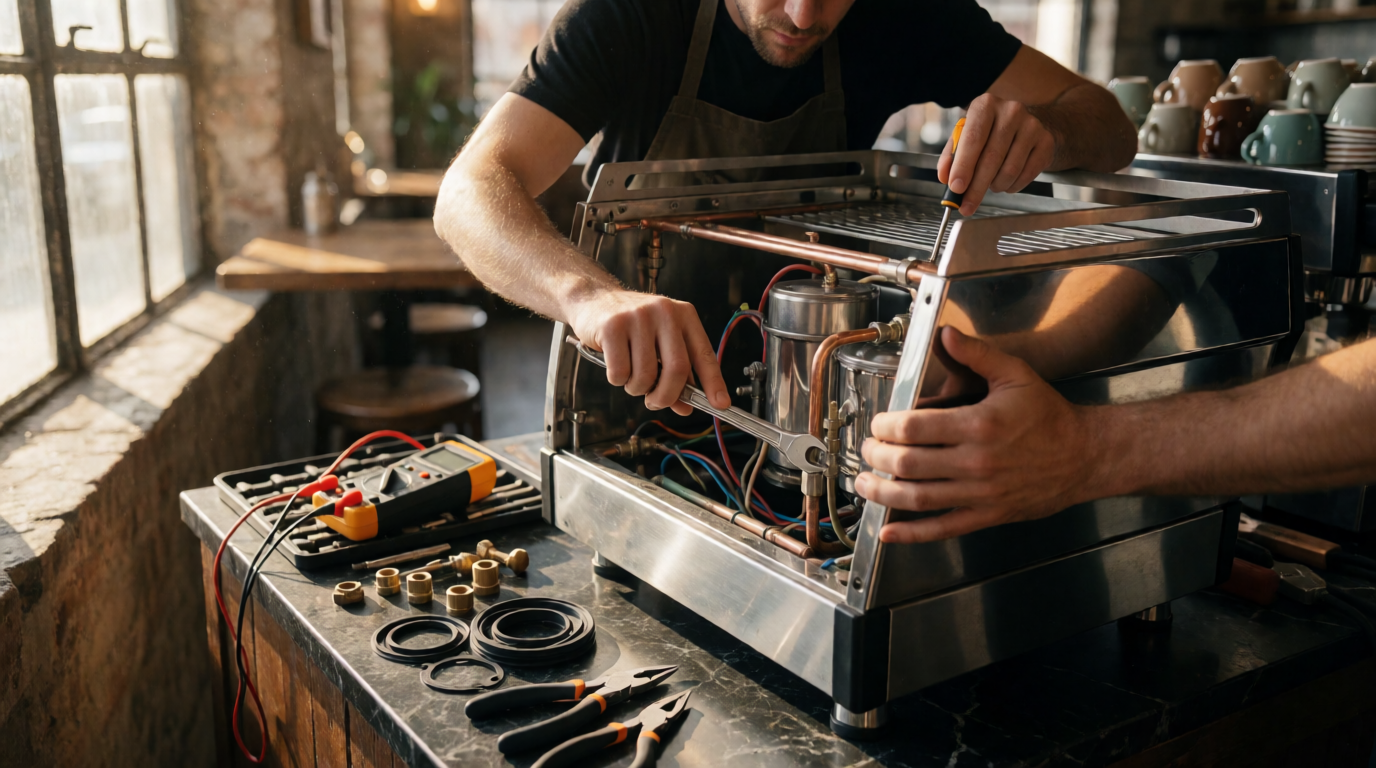
- Electrical Testing: Checking for frayed wiring or overheating components.
- Seal Replacement: Replacing all rubber O-rings and gaskets to prevent pressure loss.
💡
Key Takeaway
Daily cleaning prevents taste degradation, but quarterly professional maintenance prevents catastrophic equipment failure. One is about quality; the other is about survival.
For those who find this overwhelming, this is why we built our managed membership. When a business opts for our all-inclusive solution, they don't have to worry about whether the gaskets were changed in November. We handle the scheduling, the parts, and the labor. This is particularly effective for medical environments, such as those using automated coffee machines for clinics and medical offices, where staff are too busy to manage a maintenance log.
Comparison of Maintenance Options: Which One Wins?
Choosing the right model requires a cold look at your numbers. Do you have a dedicated technician on staff? Is your budget flexible, or do you need a fixed monthly cost? The following table breaks down the trade-offs between the three primary industry approaches.
| Feature | Reactive (Break-Fix) | Preventative (Scheduled) | Managed (Busy Bean Membership) |
|---|---|---|---|
| Upfront Cost | $0 | Low to Moderate | Fixed Monthly Fee |
| Predictability | Very Low (Emergency costs) | Moderate | Very High |
| Downtime Risk | High (Wait for repair) | Low (Scheduled) | Lowest (Proactive) |
| Equipment Lifespan | Shortened | Extended | Maximized |
| Administrative Effort | High (Finding techs) | Moderate (Scheduling) | Zero (Fully Managed) |
| Best For | Low-volume, non-critical | Mid-size with internal staff | High-volume, growth-focused |
That said, the "Reactive" model is a trap. Many owners believe they are saving money because they aren't paying a monthly fee. But the first time a heating element blows on a Friday afternoon, the "emergency" call-out fee from a technician is often triple the standard rate. When you add the lost revenue of a dead coffee station, the "savings" vanish instantly.
Now, if you have a massive corporate campus with ten different stations, the "Preventative" model might work if you have an in-house maintenance team. But for 95% of hospitality and foodservice businesses, the Managed approach, like the one we provide in Sensa Coffee Service in Mount Pleasant SC: Complete Guide, is the only way to decouple the stress of equipment failure from the act of running a business.

Common Questions and Misconceptions
Most "maintenance guides" you find online are written for home users. In a commercial environment, the rules are entirely different. Here are the most common myths I encounter when consulting with new clients.
Myth 1: "My machine has an automatic cleaning cycle, so I don't need a technician."
This is perhaps the most dangerous assumption in the industry. Automatic cycles clean the internal brew paths, but they do not check for worn pump seals, failing capacitors, or mineral buildup in the main boiler. An automatic cycle is like washing your car; it makes it look clean, but it doesn't tell you if your brake pads are worn down to the metal.
Myth 2: "Using distilled water prevents all maintenance needs."
While distilled water removes minerals, it can actually lead to "aggressive water" that leaches minerals out of the metal components of your machine, causing corrosion. The goal is balanced water, filtered to remove the bad stuff but retaining enough minerals to protect the equipment and enhance the taste of the coffee.
Myth 3: "Preventative maintenance is too expensive for a small cafe."
The math simply doesn't support this. A professional maintenance visit might cost a few hundred dollars, but a total boiler failure can cost thousands in parts and labor, plus the loss of thousands more in sales. It is significantly cheaper to pay for a "health check" than a "heart transplant."
Myth 4: "I can just buy a cheaper machine if it breaks."
In the professional world, "cheap" usually means "unserviceable." High-end equipment is designed to be rebuilt. Low-end commercial machines are often disposable. If you buy a machine that cannot be easily serviced, you are essentially gambling with your daily operations.
Frequently Asked Questions
How often should commercial coffee equipment maintenance be performed?
For a high-volume environment, professional maintenance should occur quarterly. While daily and weekly cleaning is the responsibility of the staff, a certified technician should perform a deep-dive inspection every three months. This includes checking water pressure, replacing worn gaskets, and verifying thermal stability. If you are using a managed service like Sensa Coffee Service in Raleigh NC, these visits are automated and scheduled so you never have to track them. Ignoring this quarterly cadence typically leads to a failure within 12 to 18 months.
What are the most common signs that my coffee equipment needs immediate service?
The most immediate red flag is a change in taste; if your espresso suddenly tastes sour or overly bitter despite using the same beans, your temperature stability is likely compromised. Physically, look for "weeping" gaskets where water leaks from the group head during a shot, or a noticeable increase in the time it takes for the machine to reach brewing temperature. If you hear the pump sounding "labored" or strained, it often indicates a partial blockage or scale buildup in the lines, which requires professional descaling immediately.
Can I perform professional-level maintenance myself to save costs?
While you can handle basic cleaning and filter changes, attempting professional-level maintenance, such as replacing boiler elements or recalibrating pumps, is risky. Commercial machines operate under high pressure and temperature; a mistake in a seal replacement can lead to steam leaks or electrical shorts. Furthermore, DIY repairs often void manufacturer warranties. For businesses utilizing a foodservice coffee program in Rock Hill SC, the risk of an amateur repair causing a total system failure far outweighs the cost of hiring a certified Q-Grader or technician.
Does the type of water actually affect the maintenance schedule?
Absolutely. The "hardness" of your local water is the primary driver of how often you need to descale. In cities with very hard water, scale can accumulate in weeks, whereas "soft" water areas may go longer. This is why a one-size-fits-all maintenance schedule doesn't work. Professional services analyze your local water quality and adjust the filtration and descaling frequency accordingly. Using an improper filter for your specific water chemistry can lead to "pitting" in the boiler, which is an irreversible form of damage.
What is the difference between a cleaning cycle and a descaling process?
A cleaning cycle removes coffee oils and organic residue from the brew head and valves using a chemical detergent. Descaling, however, is the process of removing mineral deposits (calcium and magnesium) from the internal heating elements and piping using an acid-based solution. You can clean your machine every day and still have a boiler choked with scale. One manages the flavor and hygiene of the coffee; the other manages the structural integrity and lifespan of the machine.
Final Thoughts on Coffee Equipment Maintenance
Choosing the right coffee equipment maintenance strategy is a decision between managing a predictable expense or managing an unpredictable crisis. For the vast majority of hospitality and foodservice operators, the transition from a reactive "fix it when it breaks" mindset to a managed membership is the single most effective way to protect their margins. When you remove the stress of equipment failure, you can focus on what actually matters: the quality of the guest experience and the growth of your business.
If you are tired of the "emergency call" cycle and want a predictable, professional solution, Busy Bean Coffee is here to help. From premium SENSA equipment to full maintenance coverage, we ensure your coffee service is a profit center, not a headache.
Explore our all-inclusive managed coffee solutions at www.busybeancoffee.com and see how we can stabilize your operations. Whether you need a Sensa Coffee Service in Jacksonville, FL or a comprehensive program for a hotel chain, we have the expertise to keep your machines running at peak performance.
Ready to Upgrade Your Business Coffee?
Café-quality coffee, zero maintenance headaches, and one predictable monthly price. Let's build your custom coffee program.
Free Coffee Pairing Guide & Specialty Roast Cheat Sheet
Unlock the secrets of perfect brewing ratios, water temperatures, and specialty roast profiles. Download the guide.