What Is Coffee Equipment Maintenance and Why Does It Matter?
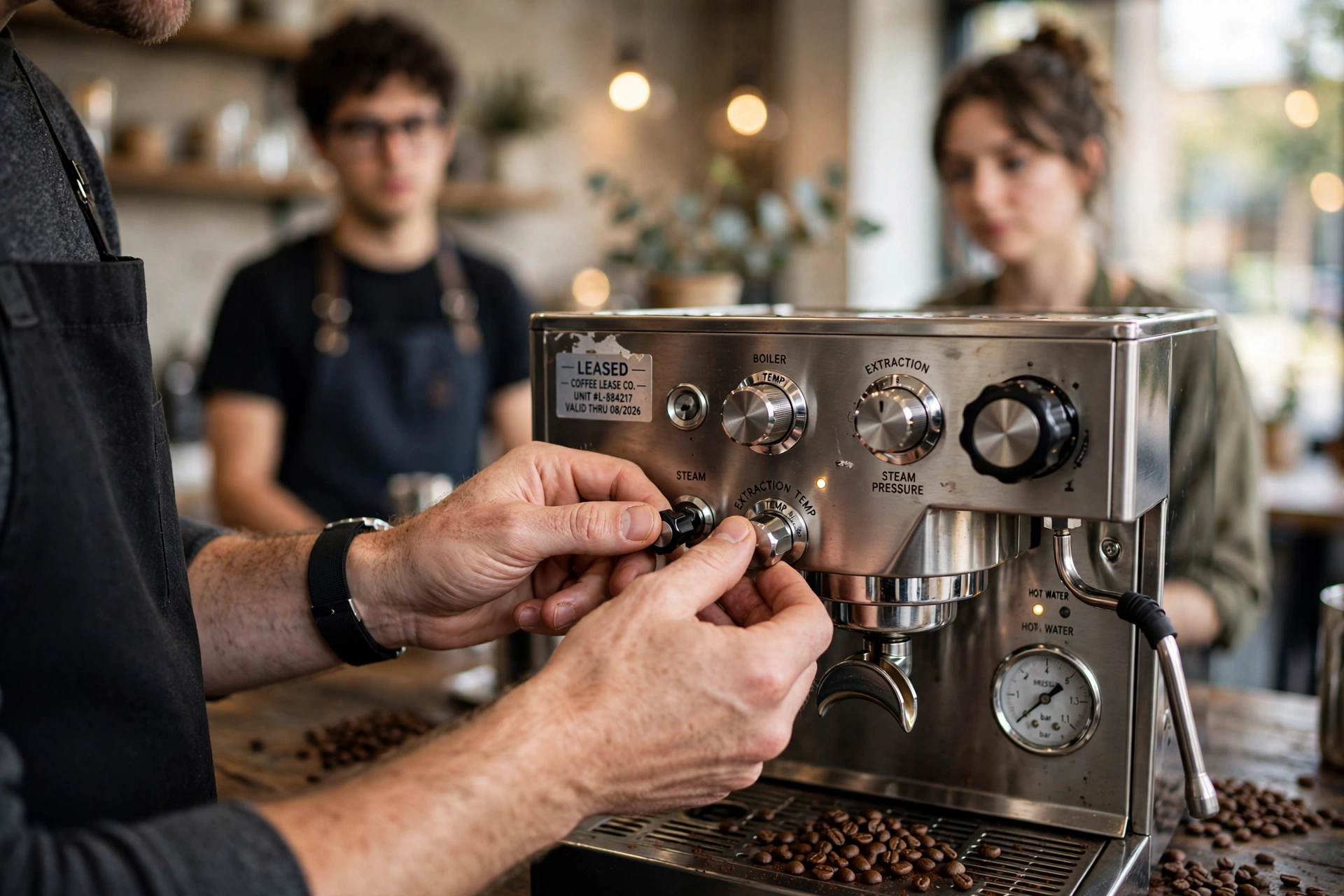
A single scale buildup in a boiler or a clogged group head can turn a high-end espresso machine into an expensive paperweight in less than six months. In my experience working with dozens of foodservice businesses in Mount Pleasant, SC, the most common reason for sudden equipment failure isn't a manufacturing defect, but a lack of consistent coffee equipment maintenance. At its core, this process involves the systematic cleaning, descaling, and mechanical calibration of brewing tools to ensure taste consistency and longevity.
📚
Definition
Coffee equipment maintenance is the scheduled process of cleaning, chemical descaling, and mechanical servicing of coffee-making hardware, such as espresso machines, grinders, and brewers, to prevent mineral buildup, remove organic oils, and maintain technical specifications.
When we talk about maintenance, we aren't just talking about wiping down a counter. We are talking about the chemical battle against Coffea arabica oils, which oxidize and turn rancid, and the geological battle against calcium carbonate deposits. For a business, this is the difference between a predictable monthly operational cost and a $5,000 emergency repair during the morning rush. For a home enthusiast, it is the difference between a balanced cup and one that tastes like burnt rubber.

How Does Technical Maintenance Impact Beverage Quality?
The physics of extraction depend entirely on the precision of the equipment. If the water temperature fluctuates by even two degrees or if the grind size drifts because of burr wear, the chemical profile of the coffee changes. Maintenance ensures that the variables remain constant. When organic compounds from the coffee bean accumulate in the group head or the portafilter, they create a bitter, acrid flavor profile that no amount of high-quality specialty coffee can overcome.
According to the Specialty Coffee Association (SCA), strict adherence to cleaning protocols is fundamental to achieving a "specialty" score in the cup. Their standards emphasize that residues from previous brews act as contaminants, altering the perceived acidity and sweetness of the current brew. If you aren't backflushing your machine daily, you are essentially brewing your 2026 coffee through the leftover oils of last week's roast.
Now here's where it gets interesting: the most invisible enemy is scale. Water contains minerals like calcium and magnesium. When water is heated in a boiler, these minerals precipitate and form a hard crust. This crust acts as an insulator, forcing the heating element to work harder and run longer to reach the target temperature. This not only increases energy costs but eventually leads to element burnout. I've seen machines that were barely two years old require full boiler replacements simply because the owner ignored the water filtration and descaling schedule.
💡
Key Takeaway
Maintenance is not about aesthetics; it is about protecting the chemistry of the extraction and the mechanical integrity of the heating elements.
Why is Consistent Maintenance Essential for Business ROI?
For any foodservice operator, equipment downtime is a direct hit to the bottom line. When your primary espresso machine goes offline, you aren't just losing the profit on a latte; you are losing the customer's trust and potentially their future visits. The financial impact of reactive maintenance, fixing things only after they break, is significantly higher than the cost of preventative care.
Research from NSF International highlights that sanitized and well-maintained food equipment not only lasts longer but reduces the risk of microbial growth in hard-to-reach areas of the machine. In a commercial setting, a machine that is not maintained according to NSF/ANSI 4 standards can become a health code liability.
From a purely financial perspective, consider the depreciation of a high-end espresso machine. A machine that is meticulously maintained retains a much higher resale value and avoids the "catastrophic failure" curve. According to industry benchmarks, businesses that implement a managed coffee service, like the all-inclusive membership at Busy Bean Coffee, reduce their unplanned equipment downtime by nearly 40% compared to those managing their own maintenance schedules.
The mistake I made early on in my career, and one that I still see constantly, is treating water filtration as an optional accessory. Many owners believe that "filtered water" from a pitcher is enough. It isn't. Without a commercial-grade reverse osmosis or ion-exchange system, you are essentially inviting scale to destroy your machine from the inside out. The cost of a high-quality filter is a fraction of the cost of a new heat exchanger.
How to Implement a Coffee Equipment Maintenance Schedule
Effective maintenance is divided into three tiers: daily, weekly, and quarterly. The goal is to move from a state of "crisis management" to "predictable performance." Here is the professional framework we recommend for maintaining specialty coffee equipment.
Daily Maintenance (The Hygiene Tier)
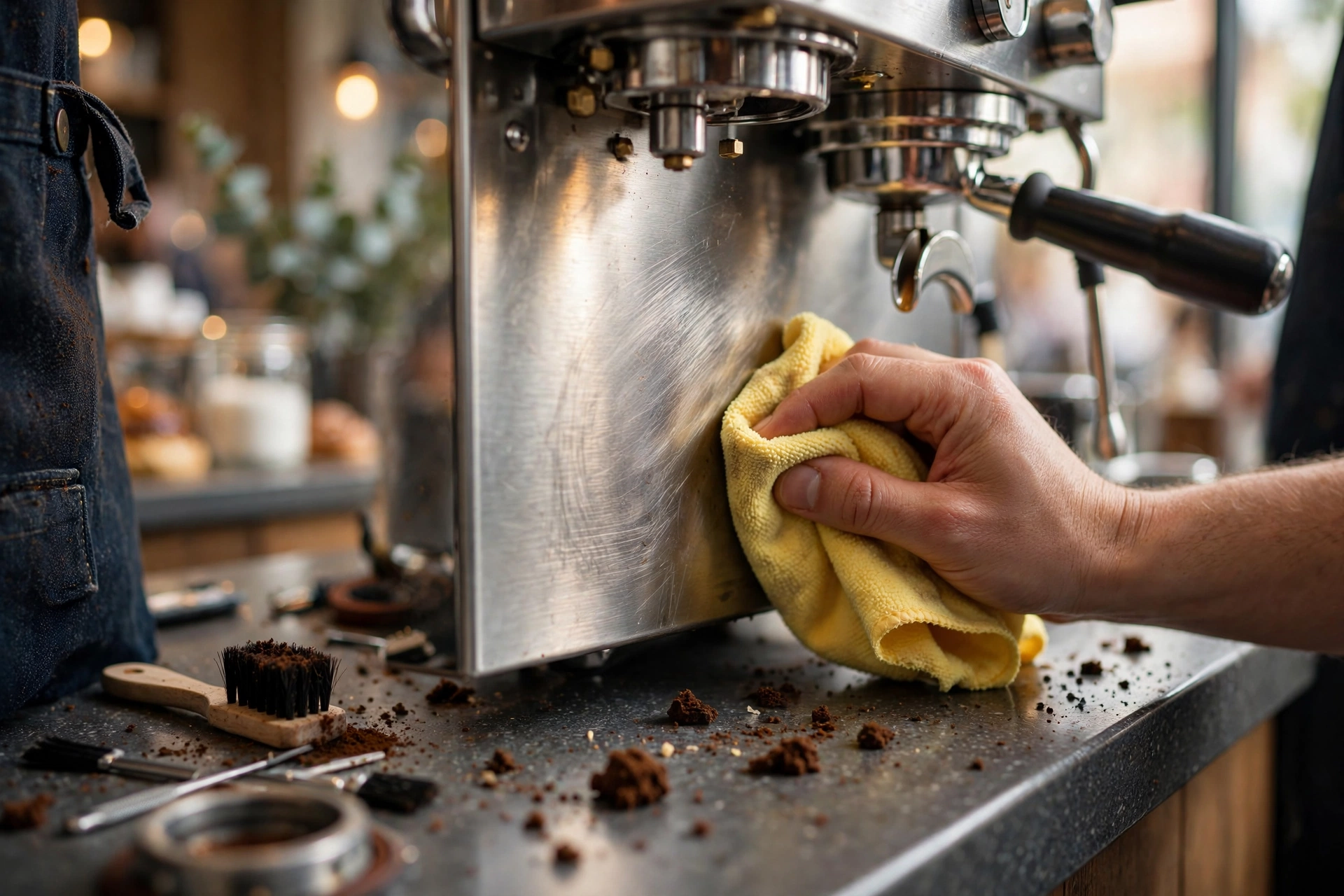
Every single day, at the close of business, the machine must be backflushed. This involves using a blind filter and a specialized detergent to clear the three-way solenoid valve and the group head. If you use a grinder, the hopper should be wiped down to remove oil buildup. If you leave coffee beans in a hopper for days, the oils oxidize, and that rancid taste will seep into every cup you serve.
Weekly Maintenance (The Deep Clean Tier)
Once a week, you must remove the shower screens and gaskets. These components trap fine particles of coffee (fines) that backflushing cannot reach. Soak these parts in a solution of coffee detergent and hot water. Additionally, check your water filter gauges. If the pressure drop is too significant, the filter is saturated and needs replacement.
Quarterly and Annual Maintenance (The Technical Tier)
This is where professional intervention is required. A Q-Grader or a certified technician should inspect the group gaskets and shower screens for wear and tear. Gaskets harden over time; once they leak, you lose pressure, and your extraction suffers. This is also the time for a full system descale if your water chemistry requires it.
At Busy Bean Coffee, we remove this entire burden from the business owner. Our managed coffee solutions include professional installation and full maintenance coverage. Instead of wondering if you remembered to change a gasket, our team handles the technical heavy lifting, ensuring your equipment operates at peak efficiency 365 days a year.

💡
Key Takeaway
Divide your tasks into daily, weekly, and quarterly cycles to ensure no single component is overlooked, preventing the "cascading failure" effect.
Comparing Maintenance Approaches: Manual vs. Managed
When deciding how to handle your equipment, you generally have three paths. Most beginners start with the manual approach, but as the volume of coffee increases, the risk of human error grows.
| Approach | Pros | Cons | Best For |
|---|---|---|---|
| Manual/DIY | Low immediate cost; total control. | High risk of error; no professional backup; time-consuming. | Home enthusiasts or very low-volume shops. |
| Generic Service | Periodic professional check-ins. | Reactive (fix when broken); variable pricing; no equipment guarantee. | Small cafes with a trusted local technician. |
| Managed Solution (Busy Bean) | Predictable monthly fee; proactive maintenance; zero CAPEX. | Monthly subscription commitment. | High-volume cafes, hotels, and growth-oriented businesses. |
Now, let's be honest about the "Generic Service" approach. Many businesses hire a technician only when the machine stops pumping water. By that point, the damage is usually systemic. A managed approach is proactive; we identify a failing pump before it dies, meaning your business never stops running.
Common Misconceptions About Equipment Care
There are several myths in the coffee industry that actually lead to more damage. Most guides get this wrong by suggesting "quick fixes" that compromise the machine's lifespan.
Myth 1: "Vinegar is a great natural descaler."
This is a dangerous misconception. While vinegar is an acid, it is not a professional-grade descaling agent. It often leaves a lingering scent and taste in the boiler that is nearly impossible to remove without a complete teardown. Furthermore, it isn't strong enough to remove heavy calcium deposits in commercial boilers. Always use an NSF-certified descaling powder or liquid.
Myth 2: "If the coffee tastes fine, the machine is clean."
Taste is a lagging indicator. By the time you taste "bitterness" or "burnt" notes, the buildup is already severe. Scale buildup in the heat exchanger happens invisibly. You won't taste it until the temperature stability fails or the flow rate drops. Maintenance is about preventing the taste change, not reacting to it.
Myth 3: "I don't need to clean my grinder because it's a 'quiet' model."
The noise level of a grinder has nothing to do with the accumulation of coffee oils on the burrs. In fact, some high-end grinders are more sensitive to oil buildup, which can cause the motor to overheat or the grind consistency to drift. Regular cleaning of the burrs with specialized tablets or a vacuum is essential for any specialty coffee setup.
Frequently Asked Questions
How often should I actually descale my espresso machine?
The frequency depends entirely on your water hardness. If you are using soft, treated water, you might only need a deep descale once every six months. However, in areas with hard water, mineral buildup can happen in weeks. According to the National Coffee Association USA (NCA), water quality is the single most influential factor in equipment longevity. I recommend using a water hardness test kit once a month. If you notice a drop in water pressure or a slower heating time, it is time to descale immediately, regardless of the calendar.
Will using a cleaning tablet every day damage my machine?
No, provided you are using a detergent specifically formulated for espresso machines. These tablets are designed to break down organic coffee oils without corroding the stainless steel or brass components of the boiler. The real damage comes from not using them. When oils are left to bake onto the group head, they create a carbonized layer that is much harder to remove and can eventually obstruct the flow of water, leading to uneven extraction and "channeling" in your coffee puck.
Why does my coffee taste bitter even after I cleaned the machine?
If you have performed a full cleaning and the bitterness persists, the issue is likely not the equipment maintenance but the "dialing in" process. Bitterness is usually a sign of over-extraction. This could be caused by a grind that is too fine, water that is too hot, or a brew time that is too long. However, check your grinder burrs. If they are worn down or chipped, they will produce "fines" (tiny dust-like particles) that over-extract and create a bitter taste. Burrs are consumables and must be replaced every 500 to 1,000 kilograms of coffee.
Is a water filter really that important for home machines?
Absolutely. For a home user, a water filter is the cheapest insurance policy you can buy. Most residential areas have water with varying levels of chlorine and minerals. Chlorine not only affects the taste of the coffee but can also degrade rubber gaskets over time. A simple carbon filter removes the chlorine, while an ion-exchange filter manages the scale. If you skip the filter, you are essentially guaranteeing that your machine will require a professional descaling service much sooner than the manufacturer's recommendation.
What happens if I ignore the group head gaskets?
Gaskets are the rubber seals that prevent water from leaking around the portafilter. Over time, heat and pressure cause the rubber to harden and shrink. When the gasket fails, water will leak from the sides of the portafilter during brewing. This does two things: it lowers the brewing pressure (ruining your crema) and it creates a messy, unsafe environment with hot water spraying around the machine. Replacing a gasket is a five-minute job, but ignoring it can lead to electrical shorts if water leaks into the machine's internal wiring.
Final Thoughts on Coffee Equipment Maintenance
Mastering coffee equipment maintenance is the difference between a hobby and a professional operation. Whether you are running a high-volume cafe in Mount Pleasant, SC, or brewing a few cups at home, the principle remains the same: consistency is king. By treating your equipment as a precision instrument rather than a kitchen appliance, you ensure that every shot of espresso is a true representation of the coffee bean's origin and quality.
If the thought of daily backflushing and quarterly descaling feels overwhelming, remember that you don't have to do it alone. Busy Bean Coffee provides an all-inclusive managed service that handles everything from professional installation to ongoing maintenance. We believe that your focus should be on the art of the brew, not the stress of the repair.
To protect your investment and elevate your coffee quality, visit www.busybeancoffee.com and explore our managed coffee solutions for 2026 and beyond.
Recommended Readings
To deepen your understanding of these topics, we recommend reading the following articles:
- The Complete Guide to White Glove Coffee Service
- Ultimate Guide to All-Inclusive Coffee Service for Businesses
- Ultimate Guide to Automated Coffee Machines for Business
- Ultimate Guide to Specialty Coffee Equipment for Business
Free Coffee Pairing Guide & Specialty Roast Cheat Sheet
Unlock the secrets of perfect brewing ratios, water temperatures, and specialty roast profiles. Download the guide.