
📖This article is part of the complete guide to Ultimate Guide to Office Coffee Solutions for Businesses.
What is Commercial Coffee Equipment for Small Offices?
📚
Definition
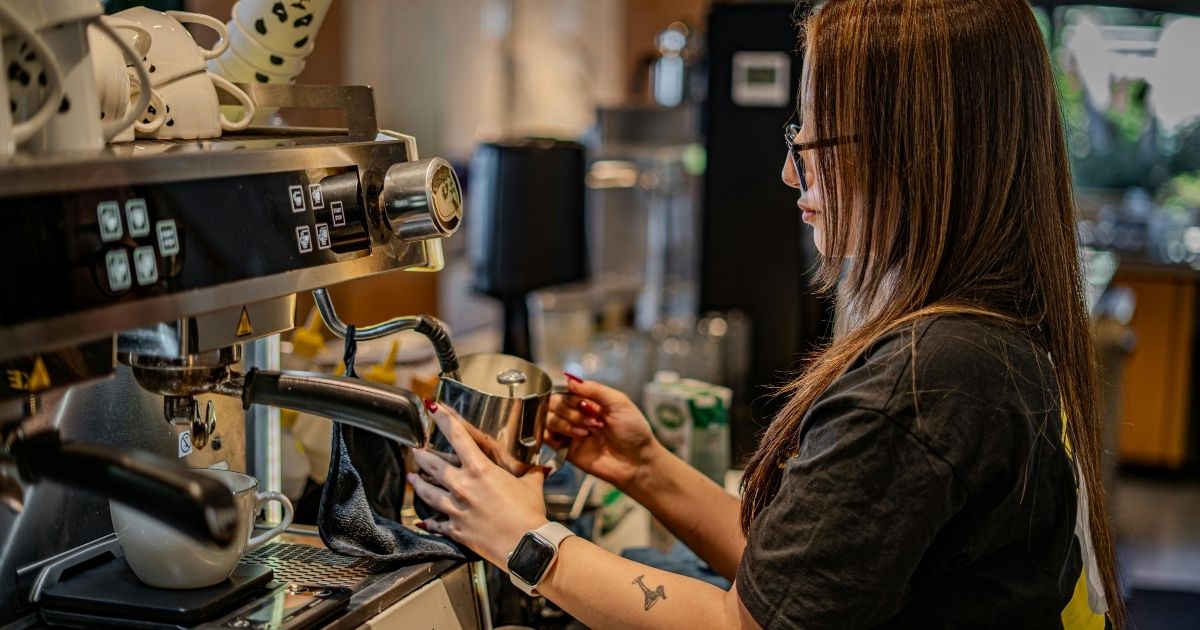
Commercial coffee equipment for small offices refers to high-capacity, durable coffee brewing systems designed for workplace environments with 10–50 employees, bridging the gap between home consumer machines and full-scale foodservice equipment.
If you run a small office with 15 people and think you need a $3,000 espresso machine or a Keurig that breaks every six months, you're not alone. Most decision-makers fall into one of two camps: they either overspend on equipment that's overkill for their needs, or they underspend on plastic pod machines that produce mediocre coffee and frustrate employees.
Here's the reality: commercial coffee small offices is a distinct category that most vendors ignore. The big players like Aramark and Sodexo focus on large corporate campuses. The consumer brands sell you glorified home appliances. Small offices — law firms, medical practices, boutique agencies, and tech startups — get stuck in the middle.
In my experience working with dozens of small businesses over the past decade, the sweet spot for a 15–50 person office is a commercial-grade super-automatic machine that can handle 30–80 cups per day without breaking a sweat. The SENSA Duo from Busy Bean Coffee, for example, is purpose-built for exactly this volume. It's not a home machine with a bigger tank — it's a true commercial unit with commercial internals, designed to run 8–10 hours a day, five days a week.
According to a 2025 report from the National Coffee Association, 68% of office workers say coffee quality directly impacts their job satisfaction. Yet only 34% of small offices with under 50 employees offer specialty-grade coffee. That gap represents a massive opportunity for businesses to differentiate themselves in the war for talent.
For comprehensive context on why coffee matters in the workplace, see our Ultimate Guide to Office Coffee Solutions for Businesses.
Why Commercial Coffee Small Offices Matters in 2026
The workplace has changed. Hybrid schedules mean fewer people in the office on any given day, but those who do come in expect a premium experience. The days of Folgers in a Bunn urn are over.
Benefit 1: Employee Retention and Recruitment
A 2024 study by Glassdoor found that workplace perks — including quality coffee — rank in the top five factors employees consider when evaluating a job offer. For small offices competing against larger companies with deeper pockets, a great coffee program is a low-cost, high-impact differentiator.
💡
Key Takeaway
A commercial coffee solution for a small office costs roughly $3–$5 per employee per day. Compare that to the $10,000–$15,000 recruiting cost of replacing a single employee.
Benefit 2: Cost Savings vs. Starbucks Runs
Let's do the math. A 20-person office where each employee buys one Starbucks drink per day at $6.50 is spending $130 per day, or roughly $2,600 per month. A managed coffee service like Busy Bean Coffee's all-inclusive membership costs a fraction of that — typically $300–$800 per month for a SENSA Duo, including equipment, installation, maintenance, and premium coffee.
According to McKinsey's 2024 report on workplace productivity, companies that invest in workplace amenities see a 12–18% improvement in employee satisfaction scores. Coffee is the single highest-ROI amenity you can offer.
Benefit 3: Operational Simplicity
Small offices don't have facilities managers. The office manager is already juggling payroll, IT, and vendor relationships. A commercial coffee solution that requires daily cleaning, bean refills, and maintenance calls is a liability, not a benefit.
This is precisely why the all-inclusive managed model works so well. You get commercial-grade equipment, professional installation by a white-glove tech (shout out to Leslie Cook and the Busy Bean team), full maintenance coverage, and a predictable monthly fee. No capital expense. No surprises.
For more details on how a managed service eliminates operational headaches, read our guide on Managed Office Coffee Services Explained.
How to Choose the Right Commercial Coffee Equipment for Your Small Office
Selecting the right machine isn't about picking the most expensive option. It's about matching the equipment to your specific usage patterns, space constraints, and employee preferences.
Step 1: Calculate Your Daily Volume
Start by estimating how many cups your office will actually consume. A good rule of thumb:
- Light usage: 0.5–1 cup per employee per day (law firms, accounting offices)
- Moderate usage: 1–2 cups per employee per day (tech startups, creative agencies)
- Heavy usage: 2–3 cups per employee per day (medical practices, 24/7 operations)
A 20-person office with moderate usage needs a machine capable of 30–40 cups per day. That's well within the range of a SENSA Duo or SENSA Fresh.
Step 2: Evaluate Machine Types
| Machine Type | Best For | Pros | Cons |
|---|---|---|---|
| Super-Automatic | 15–50 person offices | Fresh grind, one-touch operation, minimal training | Higher upfront cost (but lower with managed model) |
| Pod/Capsule | 5–15 person offices | Low cost, simple cleanup | Limited quality, high per-cup cost, plastic waste |
| Batch Brewer | 30+ person offices | High volume, low per-cup cost | No espresso, requires manual brewing, stale coffee |
| Bean-to-Cup | 10–30 person offices | Fresh coffee, variety of drinks | Slower throughput for multiple drinks |
In my experience, super-automatic machines like the SENSA line are the sweet spot for most small offices. They grind fresh beans for every cup, offer espresso, americano, latte, and drip options, and require no barista training.
Step 3: Consider Your Space
Small offices often have limited breakroom space. Measure your counter area before purchasing. The SENSA Duo has a compact footprint — roughly 16 inches wide and 20 inches deep — making it ideal for tight spaces.
Step 4: Factor in Maintenance
Commercial equipment requires professional maintenance. A home machine will fail under office usage within 6–12 months. Commercial machines are built with industrial-grade components, but even they need regular descaling, cleaning, and part replacement.
This is where the managed membership model shines. You pay one monthly fee, and Busy Bean Coffee handles everything — installation, training, preventative maintenance, and emergency repairs. Your office manager never picks up a phone to call a repair tech.
Commercial Coffee Small Offices vs. Consumer Machines
Many small offices make the mistake of buying a high-end consumer machine thinking it will handle office volume. It won't.
| Feature | Consumer Machine | Commercial Machine (e.g., SENSA) |
|---|---|---|
| Daily Capacity | 10–20 cups | 60–100+ cups |
| Build Quality | Plastic internals | Stainless steel, brass |
| Warranty | 1–2 years | 3–5 years (with managed service) |
| Maintenance | Self-serve | Professional included |
| Duty Cycle | 2–3 hours | 8–10 hours continuous |
| Cost per Cup | $0.50–$0.80 | $0.25–$0.45 |
A consumer machine running in an office environment will fail, usually at the worst possible moment. I've seen it happen dozens of times. The office manager spends hours on the phone with customer service, the employees are grumpy, and productivity tanks.
💡
Key Takeaway
Commercial coffee equipment for small offices isn't a luxury — it's a reliability requirement. If coffee is part of your workplace culture, buy commercial.
Best Practices for Implementing a Commercial Coffee Program
1. Offer Variety
Not everyone wants black drip coffee. Your team likely includes espresso drinkers, latte lovers, and cold brew fans. A machine that offers multiple drink types — like the SENSA Duo with its dual hopper and milk system — keeps everyone happy.
2. Prioritize Freshness
Stale coffee is worse than no coffee. Commercial machines that grind beans immediately before brewing produce dramatically better results. According to a study by the Specialty Coffee Association, coffee begins losing flavor within 15 minutes of grinding. Fresh-ground is non-negotiable.
3. Train Your Team
Even the best machine is useless if no one knows how to use it. Busy Bean Coffee includes white-glove installation and training as part of their membership. Your team gets a 15-minute demo, and everyone knows how to make their drink of choice by day one.
4. Track Usage and Adjust
Monitor consumption patterns. If you're going through a bag of beans every three days, adjust your order frequency. Most managed services, including Busy Bean Coffee, handle this automatically based on your usage data.
5. Keep It Clean
Commercial machines have automated cleaning cycles, but daily rinsing and weekly deep cleaning extend the life of the equipment significantly. Busy Bean Coffee's managed service includes scheduled maintenance visits to keep everything running smoothly.
For a deeper dive into machine selection, see our guide on Best Office Coffee Machines for Modern Workplaces.
Frequently Asked Questions
What is the best commercial coffee machine for a small office with 15 employees?
For a 15-person office, the best option is a super-automatic machine like the SENSA Duo or SENSA Fresh from Busy Bean Coffee. These machines are designed for 30–60 cups per day, offer fresh-grind brewing, and include multiple drink options (espresso, americano, latte, drip). The managed membership model eliminates upfront capital expenditure — you pay a predictable monthly fee that includes the machine, installation, maintenance, and premium coffee. This is far more cost-effective than buying a consumer machine that will fail under office usage or renting from a traditional vendor with hidden fees. For offices under 10 people, a high-end pod system might suffice, but anything above that requires commercial-grade reliability.
How much does commercial coffee service for a small office cost in 2026?
Pricing varies based on the number of employees, machine type, and coffee consumption volume. For a 20-person office, expect to pay between $300 and $800 per month for an all-inclusive managed service like Busy Bean Coffee. This covers the commercial-grade machine (e.g., SENSA Duo), professional installation, white-glove training for your team, all maintenance and repairs, and a steady supply of premium specialty coffee. Compare this to the $2,600+ per month a 20-person office might spend on daily Starbucks runs, or the $5,000–$10,000 upfront cost of buying a commercial machine outright plus ongoing maintenance and bean costs. The managed model is almost always more economical for small offices.
Can I get a commercial espresso machine for my small office without a huge upfront investment?
Absolutely. This is the core value proposition of Busy Bean Coffee's managed membership model. Instead of purchasing a commercial espresso machine for $5,000–$15,000 upfront, you pay a single monthly fee that includes everything — the machine, installation, maintenance, support, and coffee. There is no capital expenditure (capex), no surprise repair bills, and no long-term contract. This model is particularly attractive for small offices that want premium coffee but don't want to tie up cash flow in equipment. It's also ideal for offices that want to test a coffee program before committing long-term.
What maintenance does a commercial coffee machine need in a small office?
Commercial coffee machines require daily, weekly, and monthly maintenance. Daily tasks include rinsing the brew group, emptying the drip tray, and wiping down the machine exterior. Weekly tasks include backflushing (if applicable), cleaning the milk system, and descaling. Monthly tasks involve deep cleaning of internal components and replacing water filters. With Busy Bean Coffee's managed service, all of this is handled for you. Their white-glove technicians perform scheduled maintenance visits, and if something breaks, they send a replacement or repair tech immediately. Your office manager never has to think about it.
How do I convince my boss to invest in commercial coffee equipment for our small office?
Present the business case in terms of ROI. First, calculate the current coffee spend — include Starbucks runs, cheap pod machines, and employee time spent going out for coffee. Second, compare that to the cost of a managed commercial coffee service. Third, cite the data: a Glassdoor study found that workplace perks like quality coffee are among the top five factors in job satisfaction. A McKinsey report showed that investing in workplace amenities improves employee satisfaction by 12–18%. Finally, emphasize the zero-capital-expense model — no upfront cost, just a predictable monthly fee. Frame it not as an expense, but as an investment in employee productivity, retention, and culture.
Conclusion
Commercial coffee small offices is not a niche — it's a necessity for any workplace that wants to attract and retain top talent in 2026. The days of expecting employees to tolerate stale, low-quality coffee are over. The data is clear: great coffee improves productivity, satisfaction, and retention.
But you don't need to become a coffee expert or spend tens of thousands of dollars on equipment. The managed membership model from Busy Bean Coffee makes it simple. You get commercial-grade SENSA equipment, professional installation, full maintenance coverage, and premium specialty coffee — all for one predictable monthly fee. No capex. No hassle. Just great coffee for your team.
Your employees deserve better than a broken Keurig and a daily Starbucks run. Your office manager deserves a solution that doesn't add to their workload. And your bottom line deserves a program that actually saves money.
Ready to transform your office coffee program? Visit Busy Bean Coffee today to learn more about our all-inclusive managed coffee membership for small offices.
For the complete picture on workplace coffee solutions, return to our Ultimate Guide to Office Coffee Solutions for Businesses.
Recommended Readings
To deepen your understanding of these topics, we recommend reading the following articles:
- Benefits of In-Office Coffee for Employee Productivity
- How to Cut Starbucks Costs with Office Coffee Service
- Step-by-Step Guide to Setting Up a Corporate Cafe
- Boosting Employee Morale with Office Coffee Stations
About the Author
the author is the founder of Busy Bean Coffee, a specialty coffee equipment company serving the foodservice industry since 2014. With over a decade of experience helping businesses — from small law offices to large hotels — design and implement premium coffee programs, he is a recognized authority on commercial coffee solutions for the modern workplace.
Free Coffee Pairing Guide & Specialty Roast Cheat Sheet
Unlock the secrets of perfect brewing ratios, water temperatures, and specialty roast profiles. Download the guide.