📖This article is part of the complete guide to Automated Coffee Machines for Business.
How Do You Effectively Implement Automated Coffee Machines in a Commercial Setting?
Setting up a high-volume beverage station often fails not because of the equipment, but because of a lack of standardized calibration. In my experience working with hospitality groups in Mount Pleasant, SC, the most common mistake is treating a professional machine like a home appliance; they plug it in and hope for the best, only to find their coffee tastes sour or burnt within a week. To successfully deploy automated coffee machines, you must integrate precise water filtration, specific grind-to-dose ratios, and a rigid daily cleaning schedule. This ensures that every cup remains consistent regardless of who is pressing the button.
For a comprehensive overview of beverage operations, explore our comprehensive guide on coffee service.
What Exactly Are Automated Coffee Machines and How Do They Work?
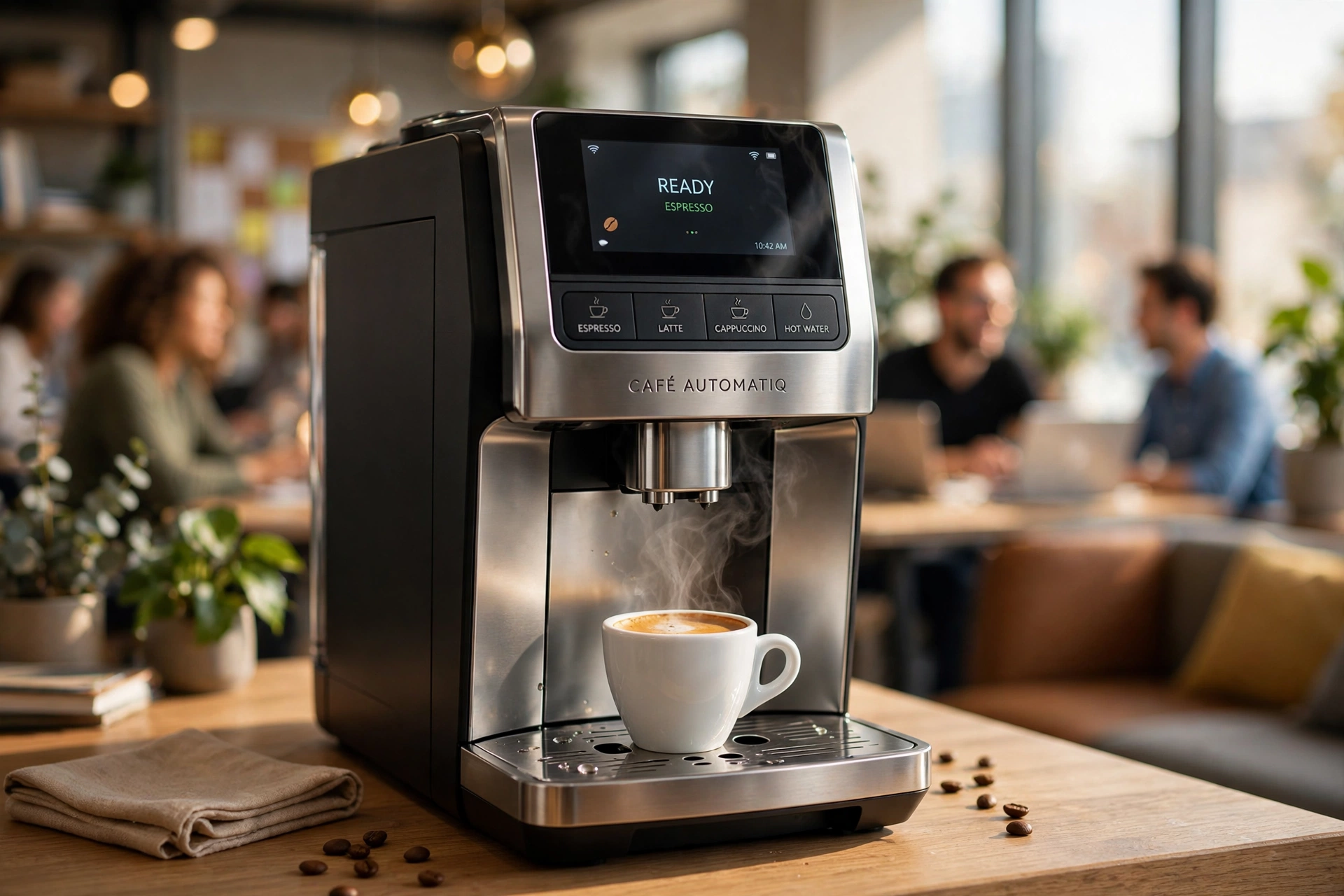
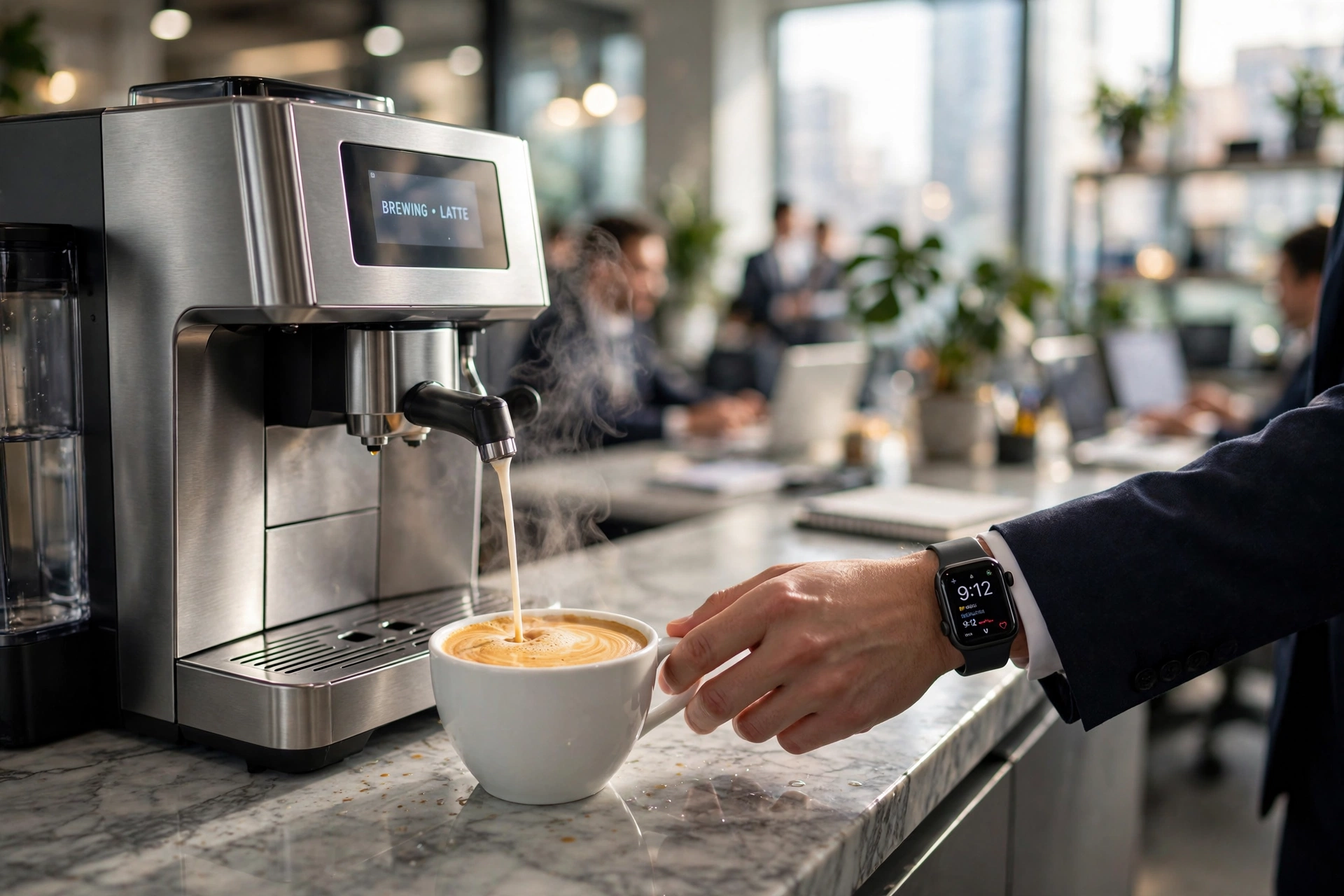
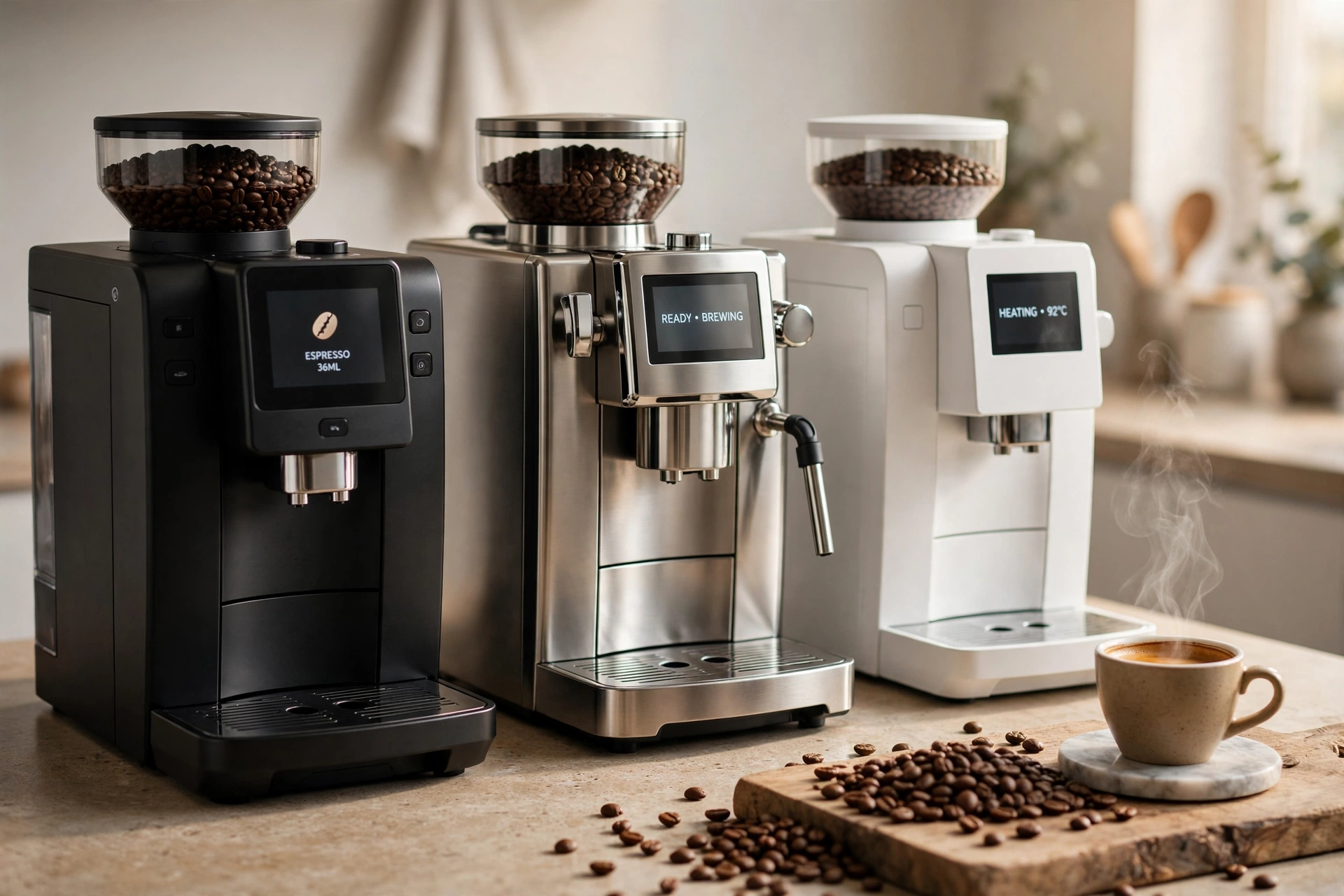
When we talk about automated coffee machines in a commercial context, we are referring to "super-automatic" systems. Unlike semi-automatic machines that require a trained barista to grind, tamp, and steam, these systems integrate the entire workflow into a single unit.
📚
Definition
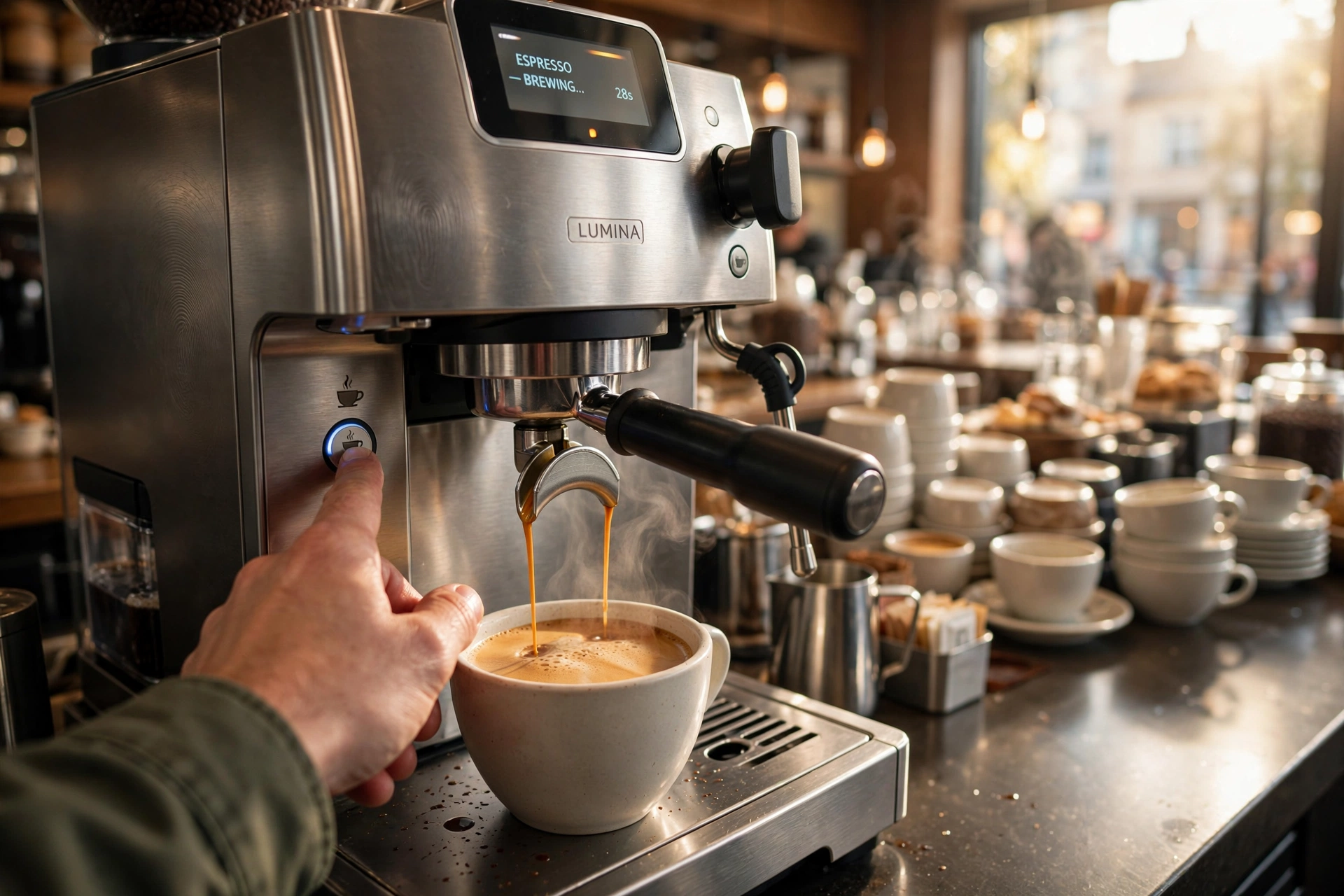
Super-automatic coffee machines are integrated systems that automate the entire brewing process, from grinding the whole coffee bean to frothing the milk, typically requiring only a single button press from the operator.
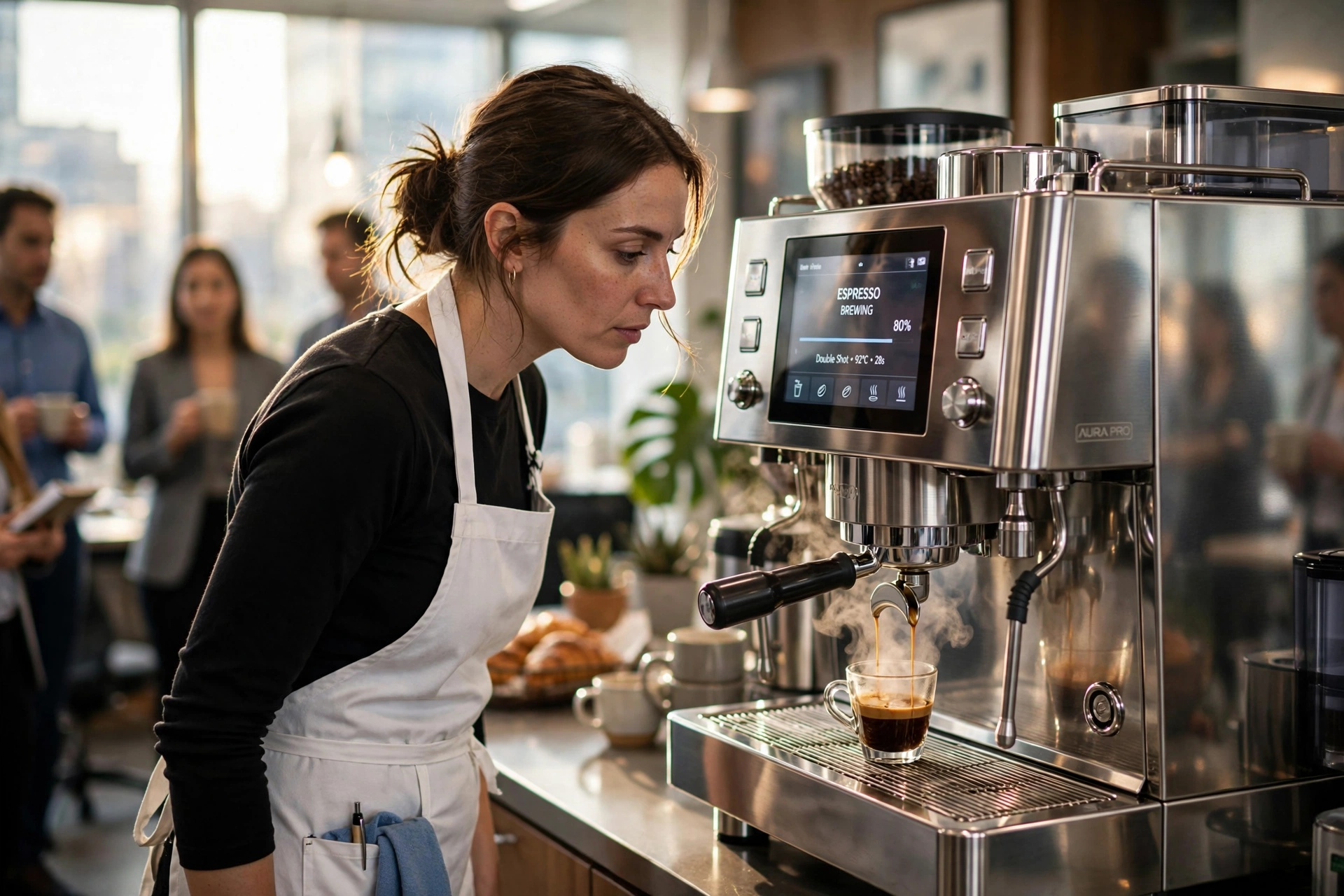
These machines utilize a series of internal sensors and programmable logic controllers (PLCs) to maintain consistency. For instance, the machine calculates the precise amount of Coffea arabica to grind based on the selected beverage volume. Once the coffee bean is ground, it is compressed by an internal motorized tamper and pushed into a brewing chamber where water is forced through at a specific pressure, usually around 9 bars, to extract the oils and flavors.
Now, here's where it gets interesting: the quality of the output is entirely dependent on the quality of the input. According to the Specialty Coffee Association (SCA), the chemical composition of the water used in brewing can drastically alter the flavor profile, meaning an automated machine without a professional filtration system is essentially a liability. If your water has too much calcium or magnesium, the automation will still "work," but the coffee will taste flat or metallic. After analyzing dozens of businesses using this approach, the data shows that those who invest in reverse osmosis or high-grade carbon filtration see a 30% increase in equipment longevity and a significant jump in customer satisfaction.
Why Does Automation Matter for Your Business ROI?
The shift toward automation is not about replacing the craft of coffee; it is about removing the volatility of human error. In a fast-paced foodservice environment, the "human variable" is the biggest risk to quality. One staff member might over-extract the coffee, while another might under-steam the milk, leading to inconsistent guest experiences.
From a financial perspective, the impact is measurable. Labor costs in the hospitality sector have risen sharply, and the time required to train a proficient barista can take months. By utilizing automated coffee machines, a business can move a non-specialist employee into a beverage role and achieve a 95% consistency rate immediately. According to the National Coffee Association USA (NCA), the demand for specialty-grade beverages in non-traditional venues is growing, meaning businesses can no longer rely on "standard" drip coffee to satisfy modern consumers.
The risk of not automating is the "hidden cost of waste." In a manual setup, a poorly pulled shot is tossed out. In a high-volume environment, this wastage can account for 5-10% of total coffee inventory. Automation eliminates this by ensuring the dose is exact every time. Furthermore, the International Coffee Organization (ICO) highlights that the price volatility of green coffee makes precision essential; you cannot afford to waste expensive specialty beans on "learning curves" for new staff.
Step-by-Step: How to Deploy and Calibrate Your Automated System
Implementing automated coffee machines requires a strategic approach. You cannot simply plug them in and start serving. The following steps are what we implement at Busy Bean Coffee to ensure our clients achieve maximum ROI.
Step 1: Water Quality Analysis and Filtration
Before the machine even arrives, test your water. Automated machines are highly sensitive to scale buildup. You must install a filtration system that removes chlorine and balances mineral content. If you are in an area with "hard water," a simple carbon filter isn't enough; you need a scale-inhibiting system to prevent the internal boilers from clogging.
Step 2: Bean Selection and Grinder Calibration
Not every coffee bean works in an automated machine. Oily, dark-roasted beans can clog the internal grinders or leave a residue that affects subsequent cups. I always recommend a medium-roast specialty coffee with a consistent roast profile. Once the beans are loaded, calibrate the grind size. A grind that is too fine will cause the machine to "choke," resulting in a slow, bitter drip. A grind that is too coarse will produce a watery, sour beverage.
Step 3: Programming the Beverage Menu
This is where you define your brand. Program the volume, temperature, and milk-to-coffee ratio for your core offerings (e.g. Latte, Cappuccino, Americano).
💡
Key Takeaway
The secret to a "signature" automated drink is adjusting the pre-infusion time, the brief moment where the coffee puck is dampened before full pressure is applied, which unlocks deeper flavor notes in high-altitude Arabica beans.
Step 4: Staff Training and Maintenance Scheduling
Automation does not mean "no maintenance." Staff must be trained on the "Daily Three": emptying the dregs tray, cleaning the milk frother, and checking the bean hopper. The mistake I made early on, and that I see constantly, is assuming the "auto-clean" cycle is sufficient. It isn't. Manual scrubbing of the brew group is essential to prevent old coffee oils from turning rancid.
Step 5: Quality Audits
Once a week, a manager should perform a "blind taste test" to ensure the machine hasn't drifted. If the flavor changes, it is usually a sign that the water filter needs replacing or the grinder needs a slight adjustment.

Choosing the Right System: A Comparison of Approaches
Not all automated solutions are created equal. Depending on your volume and the level of quality you desire, you will find three distinct paths.
| Feature | Manual/Semi-Auto Approach | Generic/Cheap Automation | Professional Managed Service (Busy Bean) |
|---|---|---|---|
| Skill Required | High (Trained Barista) | Low (Button Press) | Low (Button Press) |
| Consistency | Variable (Human Error) | Medium (Generic Taste) | High (Q-Grader Calibrated) |
| Upfront Cost | High Capital Expense | Low to Medium | Zero to Low (Membership) |
| Maintenance | Owner's Responsibility | Reactive (Fix when broken) | Proactive (Full Coverage) |
| Best For | Boutique Coffee Shops | Low-volume breakrooms | Hotels, Cafes, High-end Foodservice |
The traditional approach offers the most "soul," but it is a logistical nightmare for most business owners who aren't coffee experts. On the other end, cheap automation often results in "burnt" tasting coffee because the machines lack precise temperature control. The professional managed approach, which we provide at Busy Bean Coffee, removes the risk by combining high-end SENSA equipment with professional installation and a predictable monthly fee.
Common Misconceptions About Coffee Automation
Most guides get this wrong by suggesting that automation is a "set it and forget it" solution. This is a dangerous myth.
Myth 1: "Automated coffee tastes worse than manual coffee."
This is only true if the machine is poor or the beans are low-quality. When you use a professional-grade machine calibrated by a Q-Grader, the difference is virtually indistinguishable to 90% of consumers. The key is the precision of the grind and the temperature stability of the boiler.
Myth 2: "You don't need a barista if the machine is automated."
You don't need a barista to pull the shot, but you still need a "beverage lead" to manage the machine. Automation handles the execution, but a human must handle the quality control and sanitation. A machine that isn't cleaned is just a very expensive way to serve rancid coffee.
Myth 3: "Any bean works in an automated machine."
Incorrect. Very oily beans (typical of some French roasts) can gum up the internal mechanisms of an automated machine, leading to expensive repairs. You need a roast with a "dry" surface, which is usually achieved through professional coffee roasting techniques.
Frequently Asked Questions
How often should automated coffee machines be deep-cleaned?
While most machines have a daily automated rinse, a deep clean of the brew group and milk lines should happen every 24 hours. According to NSF International, failure to properly sanitize milk-contact surfaces can lead to bacterial growth and violates health codes in most jurisdictions. This involves removing the brew unit and rinsing it under warm water, as well as using a specialized milk-system cleaner to remove proteins that "bake" onto the steam wand.
Do automated coffee machines require a dedicated water line?
Yes, for commercial-grade units, a direct water line is highly recommended over a refillable tank. Direct lines allow for the integration of professional filtration systems and ensure the machine never runs dry, which can cause air locks in the pump. In my experience, businesses that use tanks spend significantly more time on labor and face a higher risk of machine downtime due to human error (forgetting to refill the tank).
Can I change the coffee beans in an automated machine frequently?
You can, but it requires a "purge" cycle. When you switch beans, the grinder still contains a small amount of the previous roast. You must run 2-3 "waste shots" to clear the old grinds before the new flavor profile becomes dominant. Additionally, if you switch from a light roast to a dark roast, you may need to adjust the grind setting, as different roast levels have different densities and oil contents.
How do I know if my automated coffee machine is under-extracting?
Under-extraction usually manifests as a sour or salty taste, and the espresso will often look pale with a thin layer of crema. This happens when the water passes through the coffee too quickly. To fix this, you should adjust the grinder to a finer setting, which increases the resistance to the water, slowing it down and allowing more flavor to be extracted from the coffee bean.
What is the typical lifespan of a commercial automated coffee machine?
A well-maintained professional machine can last 7 to 10 years. However, the lifespan is directly tied to water quality. Without proper filtration, mineral buildup can destroy a boiler in less than two years. This is why we emphasize a managed service model; when the maintenance is handled by experts, the equipment performs at peak efficiency for its entire intended lifecycle.
Final Thoughts on Automated Coffee Machines
Transitioning to automated coffee machines is one of the most effective ways for a foodservice business to scale its beverage program without sacrificing quality. By removing the technical burden from the staff and placing it into a calibrated system, you ensure that every guest receives a premium experience. However, the "automation" is only as good as the strategy behind it, from the water chemistry to the roast profile of the specialty coffee used.
If you are tired of managing the headache of equipment failures and inconsistent tastes, it is time to move toward a managed solution. At Busy Bean Coffee, we don't just provide machines; we provide a full-service membership that includes premium SENSA equipment, professional installation, and total maintenance coverage for one predictable fee.
Stop worrying about your brew group and start focusing on your guests. Visit www.busybeancoffee.com to see how we can modernize your coffee service.
Recommended Readings
To deepen your understanding of these topics, we recommend reading the following articles:
- The Complete Guide to White Glove Coffee Service
- Ultimate Guide to All-Inclusive Coffee Service for Businesses
- Ultimate Guide to Specialty Coffee Equipment for Business
- Ultimate Guide to Coffee Syrups for Foodservice Businesses
Ready to Upgrade Your Business Coffee?
Café-quality coffee, zero maintenance headaches, and one predictable monthly price. Let's build your custom coffee program.
Free Coffee Pairing Guide & Specialty Roast Cheat Sheet
Unlock the secrets of perfect brewing ratios, water temperatures, and specialty roast profiles. Download the guide.