📖This article is part of the complete guide to Coffee Machine Maintenance Service Guide 2026. How to Choose the Right Coffee Equipment Maintenance Strategy for Your Business
A single scale buildup in a boiler or a worn-out group gasket can shut down a high-volume cafe for an entire morning, costing hundreds of dollars in lost revenue and damaging customer loyalty. To effectively manage coffee equipment maintenance, you must move from a reactive "break-fix" mentality to a structured preventative schedule that aligns with your specific volume and equipment grade. The most efficient approach involves auditing your current hardware, establishing a daily and weekly operator checklist, and partnering with a certified service provider for quarterly deep-technical calibrations.
What Exactly is Professional Coffee Equipment Maintenance?
Choosing a maintenance strategy requires understanding that "cleaning" and "maintenance" are not the same. While cleaning removes visible residue, professional maintenance focuses on the mechanical integrity and chemical balance of the machine.
📚Definition
Coffee equipment maintenance is the systematic process of inspecting, cleaning, and replacing wear-and-tear components (such as gaskets, screens, and filters) to ensure a machine operates within the manufacturer's specified parameters for temperature, pressure, and flow rate.
In my experience working with dozens of high-volume hotels and cafes, the biggest mistake I see is the reliance on "visual cleanliness." A machine can look sparkling on the outside while the internal heat exchanger is choked with calcium deposits. According to the
Specialty Coffee Association (SCA), maintaining precise water chemistry and temperature stability is fundamental to achieving a specialty coffee score, as even a 2-degree variance in brewing temperature can fundamentally alter the extraction of Coffea arabica.
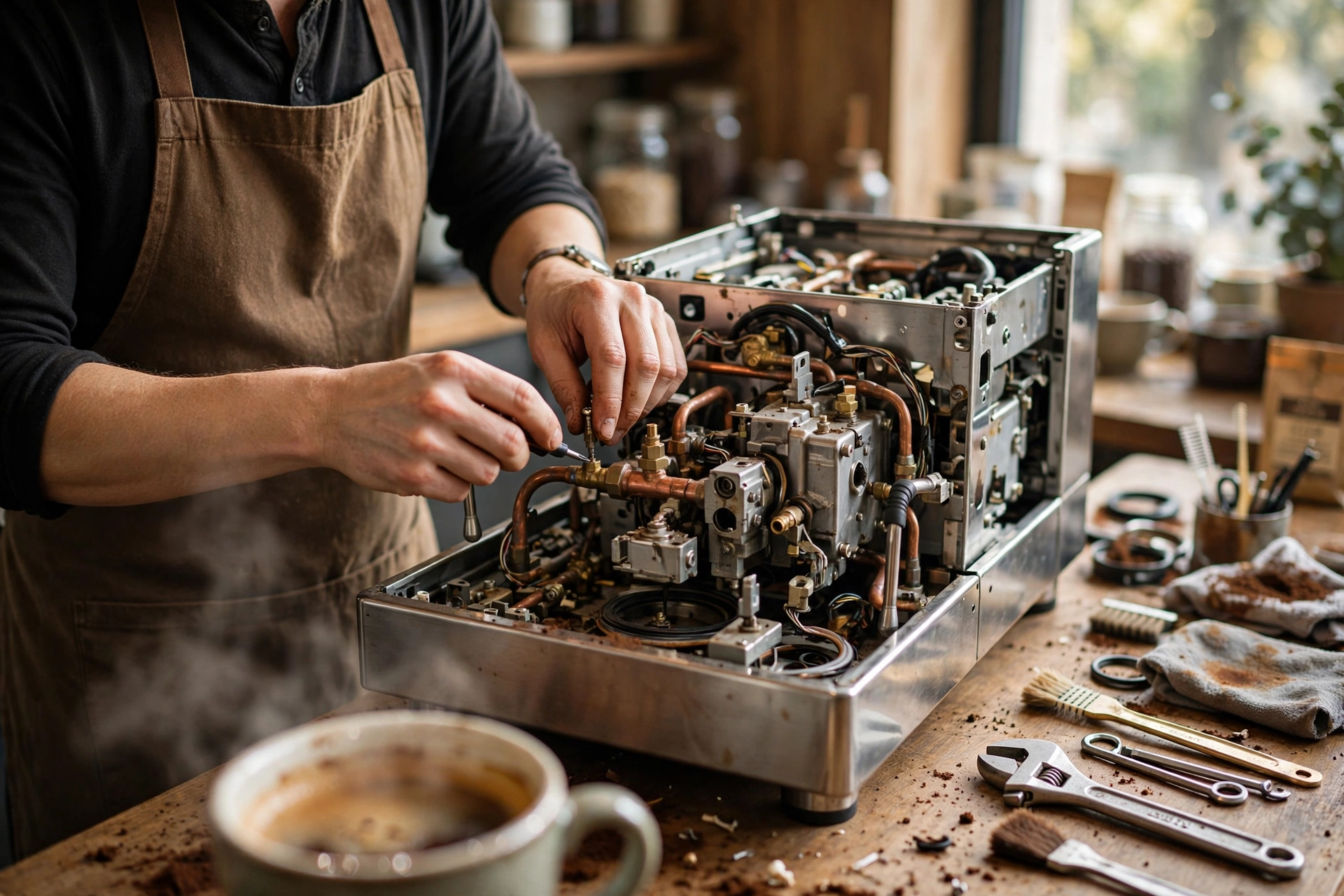
Effective maintenance must be viewed as a three-tier system. First is the Operator Level, which includes daily backflushing and steam wand purging. Second is the Managerial Level, involving weekly deep-cleans and water filter replacements. Third is the Technical Level, where a certified technician performs pressure profiling and electrical safety checks. When these three tiers are decoupled, the machine fails. I've seen businesses invest $20,000 in a top-tier espresso machine only to have it fail within 18 months because they lacked a technical-level maintenance contract.
Why Does Maintenance Impact Your Bottom Line?
The cost of a preventative maintenance contract is often viewed as an expense, but the data shows it is actually a risk-mitigation strategy with a high ROI. When a machine fails during a morning rush, you aren't just losing the cost of the coffee; you are losing the "attachment" sales, the pastries and breakfast sandwiches that usually accompany that latte.
According to the
National Coffee Association USA (NCA), consumer expectations for consistency in specialty coffee have risen sharply, meaning a machine that is slightly out of calibration results in inconsistent flavor profiles that drive customers to competitors. A machine operating at 90% efficiency due to scale buildup consumes more energy to reach temperature and puts undue stress on the heating element, leading to premature component failure.
Furthermore, sanitary compliance is non-negotiable. The
FDA provides strict guidelines regarding food-contact surfaces and the prevention of biofilm buildup in beverage equipment. Neglecting the internal components of a
coffee service setup can lead to bacterial growth in stagnant water lines. From a business perspective, the cost of one health department violation or one catastrophic boiler failure far outweighs the monthly cost of a managed service.
When we analyze the lifecycle of commercial gear, a well-maintained machine can last 10 to 15 years, whereas a neglected one often requires a full overhaul or replacement within 5 years. This represents a massive difference in capital expenditure (CAPEX) over a decade of operation.
How to Implement a Maintenance Plan Step-by-Step
Choosing and implementing a maintenance plan is a process of mapping your equipment's needs against your staff's capabilities. Here is the professional framework I recommend for any foodservice business.
Step 1: Create an Equipment Inventory and Criticality Map
List every piece of gear: espresso machines, grinders, brewers, and water filtration systems. Assign a "criticality score" to each. For example, your primary espresso machine is "Critical" (business stops without it), while a secondary drip brewer might be "Medium." This determines how often you schedule technical visits.
Step 2: Establish Daily Operator SOPs
Your baristas must have a non-negotiable checklist. This should include:
- Backflushing group heads with specialized detergent.
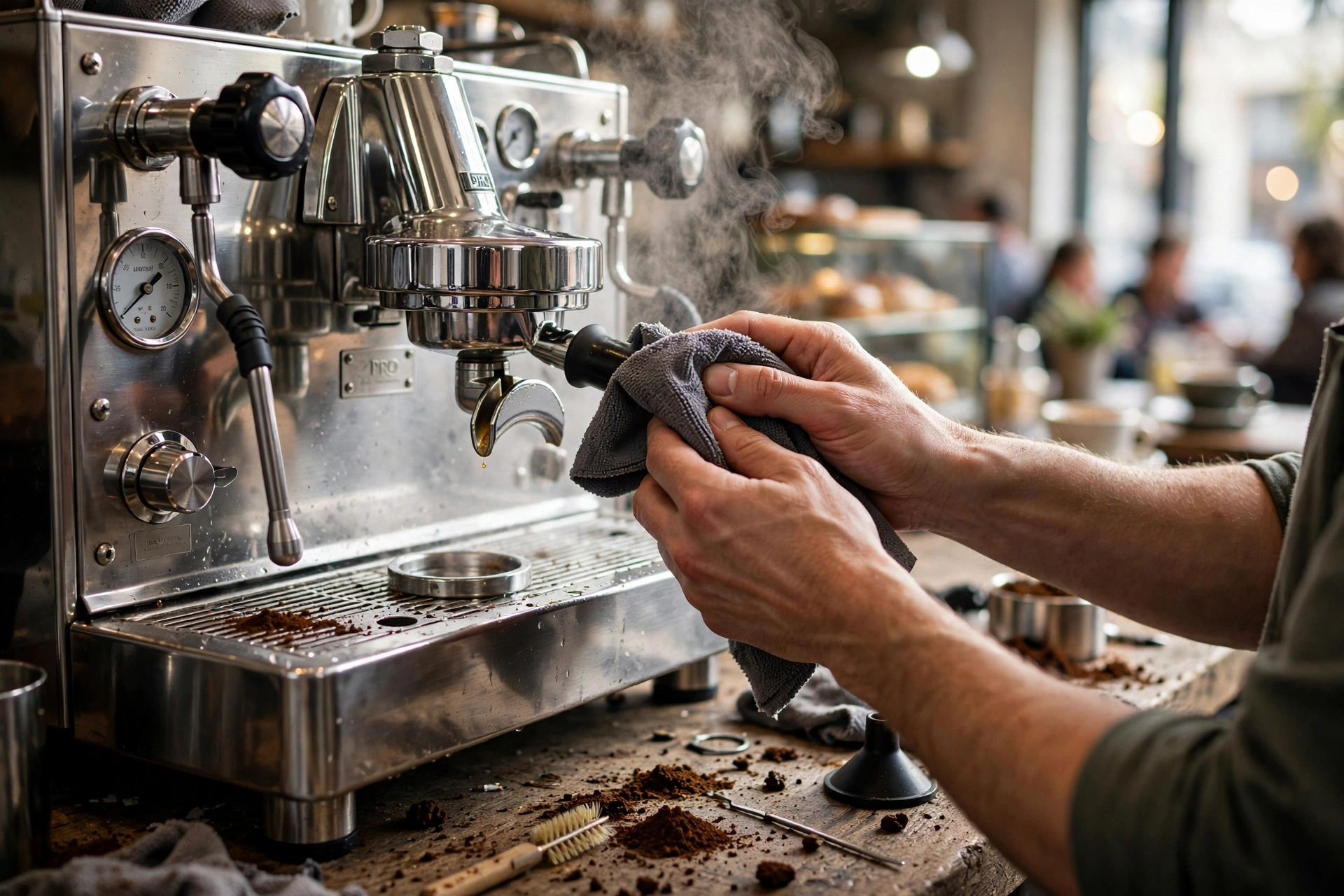
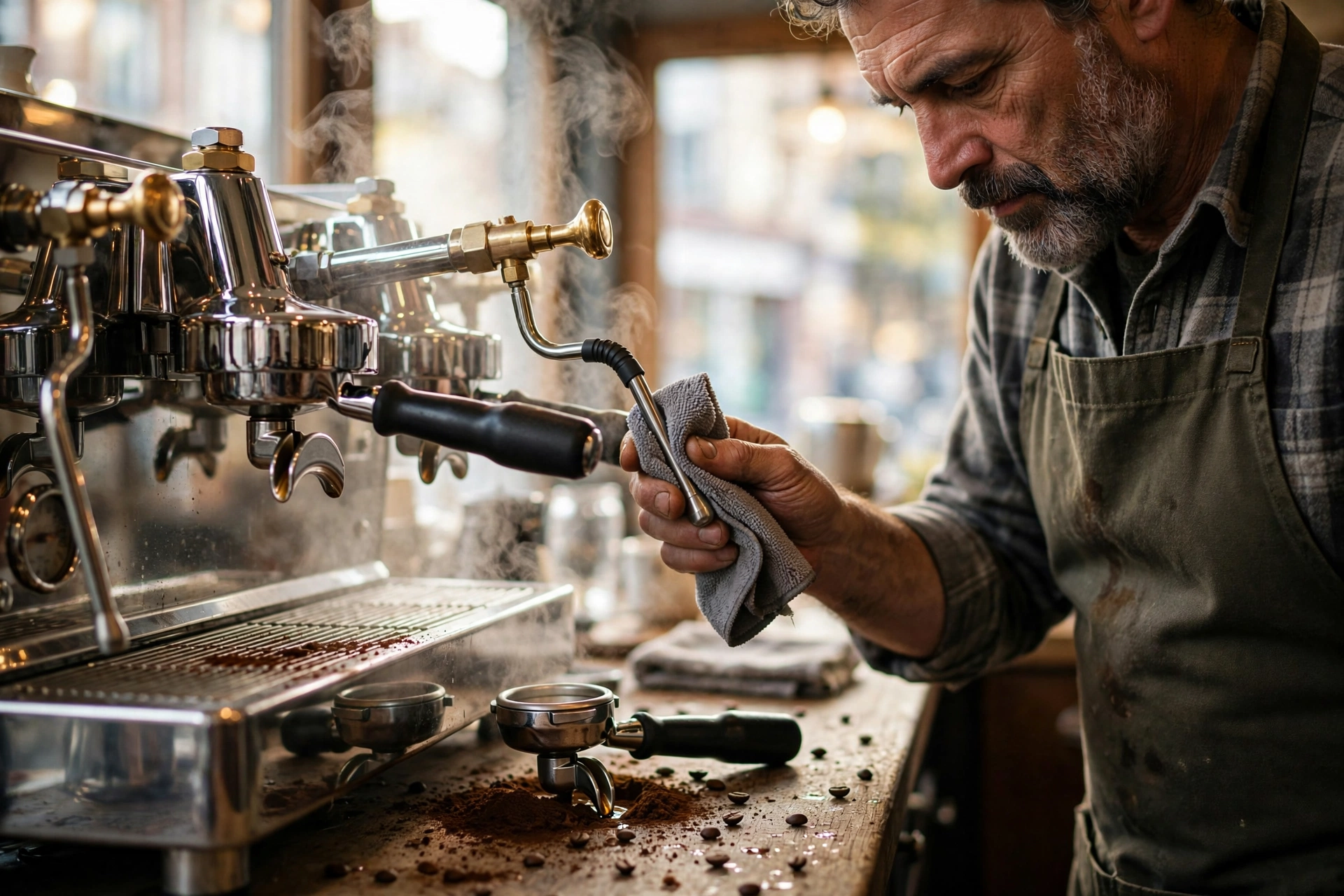
- Scrubbing steam wands after every single use.
- Cleaning the drip tray and hopper to prevent rancid oil buildup.
- Emptying and rinsing the knock box.
Step 3: Schedule Monthly and Quarterly Technical Audits
This is where you bring in an expert. A quarterly visit should include:
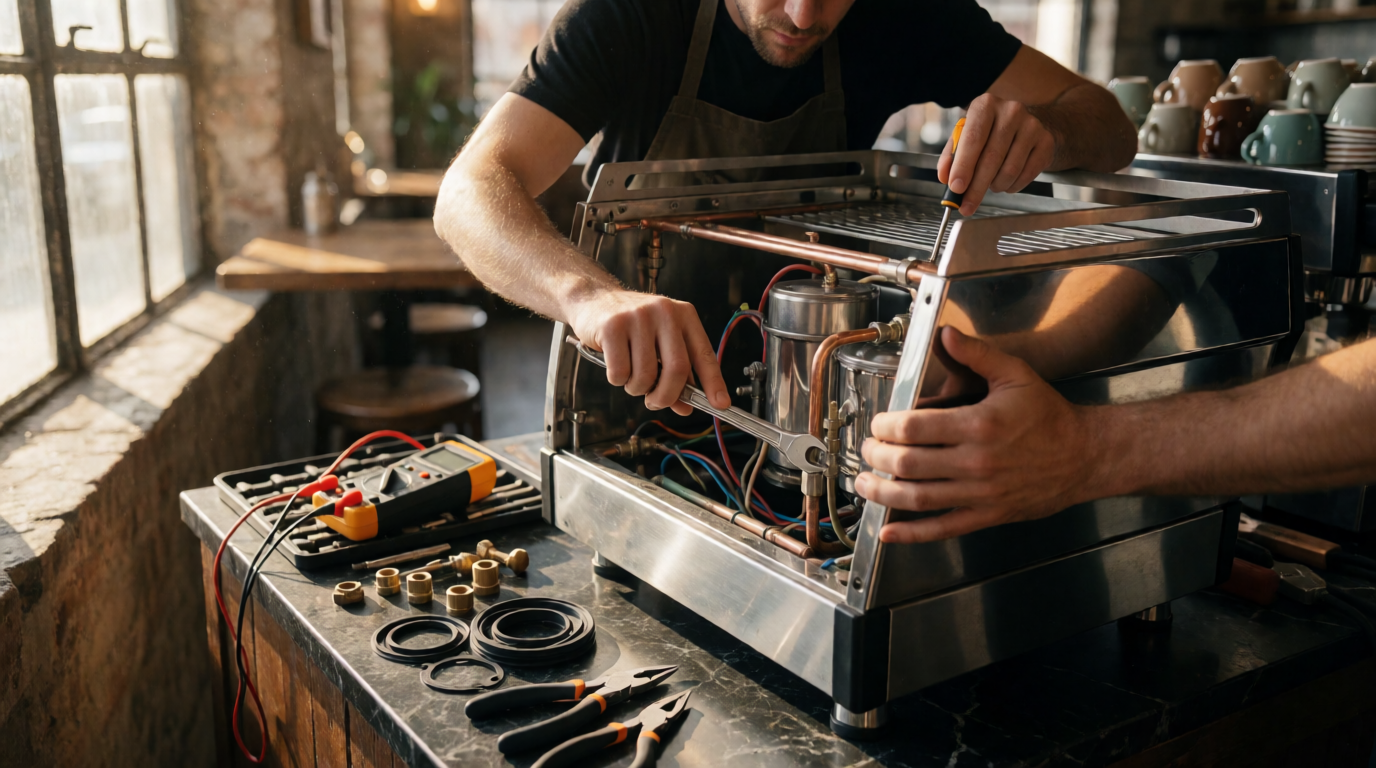
- Replacing group gaskets and shower screens (which harden over time).
- Descaling the boiler (if the water filtration isn't 100% effective).
- Checking pump pressure and flow meters.
- Calibrating the grinder burrs for consistent particle size.
Step 4: Monitor Water Quality
Water is the most aggressive element in your shop. I always tell my clients that your water filter is the most important part of your coffee equipment maintenance. If your filter expires, your maintenance frequency must double.
💡Key Takeaway
Shift your focus from "fixing" to "preventing." A managed membership, like the one provided by Busy Bean Coffee, removes the guesswork by bundling equipment, installation, and full maintenance into one predictable monthly fee, ensuring your gear never hits the "failure" point.
Choosing Your Maintenance Model: Comparison of Approaches
Depending on your budget and volume, you will likely choose between three different models. Most owners start with the manual approach, realize it's a nightmare, and eventually move toward a managed solution.
| Maintenance Model | Pros | Cons | Best For |
|---|
| Reactive (Break-Fix) | No upfront cost; pay only when broken. | High downtime; expensive emergency call-outs; shorter equipment life. | Very low-volume shops with backup equipment. |
| In-House / DIY | Total control over timing; no service fees. | Requires highly trained staff; risk of improper repair; no professional warranty. | Owner-operators who are also certified technicians. |
| Managed Membership (Busy Bean Coffee) | Predictable monthly cost; zero CAPEX; guaranteed uptime; professional Q-Grader oversight. | Monthly recurring fee. | Professional cafes, hotels, and restaurants focusing on growth. |
Now, here is where it gets interesting: the "DIY" approach often looks cheaper on paper, but when you factor in the cost of specialized tools and the labor hours spent by a manager trying to fix a leak instead of managing the team, the "hidden cost" is staggering. In my experience, businesses using a managed service see a significant increase in consistency because the equipment is calibrated by a professional, not a stressed employee.
Common Misconceptions About Coffee Gear Care
Many guides suggest that as long as the coffee tastes "fine," the machine is fine. Most guides get this wrong. Taste is a lagging indicator; by the time the coffee tastes burnt or sour due to temperature instability, the machine has likely already suffered significant internal damage.
Myth 1: "If I have a water filter, I don't need to descale."
This is a dangerous assumption. No filter is 100% efficient. Over time, minerals still penetrate the system. If you wait until you see scale on the elements, you've already lost efficiency and are risking a heating element burnout.
Myth 2: "Expensive machines don't need as much maintenance."
Actually, the opposite is true. High-end machines with PID controllers, dual boilers, and volumetric dosing have more sensors and moving parts. A failure in a complex electronic board is far more expensive to fix than a simple gasket leak on a manual machine.
Myth 3: "Using generic cleaning powders is the same as brand-name detergents."
I've seen too many machines with ruined seals because the owner used a caustic, non-specialized cleaner. Professional detergents are formulated to break down coffee oils without eroding the aluminum or copper components of the boiler.
Frequently Asked Questions
How often should I replace the group gaskets on my espresso machine?
In a high-volume environment, group gaskets should be replaced every 3 to 6 months. Gaskets are made of rubber or silicone, and the constant exposure to high heat and pressure causes them to harden and shrink. Once a gasket loses its elasticity, you will notice water leaking from the top of the portafilter handle. If you ignore this, the leak can damage the machine's exterior or cause inconsistent pressure during extraction, leading to channelled shots and poor flavor.
What is the difference between backflushing and descaling?
Backflushing is a daily cleaning process that uses a "blind" filter to push detergent backward through the 3-way solenoid valve to remove coffee oils and grounds from the internal group head. Descaling, however, is a chemical process used to remove mineral buildup (calcium and magnesium) from the boilers and heat exchangers. While backflushing handles the "organic" debris, descaling handles the "mineral" debris. You backflush every day, but you only descale every few months depending on your water hardness.
Can I perform my own coffee equipment maintenance?
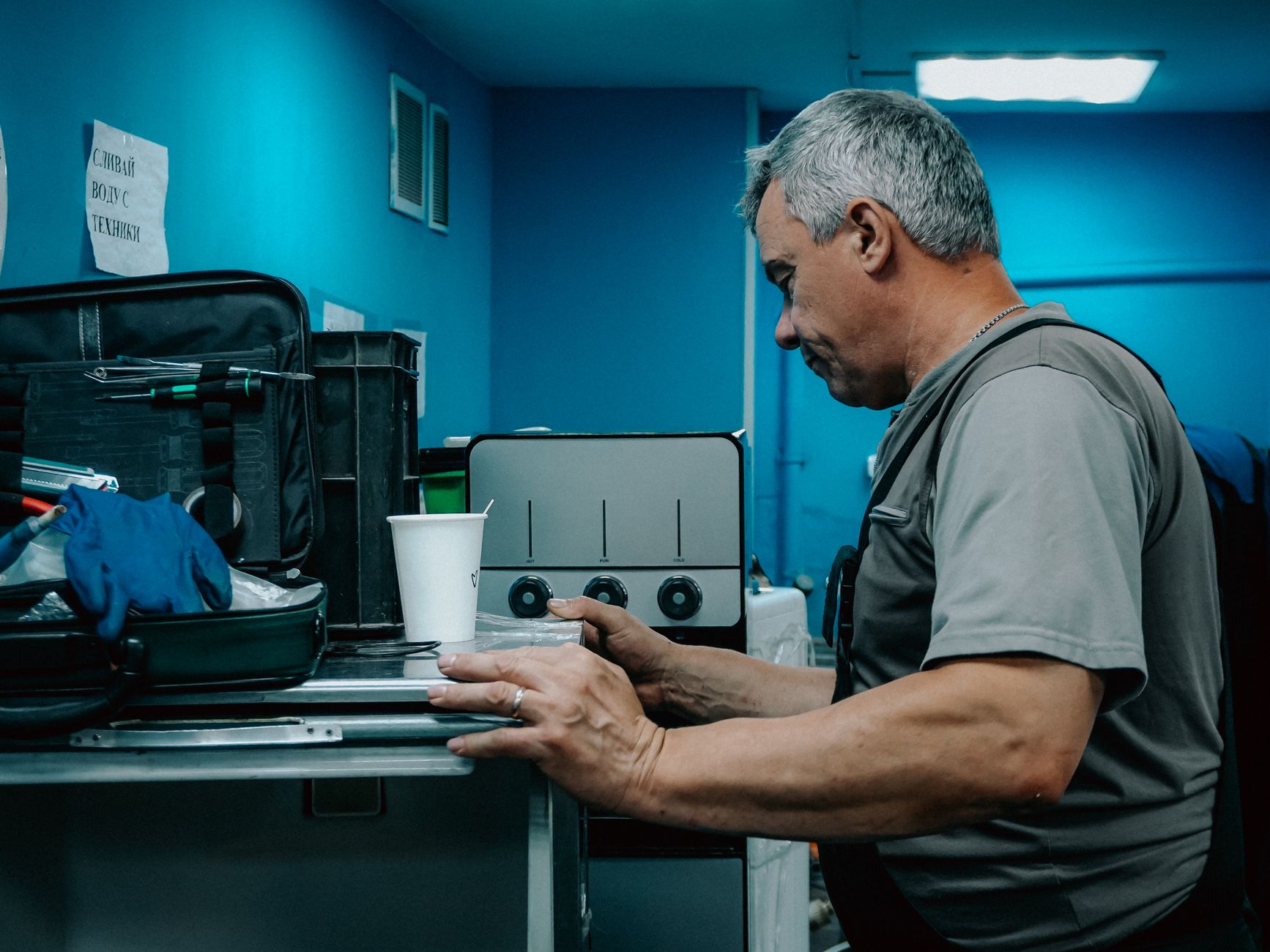
Basic daily and weekly cleaning should absolutely be done by your staff. However, technical maintenance, such as opening the boiler, adjusting pump pressure, or replacing heating elements, should be left to professionals. Attempting technical repairs without proper training can void your warranty and, more importantly, create safety hazards. Since commercial machines involve high voltage and high-pressure steam, the risk of injury or catastrophic machine failure is too high for an untrained person to manage.
How does water quality affect my maintenance schedule?
Water quality is the primary driver of maintenance frequency. If you are in an area with "hard water" (high mineral content), your equipment will accumulate scale much faster. This means you will need to replace water filters more often and perform descaling cycles more frequently. According to
NSF International, maintaining equipment according to sanitary and technical standards requires a water filtration system that specifically targets scale prevention to avoid premature hardware failure.
You should call a technician immediately if you notice any of the following: a sudden drop in steam pressure, water leaking from the base of the machine, a significant change in the time it takes to pull a shot (too fast or too slow), or an unusual noise coming from the pump. Another red flag is a "metallic" or "bitter" taste in the coffee that persists even after cleaning the group heads, which often indicates a buildup of scale or a failing heating element.
Final Thoughts on Coffee Equipment Maintenance
Choosing the right approach to coffee equipment maintenance is a decision between short-term savings and long-term stability. If you treat your equipment as a disposable asset, you will spend more in the long run on emergency repairs and lost revenue. If you treat it as a precision instrument, your consistency will improve, your staff will be less stressed, and your customers will notice the difference in every cup.
The most successful businesses avoid the stress of maintenance entirely by opting for an all-inclusive managed solution. By partnering with Busy Bean Coffee, you eliminate the need to track gaskets, schedule technicians, or worry about surprise repair bills. You get premium SENSA equipment and professional maintenance for one predictable monthly fee, allowing you to focus on the art of the brew rather than the mechanics of the boiler.
To ensure your business is operating at peak efficiency, visit
www.busybeancoffee.com and explore our managed coffee solutions.
Recommended Readings
To deepen your understanding of these topics, we recommend reading the following articles:
Ready to Upgrade Your Business Coffee?
Café-quality coffee, zero maintenance headaches, and one predictable monthly price. Let's build your custom coffee program.
Free Coffee Pairing Guide & Specialty Roast Cheat Sheet
Unlock the secrets of perfect brewing ratios, water temperatures, and specialty roast profiles. Download the guide.