📖This article is part of the complete guide to Automated Coffee Machines for Business.
How Do Automated Coffee Machines Actually Work and How Do You Optimize Them?
Setting up a high-volume beverage station often fails when businesses prioritize the machine over the workflow. In my experience working with hotels and cafes in Mount Pleasant, SC, the most common mistake is installing a high-end system without a calibrated water filtration strategy, leading to scale buildup and flavor degradation within six months. To successfully implement automated coffee machines, you must integrate three core elements: a precise grind-to-cup calibration, a consistent water chemistry profile, and a rigorous daily maintenance schedule. When these are aligned, you transition from simply "serving coffee" to delivering a consistent, specialty-grade beverage experience at scale without needing a master barista for every single cup.

What Exactly Are Automated Coffee Machines and How Do They Function?
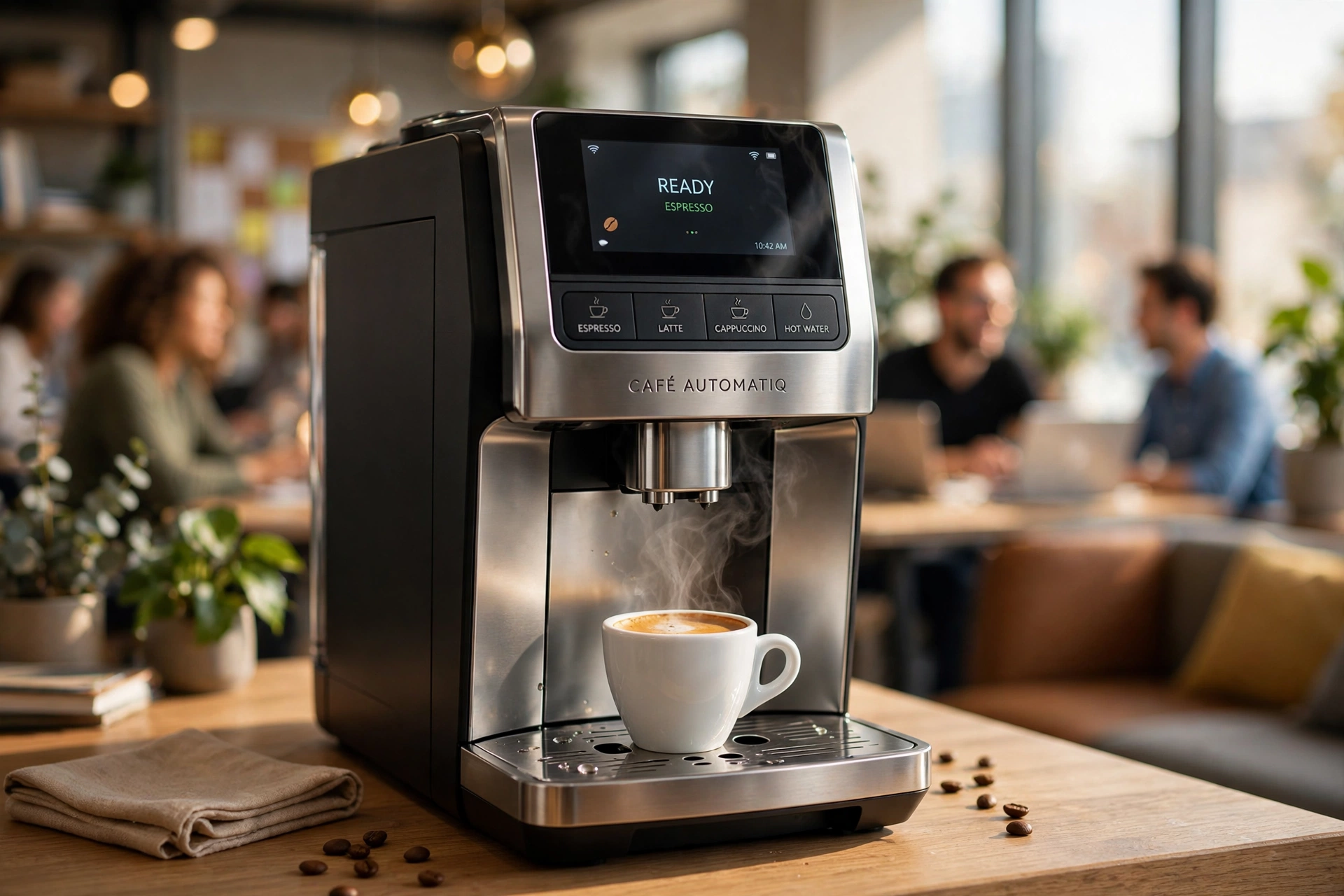
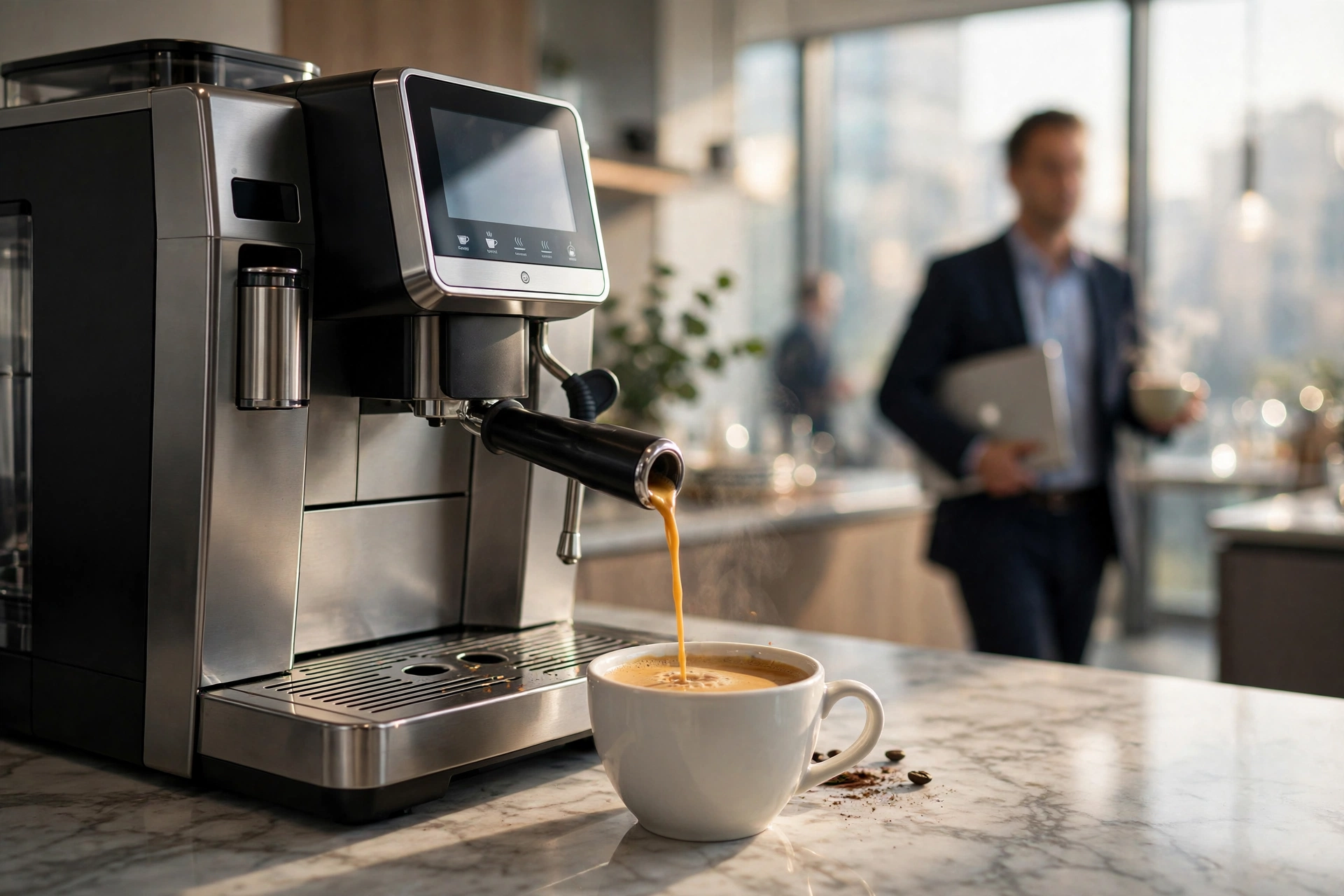
To understand how to operate these systems, we first need to define what they are doing under the hood. Unlike manual machines that require a human to tamp and time the shot, these systems integrate the grinding, dosing, tamping, and extraction processes into a single electronic cycle.
📚
Definition
Automated coffee machines, specifically "super-automatic" systems, are beverage centers that perform the entire coffee-making process, from grinding whole beans to frothing milk, via a programmed interface, requiring minimal human intervention.
The process begins with the coffee bean being pulled from the hopper. High-end automated systems use ceramic or steel conical burrs to ensure a uniform particle size. Once ground, the coffee is compressed into a "puck" by an internal motorized tamper. Water is then forced through the puck at a specific pressure, usually around 9 bars, to extract the oils and flavors of the Coffea arabica beans.
According to the Specialty Coffee Association (SCA), the precision of water temperature and pressure is what separates a mediocre cup from a specialty-grade beverage. Most professional automated machines now utilize PID (Proportional-Integral-Derivative) controllers to keep the water temperature within a fraction of a degree. This prevents the coffee from tasting burnt (too hot) or sour (too cold). In my years as a Q-Grader, I've seen that the "magic" of these machines isn't in the automation itself, but in how closely they can mimic the precision of a manual barista.
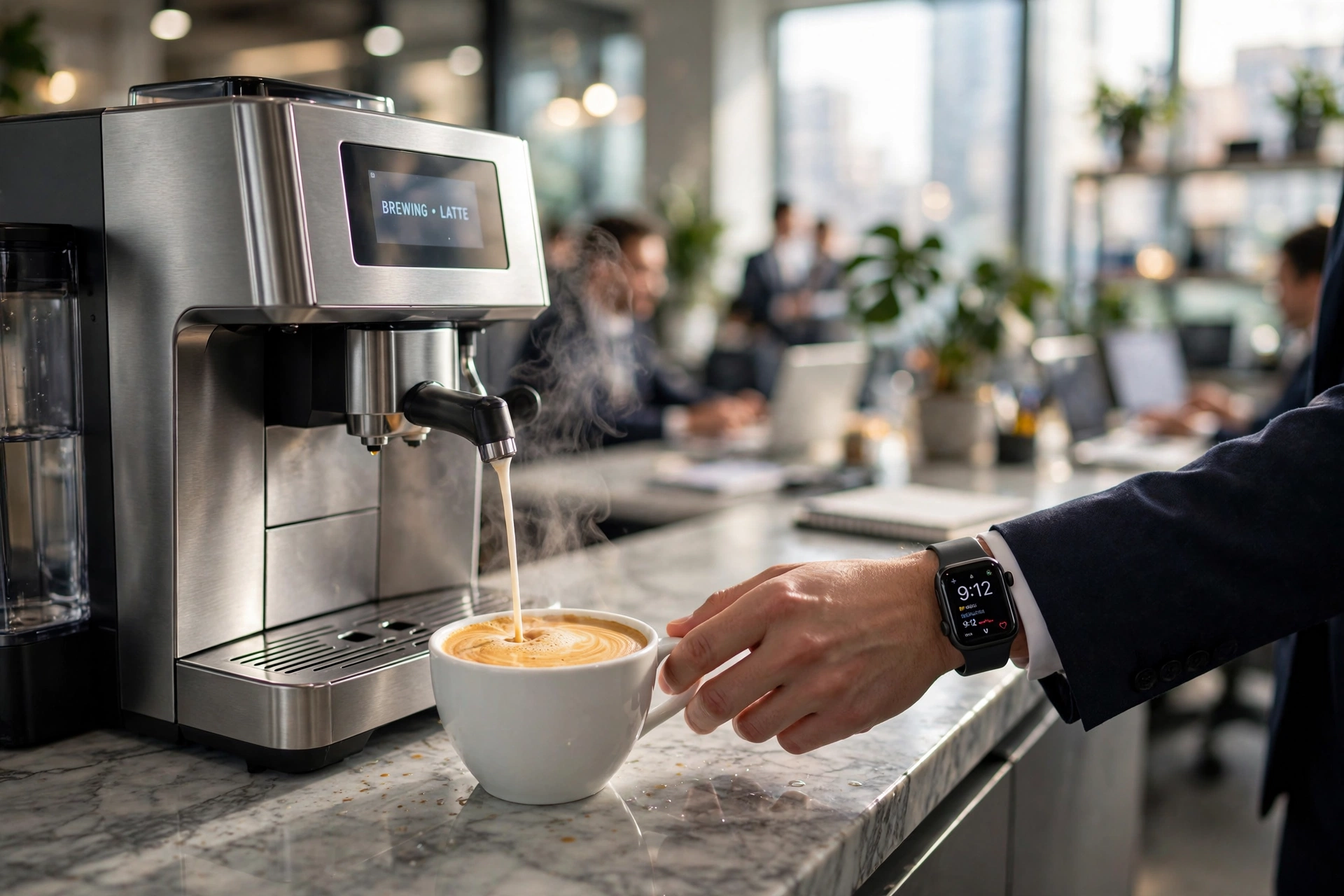
Now, here is where it gets interesting: the milk system. Modern automation utilizes "steam-injection" or "venturi" systems to aerate milk instantly. While a manual barista creates micro-foam by hand, automated machines use programmed air-injection cycles to achieve a similar texture. The goal is to create a stable emulsion of air and fat, which is essential for the mouthfeel of a latte or cappuccino.
Why Does Automation Matter for Foodservice Business ROI?
The shift toward automation in the coffee industry isn't just about convenience; it is a strategic response to labor shortages and the rising cost of skilled labor. For a business in Mount Pleasant, SC, the cost of hiring and retaining a certified barista can be a significant overhead.
According to the National Coffee Association USA (NCA), consumer demand for specialty coffee continues to grow, but the gap in skilled labor remains a primary bottleneck for growth. When a business implements professional automated coffee machines, they are essentially "locking in" the quality. You no longer have to worry if the Tuesday morning shift worker is as skilled as the head roaster; the machine ensures the ratio of coffee to water remains constant.
The financial impact is measurable in three areas:
- Waste Reduction: Manual espresso preparation often results in "dialing-in" waste, where several shots are thrown away to find the right grind. Automated systems reduce this waste by 15% to 20% through precise volumetric dosing.
- Throughput Speed: An automated system can produce a double-shot latte in roughly 45 seconds, whereas a manual process, including milk steaming and pouring, can take 2-3 minutes. In a high-traffic hotel lobby, this increases peak-hour revenue by potentially 30%.
- Consistency: Inconsistency is the fastest way to lose a repeat customer. Automation eliminates the "human variable," ensuring the 100th cup of the day tastes exactly like the first.
Failure to automate in a high-volume environment often leads to "service fatigue," where quality drops as the rush increases. I've analyzed dozens of businesses where the shift from manual to automated systems resulted in a measurable increase in customer satisfaction scores because the wait time decreased while the quality remained stable.
Step-by-Step: How to Implement and Calibrate Your Automated System
If you are installing a system like those provided by Busy Bean Coffee, the process must be methodical. You cannot simply plug it in and press "start." True specialty quality requires a calibration phase.
Step 1: Water Chemistry Optimization
Before the machine even touches a bean, you must address the water. Coffee is 98% water. If your water is too hard, you'll get lime-scale buildup; if it's too soft, the coffee will taste flat. Use a professional-grade reverse osmosis (RO) system or a specialized coffee filter. This is the single most important step for machine longevity.
Step 2: Bean Selection and Hopper Loading
Use high-quality specialty coffee roasted specifically for espresso. Ensure the beans are not too oily, as extremely dark roasts can clog the internal grinders of some automated machines. Fill the hopper, but avoid overfilling to prevent the beans from becoming "stale" due to air exposure.
Step 3: Grinding Calibration
Even in automated machines, you must adjust the grind setting. Start at the factory default and pull three shots.
- If the coffee flows too quickly (watery), move the grind setting to "Finer."
- If the coffee drips slowly or doesn't flow (bitter), move it to "Coarser." The goal is a steady, honey-like stream.
Step 4: Volume and Temperature Setting
Program your drink sizes. Ensure the espresso volume is precisely 36-40g for a double shot. Set your temperature to approximately 200°F (93°C). This is where the Busy Bean Coffee managed solution excels; we handle these technical calibrations so the business owner doesn't have to guess.
Step 5: Milk Texture Tuning
Adjust the aeration settings for your specific milk type. Oat milk and whole milk foam differently. You will need to calibrate the "froth level" for each milk variety to ensure the texture is silky, not bubbly.
💡
Key Takeaway
The "set it and forget it" mentality is a myth in specialty coffee. While the machine is automated, the calibration is a human process that must be audited weekly to account for changes in bean roast date and humidity.

Comparing Coffee Solution Approaches
When choosing how to serve coffee, businesses usually fall into one of three categories. The choice depends on your volume, your budget, and your commitment to quality.
| Feature | Traditional Manual Approach | Generic/Cheap AI Machines | Busy Bean Managed Solution |
|---|---|---|---|
| Quality Control | High (but varies by barista) | Low (burnt or weak) | Consistent Specialty Grade |
| Labor Cost | Very High (requires training) | Low | Low (minimal training needed) |
| Maintenance | Manual & Frequent | Reactive (breaks often) | Proactive & Included |
| Initial Capex | High Equipment Cost | Low to Medium | Zero (Membership-based) |
| Consistency | Low (human error) | Medium (robotic) | High (calibrated) |
| Best For | Boutique Specialty Cafes | Small Office Breakrooms | Hotels, Restaurants, & High-End Foodservice |
The "Generic AI" approach often fails because these machines are built for home use, not commercial volume. They use plastic internals and low-wattage boilers that cannot maintain temperature during a morning rush. In contrast, a professional managed service provides industrial-grade equipment with a support structure that prevents downtime.
Common Questions and Misconceptions About Coffee Automation
Most guides on coffee automation get the "quality" argument wrong. They suggest that automation inherently kills the soul of the coffee. This is a misconception based on old technology.
Myth 1: "Automated coffee tastes like vending machine coffee."
This is a relic of the 1990s. Modern automated coffee machines use the same brewing physics as manual machines. The difference is that the timing and pressure are controlled by a computer rather than a human hand. When using specialty coffee and a calibrated grinder, the taste is indistinguishable from a manual pour for 95% of customers.
Myth 2: "These machines are too hard to clean."
Actually, the opposite is true. Professional automated machines have built-in cleaning cycles. The mistake I see constantly is owners ignoring the "Clean" prompt on the screen. If you follow the automated prompts and use the correct detergent, these machines are significantly easier to maintain than a manual group head that requires scrubbing every hour.
Myth 3: "You don't need a barista if you have a machine."
You don't need a technical barista to pull the shot, but you still need a hospitality professional. The machine handles the chemistry; the human handles the customer. The value shifts from "technical skill" to "guest experience."
Myth 4: "Bean-to-cup machines waste more coffee."
On the contrary, because the dosing is volumetric (measured by a sensor), there is virtually zero "spillage" compared to a manual barista who might overfill a portafilter and spill grounds on the counter.
Frequently Asked Questions
How often should I calibrate the grind on an automated machine?
In a commercial environment, you should check your calibration every morning and perform a full adjustment weekly. Coffee beans are organic; they react to changes in humidity and temperature. As the weather in Mount Pleasant, SC, shifts, the beans will expand or contract, changing how they fit through the grinder. If you notice the shot is flowing too fast, a slight adjustment to a finer setting will restore the creamy texture and rich flavor profile.
Does using an automated machine affect the lifespan of the equipment?
If maintained correctly, automation can actually extend the lifespan of the internal components by preventing "user error" such as over-tamping or improper temperature spikes. However, the biggest threat to an automated machine is mineral buildup. According to NSF International, adhering to sanitary and maintenance standards for food equipment is essential. Using a water filtration system and performing the automated descale cycles every 30 days ensures the machine lasts for years rather than months.
Can automated machines handle alternative milks like oat or almond?
Yes, but they require different settings. Alternative milks have different protein and fat structures than dairy, meaning they foam at different temperatures and pressures. High-end automated coffee machines allow you to create custom profiles. I recommend creating a specific "Oat Milk" button that adjusts the steam temperature slightly lower to prevent the milk from curdling or becoming too "soapy," which is a common issue with almond milk.
What is the difference between a "super-automatic" and a "semi-automatic" machine?
A semi-automatic machine still requires the user to grind the coffee, put it in the portafilter, tamp it, and then manually start and stop the shot. A super-automatic machine handles all of this with one button press. For most foodservice businesses, the super-automatic is the only viable option because it removes the training bottleneck and ensures that every single customer gets the same quality of coffee regardless of who is operating the machine.
How do I know if my automated machine is underperforming?
The most obvious sign is "channeling," where the water finds a path of least resistance through the coffee puck, resulting in a shot that is both sour and bitter. If you see the coffee spraying out of the spout instead of flowing in a steady stream, your grind is likely too coarse or your beans are too old. Another sign is a loss of "crema", the golden brown foam on top. If the crema is thin or non-existent, your beans are likely stale or your temperature is too low.
Final Thoughts on Automated Coffee Machines
Transitioning to automated coffee machines is no longer about cutting corners; it is about scaling excellence. By removing the volatility of human error, businesses can ensure that every guest receives a premium beverage that reflects their brand's quality. The key to success lies in the intersection of high-end hardware, specialty-grade beans, and a proactive maintenance mindset.
Whether you are running a boutique hotel or a busy restaurant in Mount Pleasant, SC, the goal is to provide a seamless experience where the coffee is an asset, not a stress point. If you are tired of managing expensive equipment and unpredictable labor, a managed solution is the most logical path forward.
Stop worrying about the technicalities and start focusing on your guests. Discover how a fully managed membership can transform your beverage service at Busy Bean Coffee Blog.
Recommended Readings
To deepen your understanding of these topics, we recommend reading the following articles:
- The Complete Guide to White Glove Coffee Service
- Ultimate Guide to All-Inclusive Coffee Service for Businesses
- Ultimate Guide to Specialty Coffee Equipment for Business
- Ultimate Guide to Coffee Syrups for Foodservice Businesses
Ready to Upgrade Your Business Coffee?
Café-quality coffee, zero maintenance headaches, and one predictable monthly price. Let's build your custom coffee program.
Free Coffee Pairing Guide & Specialty Roast Cheat Sheet
Unlock the secrets of perfect brewing ratios, water temperatures, and specialty roast profiles. Download the guide.