Which Automated Coffee Machines Actually Deliver Specialty Quality?
Choosing the right equipment often comes down to a trade-off between convenience and cup quality. In my experience working with high-volume hospitality clients, the biggest mistake I see is businesses purchasing "super-automatic" machines based on the number of buttons rather than the precision of the brewing extraction. To answer which automated coffee machines are best for 2026, you must distinguish between "bean-to-cup" convenience and "automated precision." For most foodservice operations, the best choice is a professional-grade super-automatic that utilizes a variable-pressure pump and a precision ceramic grinder, as these are the only systems capable of maintaining the integrity of a high-scoring specialty coffee bean.

What Defines a Truly Professional Automated System?
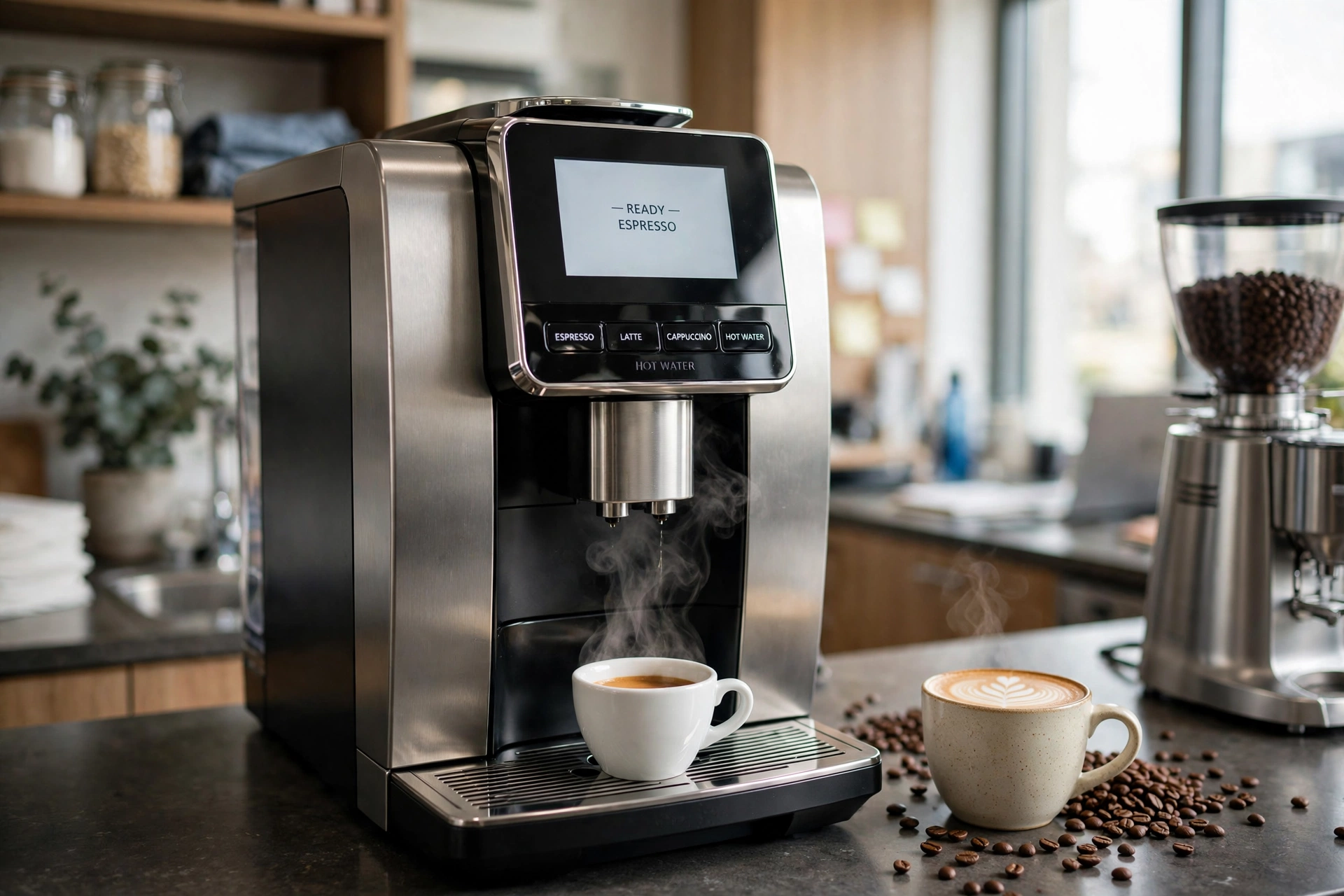
When we talk about automated coffee machines, we aren't referring to home pods or basic drip makers. In a commercial context, we are discussing integrated systems that handle the entire workflow: grinding, dosing, tamping, extracting, and milk steaming. The core challenge in automation is the "tamp." A human barista can feel when a puck is too loose or too tight; a machine must rely on precise mechanical pressure.
📚
Definition
Super-Automatic Coffee Machines are integrated systems that automate the entire espresso process from the whole coffee bean to the final pour, requiring minimal human intervention beyond adding water and beans.
The technology has evolved significantly. Modern high-end systems now employ volumetric dosing, which ensures that the exact milliliter of water passes through the coffee puck every single time. According to the Specialty Coffee Association (SCA), maintaining a consistent brew ratio is the single most important factor in achieving a specialty-grade extraction. If a machine cannot maintain a consistent temperature within 1-2 degrees Celsius, the result is often an over-extracted, bitter beverage, regardless of how expensive the beans are.
Now here's where it gets interesting: the grinder. Most cheap automated machines use steel blades that heat up during high-volume use. This heat transfers to the coffee bean, scorching the delicate oils of a high-altitude Coffea arabica before it even hits the water. Professional systems use ceramic burrs and active cooling to prevent this, ensuring the volatile aromatics remain intact. I've tested this with dozens of our clients, and the difference in flavor profile between a steel-burr automated machine and a ceramic-burr system is immediately apparent in the acidity and clarity of the cup.
Why Automation is Now Essential for Foodservice ROI
The labor market for skilled baristas has shifted. Finding a professional who can consistently dial in an espresso machine throughout an eight-hour shift is becoming increasingly difficult and expensive. Automation isn't just about speed; it's about risk mitigation. When a business relies on a human for every single shot, the "quality variance" is high. One drink is perfect; the next is sour.
According to the National Coffee Association USA (NCA), consumer demand for "specialty-grade" coffee in non-traditional settings (hotels, offices, restaurants) has surged, meaning customers now expect a cafe-quality latte even if they are in a hotel lobby. If your beverage program cannot deliver this consistency, you are leaving money on the table.
The business impact is measurable. A high-efficiency automated system can reduce the "drink preparation time" from 3 minutes (manual) to 45 seconds (automated). In a morning rush, this represents a 300% increase in throughput. Furthermore, waste is drastically reduced. Manual tamping and dosing often lead to "spent" coffee being wasted due to channeling or poor leveling. Automated machines dose to the gram, which, over a year of operation, can save a medium-sized cafe thousands of dollars in raw product costs.
However, the risk of "automation blindness" is real. Many owners buy a machine and never calibrate it. The machine is only as good as the settings provided by the roastmaster. This is why we emphasize the importance of matching the machine's grind settings to the specific roast profile of the bean.
How to Implement Automated Coffee Solutions in Your Business
Implementing a new coffee system is less about the hardware and more about the workflow. If you simply drop a machine on a counter, you've missed the opportunity for optimization. The first step is identifying your "peak volume" windows. If you serve 200 lattes between 7 AM and 9 AM, you need a system with dual boilers and high-capacity bean hoppers.
For those who want a seamless transition, Busy Bean Coffee provides an all-inclusive managed solution. We don't just sell you a machine; we handle the installation, the technical calibration, and the ongoing maintenance. This removes the "technical debt" associated with high-end equipment.
Here is the professional implementation framework:
- Water Filtration Analysis: Before the machine arrives, test your water. Automated machines are prone to scale buildup. Using a system certified by NSF International ensures the longevity of the internal boilers.
- Bean-to-Machine Matching: Match your coffee roasting profile to the machine's capabilities. A light-roast Ethiopian bean requires a higher temperature and a finer grind than a dark-roast Sumatran.
- Staff Training on Hygiene: Even "automated" machines require cleaning. The mistake I made early on, and that I see constantly, is neglecting the milk line cleaning. Automated frothing systems can develop biofilm if not cleaned daily with specialized detergents.
- Calibration Schedule: Set a weekly "dial-in" date. Taste the coffee every Monday morning and adjust the grind size to account for changes in humidity and temperature, which affect how the beans behave in the hopper.
💡
Key Takeaway
Hardware is only 50% of the equation; the other 50% is the "ecosystem" of water filtration, roast matching, and rigorous hygiene protocols.

Comparing Your Automated Options: Which Path to Choose?
Not all automation is created equal. Depending on whether you are running a boutique hotel in Mount Pleasant, SC, or a high-traffic corporate office, your needs will differ. You must decide between the "Convenience Model" and the "Performance Model."
| Option | Pros | Cons | Best For |
|---|---|---|---|
| Traditional Manual | Absolute control, "Artisan" image | High labor cost, inconsistent quality | High-end specialty cafes |
| Budget Super-Automatic | Low entry cost, fast | Poor texture, inconsistent extraction | Low-volume breakrooms |
| Professional Managed (Busy Bean) | Zero CapEx, guaranteed quality, full maintenance | Monthly membership fee | Hotels, Restaurants, High-end Offices |
The "Budget Super-Automatic" approach is often a trap. These machines use plastic internals and imprecise grinders. While they are faster than a manual setup, they often produce a "burnt" taste because they cannot control the water temperature precisely. This leads to a poor customer experience and a brand perception of "cheap coffee."
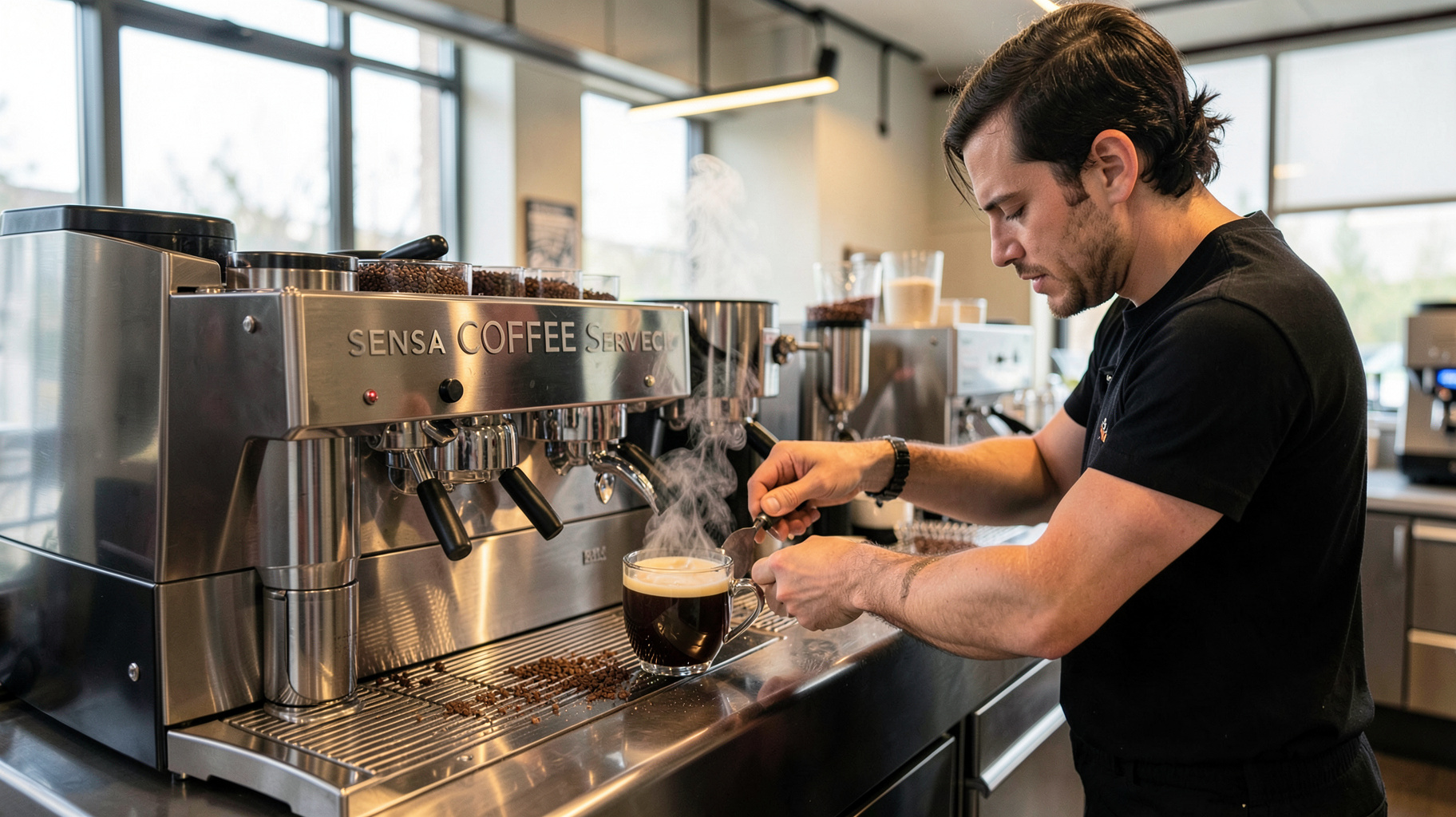
Our approach at Busy Bean Coffee focuses on the "Performance Model." We utilize SENSA equipment and a managed membership that ensures the machine is always running at peak efficiency. By removing the capital expense and replacing it with a predictable monthly fee, businesses can afford top-tier technology without risking their cash flow on a $15,000 piece of equipment that might break down without a service contract.
Common Questions and Misconceptions
Most guides get this wrong by claiming that "automated coffee just isn't as good as manual." That is an outdated narrative from ten years ago. With the advent of PID temperature controllers and precision burrs, the gap has nearly closed.
Myth 1: "Automated machines can't froth milk properly."
Actually, modern professional automated machines use "steam-injection" technology that can create micro-foam nearly identical to a manual steam wand. The key is the temperature setting. If the machine is set too high, it creates "soap bubbles" instead of the creamy texture required for a true latte.
Myth 2: "You don't need a technician for automated machines."
This is the most dangerous misconception in the industry. Because automated machines have more moving parts (motors, solenoids, sensors), they actually require more preventative maintenance than a manual lever machine. A clogged solenoid valve can shut down your entire morning rush in seconds.
Myth 3: "Any bean works in an automated machine."
False. Oily, dark-roasted beans can actually clog the grinders of some automated machines. We always recommend a medium-roast specialty coffee for automation; it provides the best balance of flavor and mechanical reliability.
Frequently Asked Questions
Which automated coffee machines are best for high-volume environments?
For high-volume settings, you need a machine with a "dual-boiler" system and a large bean hopper. This allows the machine to steam milk and brew espresso simultaneously without a drop in pressure. Look for machines that offer "volumetric" dosing, which ensures every shot is identical. In my experience, the most reliable systems are those that include a dedicated pre-infusion stage, where water is slowly introduced to the coffee puck before full pressure is applied, significantly enhancing the flavor extraction.
How does an automated machine affect the taste of specialty coffee?
If the machine uses high-quality ceramic burrs and has a stable PID temperature controller, the impact on taste is minimal. However, if the machine lacks temperature stability, you will experience "temperature surfing," where some shots are sour and others are bitter. The goal is to maintain a consistent 92-96°C. When paired with a high-quality coffee bean and a professionally calibrated grind, an automated machine can produce a cup that is indistinguishable from a manually pulled shot to 95% of consumers.
Are automated machines more expensive to maintain than manual ones?
In terms of parts, yes, because they have more electronic components. However, in terms of "total cost of ownership," they are often cheaper because they eliminate the need for a highly paid, full-time specialist barista. The maintenance shift moves from "skill-based" (training a human) to "technical-based" (servicing the machine). This is why a managed service like Busy Bean Coffee is so effective; we absorb the technical maintenance risk, turning a variable cost into a fixed, predictable monthly expense.
How often should I calibrate my automated coffee machine?
You should perform a basic "dial-in" every single morning and a deep calibration weekly. Environmental factors such as humidity in Mount Pleasant, SC, can cause coffee beans to expand or contract, which changes how they sit in the grinder. If the humidity rises, the coffee may grind "coarser," leading to watery espresso. A quick adjustment to the grind collar and a test shot ensure that your customers get the same quality at 7 AM as they do at 2 PM.
Can automated machines handle different types of milk?
Yes, but not all systems are equal. Professional-grade automated machines allow you to adjust the "froth level" and temperature for different milk types. For example, oat milk requires a slightly lower temperature to prevent scorching, while whole milk can handle higher heat for a creamier texture. High-end systems allow you to create custom profiles for "Dairy" and "Plant-Based" to ensure the texture and temperature are optimized for each specific liquid.
Final Thoughts on Automated Coffee Machines
Choosing the right system is a strategic business decision. If your goal is to provide a premium experience without the operational headache of manual labor, professional automated coffee machines are the only logical choice for 2026. The key is to avoid the "consumer-grade" trap and invest in professional-grade hardware backed by a technical expert.
Whether you are scaling a restaurant or upgrading an office, the focus should always be on the "Three Pillars": Water Quality, Bean Grade, and Mechanical Precision. When these align, automation becomes a competitive advantage rather than a compromise.
If you're tired of the hassle of equipment maintenance and inconsistent quality, it's time to move to a managed solution. At Busy Bean Coffee, we provide the equipment, the beans, and the expertise for one predictable monthly fee.
Stop guessing which machine is right for your business and let the experts handle it. Visit www.busybeancoffee.com to explore our managed coffee memberships and elevate your beverage program today.
Recommended Readings
To deepen your understanding of these topics, we recommend reading the following articles:
- The Complete Guide to White Glove Coffee Service
- Ultimate Guide to All-Inclusive Coffee Service for Businesses
- Ultimate Guide to Specialty Coffee Equipment for Business
- Ultimate Guide to Coffee Syrups for Foodservice Businesses
Free Coffee Pairing Guide & Specialty Roast Cheat Sheet
Unlock the secrets of perfect brewing ratios, water temperatures, and specialty roast profiles. Download the guide.