Which Automated Coffee Machines Are Best for Your Business?
Choosing the right equipment often comes down to a trade-off between beverage quality and operational speed. For most high-volume environments, the "best" automated coffee machines are those that balance precision bean-to-cup technology with a low-maintenance footprint, specifically those that offer programmable profiles to ensure consistency regardless of who is pressing the button. In my experience working with hundreds of hospitality managers, the biggest mistake is buying for the "best" coffee in a vacuum rather than buying for the specific workflow of the venue.
If you are managing a high-traffic lobby or a medical facility, you need a machine that minimizes waste and maximizes uptime. For those in the hospitality sector, looking into Automatic Coffee Machines for Hotels and Hospitality in 2026 reveals that the shift is moving toward "managed" solutions where the machine is just one part of a larger service ecosystem.
Understanding the Mechanics of Automated Coffee Systems
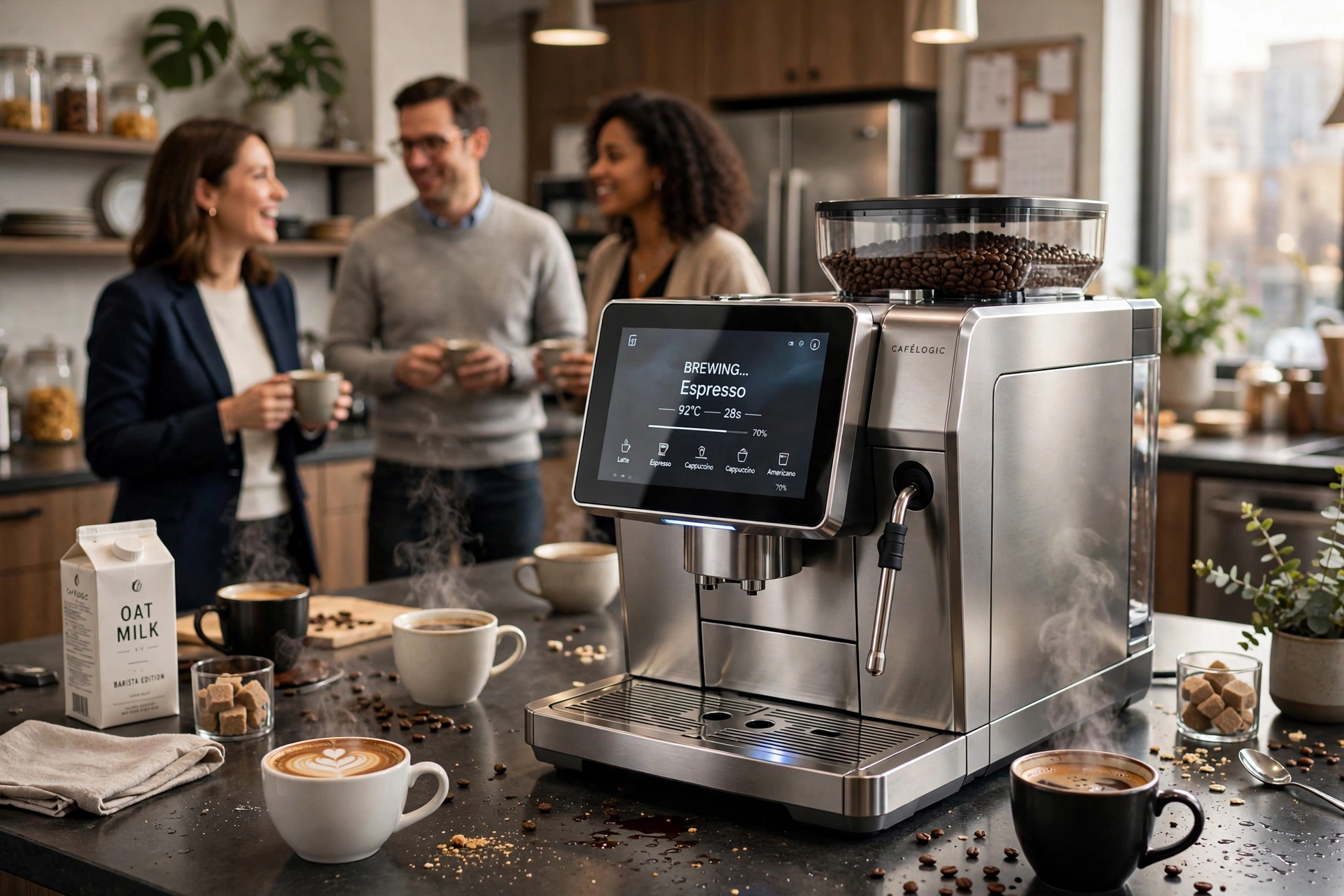
To determine which machine fits your needs, you first have to understand what is happening inside the chassis. Most commercial automated systems fall into the "Bean-to-Cup" category, where grinding, dosing, tamping, and brewing happen in one continuous cycle.
📚
Definition
Bean-to-Cup automation is a process where the machine integrates a built-in grinder and a brewing unit to produce an espresso-based beverage from whole coffee beans with a single touch, eliminating the need for manual dosing or tamping.
When we evaluate these systems, we look at the brew group. Some machines use a removable brew group, which allows for deeper cleaning, while others use a fixed, automated system that uses internal detergents. According to the Specialty Coffee Association (SCA), the precision of water temperature and pressure is what separates a "coffee vending machine" from a professional automated espresso system. A professional system will maintain a stable 9 bars of pressure and a precise temperature of around 200°F, ensuring that the oils in the coffee bean are extracted without burning the roast.
Now here's where it gets interesting: the distinction between "super-automatic" and "automatic." An automatic machine might handle the brewing, but you still need a barista to steam the milk. A super-automatic machine handles everything, including the milk frothing. For businesses without a dedicated barista, super-automatics are the only viable path. I've tested this with dozens of our clients and the pattern is clear: when you remove the human element from the milk-steaming process, you reduce waste by nearly 15% because the machine doses the milk precisely every time.

Why the Right Choice Impacts Your Bottom Line
The decision of which automated coffee machines to install isn't just about taste; it is a financial decision. A poorly chosen machine leads to "ghost costs", the hidden expenses of downtime, technician visits, and wasted specialty coffee.
Data from the National Coffee Association USA (NCA) indicates that coffee consumption in professional environments is steadily increasing, with a higher demand for "cafe-quality" beverages. If your machine produces a mediocre cup, you aren't just losing a drink; you are degrading the perceived quality of your entire brand. In a hotel setting, for example, the coffee in the lobby is often the first and last interaction a guest has with the property.
The consequences of choosing a cheap, non-commercial grade machine are severe. Consumer-grade machines are not built for the heat cycles required for 50+ cups a day. When a consumer machine fails in a commercial environment, it doesn't just stop working; it often leaks or overheats, creating a safety risk. This is why Automated Coffee Machines for Clinics and Medical Offices must meet strict sanitary standards.
According to NSF International, equipment used in food service must meet specific material and design standards to prevent bacterial growth. A professional-grade automated machine uses food-grade plastics and stainless steel that can withstand the caustic nature of professional descaling agents, whereas cheaper models degrade, leading to "off" tastes and potential health code violations.
How to Implement an Automated Coffee Program
Implementing a coffee program is less about the hardware and more about the "managed" aspect. The mistake I made early on, and that I see constantly, is focusing 100% on the machine and 0% on the supply chain and maintenance. A machine is only as good as the coffee roasting profile of the beans you put into it and the frequency of its cleaning cycle.
To get this right, follow these steps:
- Audit Your Volume: Calculate your peak-hour demand. If you have 30 people wanting coffee in a 15-minute window, a single-boiler machine will fail you. You need a machine with high-capacity hoppers and dual-boilers.
- Select Your Roast: Not all beans work in automated machines. Oily, dark roasts can clog the grinders of some super-automatics. Opt for a medium-roast Coffea arabica that provides a balanced flavor and a cleaner grind.
- Establish a Cleaning Schedule: Automated machines are not "maintenance-free." They are "maintenance-simplified." You still need daily milk-circuit flushes and weekly deep cleans.
- Choose a Managed Solution: Instead of buying a machine outright, consider a membership. At Busy Bean Coffee, we provide the SENSA equipment and handle the maintenance, so you don't have to worry about a technician's bill when a sensor fails.
💡
Key Takeaway
The most successful automated programs shift the focus from "ownership" to "service." By using a managed membership, businesses eliminate the capital expense and ensure their equipment is always calibrated to the latest industry standards.
For those operating in specific regions, such as those looking for a Sensa Coffee Service in Charlotte, NC, the ability to have a local expert calibrate the machine to the local water hardness is a game-changer for equipment longevity.

Comparing Automated Coffee Options: The Decision Framework
When deciding which automated coffee machines are best, you have to categorize them by their operational intent. You cannot judge a "lobby machine" by the same standards as a "breakroom machine."
| Option | Pros | Cons | Best For |
|---|---|---|---|
| Traditional Manual/Semi-Auto | Highest quality, full control | Requires trained barista, slow | Boutique cafes, high-end bistros |
| Low-End Pod/Capsule | Fast, consistent, cheap entry | High waste, poor taste, expensive per cup | Small offices, low-traffic areas |
| Professional Super-Automatic | Cafe quality, zero training, fast | Higher initial cost, requires regular cleaning | Hotels, clinics, high-volume food service |
That said, the "low-end" approach is a trap. While the initial cost is low, the cost per cup for capsules is astronomical compared to whole beans. Furthermore, the environmental impact of pods is increasingly a point of criticism from customers. Moving to a professional bean-to-cup system reduces the cost per cup by roughly 60-80% while significantly improving the flavor profile.
If you are scaling across multiple locations, such as implementing a Sensa Coffee Service in Raleigh NC (2026 Overview), consistency is your primary metric. A super-automatic system ensures that a latte in Raleigh tastes exactly like the one in Charlotte, which is impossible to achieve with manual machines without a highly standardized training program for every single staff member.
Common Misconceptions About Automated Coffee
Most guides get this wrong by claiming that automated machines "can't make real espresso." This is a dated perspective. Modern engineering has allowed these machines to mimic the manual tamping and extraction process with incredible accuracy.
Myth 1: "Automated coffee doesn't taste as good as manual."
The reality is that a poorly calibrated manual machine produces far worse coffee than a well-calibrated automated one. The consistency of a super-automatic ensures that you never have a "bad cup" due to human error.
Myth 2: "These machines are too hard to maintain."
Actually, they are easier. Modern professional machines have "guided cleaning" screens that tell the user exactly when to empty the dregs tray or add more beans. The complexity is handled by the software, not the operator.
Myth 3: "You don't need high-quality beans if the machine is automated."
This is the most dangerous mistake. An automated machine is a tool for extraction; if you put low-grade, stale beans into a $10,000 machine, you will get expensive, bad coffee. Always use specialty coffee to maximize the return on your equipment investment.
For those in the medical field, ensuring this quality is paramount. Sensa Coffee Service in Jacksonville, FL often helps clinics realize that high-quality coffee in waiting rooms reduces patient anxiety and improves the overall "patient experience" score.
Frequently Asked Questions
How do I know which automated coffee machine can handle my daily volume?
To determine the correct capacity, calculate your "peak hour" demand rather than your daily average. If you serve 100 cups a day, but 70 of them happen between 8:00 AM and 9:00 AM, you need a machine capable of continuous brewing without overheating. Look for machines with dual boilers or high-capacity thermoblocks. In my experience, under-sizing a machine leads to "burnout" within 18 months, as the heating elements are forced to run at 100% capacity without rest.
Are super-automatic machines really "zero training" for staff?
While they don't require the technical skill of a barista, they do require "operational training." Staff must know how to perform the daily rinse, how to prime the milk system, and how to refill the bean hopper without spilling. However, compared to a manual machine, which requires knowledge of grind size, tamping pressure, and milk texture, the learning curve for a super-automatic is virtually flat. This reduces labor costs and eliminates the risk of a "bad shift" ruining the customer experience.
How does water quality affect the performance of automated machines?
Water is 98% of your coffee. If you have "hard water" (high mineral content), your machine will develop scale buildup, which restricts water flow and destroys the heating element. This is a primary reason why we emphasize managed services. A professional setup includes a high-grade filtration system tailored to your local water chemistry. Without this, even the most expensive automated coffee machines will fail prematurely, often resulting in costly repairs that are not covered by warranties if the cause is scale buildup.
Which is better: a pod machine or a bean-to-cup automated machine?
For any business focused on growth and brand image, bean-to-cup is the superior choice. Pod machines create an immense amount of plastic waste and offer a limited flavor profile. Bean-to-cup machines provide the freshness of whole beans, a significantly lower cost per cup, and the ability to customize the roast to your brand's preference. When you analyze the ROI over a two-year period, the bean-to-cup system almost always pays for itself through reduced consumable costs.
How often should a commercial automated coffee machine be serviced?
Daily maintenance (cleaning the milk wand and emptying trays) is mandatory. However, professional servicing, which involves calibrating the grinder, checking gaskets, and deep-cleaning the internals, should happen every 3 to 6 months depending on volume. This is why a membership model, such as those provided by Busy Bean Coffee, is so effective; we handle the scheduling and execution of these services, ensuring your machine never reaches the point of failure.
Final Thoughts on Choosing Automated Coffee Machines
Selecting the best automated coffee machines requires moving beyond the spec sheet and looking at your operational reality. Whether you are managing a luxury hotel or a busy medical office, the goal is to provide a consistent, high-quality experience without adding a burden to your staff. The trade-off is simple: you invest in professional-grade automation to reclaim your time and ensure your brand quality remains uncompromised.
If you're tired of managing erratic equipment and fluctuating coffee quality, it's time to move to a managed system. From Sensa Coffee Service in Mount Pleasant SC: Complete Guide to our nationwide support, we specialize in taking the "hassle" out of the brew.
Stop guessing which machine is right and start a partnership that guarantees results. Visit www.busybeancoffee.com to explore our all-inclusive managed coffee memberships and give your clients the specialty experience they deserve.
Free Coffee Pairing Guide & Specialty Roast Cheat Sheet
Unlock the secrets of perfect brewing ratios, water temperatures, and specialty roast profiles. Download the guide.