When Should You Invest in Professional Cafe Equipment Supply?
The moment a business realizes its current beverage setup is hindering customer experience or slowing down operations is the exact trigger for upgrading. Whether you are scaling a boutique hotel or launching a new restaurant, the right timing for sourcing a professional cafe equipment supply occurs when your volume exceeds your current machine's capacity or when inconsistency in taste begins to drive customers away. Waiting until a machine suffers a total catastrophic failure is a costly mistake; the optimal window is during the transition from "functional" to "efficient."
In my experience working with specialty coffee programs, the most common mistake I see is the "incremental upgrade trap." Business owners often buy a slightly better consumer-grade machine to patch a leak in their workflow, only to realize six months later that they still lack the throughput needed for a morning rush. By the time they pivot to a professional grade solution, they have wasted thousands on intermediate hardware that has zero resale value.
For those managing high-traffic hospitality environments, the shift toward Automatic Coffee Machines for Hotels and Hospitality in 2026 represents a move toward predictable labor costs and consistent quality. When the time to upgrade arrives, it isn't just about the hardware; it is about the infrastructure of your entire coffee service.
Understanding the Scope of Professional Cafe Equipment Supply
When we discuss cafe equipment supply, we aren't just talking about buying a shiny new espresso machine. We are referring to the entire ecosystem of hardware, filtration, and roasting technology required to maintain a commercial-grade beverage program. This includes everything from the high-pressure pumps of a professional espresso machine to the precise temperature stability of a PID-controlled brewer.
📚
Definition
Cafe equipment supply refers to the strategic procurement of commercial-grade hardware, including grinders, brewers, water filtration systems, and roasting equipment, designed for high-volume use and adherence to sanitary and safety standards.
To understand when to engage a supplier, you must first understand the technical thresholds of your equipment. A home-grade machine might handle five lattes an hour, but a commercial setup is designed for hundreds. This difference isn't just in speed; it is in thermal stability. In a professional environment, the boiler must recover heat almost instantaneously to ensure the 100th cup of the day tastes exactly like the first.
According to the Specialty Coffee Association (SCA), maintaining strict temperature parameters (typically between 195°F and 205°F) is fundamental to extracting the complex flavors of Coffea arabica. If your current setup cannot maintain this stability during a rush, you have passed the "trigger point" for a professional upgrade.
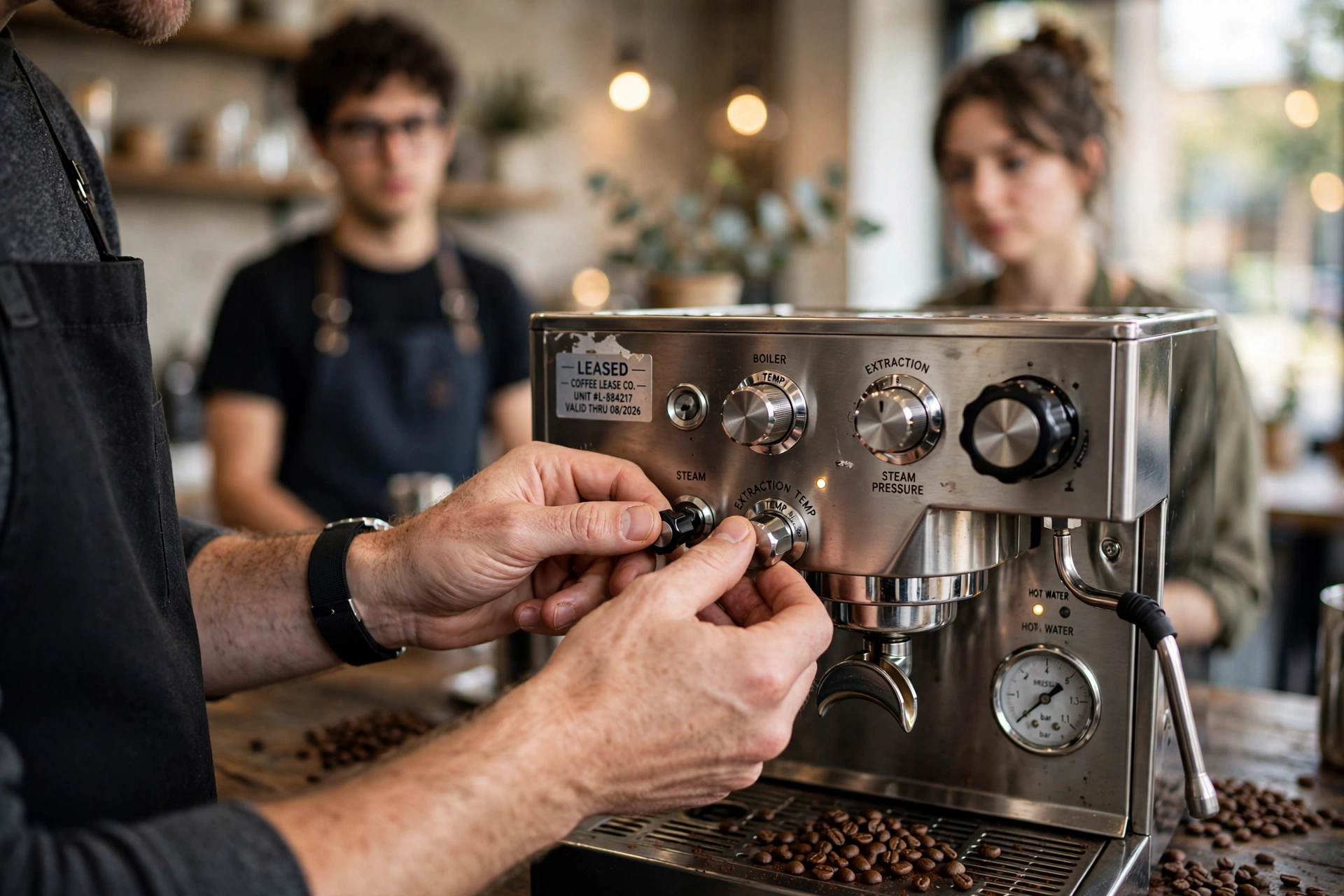
Now, here's where it gets interesting: the supply chain for this equipment has shifted. We are seeing a move away from simple one-time purchases toward managed memberships. For many businesses, the "when" is no longer about having a lump sum of capital, but about when the operational risk of downtime becomes too high to manage internally. This is why many are opting for Sensa Coffee Service in Charlotte, NC or similar managed models that remove the burden of maintenance.

Why Timing Your Equipment Upgrade Matters for Your Bottom Line
The financial implications of timing your cafe equipment supply are significant. There is a "hidden cost of inadequacy" that manifests as wasted beans, labor inefficiency, and customer churn. When a barista spends 30 seconds longer per drink because of a slow-grinding burr or a fluctuating boiler, that time multiplies across 200 customers, resulting in hours of lost productivity every week.
Research from the National Coffee Association USA (NCA) indicates that consumer expectations for specialty coffee quality are at an all-time high, with a growing segment of the market prioritizing "experience" and "precision." If your equipment cannot deliver a consistent crema or a smooth micro-foam, you aren't just losing a drink sale; you are losing the lifetime value of a customer who now associates your brand with mediocre coffee.
Consider the risk of non-compliance. Professional equipment is not just about taste; it is about safety. According to NSF International, equipment must meet specific sanitary standards (such as NSF/ANSI 4) to prevent contamination and ensure operator safety. Using "prosumer" equipment in a commercial kitchen often puts a business in a grey area regarding health inspections and insurance liabilities.
The data shows that businesses that transition to professional equipment before hitting their growth ceiling see a 15-20% increase in beverage-related revenue due to increased throughput and the ability to charge premium prices for specialty coffee. Conversely, those who wait until their equipment fails often experience a "revenue dip" during the downtime that can take months to recover. For those in the medical sector, the stakes are even higher; automated coffee machines for clinics and medical offices ensure that staff and patients have access to quality caffeine without requiring a dedicated barista, optimizing the use of expensive square footage.
Practical Application: Triggers for Upgrading Your Coffee Program
Identifying the exact moment to invest in new cafe equipment supply requires looking at specific operational triggers. I recommend auditing your beverage station every quarter using these three categories: Volume, Variance, and Velocity.
1. The Volume Trigger
If your current machine is running at 80% capacity for more than four hours a day, you are in the "danger zone." At this level, the equipment is under constant stress, which accelerates wear and tear on gaskets and heating elements. If you are seeing a consistent increase in guest counts, perhaps through a new partnership or a localized growth spurt, it is time to scale. For instance, if you are operating in a growing hub, looking into a Sensa Coffee Service in Raleigh NC (2026 Overview) can provide a scalable path that grows with your volume.
2. The Variance Trigger
This is the "taste test." When your baristas start complaining that the machine is "acting up" or that the espresso tastes sour one hour and bitter the next, your thermal stability has failed. This variance is a direct signal that your equipment can no longer handle the thermal load. In a professional setting, consistency is the only currency that matters.
3. The Velocity Trigger
Measure the time from "order placed" to "drink served." If the bottleneck in your entire operation is the espresso machine, you are losing money. When the velocity of your coffee production lags behind your food production, you have a throughput problem that can only be solved by upgrading your hardware.
To implement this transition, I suggest a three-step approach:
- Audit: Track your peak-hour volume for two weeks.
- Benchmark: Compare your output against the technical specifications of professional-grade machines.
- Partner: Instead of buying a machine and hoping for the best, partner with a managed service like Busy Bean Coffee.
💡
Key Takeaway
The optimal time to upgrade is when your equipment's capacity is reached, not when it breaks. Shifting to a managed service allows you to scale throughput without the risk of capital depreciation.
By utilizing a managed coffee membership, businesses in regions like the Carolinas can access high-end SENSA equipment without the massive upfront cost. Whether you need a Sensa Coffee Service in Greenville SC: Complete Guide or a specialized foodservice coffee program in Rock Hill SC: Complete Guide, the goal is to align your equipment capacity with your growth trajectory.
Comparing Your Equipment Sourcing Options
When the timing is right, you face a choice: do you buy a machine outright, lease a generic unit, or enter a managed membership? Most business owners default to the "buy" option because it feels like ownership, but in the world of specialty coffee, ownership often equals a liability.
| Feature | Traditional Purchase | Generic Lease | Managed Membership (Busy Bean) |
|---|---|---|---|
| Upfront Cost | Extremely High | Moderate | Zero/Low |
| Maintenance | Your responsibility | Limited/Paid | All-inclusive |
| Tech Refresh | Rare (Use until break) | Every 3-5 years | Constant updates |
| Consistency | Variable (User-dependent) | Moderate | High (Calibrated) |
| Best For | Pure Enthusiasts | Low-volume offices | Growth-focused businesses |
The "Traditional Purchase" approach is a gamble on the lifespan of the machine. If a boiler leaks in year two, you are paying for the part and the labor, and you are losing revenue every hour the machine is offline. The "Generic Lease" provides a bit more flexibility but often lacks the professional calibration needed for true specialty coffee.
Our modern approach via Busy Bean Coffee removes the friction entirely. By providing the equipment, installation, and maintenance for one predictable monthly fee, we transform a volatile capital expense into a stable operating expense. This is particularly beneficial for those seeking a Sensa Coffee Service in Columbia SC: Complete Guide | Busy Bean Coffee or a Sensa Coffee Service in Charleston SC: Complete Guide | Busy Bean Coffee, where the local tourism and hospitality market demands zero downtime.

Common Misconceptions About Equipment Timing
There are several myths that frequently lead business owners to make poor timing decisions regarding their cafe equipment supply. Most guides will tell you to just "buy the best machine you can afford," but that is flawed advice.
Myth 1: "I should wait until my current machine breaks to upgrade."
This is the most dangerous mindset in hospitality. A broken machine during a holiday weekend or a peak season is a financial disaster. The cost of the lost revenue during a week of downtime often exceeds the cost of the upgrade itself. Proactive replacement is a strategy for risk mitigation, not an unnecessary expense.
Myth 2: "A high-end prosumer machine is enough for a small cafe."
I see this constantly. A business owner buys a "premium" home machine thinking it can handle a small crowd. However, prosumer machines are not designed for the continuous duty cycle of a commercial environment. They lack the heavy-duty pumps and oversized boilers required for back-to-back shots. According to the International Coffee Organization (ICO), the global demand for high-quality specialty coffee is driving a need for more rigorous industrial standards in all serving environments.
Myth 3: "More features always mean better coffee."
Many are seduced by machines with a dozen different screens and programmable settings. However, if the fundamental heat exchange system is poor, no amount of software will fix the taste. The "when" to upgrade should be based on fundamental capacity and thermal stability, not the number of buttons on the interface.
Frequently Asked Questions
How do I know if my current equipment is actually the bottleneck?
To determine if your equipment is the bottleneck, conduct a "velocity test" during your busiest hour. Track the time from when a customer orders to when the drink is delivered. If the barista is standing still waiting for the machine to recover steam or heat, or if there is a queue of drinks that are ready for milk but waiting for espresso, your equipment is the bottleneck. If the delay is caused by the barista's movement or the POS system, the hardware is not the issue. Once the hardware is the primary limit on your hourly revenue, it is the definitive time to seek a new cafe equipment supply.
Is it better to buy a new machine or refurbish an old one?
Refurbishing is a temporary fix that often masks deeper systemic issues. In a professional environment, the cost of labor to refurbish a machine, combined with the risk that a different component will fail shortly after, makes it a poor investment. Modern equipment is significantly more energy-efficient and offers better precision through PID controllers and volumetric dosing. For businesses prioritizing growth, moving to a modern, managed solution like the one offered by Busy Bean Coffee is far more sustainable than patching a 10-year-old machine that consumes double the electricity and produces inconsistent results.
What is the average lifespan of commercial cafe equipment?
While a high-quality espresso machine can physically last a decade, its "economic lifespan" is much shorter. Technology in coffee roasting and extraction evolves rapidly. A machine from five years ago lacks the precision and automation of 2026's standards. Typically, after 3 to 5 years of heavy commercial use, the cost of maintenance starts to climb as seals, gaskets, and pumps reach their failure point. When your annual maintenance costs exceed 20% of the cost of a new machine, the timing for an upgrade has arrived.
Do I need different equipment for a hotel compared to a standalone cafe?
Yes, the requirements differ based on the "user profile." A standalone cafe needs maximum throughput and barista control. A hotel, however, often needs a balance between quality and ease of use, as the person operating the machine may not be a certified barista. This is why Sensa Coffee Service in Mount Pleasant SC: Complete Guide emphasizes automated solutions. Hotels benefit from "bean-to-cup" or highly automated espresso machines that ensure a guest gets a perfect latte at 6:00 AM without requiring a master barista on the early shift.
How does water quality affect when I need to replace equipment?
Water quality is the single biggest factor in equipment longevity. In areas with hard water, scale buildup can destroy a boiler in months if not properly filtered. If you are seeing a rapid increase in "clogged" groups or fluctuating temperatures despite regular cleaning, your water filtration system has failed, and your machine may already be compromised. When upgrading your cafe equipment supply, the filtration system should be treated as equally important as the machine itself. Failure to invest in professional filtration is the fastest way to shorten the lifespan of expensive hardware.
Final Thoughts on Your Cafe Equipment Supply
Deciding when to invest in a professional cafe equipment supply is not about following a calendar, but about responding to operational triggers. When your volume outpaces your capacity, when your quality begins to vary, or when your maintenance costs spike, the window for a proactive upgrade is open. Waiting for a total failure is a gamble that most successful hospitality businesses cannot afford to take.
The shift toward managed coffee memberships represents the most efficient way to handle this transition. By removing the capital burden and the stress of maintenance, you can focus on what actually drives your business: the customer experience. Whether you are looking for a Sensa Coffee Service in Jacksonville, FL or a Business Coffee Membership in Boston MA: Complete Guide, the goal is to ensure your coffee program is an asset, not a liability.
If you are seeing the signs of equipment fatigue or are planning a new launch in 2026, don't let hardware limitations cap your revenue. Visit Busy Bean Coffee to explore how our all-inclusive managed solutions can transform your beverage service from a point of friction into a profit center.
Free Coffee Pairing Guide & Specialty Roast Cheat Sheet
Unlock the secrets of perfect brewing ratios, water temperatures, and specialty roast profiles. Download the guide.