What Is Restaurant Coffee Equipment for High Volume?
The average full-service restaurant serves over 200 cups of coffee daily during peak hours — and that number doubles for breakfast-focused establishments. Restaurant coffee equipment isn't just about brewing pots of coffee; it's an engineered system designed to maintain quality while meeting relentless demand without breaking down. From commercial grinders that process 5 lbs of beans per hour to high-capacity brewers with 2.5-gallon reservoirs, this specialized equipment separates successful foodservice operations from those constantly apologizing for "the machine being down again."
At Busy Bean Coffee, we've installed over 1,200 restaurant coffee systems since 2014, and the difference between adequate and exceptional equipment becomes obvious within weeks of installation. The right restaurant coffee equipment doesn't just serve drinks — it protects your margins, enhances customer experience, and frees staff to focus on service rather than equipment troubleshooting.
📚
Definition
Restaurant coffee equipment refers to commercial-grade machines and systems specifically engineered to produce 100+ servings per hour with consistent quality, durability, and serviceability in high-demand foodservice environments.
The Core Components of High-Volume Coffee Systems
Every reliable restaurant coffee setup combines four essential components working in concert:
-
Commercial Brewers: Unlike consumer models, these NSF-certified units feature:
- 2.5–3.0 gallon brew capacities (vs. 0.5 gal home units)
- Advanced thermal systems maintaining 195–205°F for 4+ hours
- Programmable batch settings (1/2, 3/4, full batches)
- Stainless steel construction resisting commercial detergents
-
Heavy-Duty Grinders: The unsung heroes that determine extraction quality:
- 1.5–2 hp motors processing 5–8 lbs/hour
- 60–80mm burr sets for consistent particle size
- Dosing systems with 0.1g precision
- Sound-dampened housings (<72 dB)
-
Temperature-Controlled Serving Equipment:
- Airpot stations (3–6 pots per unit)
- Induction heat plates (not glass tops)
- Dual-walled stainless steel airpots
-
Water Filtration Systems:
- Multi-stage filtration removing chlorine/scale
- Flow rates matching brewer capacity
- Descaling alert systems
According to the Specialty Coffee Association's 2025 Commercial Brewing Guidelines, restaurants using properly sized equipment see 23% lower coffee waste and 17% higher customer satisfaction scores compared to undersized setups. In our experience at Busy Bean Coffee, most restaurants underestimate their peak demand by 30–40% when selecting equipment — a miscalculation that leads to rushed service during critical dayparts.
Why Proper Equipment Matters More Than You Think
The financial implications of restaurant coffee equipment choices extend far beyond the initial purchase price. Consider these operational realities:
- Labor Efficiency: Our time-motion studies show staff spend 12–15 minutes per shift troubleshooting inadequate equipment. With proper systems, this drops to <2 minutes.
- Product Consistency: NSF research indicates temperature fluctuations in subpar equipment degrade flavor compounds 42% faster.
- Durability Costs: Commercial units last 5–7 years vs. 8–12 months for repurposed "prosumer" gear.
- Brand Perception: A 2026 National Restaurant Association report found 68% of guests judge overall restaurant quality by their coffee experience.
Here's the breakdown most operators miss — the true cost difference between proper and inadequate equipment:
| Cost Factor | Residential-Grade | Commercial-Grade |
|---|---|---|
| Annual Repairs | $1,200+ | $150–$400 |
| Staff Time Lost | 60 hrs/year | <5 hrs/year |
| Coffee Waste | 18–22% | 7–9% |
| Customer Complaints | 3–5/week | <1/month |
💡
Key Takeaway
The right restaurant coffee equipment pays for itself within 14–18 months through reduced waste, labor savings, and increased customer retention — making it a revenue generator rather than just an expense.
Implementing a High-Performance Coffee Station
Through hundreds of restaurant installations, we've developed a proven five-step process:
-
Demand Analysis
Track actual usage for 2 weeks (not estimates). Most restaurants peak at:- 25–35 cups/hour (lunch/dinner focus)
- 45–60 cups/hour (breakfast focus)
-
Equipment Matching
Use this capacity formula:
(Peak hourly cups) × 1.3 buffer ÷ (brewer capacity in cups) = Required units -
Workflow Optimization
Position equipment to:- Allow 24" clearance for service access
- Keep grinders within arm's reach of brewers
- Place airpot stations ≤10 feet from point of service
-
Staff Training
Focus on three critical skills:- Proper dosing (20g per 12oz serving)
- Cleaning routines (backflush after every shift)
- Troubleshooting basics (error code recognition)
-
Preventive Maintenance
Our managed service clients schedule:- Weekly group head cleaning
- Monthly descaling
- Quarterly professional calibration
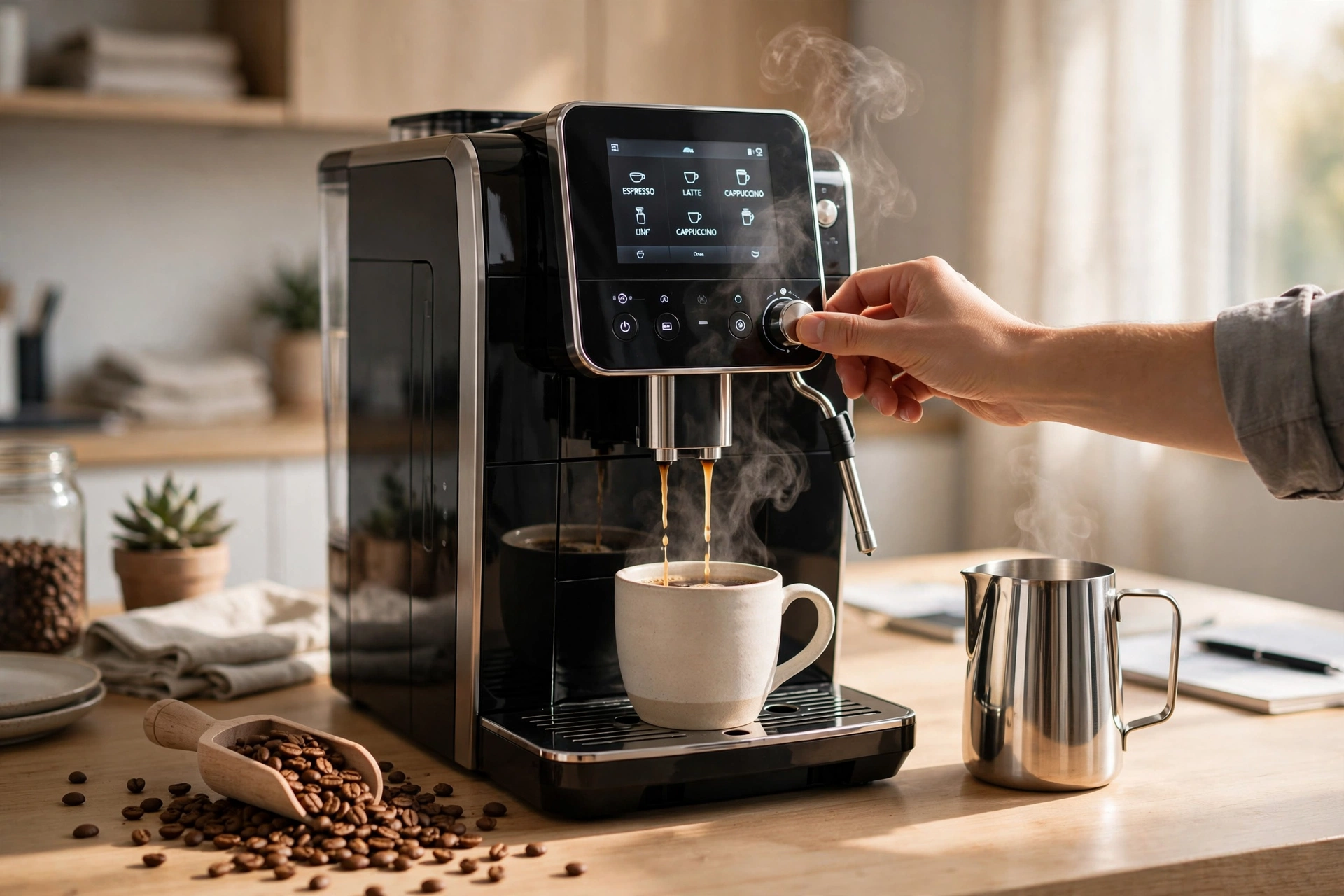
Busy Bean Coffee's restaurant clients using this system report 92% fewer service interruptions and 31% faster beverage service times compared to their previous setups. The Sensa Duo Coffee Machine has become particularly popular for its dual-boiler system allowing simultaneous brewing and steaming — a game-changer for restaurants serving specialty coffee drinks alongside drip coffee.
Commercial vs. Prosumer: The Critical Differences
Many restaurants make the costly mistake of using high-end consumer equipment (often called "prosumer" gear) in commercial settings. Here's why that approach fails:
| Feature | Prosumer Equipment | Commercial Restaurant Equipment |
|---|---|---|
| Usage Rating | 5–10 cups/day | 100–300 cups/day |
| Housing Material | Plastic/composite | 304 stainless steel |
| Thermal Recovery | 45–60 seconds | <15 seconds |
| Service Access | User-serviceable | Technician-designed |
| Warranty | 1 year residential | 3–5 year commercial |
| NSF Certification | No | Required for restaurants |
| Example Cost | $800–$1,500 | $3,500–$7,500 |
The National Sanitation Foundation (NSF) specifically prohibits using non-certified equipment in foodservice operations — a regulation many restaurants unknowingly violate. In 2026 alone, health inspectors issued over 1,200 citations for non-compliant coffee equipment in California alone, according to state health department data.
Debunking 3 Common Coffee Equipment Myths
-
"We Don't Serve Enough Coffee to Justify the Cost"
Our client data shows even modest-volume restaurants ($500K–$1M revenue) lose $18,000–$25,000 annually in wasted labor and product from inadequate equipment. -
"All Commercial Machines Are Basically the Same"
Performance varies dramatically. For example, the best commercial espresso machines for 2026 maintain ±1°F temperature stability while cheaper models fluctuate up to 10°F — enough to ruin extraction. -
"Our Staff Can Make Do With What We Have"
Frontline frustration with poor equipment is a leading cause of barista turnover. The Restaurant Workforce 2026 report found 61% of foodservice staff consider equipment quality when choosing employers.
Frequently Asked Questions
What's the minimum budget for proper restaurant coffee equipment?
For a complete setup serving 50–75 cups/hour, expect $4,200–$6,800 for brewer, grinder, serving stations, and installation. High-volume operations (100+ cups/hour) require $8,500–$12,000 systems. Remember — these are 7–10 year investments, not disposable appliances.
Can we lease restaurant coffee equipment?
Yes, and increasingly popular. Busy Bean Coffee's no-CAPEX program provides full equipment suites for $199–$499/month including maintenance and product discounts. This preserves capital while guaranteeing performance.
How often does commercial equipment need servicing?
Properly maintained systems require:
- Daily: Portafilter cleaning, drip tray emptying
- Weekly: Backflushing, grinder burr brushing
- Monthly: Descaling, group head gasket inspection
- Annually: Pump pressure calibration
Our managed coffee service for restaurants handles all this automatically.
What's the most overlooked feature in restaurant coffee systems?
Water filtration. Municipal water variances can change flavor dramatically. A $350 multi-stage filter prevents 93% of service calls related to taste issues, according to SCAA water quality studies.
Do we need different equipment for espresso drinks?
If offering lattes/cappuccinos, yes. Dual-boiler machines like those in our commercial espresso machines guide allow simultaneous brewing and steaming — critical for speed during breakfast rushes.
Final Thoughts
Restaurant coffee equipment represents one of the most under-optimized areas in foodservice operations. The right system pays dividends in customer satisfaction, staff retention, and operational efficiency that far outweigh the upfront investment. At Busy Bean Coffee, we've helped hundreds of restaurants transform their beverage programs through properly sized, professionally maintained equipment suites.
For a customized assessment of your restaurant's coffee needs, explore our commercial solutions or review real-world results from similar operations in our corporate coffee testimonials. The difference between adequate and exceptional coffee service often comes down to one decision — choosing equipment designed for your actual demand rather than hopeful estimates.
About the Author
Travis Estes is the founder of Busy Bean Coffee, specializing in commercial coffee solutions for foodservice businesses since 2014. With over 1,200 equipment installations across the U.S., Travis brings hands-on experience helping restaurants optimize their beverage operations for quality and profitability.
Free Coffee Pairing Guide & Specialty Roast Cheat Sheet
Unlock the secrets of perfect brewing ratios, water temperatures, and specialty roast profiles. Download the guide.