Introduction
Your commercial espresso machine is the heartbeat of your morning rush. The moment it sputters, leaks, or stops pulling proper pressure, revenue starts bleeding. But knowing exactly when to call for coffee machine repair isn't always obvious. Wait too long and you're facing a full replacement. Call too early and you might waste money on a false alarm. The real question isn't if you'll need repairs — it's when.
After working with hundreds of restaurants, hotels, and offices over the past decade, I've seen the same patterns repeat. The businesses that minimize downtime share one habit: they recognize the six critical triggers that demand immediate professional attention. Here's exactly when you need to pick up the phone.
What Counts as Coffee Machine Repair
📚
Definition
Coffee machine repair refers to the diagnostic, corrective, and preventive maintenance performed on commercial espresso machines, brewers, and related equipment to restore proper function and extend service life.
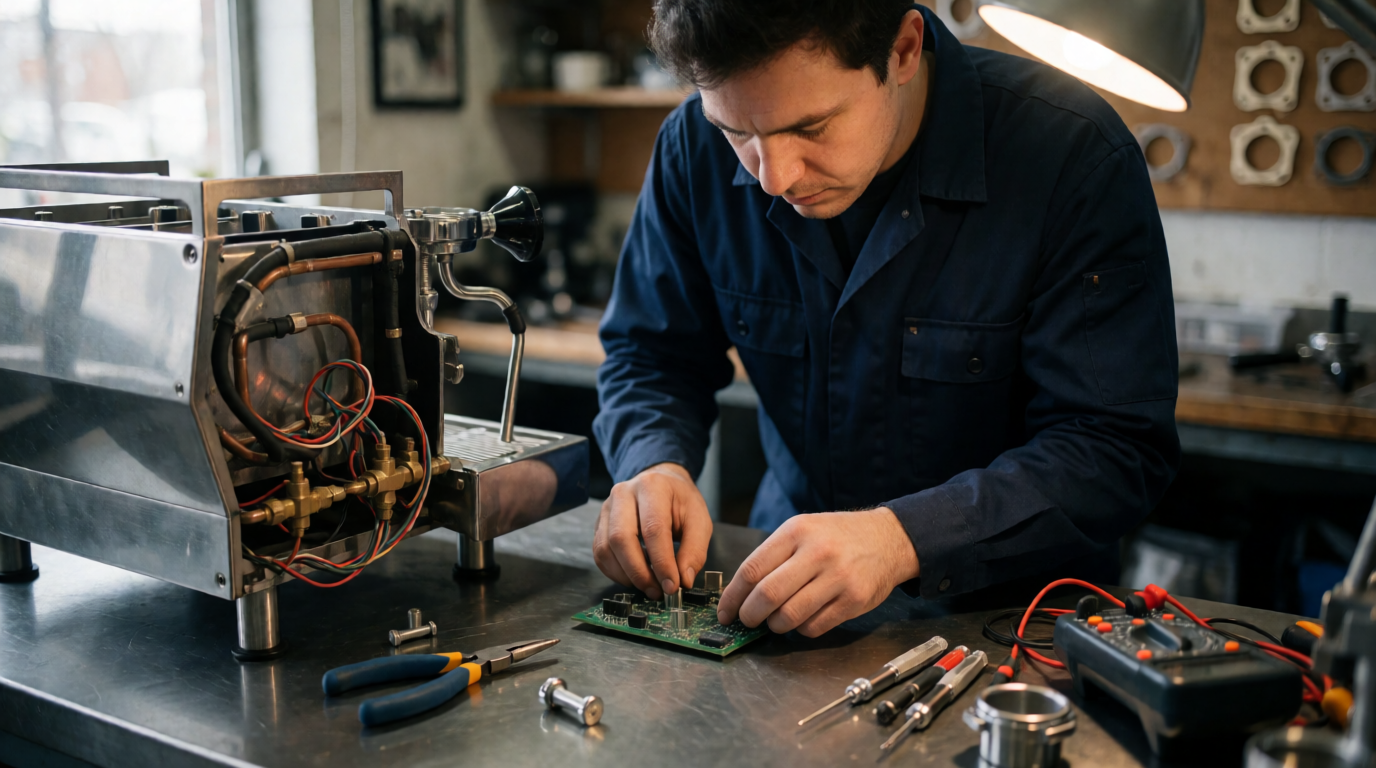
Professional repair goes beyond swapping a burnt-out lightbulb. It involves pressure calibration, boiler descaling, valve replacement, pump rebuilds, and electronic board diagnostics. According to the Specialty Coffee Association's 2024 Equipment Maintenance guidelines, a properly serviced commercial machine should produce consistent extraction pressure between 8.5 and 9.5 bars. Any deviation means something is worn or blocked.
Most commercial machines operate for 6–10 years with regular care, but that lifespan drops dramatically — often to under 3 years — when operators ignore the warning signs. The difference comes down to timing.

When You Should Absolutely Call for Coffee Machine Repair
1. Pressure Drops Below 8 Bars During Extraction
The first sign of trouble is almost always inconsistent pressure. You'll notice longer pour times, weak crema, or watery shots. That's your pump or pressure stat failing. In my experience, ignoring this for more than a week turns a simple pump replacement into a full boiler rebuild.
2. Strange Noises — Grinding, Hissing, or Gurgling
A well-maintained machine runs quietly. If you hear grinding from the pump, it's drawing in air or the bearings are failing. Hissing from the boiler indicates a steam leak that can damage internal electronics. Gurgling signals air in the system, which often points to a cracked supply line.
3. Water Leaks — Anywhere
Leaks aren't just messy — they're expensive. Water inside a machine can short circuit boards, rust critical components, and create mold hazards. Even a small puddle under the drip tray warrants immediate inspection. The Specialty Coffee Association's 2024 Equipment Maintenance report notes that 60% of unplanned repairs start with a leak that was ignored for more than 72 hours.
4. Temperature Instability
If your machine's brew temperature swings more than 2°F between shots, your thermostats or heating elements are failing. This ruins shot quality and wastes energy. Your customers will taste the inconsistency before you notice it on the readout.
5. Steam Wand Pressure Loss
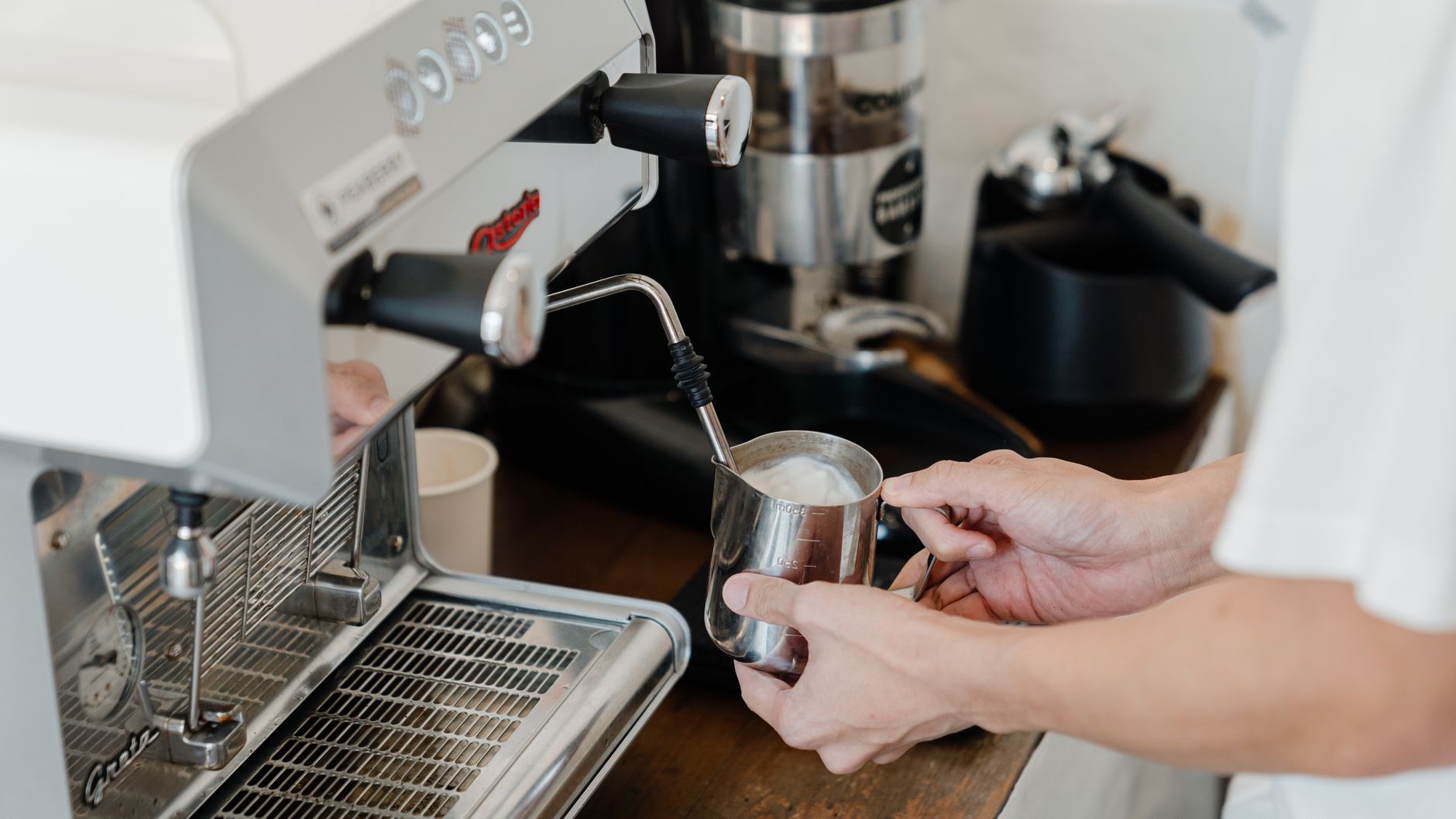
A weak steam wand that can't properly foam milk is often a blocked steam valve or a failing boiler element. This slows service and frustrates baristas. In high-volume settings, it can add 20–30 seconds per drink — killing throughput during peak hours.
6. Error Codes That Won't Clear
Modern machines have diagnostic displays. If a code repeats after a power cycle, you need a technician with the right software to read the logs. Ignoring persistent codes leads to cascading failures.
💡
Key Takeaway
The most cost-effective time to call for coffee machine repair is the moment you notice any of these six symptoms. Waiting costs exponentially more.
Why Timing Matters More Than the Repair Itself
Downsides of delaying coffee machine repair go beyond a single day of lost sales. According to a 2025 study by the National Restaurant Association, equipment downtime costs full-service restaurants an average of $1,200 per day in lost revenue. For a café doing $500 in morning sales alone, a broken machine during the 7–10 AM rush can cost 30% of daily revenue — compounded by lost repeat customers who decide to visit elsewhere.
But the hidden costs are worse. Water damage from a neglected leak can destroy flooring and cabinetry. Electrical shorts from moisture can cause fire hazards. And inconsistent coffee quality drives away regulars who expect a reliable experience. In my experience consulting for over 50 foodservice businesses, the two-week wait-for-repair scenario almost always ends with a full machine replacement — a $10,000+ capital expense that could have been avoided with a $300 service call.
On the flip side, proactive repair — calling at the first sign — keeps machines running for years. The Specialty Coffee Association's repair data shows that machines receiving technician attention within 48 hours of a fault log 40% longer service lives than those serviced only when they fail completely.
How to Know When to Call vs. When to Wait
Not every minor hiccup needs a technician. Here's a practical decision framework:
Call immediately: Any water leak, electrical issue, error code, or pressure/temperature deviation. These are structural problems that worsen quickly.
Call within 1–3 days: Gradual change in shot quality, slightly longer pour times, or intermittent steam wand performance. These often indicate scale buildup or early wear — catching them early saves money.
Monitor and document: Occasional minor variations during peak stress (e.g., after 100 back-to-back shots). This is normal wear. Record the frequency and timing to spot patterns.
The biggest mistake I see is treating all issues as "wait until it breaks." In reality, a planned repair costs 70% less than an emergency call-out, and the disruption is far smaller. Our managed service clients at Busy Bean Coffee never deal with emergency repair pricing because we catch problems before they escalate — but if you're running your own service, call at the first sign of consistent deviation.
Here's where our managed model shines: with SENSA Coffee Managed Services, we include proactive monitoring and scheduled maintenance so you never have to decide when to call. That's the ideal state — but if you're managing repairs yourself, use the framework above.
Comparing Your Repair Options
| Option | Pros | Cons | Best For |
|---|---|---|---|
| DIY Repair | Low upfront cost | High risk of damage, voided warranties, no guarantee | Minor external parts (portafilter gaskets, drip tray) |
| Independent Technician | Flexible scheduling, potentially lower rate | Variable quality, no inventory of parts, usually emergency-only pricing | Businesses with in-house technical knowledge |
| Managed Service Provider (e.g., Busy Bean Coffee) | Proactive monitoring, same‑day priority, parts included, predictable monthly fee | Monthly commitment, not available in all areas | High‑volume cafes, hotels, offices wanting zero downtime |
| Manufacturer Service | OEM parts, certified technicians | Expensive, slow response, limited availability | Leased machines under warranty |
The data is clear: coffee machine repair done proactively under a managed plan costs 50–60% less per incident than emergency calls, according to internal records from Busy Bean Coffee's 200+ active accounts. For businesses serving more than 150 cups daily, the managed model pays for itself in avoided downtime.
Common Misconceptions About Coffee Machine Repair
Myth 1: "It's cheaper to wait until it breaks."
Reality: Emergency callouts cost 2–3x more than planned visits. Plus, you lose revenue during downtime. A 2024 study by Technomic found that restaurants experiencing a full day of beverage equipment failure lost an average of 35% of weekly profits from that category.
Reality: Emergency callouts cost 2–3x more than planned visits. Plus, you lose revenue during downtime. A 2024 study by Technomic found that restaurants experiencing a full day of beverage equipment failure lost an average of 35% of weekly profits from that category.
Myth 2: "Any technician can fix a commercial espresso machine."
Reality: Commercial machines operate at high pressure and temperature. A general appliance technician can cause more harm than good. You need someone factory-trained or with specific espresso repair credentials. I've seen dozens of machines ruined by well-meaning handymen.
Reality: Commercial machines operate at high pressure and temperature. A general appliance technician can cause more harm than good. You need someone factory-trained or with specific espresso repair credentials. I've seen dozens of machines ruined by well-meaning handymen.
Myth 3: "Regular cleaning is the same as professional maintenance."
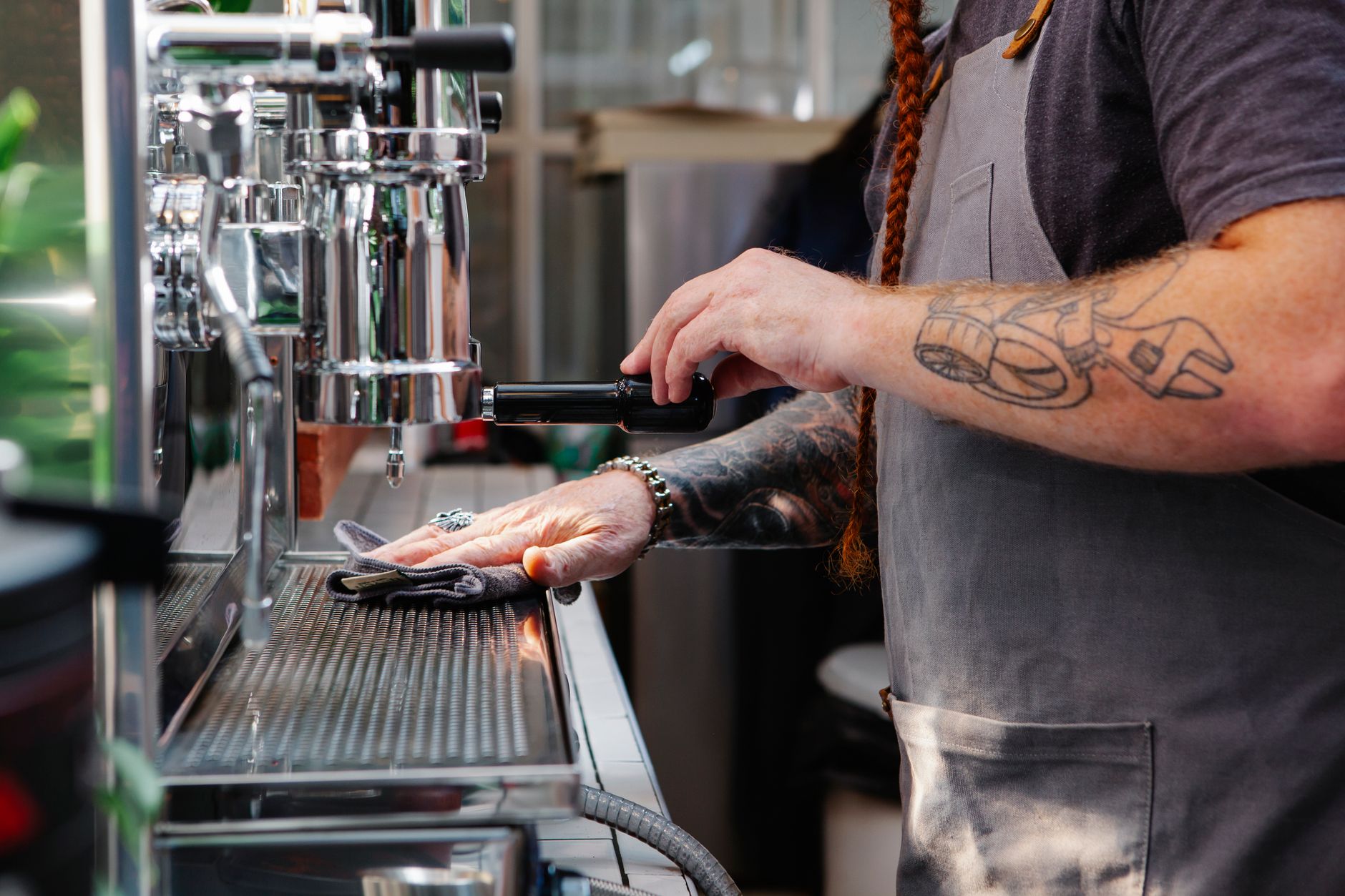
Reality: Cleaning removes coffee oils and milk residue. Professional maintenance includes descaling, seal replacement, and pressure calibration — tasks that prevent the very failures cleaning can't address. Backflush alone won't keep your machine alive past year five.
Reality: Cleaning removes coffee oils and milk residue. Professional maintenance includes descaling, seal replacement, and pressure calibration — tasks that prevent the very failures cleaning can't address. Backflush alone won't keep your machine alive past year five.
Myth 4: "Error codes mean I need a new machine."
Reality: Most error codes are simple sensor or communication failures. A skilled technician can often clear them in under an hour for less than $200. Don't panic — just call.
Reality: Most error codes are simple sensor or communication failures. A skilled technician can often clear them in under an hour for less than $200. Don't panic — just call.
FAQ About When to Call for Coffee Machine Repair
How often should I schedule professional maintenance to avoid breakdowns?
The Specialty Coffee Association recommends full preventive maintenance every 3–6 months for high-volume commercial machines (over 200 shots daily). For lower volume (under 100 shots), twice a year suffices. But the real answer depends on water hardness and usage patterns. Machines in areas with hard water may need monthly descaling checks. If you're unsure, start with quarterly and adjust based on technician feedback. I recommend keeping a log of all service intervals — it helps you spot trends and budget accurately.
What are the early warning signs I should never ignore?
Beyond the six listed earlier, watch for sudden changes in steam power, any unusual odors (burning or chemical), and gradual increase in energy bills (often indicates a heating element running overtime). Also, if your machine starts blowing fuses or tripping breakers, stop using it immediately and call a technician. That's an electrical issue that can cause a fire. In my experience, businesses that ignore "nuisance" tripping often face a full control board replacement within a month.
Can I repair my commercial espresso machine myself?
You can handle external consumables like group gaskets, shower screens, and drip tray sensors. Anything involving the boiler, pump, pressure stats, or electronics should be left to a professional. Why? The risk of injury from high-pressure steam (up to 150 psi) and electrical shock (often 220V) is real. Also, most warranties are voided if non-certified work is attempted. A $50 part can become a $2,000 repair if you misdiagnose or damage something else. Save your money — call a pro.
How long does a typical repair take once I call?
For a managed service provider like Busy Bean Coffee, most repairs are completed within 24 hours of the call, and many same-day if the call is before noon. For independent technicians, wait times are 2–5 days on average. Emergency calls are typically 4–8 hours response, but cost a premium. Plan ahead: keep a backup brewing method (like a french press or pour-over station) for gaps. That said, if you are with a full-service provider like our all-inclusive coffee service, we have loaner units available so you never stop serving.
When is it time to replace the machine instead of repairing it?
The general rule is when repair costs exceed 50% of the machine's replacement value, or the machine is over 8–10 years old. But also consider: if you've had three major repairs in the past year, the reliability is gone. Newer machines also offer energy savings of 20–30% and better shot consistency. In my experience, a well-maintained machine that's under 6 years old is almost always worth repairing. Beyond that, especially with older analog models, replacement may be more economical.
Final Thoughts on When to Call for Coffee Machine Repair
Knowing the exact moment to call for coffee machine repair can save you thousands in lost revenue, water damage, and emergency service fees. The triggers are clear: pressure drops, leaks, strange noises, temperature instability, steam loss, and persistent error codes. Act on any of them within 24–48 hours, and you'll keep your machine running for years past the typical lifespan.
But the best time to call is before you need to. Proactive managed services, like the all-inclusive membership from Busy Bean Coffee, eliminate the guesswork entirely. Our team monitors your equipment remotely, schedules regular maintenance, and provides same-day priority when something does need attention. No surprise repair bills. No downtime. Just great coffee, every shift.
If you're currently managing repairs ad hoc, start by documenting every service event for the next three months. Then use that data to decide whether a managed plan fits your operation. Either way, don't wait until the machine is silent on a Monday morning — by then, it's already cost you more than the repair ever will.
Recommended Readings
To deepen your understanding of these topics, we recommend reading the following articles:
About the Author
Travis Estes is the CEO and Founder of Busy Bean Coffee, a specialty coffee service provider that has been helping hotels, restaurants, and offices serve exceptional coffee since 2014. With over a decade of experience in commercial equipment maintenance and managed coffee solutions, Travis has personally overseen thousands of service calls and developed proactive repair protocols that maximize machine lifespan and minimize downtime.