What Exactly Is a Premium Coffee Service?
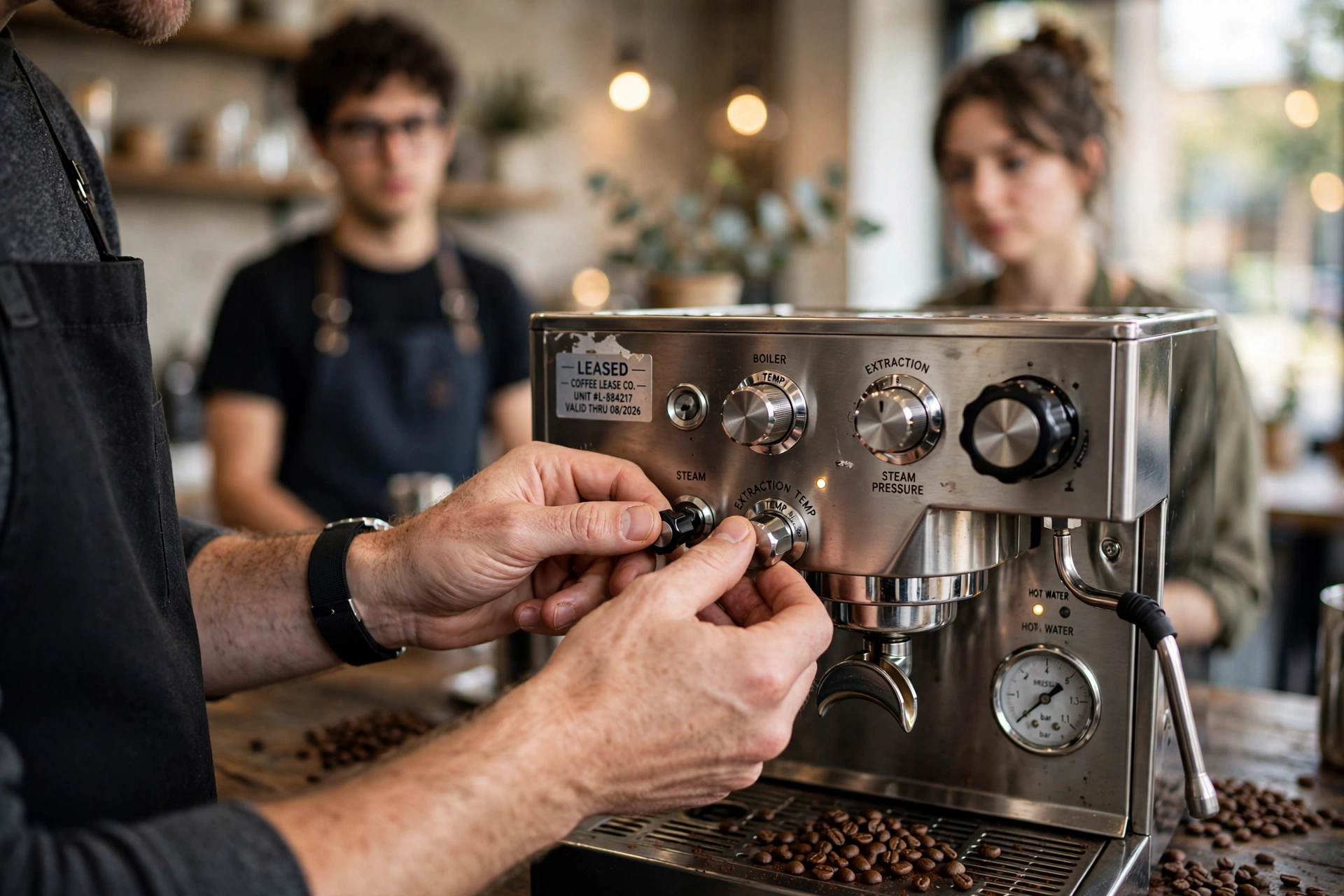
Most hospitality managers believe that providing a great cup of coffee simply means buying an expensive machine and a bag of high-end beans. In my experience working with hundreds of hotels and restaurants, that approach is the fastest way to lose money through downtime and inconsistent quality. A true premium coffee service is not a product purchase, but a comprehensive operational partnership. It is a managed ecosystem that combines high-performance equipment, curated specialty coffee, and a proactive maintenance schedule to ensure that every single cup meets a gold standard without requiring the business owner to become a technician.
For a business in a high-traffic area, such as those utilizing No Capex Coffee Service in Mount Pleasant SC: 2026 Guide, this means shifting the burden of equipment ownership and maintenance to experts. Instead of dealing with leaking gaskets or inconsistent extraction, the business focuses on guest experience while the service provider handles the technical backend.
📚
Definition
Premium Coffee Service is an all-inclusive managed beverage solution for B2B environments that integrates professional-grade hardware, specialty-grade coffee roasting, and comprehensive technical support into a single, predictable operational model.
The Core Components of a High-End Beverage Program
To understand what makes a service "premium," you have to look past the brand name on the machine. A professional program is built on three non-negotiable pillars: sourcing, hardware, and sustainment. If any one of these is missing, you aren't running a premium service; you are simply buying expensive equipment.
First, the sourcing must center on specialty coffee. This isn't just a marketing term. According to the Specialty Coffee Association (SCA), specialty coffee must score 80 points or higher on a 100-point scale, evaluated by certified Q-Graders. When we curate beans for Busy Bean Coffee, we focus on Coffea arabica varieties that offer complex flavor profiles and a clean finish. Using commodity-grade beans in a $20,000 espresso machine is like putting low-octane fuel in a Ferrari; the hardware cannot compensate for poor raw materials.
Second is the hardware. A premium service utilizes professional-grade espresso machines and grinders that are engineered for high volume and thermal stability. The equipment must be NSF certified to meet strict health and safety standards. As NSF International notes, adherence to these standards ensures that food-contact surfaces are durable, easy to clean, and prevent contamination.
Finally, the sustainment phase is where most businesses fail. In the industry, we call this "The Maintenance Gap." The mistake I made early on, and that I see constantly with new cafe owners, is assuming that a machine only needs service when it breaks. A premium service employs proactive maintenance, which includes regular water filtration changes, seal replacements, and calibration of the barista equipment. This ensures the machine never reaches the point of failure.

Why Does Your Business Need a Managed Coffee Strategy?
The financial implications of poor coffee service are often hidden in the "invisible costs" of operations. When a machine goes down on a busy Sunday morning, the loss isn't just the cost of the repair; it is the lost revenue from every missed latte, the damage to your brand reputation, and the frustration of your staff.
Data shows that beverage quality is one of the top three drivers of guest satisfaction in the hospitality sector. According to the National Coffee Association USA (NCA), the demand for specialty coffee continues to grow as consumers move toward "premiumization," seeking higher quality and more ethical sourcing in their daily cups. If your business is still serving burnt, commodity-grade coffee, you are effectively telling your customers that quality is an afterthought.
Now, here's where it gets interesting: the capital expenditure (CapEx) versus operational expenditure (OpEx) debate. Traditional models require a massive upfront investment in equipment, which then depreciates the moment it is installed. A managed premium coffee service transforms this into a predictable monthly cost. This allows businesses to preserve their cash flow for other growth initiatives while still offering top-tier products. For those operating in major hubs, such as those looking at Sensa Coffee Service in Dallas TX: Complete Guide | Busy Bean Coffee, this financial flexibility is a competitive advantage.
Consider the impact on labor. Training a full-time barista to maintain a complex machine is expensive and risky. If that employee leaves, your technical knowledge walks out the door. By outsourcing the technical management to a premium service, you remove the "single point of failure" from your payroll. You are paying for the certainty that your coffee will be perfect every time, regardless of who is behind the counter.
How to Implement a Premium Coffee Service in Your Business
Transitioning to a professional setup requires a strategic approach. You cannot simply swap a drip pot for an espresso machine and expect a return on investment. You need a deployment plan that aligns with your specific volume and customer demographics.
First, conduct a volume audit. How many cups are you serving per hour during your peak window? A small boutique hotel in Sensa Coffee Service in Boston MA: 2026 Business Guide has very different needs than a high-traffic airport kiosk. This data determines whether you need a semi-automatic machine (for high-skill baristas) or a super-automatic system (for speed and consistency).
Second, optimize your water chemistry. This is the most overlooked step in the entire process. Coffee is 98% water. If your water is too hard, you will get scale buildup that destroys your heating elements; if it is too soft, the coffee will taste flat. A premium service includes professional water filtration tailored to your local municipal water report.
Third, establish a training cadence. Equipment is only as good as the person operating it. We implement a tiered training program at Busy Bean Coffee that covers everything from "dialing in" the coffee bean grind to milk texturing techniques.
Fourth, set up your replenishment cycle. You should never be in a position where you are "running low" on beans. A managed service uses automated or scheduled replenishment to ensure the freshest roast is always on hand, reducing waste and preventing stockouts.
💡
Key Takeaway
The most successful coffee programs prioritize water filtration and consistent staff training over the brand of the machine. Without these two elements, even the most expensive equipment will produce mediocre results.

Comparing Coffee Service Models: Which Is Right for You?
Not every business needs the same level of service. However, the gap between a "basic" setup and a "managed premium" setup is vast. The following table breaks down the differences based on operational impact and financial risk.
| Feature | Traditional / DIY Approach | Generic Rental / Low-Cost AI | Modern Managed Premium (Busy Bean) |
|---|---|---|---|
| Upfront Cost | High (Full CapEx) | Low (Rental Fee) | Zero to Low (Membership) |
| Maintenance | Reactive (Fix when broken) | Limited (Basic support) | Proactive (Scheduled visits) |
| Coffee Quality | Variable / Commodity | Standardized / Generic | Specialty Grade (SCA 80+) |
| Technical Skill | Owner must be the expert | Basic operator training | Full expert management |
| Financial Risk | High (Equipment failure) | Moderate (Low quality) | Low (Predictable OpEx) |
| Best For | Very small, low-volume shops | Low-budget offices | Hotels, Cafes, High-end Foodservice |
Most "generic" services promise low costs but deliver low quality. They provide a machine that is easy to maintain but produces coffee that tastes like cardboard. On the other hand, the DIY approach is a nightmare for owners who find themselves spending their weekends scrubbing group heads instead of managing their business. The modern managed approach, which we champion at Busy Bean Coffee, removes the friction from the equation entirely.
For businesses in high-growth markets, like those exploring Sensa Coffee Service in Houston TX: 2026 Business Guide, the "Managed Premium" model is the only way to scale without exponentially increasing operational stress.
Common Misconceptions About Professional Coffee Services
There is a lot of misinformation in the industry, often pushed by companies trying to sell you a machine and then disappearing. Here is the reality of the situation.
Myth 1: "Super-automatic machines can't make real coffee."
Most guides get this wrong by claiming you need a manual lever machine for quality. While that was true ten years ago, modern precision engineering allows super-automatic machines to maintain temperature and pressure with incredible accuracy. In my experience, for 90% of foodservice businesses, a high-end super-automatic provides better consistency than a human barista who is tired on a Tuesday morning.
Myth 2: "The most expensive bean is always the best."
More expensive doesn't always mean better; it usually means "rarer." For a commercial setting, you need a bean that is "stable." This means it tastes great across a variety of milk options and holds its flavor profile during high-volume extraction. We focus on a balance of acidity and body that appeals to the widest range of palates while still maintaining its specialty status.
Myth 3: "Maintenance is just about cleaning the machine."
Cleaning is basic hygiene. Maintenance is technical engineering. Replacing a group head gasket before it blows, calibrating the volumetric dosing, and descaling the boiler are the things that actually save you money. If your provider only talks about "cleaning," they aren't providing a premium service.
Myth 4: "I can just buy a high-end machine and hire a part-time technician."
This creates a fragmented system. When the machine breaks, you have to coordinate between the manufacturer, the technician, and the bean supplier. A managed service creates a single point of accountability. If the coffee doesn't taste right, there is only one phone call to make.
Frequently Asked Questions
What is the difference between a coffee rental and a premium coffee service?
A coffee rental is a simple transaction: you pay a fee to use a piece of equipment. If the machine breaks, you might get a replacement, but the quality of the coffee is usually secondary. A premium coffee service is a holistic partnership. It includes the equipment, but it also includes the sourcing of specialty coffee, the precise calibration of that coffee for your specific machine, and a proactive maintenance schedule. While a rental focuses on the "tool," a premium service focuses on the "result," ensuring that the guest experience is consistent and the operational burden on the owner is zero.
Does a premium coffee service require a dedicated barista on staff?
Not necessarily. One of the primary advantages of a managed premium service, especially those using Sensa equipment, is the ability to deliver café-quality beverages without needing a master barista on every shift. Because the equipment is pre-calibrated and the maintenance is handled by experts, your existing staff only needs basic operational training. This significantly reduces your labor costs and removes the risk associated with the high turnover rates common in the barista profession. You get the quality of a specialty shop with the ease of a push-button system.
How does the "No CapEx" model actually work financially?
The "No CapEx" (No Capital Expenditure) model replaces the massive upfront cost of purchasing professional equipment with a predictable monthly membership fee. Instead of spending $15,000 to $30,000 on machines and installation, you pay a monthly fee that covers the equipment, professional installation, and ongoing maintenance. This shifts the expense from your balance sheet (as an asset that depreciates) to your profit and loss statement (as an operational expense). This is particularly beneficial for businesses in cities like those using Sensa Coffee Service in San Antonio TX: 2026 Business Guide, where cash flow management is key to scaling.
How often is the equipment maintained in a managed service?
Maintenance is not performed on a "when it breaks" basis, but on a "preventative" basis. A true premium service includes scheduled visits to check water filtration/softener levels, replace worn-out seals, calibrate grinders, and perform deep-system descaling. The exact frequency depends on your volume, but typically, these checks occur quarterly. This prevents the catastrophic failures that lead to hours of downtime. In my experience, proactive maintenance reduces emergency repair calls by over 70%, ensuring your business never misses a morning rush.
Can I use my own coffee beans with a premium coffee service?
While some providers allow this, it generally contradicts the "premium" promise. The equipment is calibrated specifically for the roast profile, density, and moisture content of the beans provided. If you switch to a different bean, the grind size and temperature settings will likely be wrong, resulting in sour or bitter coffee. For a truly managed experience, the beans and the machines must be treated as a single, integrated system. This ensures that the "gold cup" standard is maintained without the need for constant manual adjustments.
Final Thoughts on Premium Coffee Service
Implementing a premium coffee service is about more than just upgrading your menu; it is about removing a significant operational headache from your daily routine. When you stop worrying about whether your machine will work or if the coffee tastes "off" today, you free up mental bandwidth to focus on what actually grows your business: your customers.
The transition from a DIY or low-cost rental model to a managed partnership is the moment most businesses realize that the "cheaper" option was actually the most expensive in terms of lost time and wasted potential. By focusing on specialty-grade sourcing, NSF-certified hardware, and a rigorous maintenance schedule, you create a reliable revenue stream that enhances your brand's prestige.
If you are ready to stop managing machines and start serving exceptional coffee, we invite you to explore the managed solutions at Busy Bean Coffee. Whether you are looking for a No Capex Coffee Service in Charleston SC: 2026 Guide or a comprehensive beverage overhaul, our team of Q-Graders and technicians is ready to help you scale.
Visit www.busybeancoffee.com to see how we can transform your coffee program into a high-performance asset.
Ready to Upgrade Your Business Coffee?
Café-quality coffee, zero maintenance headaches, and one predictable monthly price. Let's build your custom coffee program.
Free Coffee Pairing Guide & Specialty Roast Cheat Sheet
Unlock the secrets of perfect brewing ratios, water temperatures, and specialty roast profiles. Download the guide.