Which Type of Commercial Espresso Machine is Right for Your Business?
Selecting the wrong equipment can lead to a catastrophic bottleneck during a morning rush or, worse, a product that tastes like burnt rubber. When deciding which of the various commercial espresso machines to install, the choice depends entirely on your volume, staff skill level, and the specific guest experience you want to curate. For high-volume cafes needing precision, a multi-group semi-automatic machine is the gold standard; for hotels or medical offices where speed and consistency trump manual craft, a fully automatic "super-automatic" system is the only logical choice.
In my experience working with dozens of foodservice operators, the most common mistake is overbuying capacity while underbuying usability. I've seen owners spend $15,000 on a triple-group machine only to realize their staff can't steam milk consistently, resulting in wasted product and frustrated customers. The goal isn't to buy the "best" machine on the market, but the one that aligns with your operational reality in 2026.
For those managing hospitality environments, exploring Automatic Coffee Machines for Hotels and Hospitality in 2026 reveals how automation can bridge the gap between quality and labor shortages.
Understanding the Mechanics of Commercial Espresso Machines
To choose the right hardware, you first need to understand the technical divide between how these machines handle water, heat, and pressure. Most commercial units fall into one of three boiler configurations: single boiler, heat exchange, or dual boiler.
📚
Definition
A Dual Boiler system features two independent boilers, one dedicated to brewing espresso and another to steaming milk, allowing the barista to perform both tasks simultaneously without temperature fluctuations.
In a heat exchange system, hot water from the steam boiler passes through a heat exchanger to warm the brew water. While efficient, it can lead to "temperature surfing," where the barista must manually purge water to hit the target temperature. For a high-end specialty coffee shop, this inconsistency is unacceptable. This is why I always steer my clients toward dual boiler systems when they are pursuing a specialty coffee designation. According to the Specialty Coffee Association (SCA), precision in temperature and pressure is the fundamental requirement for extracting the complex flavors of high-scoring Arabica beans.
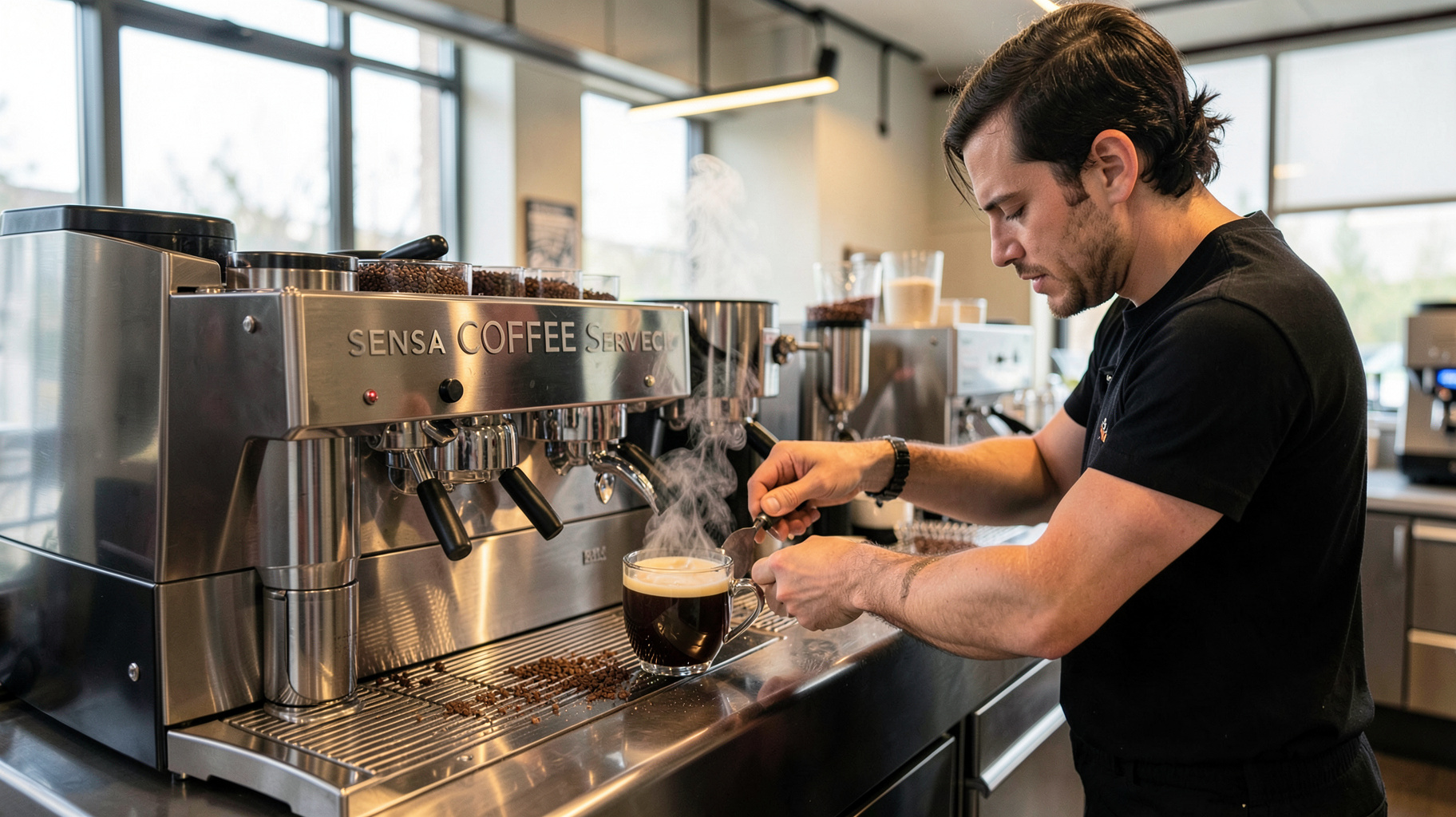
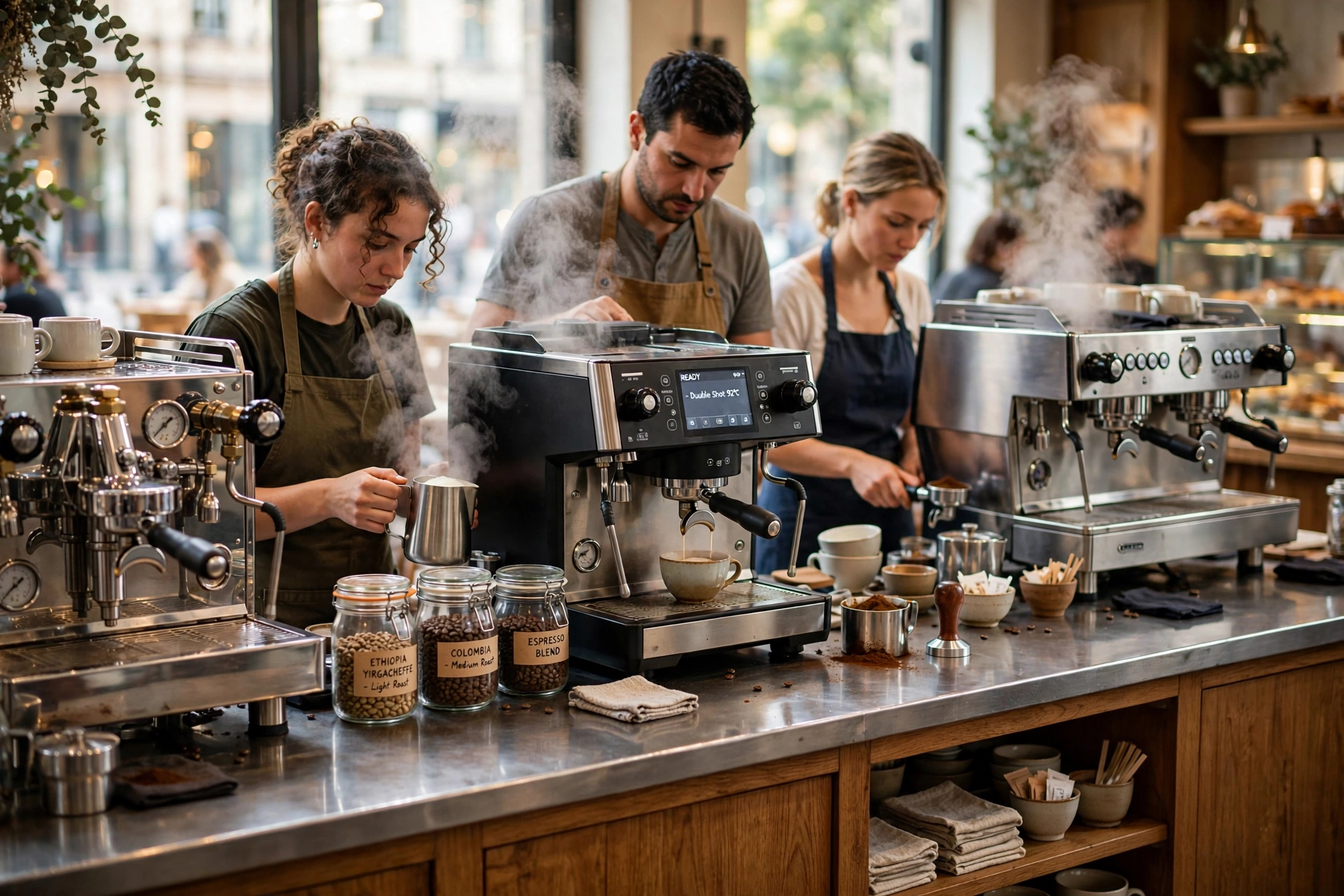
Now here's where it gets interesting: the "group head" count. A "group" is essentially the brew head where the portafilter attaches. A one-group machine is fine for a low-volume office, but a three-group machine allows three baristas to pull shots simultaneously. If you are operating in a high-traffic area, like those utilizing a Sensa Coffee Service in Charlotte, NC, the throughput capacity of your group heads will determine your maximum hourly revenue.

Why the Right Equipment Choice Directly Impacts Your Bottom Line
The difference between a "good enough" machine and the right machine is measured in labor costs and waste. In the coffee industry, "shrinkage" doesn't just happen at the register; it happens in the pitcher. When a machine has inconsistent steam pressure or unstable brew temperatures, the result is rejected drinks.
According to research from the National Coffee Association USA (NCA), consumer expectations for specialty coffee quality have risen sharply, meaning a "burnt" espresso is no longer tolerated by the average customer. If your equipment causes a 5% waste rate on milk and beans due to inconsistency, a mid-sized cafe could be flushing thousands of dollars down the drain annually.
Furthermore, the labor cost of training a barista to use a manual machine is significant. A semi-automatic machine requires a skilled operator who understands grind size, tamping pressure, and milk aeration. If your business model relies on general staff rather than dedicated baristas, such as in many Automated Coffee Machines for Clinics and Medical Offices, the cost of training and the risk of human error become your biggest liabilities.
The operational risk also extends to sanitation. Equipment that isn't designed for high-volume cleaning often accumulates scale and biofilm, which can lead to health code violations. The NSF International provides rigorous standards (such as NSF/ANSI 4) to ensure that food equipment is easy to sanitize and safe for public consumption. Using non-certified or poorly maintained equipment isn't just a quality issue; it's a regulatory risk.
Practical Application: Choosing Your Machine Based on Use Case
When I consult with a new business, I use a decision framework based on "The Three Pillars": Volume, Skill, and Speed. You cannot maximize all three without spending an exorbitant amount of money, so you must prioritize.
Case 1: The Specialty Cafe (Priority: Quality & Craft)
If your brand is built on the art of the brew, you need a semi-automatic dual boiler machine. This allows your baristas to control every variable. To implement this, start by selecting a machine with volumetric dosing, this ensures the water volume is consistent even if the barista is distracted.
Case 2: The High-Volume Hotel or Clinic (Priority: Speed & Consistency)
In these environments, you cannot afford to have a "learning curve." This is where a super-automatic machine excels. One touch of a button delivers a perfect latte. For businesses in the Southeast, such as those implementing a Sensa Coffee Service in Raleigh NC (2026 Overview), this model removes the "human variable" and ensures that a guest in room 201 gets the same coffee as the guest in room 505.
Case 3: The Boutique Restaurant (Priority: Aesthetics & Versatility)
Restaurants often need a machine that looks beautiful on the counter but doesn't require a full-time operator. A high-end automatic machine provides the prestige of a professional espresso machine without the need for a dedicated barista.
💡
Key Takeaway
If your staff cannot be certified as professional baristas, avoid semi-automatic machines. The "prestige" of the equipment will be negated by the poor quality of the output.
At Busy Bean Coffee, we simplify this entire process through our managed coffee membership. Instead of guessing which machine fits your 2026 projections, we provide the SENSA equipment and professional installation, ensuring the hardware matches your specific volume requirements without the massive upfront capital expense.

Comparison of Commercial Espresso Machine Types
To help you decide, I've mapped out the primary options based on the trade-offs I've observed in the field over the last decade.
| Machine Type | Pros | Cons | Best For |
|---|---|---|---|
| Semi-Automatic | Total control, highest quality, industry standard for cafes | Requires high skill, slower throughput per person | Specialty Coffee Shops, Third-Wave Cafes |
| Automatic | Consistent dosing, faster training, reduced waste | Less control over "dialing in" the shot | Mid-sized Restaurants, Bakeries |
| Super-Automatic | Zero skill required, maximum speed, one-touch operation | Higher maintenance, expensive repairs, less "craft" feel | Hotels, Medical Offices, Corporate Hubs |
| Pod/Capsule Commercial | Extremely clean, no waste, zero training | High cost per cup, lower quality, environmental impact | Low-volume Executive Suites |
That said, the "Super-Automatic" category has evolved. In 2026, the gap in quality between a super-automatic and a semi-automatic has narrowed significantly. Modern grinders integrated into these machines can now maintain a level of precision that was previously only possible with standalone professional grinders. This makes them a viable option even for businesses that care deeply about the taste of Coffea arabica but lack the payroll for a full-time barista.
Common Questions & Misconceptions
Most guides get the "capacity" conversation wrong. They tell you to buy a machine based on how many cups you think you'll sell. That is a recipe for failure.
Myth 1: "More group heads always mean more profit."
Wrong. More group heads only increase profit if you have the staff to operate them. A three-group machine operated by one person is just a very expensive two-group machine with an empty spot. You should scale your equipment to your peak hour staffing, not your total daily volume.
Myth 2: "Automatic machines can't make 'real' specialty coffee."
This was true ten years ago. Today, high-end automated systems can precisely control temperature and pressure to within a fraction of a degree. If the bean quality is high and the grinder is calibrated, the consumer cannot tell the difference between an automated shot and a manual one.
Myth 3: "Buying a cheap machine saves money in the long run."
This is the most dangerous misconception. A cheap commercial machine has a higher "Total Cost of Ownership" (TCO) due to frequent breakdowns and poor energy efficiency. According to industry data, low-end commercial machines have a 30% higher failure rate in the first 24 months compared to professional-grade equipment.
If you are managing a program in a specific region, such as a Foodservice Coffee Program in Rock Hill SC: Complete Guide, you'll find that the local climate (humidity and temperature) can actually impact machine longevity, making professional installation and maintenance essential.
Frequently Asked Questions
Which machine is best for a hotel lobby?
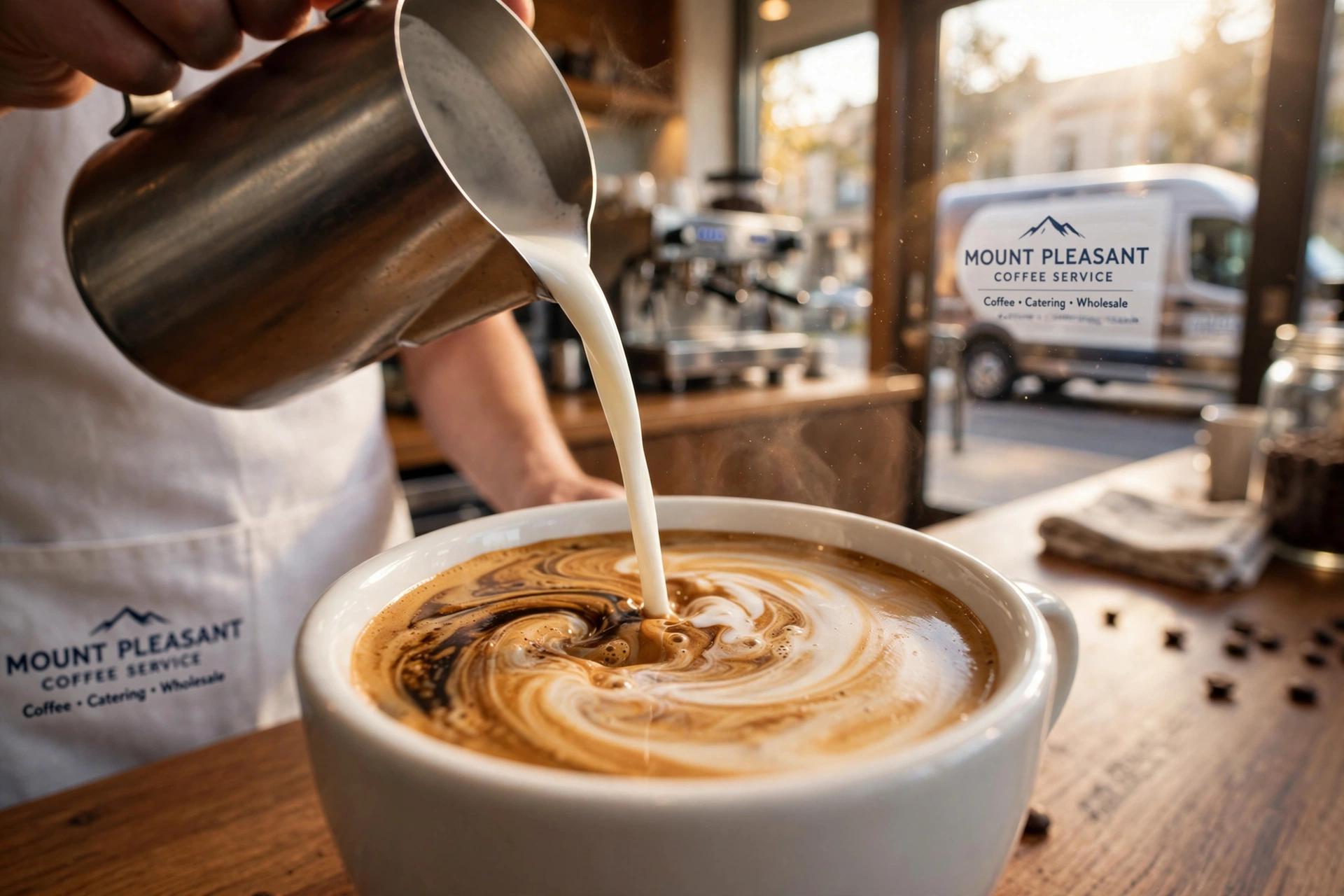
For a hotel lobby, a super-automatic machine is almost always the best choice. Lobbies have high volatility in traffic and varying levels of staff expertise. A super-automatic ensures that whether the front desk clerk or a housekeeping manager is making the coffee, the quality remains identical. It eliminates the need for specialized barista training and minimizes the mess associated with portafilters and loose grounds. For a seamless integration, we recommend looking into Sensa Coffee Service in Mount Pleasant SC: Complete Guide for local implementation.
How do I know if I need a semi-automatic or a fully automatic machine?
The decision rests on your "Labor Strategy." If you intend to hire professional baristas as a core part of your brand identity, go semi-automatic. This allows for the "theater" of coffee making and total control over the extraction. However, if coffee is a secondary offering to your primary business (like in a clinic or restaurant), a fully automatic machine is superior. It reduces the risk of "bad cups" and allows your staff to focus on their primary duties without sacrificing the quality of the beverage.
What is the difference between a heat exchange and a dual boiler?
A heat exchange machine uses one large boiler to create steam, and the brew water is heated by passing through a pipe inside that boiler. It's cheaper and faster to heat up, but the temperature can be unstable. A dual boiler system has two completely separate boilers. This means you can steam milk and brew espresso at the same time without any interference in temperature. In my experience, if you are serving specialty coffee, a dual boiler is non-negotiable to avoid the "sour" or "bitter" taste caused by temperature swings.
How often do commercial espresso machines need maintenance?
Basic maintenance, such as backflushing and cleaning group heads, must happen daily. However, professional deep-cleaning and calibration should occur every 3 to 6 months. Neglecting this leads to calcium buildup (scale), which is the leading cause of boiler failure. According to FDA guidelines on food safety, maintaining clean equipment is a critical part of preventing contamination. This is why a managed service like Busy Bean Coffee is so valuable; we handle the maintenance so you don't have to remember the schedule.
Can a small business afford a professional espresso machine?
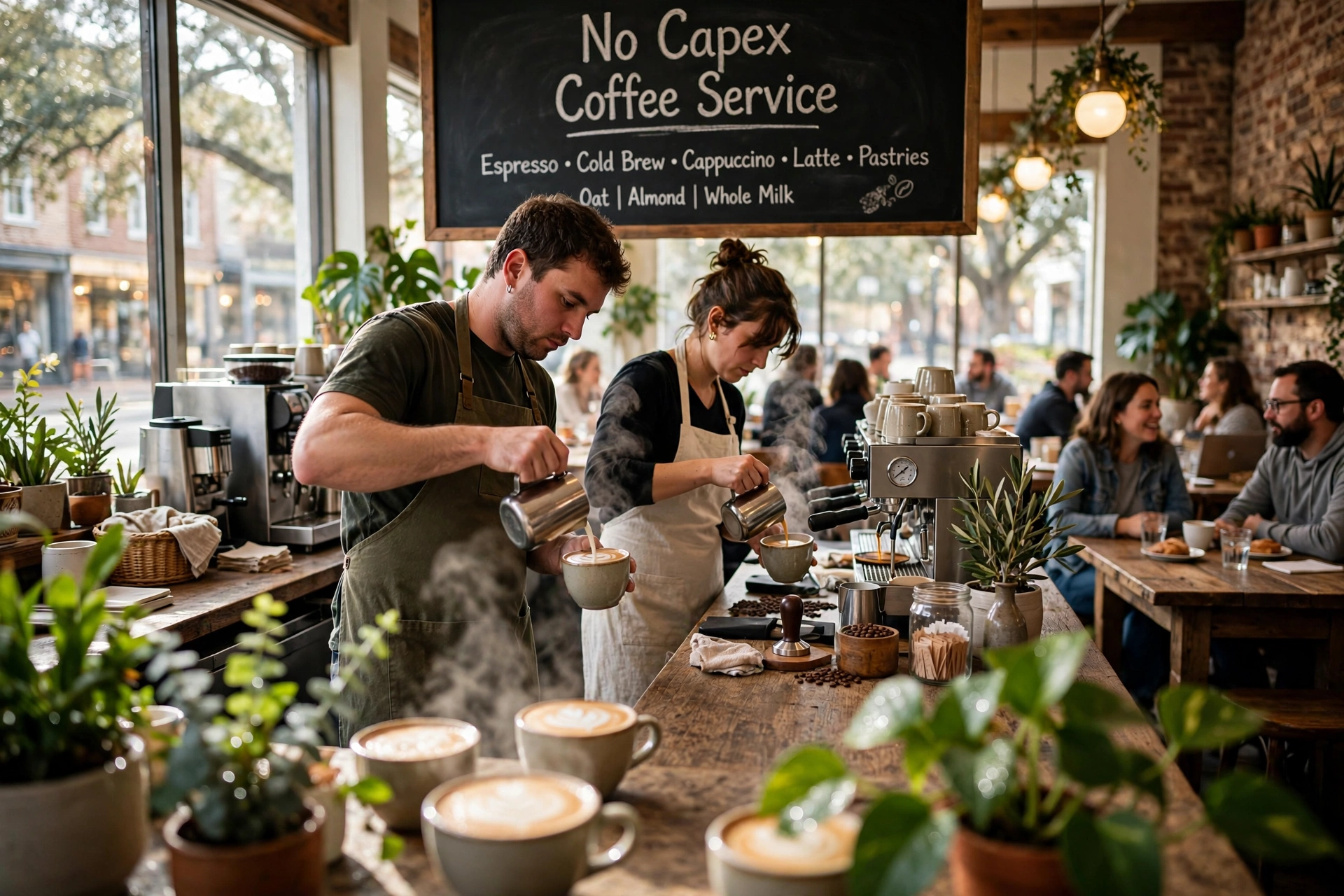
Yes, but the "purchase" model is often the wrong way to do it. Spending $10,000 upfront on a machine creates a massive capital hole in your balance sheet. A more sustainable approach is a managed membership. By paying a predictable monthly fee, you get professional-grade SENSA equipment, installation, and maintenance. This shifts the cost from a Capital Expenditure (CAPEX) to an Operational Expenditure (OPEX), which is much healthier for a growing business, especially for those utilizing Sensa Coffee Service in Jacksonville, FL.
Final Thoughts on Commercial Espresso Machines
Choosing the right commercial espresso machines is not about finding the most expensive piece of steel; it is about matching the technology to your human capital and your volume. Whether you are running a high-end boutique in a tourist hub or a quiet medical office, the goal is the same: a consistent, high-quality cup of coffee that enhances your customer's experience without breaking your operational budget.
If you are tired of the stress of equipment failure and the headache of barista training, it's time to move toward a managed solution. At Busy Bean Coffee, we provide the equipment, the beans, and the expertise to ensure your coffee program is a profit center, not a liability.
Stop guessing and start brewing. Visit www.busybeancoffee.com to discover how our all-inclusive managed coffee membership can transform your business. For those in the Carolinas or Georgia, exploring our Sensa Coffee Service in Greenville SC: Complete Guide is a great first step toward professionalizing your beverage program.
Free Coffee Pairing Guide & Specialty Roast Cheat Sheet
Unlock the secrets of perfect brewing ratios, water temperatures, and specialty roast profiles. Download the guide.