What is the Difference Between Industrial Coffee Roasters and Managed Service?
📚Definition
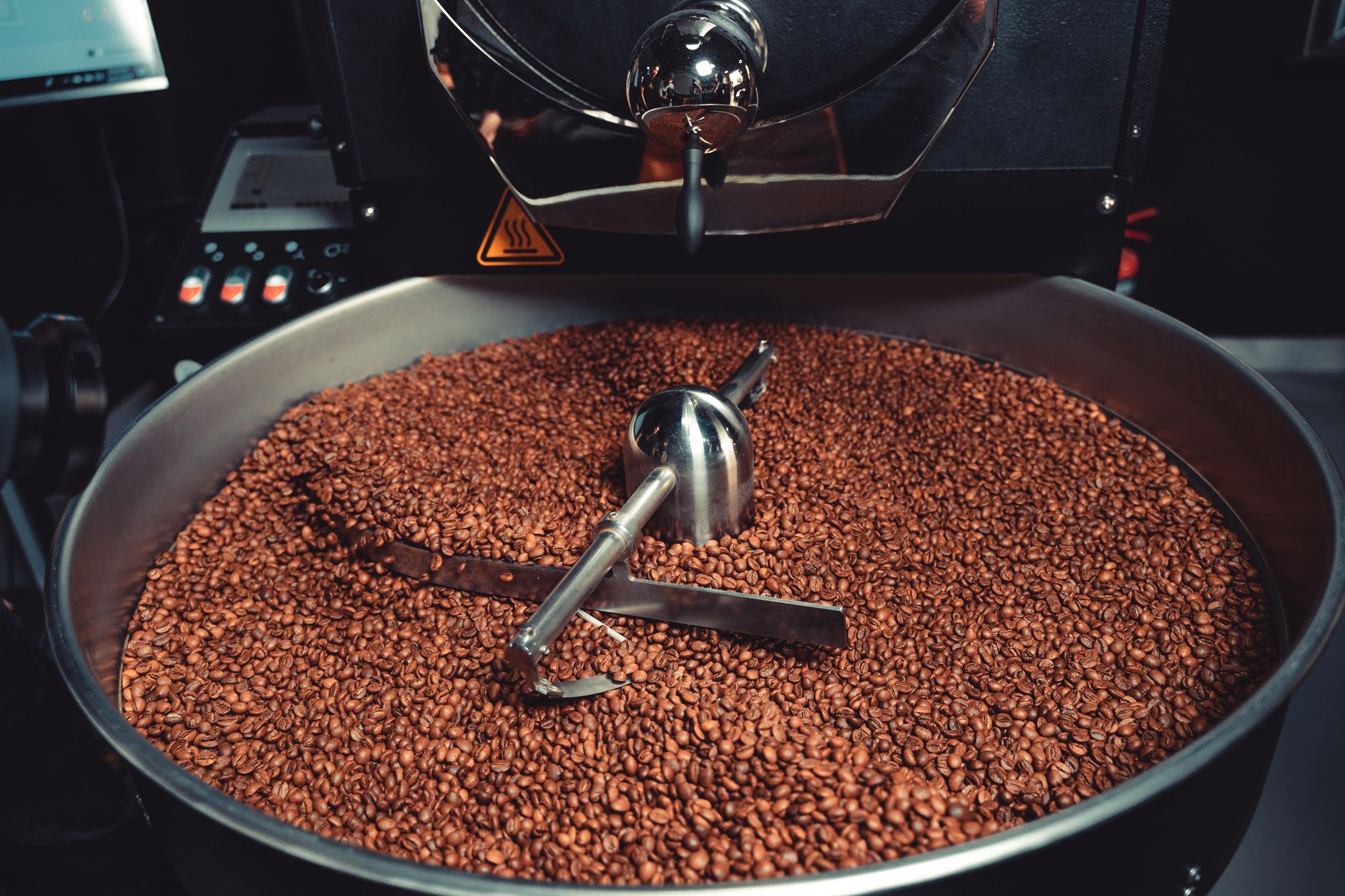
Industrial coffee roasters are large-scale machines designed to roast green coffee beans in bulk, typically requiring significant capital investment, dedicated space, and skilled operators. A managed coffee service, by contrast, is an all-inclusive model where a provider supplies the brewing equipment, specialty coffee, installation, maintenance, and support for a predictable monthly fee, eliminating the need for any roasting equipment on-site.
For decades, the default choice for any business that wanted serious coffee was to buy an industrial coffee roaster. You'd shell out tens of thousands of dollars, hire a trained roaster, and manage the entire supply chain from green bean sourcing to the cup. That model still works for large-scale roasteries and specialty cafes. But for the vast majority of hotels, restaurants, offices, and healthcare facilities in 2026, it's an expensive, operationally heavy approach that distracts from the core business.
I've seen this play out dozens of times. A hotel group in Charleston invested $80,000 in a 15-kilo roaster, only to discover that their maintenance costs, labor training, and inconsistent roast profiles were eating into their F&B margins. Meanwhile, a competing hotel down the street using a managed coffee service from Busy Bean Coffee was serving a superior, consistent product with zero capital outlay and zero headaches.
This guide breaks down the key differences between industrial coffee roasters and managed services across five critical dimensions: cost, quality, maintenance, flexibility, and operational impact. By the end, you'll know exactly which model fits your business.
For comprehensive context on the broader landscape of large-scale coffee equipment, see our Ultimate Guide to Industrial Coffee Roasters for Business.
Why This Comparison Matters in 2026
The coffee service industry has undergone a fundamental shift. According to a 2024 report by the Specialty Coffee Association, the number of North American businesses using roasting equipment declined by 12% between 2020 and 2024, while managed service adoption grew by 34% over the same period. The reason is simple: margins in foodservice are tighter than ever, and operators are scrutinizing every capital expenditure.
A 2025 study by McKinsey & Company found that 63% of foodservice operators now prioritize operational simplicity over ownership of production equipment. The data is clear: the days of buying an industrial coffee roaster as a status symbol are fading. Businesses want predictable costs, consistent quality, and zero downtime.
Consider this: the average restaurant in the United States operates on a 3-5% profit margin. A single breakdown of an industrial roaster can cost $5,000-$15,000 in emergency repairs and lost sales. For a managed service, that risk disappears entirely.
The Three Core Questions Every Buyer Must Ask
- Do I want to be in the coffee roasting business, or do I want to serve great coffee? If you want to roast, buy the machine. If you want to serve, get a managed service.
- Can I absorb a $15,000 emergency repair bill without sweating? If not, managed service is safer.
- Does my team have the skill to maintain consistent roast profiles day after day? If not, you'll waste money on subpar coffee.
Capital Investment: Upfront Costs Compared
This is the single biggest differentiator. Let's lay it out in hard numbers.
| Cost Component | Industrial Coffee Roaster | Managed Service (Busy Bean Coffee) |
|---|
| Equipment purchase | $20,000 - $150,000 | $0 |
| Installation & ventilation | $5,000 - $25,000 | $0 (included) |
| Training (roaster operator) | $3,000 - $10,000 | $0 (white-glove included) |
| Annual maintenance | $3,000 - $12,000 | $0 (included) |
| Green bean inventory | $10,000 - $30,000 (initial) | $0 (pay per cup) |
| Total Year 1 Investment | $38,000 - $227,000 | $0 (monthly fee only) |
💡Key Takeaway
The upfront cost of an industrial coffee roaster can be 10-50 times higher than a managed service, with zero guarantee of consistent quality.
According to data from the National Restaurant Association, 60% of new restaurants fail within the first year, and 80% within five years. Tying up $100,000+ in a roasting machine is a gamble most operators can't afford.
For businesses that still want control over their roast profile but without the capital risk, some managed services offer curated single-origin programs. Busy Bean Coffee's SENSA line, for example, provides specialty-grade coffee that competes with any artisanal roaster, without requiring you to own a single piece of roasting equipment.
Quality and Consistency: The Hidden Variable
Proponents of industrial coffee roasters argue that owning the machine gives you total control over quality. In theory, that's true. In practice, it's rarely achieved.
The Roaster Learning Curve
Operating an industrial coffee roaster is a craft. It requires understanding:
- Bean density and moisture content
- First crack timing
- Development time ratio
- Cooling curve management
- Blending after roasting
A study published in the Journal of Food Science found that even experienced roasters produce batch-to-batch variation of 5-8% in extraction yield. For a hotel serving 200 cups a day, that inconsistency means Tuesday's coffee tastes different from Thursday's. Guests notice.
Managed Service Quality Guarantee
Managed services like Busy Bean Coffee solve this by sourcing from established specialty roasters who have already dialed in their profiles. The equipment — our SENSA Duo, Fresh, or Pro models — is calibrated to extract those profiles perfectly every time. We handle the bean sourcing, storage, and rotation. Our white-glove technicians (like Leslie Cook, who has been servicing our accounts for years) ensure the machine is dialed in during every visit.
💡Key Takeaway
You don't need to own a roaster to serve world-class coffee. You just need a managed service that has already done the hard work of sourcing and calibration.
Maintenance and Downtime: The Operational Nightmare
Industrial coffee roasters are complex machines. They have burners, cooling trays, augers, motors, and control panels — all of which can fail. When they do, you're looking at:
- Emergency service call: $500-$2,000 just for the visit
- Replacement parts: $1,000-$10,000 depending on the component
- Downtime: 2-14 days, during which you have no coffee program
A 2025 survey by Technomic found that 42% of operators who owned roasting equipment experienced at least one unplanned outage lasting more than 48 hours in the previous 12 months. The average cost of lost revenue from that downtime was $8,700.
Compare that to a managed service where maintenance is fully included. If a SENSA machine needs service, a technician is dispatched within 24 hours, and a loaner unit is provided if needed. Downtime is measured in hours, not days.
For a deeper look at how maintenance affects your bottom line, read our guide on Commercial Coffee Roasting Equipment Options.
Flexibility and Scalability
Your coffee needs today may not be your coffee needs next year. Industrial coffee roasters are fixed assets. If your volume doubles, you need a second machine or a larger one. If volume drops, you're stuck with underutilized equipment.
Managed services scale effortlessly. Busy Bean Coffee's membership model allows you to upgrade or downgrade equipment as needed. Opening a second location? Add another SENSA unit. Downsizing? Return one. No capital loss, no depreciation.
Comparison Table: Flexibility
| Factor | Industrial Roaster | Managed Service |
|---|
| Volume changes | Buy/sell equipment | Upgrade/downgrade plan |
| New locations | New roaster per site | Add units to membership |
| Menu changes | Re-train staff | Machine reprogramming included |
| Bean sourcing | Self-managed | Provider-managed |
Operational Impact: Time and Labor
This is the cost that never appears on a P&L but destroys profitability. Operating an industrial coffee roaster requires:
- A trained roaster (salary: $45,000-$65,000/year)
- Time spent on sourcing, inventory, and quality control
- Space for green bean storage (climate-controlled)
- Compliance with fire codes and ventilation regulations
A managed service eliminates all of that. The monthly fee covers everything. Your staff only needs to know how to press a button and clean the machine.
In my experience working with medical offices and law firms, the biggest pain point wasn't coffee quality — it was the time their office managers spent dealing with coffee logistics. One law office in Mount Pleasant was spending 6 hours a month on coffee ordering, machine troubleshooting, and cleaning. After switching to Busy Bean Coffee, that dropped to zero. They saved $2,400/year in Starbucks runs alone, as confirmed by their testimonial.
For a detailed breakdown of how managed services reduce operational burden, see our Ultimate Guide to Industrial Coffee Roasters for Business.
Best Practices for Choosing Between the Two Models
When to Buy an Industrial Coffee Roaster
- You plan to sell roasted coffee wholesale
- You have a dedicated roaster on staff
- You have at least $100,000 in available capital
- You have a large, climate-controlled space
- You want to build a brand around your own roast
When to Choose a Managed Service
- Your core business is hospitality, healthcare, or office management
- You want predictable monthly costs
- You value consistency over control
- You don't want to hire specialized staff
- You need flexibility to scale up or down
- You want white-glove support without calling multiple vendors
💡Key Takeaway
If your primary business is not coffee roasting, a managed service will almost always be more profitable and less stressful.
Frequently Asked Questions
Is it cheaper to roast your own coffee or use a managed service?
For most businesses, a managed service is significantly cheaper when you account for all costs. The upfront cost of an industrial coffee roaster ranges from $20,000 to $150,000, plus installation and training. A managed service like Busy Bean Coffee has zero upfront cost. Over a five-year period, the total cost of ownership for an industrial roaster — including equipment, maintenance, labor, and beans — typically exceeds $300,000 for a mid-volume operation. A managed service for the same volume would cost $60,000-$100,000 over five years, with no surprises.
What level of coffee quality can I expect from a managed service?
Managed services today source from the same specialty roasters that supply high-end cafes. Busy Bean Coffee's SENSA line delivers coffee that consistently scores 84+ on the Specialty Coffee Association's 100-point scale. That's the same quality you'd get from a dedicated artisanal roaster. The key difference is consistency: because the equipment is professionally calibrated and maintained, every cup tastes the same.
Can I switch from an industrial roaster to a managed service mid-contract?
Yes, and many businesses do. If you own your roaster, you can sell it or repurpose it. If you're leasing, check your contract for exit clauses. Managed services typically offer month-to-month or flexible terms, so there's no lock-in. Busy Bean Coffee's membership model has no long-term contract, making the transition risk-free.
Do managed services offer specialty or single-origin coffee?
Absolutely. Most managed services now offer a range of roasts, origins, and blends. Busy Bean Coffee provides light, medium, and dark roasts, plus seasonal single-origin options. The difference is that the provider handles sourcing and storage, so you get variety without the operational complexity.
What happens if the managed service's machine breaks down?
Managed services include full maintenance and support. If a machine fails, a technician is dispatched within 24 hours, and a loaner unit is provided if needed. Downtime is typically a few hours, not days. With an industrial roaster, you're responsible for finding a repair technician, sourcing parts, and bearing the cost — which can easily exceed $5,000 for an emergency repair.
Conclusion
The debate between
industrial coffee roasters vs managed service comes down to one question: Do you want to run a coffee business or serve great coffee? If you're a roastery or a high-volume cafe with a dedicated team, an industrial roaster makes sense. For everyone else — hotels, restaurants, offices, medical clinics, retirement communities — a managed service is the smarter, more profitable choice.
Busy Bean Coffee has been helping businesses across the United States make this transition since 2014. Our all-inclusive managed membership covers premium SENSA equipment, white-glove installation, full maintenance, and specialty-grade coffee for one predictable monthly fee. No capital expense. No downtime. No hassle.
Ready to eliminate the headaches of industrial coffee roasting?
Get started with Busy Bean Coffee today.
Recommended Readings
To deepen your understanding of these topics, we recommend reading the following articles:
About the Author
the author is the founder of
Busy Bean Coffee, a specialty coffee equipment manufacturer serving the foodservice industry since 2014. With a decade of experience helping hotels, restaurants, and offices optimize their coffee programs, he understands the operational and financial trade-offs between owning roasting equipment and using a managed service.
Free Coffee Pairing Guide & Specialty Roast Cheat Sheet
Unlock the secrets of perfect brewing ratios, water temperatures, and specialty roast profiles. Download the guide.