📖This article is part of the complete guide to Coffee Solutions for Restaurants.
In my experience working with high-volume bistros in Mount Pleasant, South Carolina, the biggest missed opportunity isn't the coffee quality itself, but the gap between the kitchen and the beverage program. I've seen restaurant owners invest $20,000 in a top-tier espresso machine only to serve a generic roast with a complex dessert, effectively canceling out the flavor profiles of both. When the acidity of a Coffea arabica bean clashes with a delicate pastry, the guest doesn't blame the bean; they simply don't order a second cup.
For a comprehensive overview of integrating these systems into your business, explore our guide on coffee solutions for restaurants.
What is a Coffee Food Pairings Guide for Restaurants?
📚
Definition
Coffee food pairing is the culinary practice of matching the flavor notes, acidity, and body of a specific coffee roast with the complementary or contrasting flavors of a food dish to enhance the overall sensory experience.
A coffee food pairings guide restaurant owners utilize is essentially a sensory map. It isn't just about 'coffee and cake'; it is about understanding the chemical interaction between lipids in food and the organic acids in the coffee bean. When you pair a bright, citrusy Ethiopian Yirgacheffe with a lemon tart, you are utilizing a complementary pairing. When you pair a heavy, chocolatey Sumatran roast with a tart raspberry cheesecake, you are creating a contrast pairing that cleanses the palate.
To implement this successfully, a restaurant must analyze the 'tasting notes' of their specialty coffee. These notes, ranging from berry and floral to nutty and cocoa, are not additives but natural characteristics of the terroir and roasting process. By aligning these notes with the ingredients in the kitchen, the coffee ceases to be a mere beverage and becomes a curated course of the meal. In 2026, guests are increasingly seeking 'curated experiences' over standard menus, making this level of detail a requirement for any establishment aiming for a premium position in the market.

Why Does Strategic Pairing Matter for Your Business?
Strategic pairing is a direct lever for increasing the Average Order Value (AOV). When a server can confidently suggest a specific roast to accompany a dessert, the perceived value of the experience rises, allowing for premium pricing. According to the National Coffee Association USA (NCA), coffee consumption patterns are shifting toward specialty blends, and consumers are more likely to spend more when the beverage is presented as a complementary component of the meal rather than a standalone afterthought.
Beyond the financials, pairing improves the perceived quality of the food. A well-matched coffee can act as a palate cleanser, stripping away excess fats from a rich meal and preparing the taste buds for the next bite. This synergy reduces the 'flavor fatigue' that often occurs during multi-course dinners. If you are currently focused on how much restaurants make selling specialty coffee, you will find that the margin on a 'Pairing Flight' (coffee + small bite) is significantly higher than on coffee alone.
Furthermore, it establishes your brand as a culinary authority. In the competitive landscape of Mount Pleasant, SC, where diners have access to numerous high-end options, the ability to discuss the 'notes of stone fruit' in a roast and how they balance the 'saltiness of a salted caramel tart' separates a professional establishment from a generic eatery. This level of expertise drives guest loyalty and increases the likelihood of social media mentions, which serve as free, high-trust organic marketing.
How to Implement Coffee and Food Pairings in Your Menu
Implementing a pairing program requires a systematic approach to flavor mapping. The core approach is to categorize your coffee offerings by their primary sensory characteristics: acidity, body, and roast level. Once these are mapped, you cross-reference them with your menu's flavor profiles (sweet, salty, bitter, acidic, and umami).
-
Analyze the Roast Profile: Start with the bean. A light roast usually retains more acidity and floral notes, making it ideal for breakfast items or fruit-based desserts. A dark roast has more bitterness and a heavier body, which can stand up to rich, creamy, or salty foods.
-
Identify the Dominant Food Note: Determine if the dish is dominated by fat (cream/butter), acid (citrus/vinegar), or sweetness. For example, if you have a rich chocolate lava cake, you need a coffee with enough body and a slight bitterness to cut through the sugar and fat.
-
Apply the Pairing Rules:
- Complementary: Match like with like (e.g. blueberry coffee with a blueberry scone).
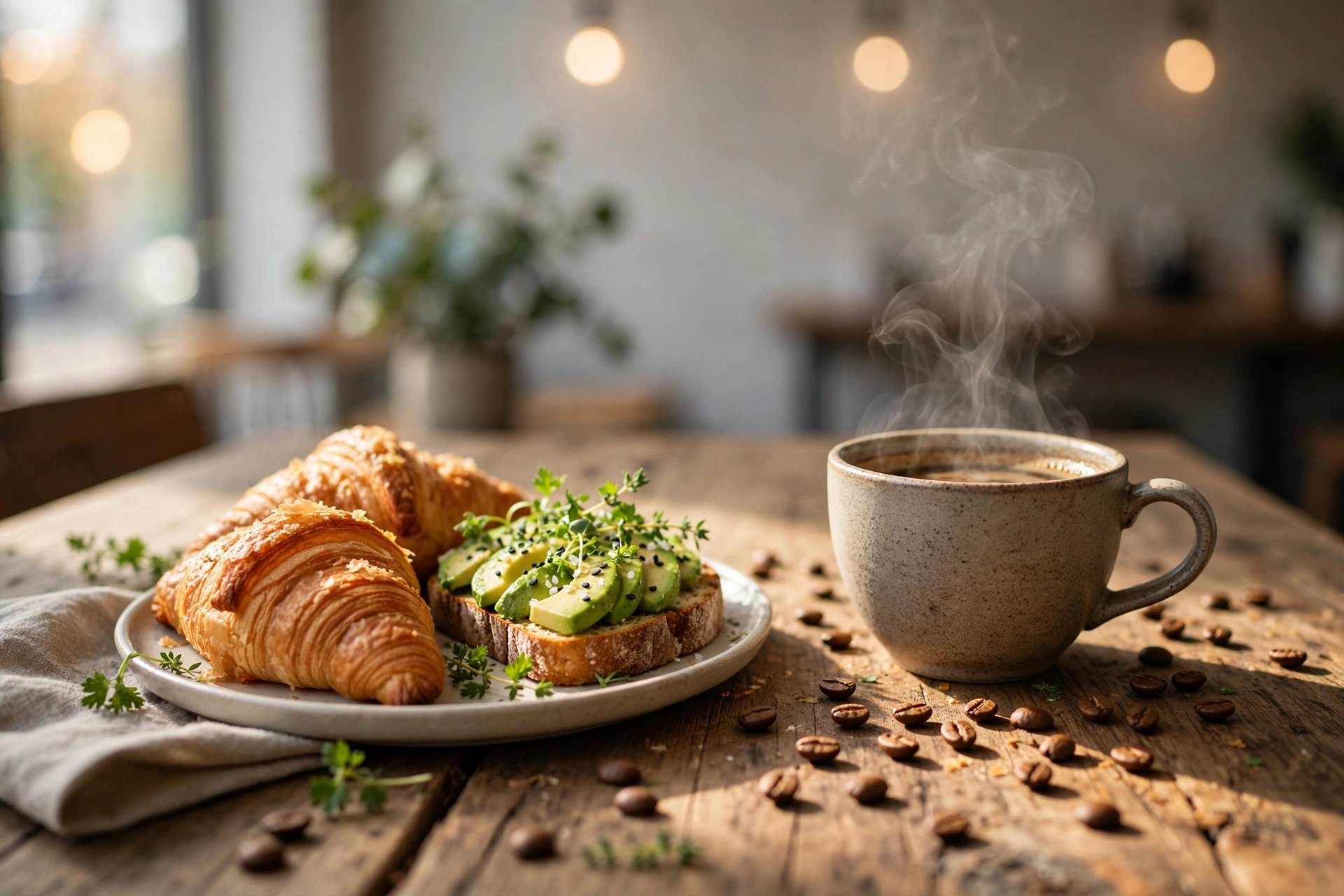
- Contrasting: Use opposites to create balance (e.g. a high-acidity coffee to balance a buttery croissant).
- Bridging: Find a common ingredient that appears in both the coffee notes and the food (e.g. a nutty coffee paired with a dish containing toasted almonds).
-
Staff Training: Your baristas and servers must be the ambassadors of this program. If they cannot explain why the Sumatran roast pairs with the cheesecake, the guest won't buy into the concept. This ties directly into the need for proper training restaurant staff in specialty coffee, ensuring that the terminology used at the table matches the quality of the brew.
-
Menu Integration: Do not hide these pairings in a separate section. Integrate them directly into the dessert menu. Instead of listing 'Coffee,' list 'Recommended Pairing: Ethiopian Yirgacheffe for its floral notes that elevate the lemon zest.'
Comparison of Pairing Approaches
Not all pairing strategies are created equal. Many restaurants settle for 'good enough,' but the difference in guest experience and revenue is stark.
| Feature | Traditional Approach | Generic AI/Low-Cost Approach | Busy Bean Professional Approach |
|---|---|---|---|
| Pairing Logic | Based on habit (e.g. 'Coffee goes with cake') | Based on generic internet lists | Based on Q-Grader sensory analysis |
| Bean Selection | One generic house roast for all | Randomly selected 'specialty' beans | Curated roasts mapped to specific menu items |
| Staff Knowledge | Low; servers just take the order | Scripted; sounds robotic and unnatural | Expert; consultants explain flavor chemistry |
| Guest Experience | Expected / Mundane | Confusing / Inconsistent | Elevated / Memorable |
| Revenue Impact | Flat; coffee is a commodity | Marginal; guests are skeptical | High; creates a premium 'experience' upsell |

Common Mistakes to Avoid in Coffee Pairing
One of the most frequent mistakes I see, and one I made early in my career, is overloading the palate. This happens when a restaurant pairs a highly complex, funky fermented coffee with an equally complex, multi-layered dessert. When both the coffee and the food are fighting for attention, the result is sensory overload, and the guest often finds the taste 'confusing' rather than 'complex.' The rule is: one should be the star, and the other should be the supporting actor.
Another critical error is ignoring the temperature. A scorching hot espresso can burn the taste buds, making the subtle nuances of a delicate pastry disappear. We recommend serving the coffee at a temperature that allows the flavor notes to be perceptible, typically between 155°F and 175°F. If you're utilizing an espresso bar setup for restaurants, ensure your equipment is calibrated to prevent over-extraction, which creates a burnt taste that ruins any pairing.
Finally, avoid using 'one-size-fits-all' coffee. Using a dark roast for every pairing is the quickest way to alienate specialty coffee enthusiasts. A dark roast will overpower a lemon tart or a fruit salad, leaving a bitter aftertaste that lingers. Instead, rotate your beans based on the seasonal menu. If your spring menu features light berries and creams, switch to a light-to-medium roast with higher acidity.
Deep Dive: The Chemistry of the Perfect Pair
To truly master coffee food pairings, one must understand the role of lipids and acidity. Lipids (fats) coat the tongue, which can mute the perception of acidity. This is why a creamy cheesecake feels 'heavy' until you sip a bright, acidic coffee; the acid cuts through the fat, refreshing the palate and making the next bite of cheesecake taste as vibrant as the first. This is essentially the same logic used in wine pairing, where a high-acid Riesling is paired with fatty pork.
According to the Specialty Coffee Association (SCA), the quality of the coffee, defined by its score and lack of defects, is the foundation of any successful pairing. If the coffee has 'off-flavors' due to poor storage or incorrect grinding, no amount of pairing logic can save the experience. This is why using a managed service like Busy Bean Coffee is an advantage; we ensure the freshness and consistency of the roast, meaning your 'citrus notes' are actually present and not masked by stale beans.
💡
Key Takeaway
The goal of pairing is balance. If the food is heavy, the coffee should be acidic or bold. If the food is light, the coffee should be floral or tea-like.
For those looking to further integrate these strategies into their overall business model, we suggest reviewing our resources on after dinner coffee service to boost revenue.
Frequently Asked Questions
Which coffee roast is best for savory foods?
For savory dishes, particularly those with salty or umami profiles (like a gourmet breakfast sandwich or a charcuterie board), a medium-to-dark roast is generally superior. The bolder, more caramelized notes of a darker roast can stand up to the salt and protein without being drowned out. Specifically, beans from regions like Sumatra or Brazil often provide a nutty, chocolatey base that complements savory elements. In my experience, a natural-process coffee with a heavier body works best here, as it adds a richness that mimics the effect of a sauce or condiment.
How do I handle pairings for guests with dietary restrictions?
Pairing for dietary restrictions requires focusing on the 'flavor profile' rather than the ingredient. For a vegan dessert using coconut cream, you want a coffee that complements the coconut's natural sweetness and creaminess. A medium-roast Ethiopian coffee with blueberry notes creates a wonderful contrast. The key is to train your staff to identify the 'dominant flavor' of the alternative dish. Whether the dish is gluten-free or dairy-free, the chemistry of acidity vs. fat remains the same. Focus on the sensory experience and the balance of the palate.
Can I use the same coffee for all my pairings to save on costs?
While it is tempting to use one 'house roast' for simplicity, doing so severely limits your revenue potential and guest experience. A single roast cannot be both floral enough for a lemon tart and bold enough for a chocolate brownie. By offering at least two distinct profiles, a bright, acidic option and a rich, bold option, you can cover 90% of your menu's needs. This versatility allows you to create 'pairing flights,' which can be sold at a premium. Investing in a managed service that provides a variety of high-quality roasts is far more profitable than the cost-saving of a single, mediocre bean.
What is the best way to present coffee pairings on a menu?
The most effective method is 'suggestive integration.' Instead of a separate 'Coffee Menu,' place a small 'Perfect Pairing' note under each dessert or brunch item. For example, under a 'Ricotta Pancake' item, add: 'Pair with our Medium Roast Colombia for a balanced, nutty finish.' This removes the decision fatigue from the guest and positions the server as an expert. Additionally, using descriptive language, such as 'stone fruit,' 'cocoa nibs,' or 'jasmine', instead of just 'light' or 'dark' roast, increases the perceived value and encourages the guest to try the pairing.
How does the grind size affect the pairing experience?
Grind size is fundamental to the extraction of the flavor notes you are trying to pair. If the grind is too coarse, you get under-extraction, resulting in a sour, thin coffee that lacks the body to stand up to rich foods. If it's too fine, you get over-extraction, leading to bitterness that can clash with sweet desserts. To maintain the integrity of your pairings, you must use professional-grade grinders and calibrate them daily. This is where an espresso bar setup for restaurants becomes vital; consistent extraction ensures that the 'chocolate' note you promised the guest is actually what they taste in the cup.
Recommended Readings
To deepen your understanding of these topics, we recommend reading the following articles:
- Coffee Equipment for Restaurant Kitchens
- Cold Brew and Iced Coffee Options for Restaurant Menus
- How Restaurants Are Differentiating with Specialty Coffee Programs
- Espresso Bar Setup for Restaurants
Conclusion
Mastering the art of coffee and food pairings is not just about culinary flair; it is a strategic business decision. By aligning the sensory profiles of your specialty coffee with your menu, you transform a commodity beverage into a luxury experience that justifies higher price points and increases guest loyalty. In a market like Mount Pleasant, SC, the difference between a 'good' restaurant and a 'destination' restaurant often lies in these small, curated details.
Whether you are looking to refine your current offerings or are starting from scratch, the foundation is always the quality of the bean and the consistency of the brew. If you are struggling with inconsistent quality or an overwhelming equipment setup, it may be time to move toward a managed solution. For more information on how to streamline your operations and elevate your beverage program, check out our comprehensive guide on Coffee Solutions for Restaurants.
Ready to upgrade your guest experience with premium equipment and curated roasts? Visit Busy Bean Coffee Blog to explore our all-inclusive managed coffee memberships.
Ready to Upgrade Your Business Coffee?
Café-quality coffee, zero maintenance headaches, and one predictable monthly price. Let's build your custom coffee program.
Free Coffee Pairing Guide & Specialty Roast Cheat Sheet
Unlock the secrets of perfect brewing ratios, water temperatures, and specialty roast profiles. Download the guide.