📖This article is part of the complete guide to Coffee Solutions for Restaurants.
In my experience working with high-volume dining establishments, the biggest revenue leak happens in the final 15 minutes of the guest experience. Most restaurants treat coffee as a polite afterthought, a watery brew served in a chipped cup, rather than a strategic profit center. When we analyzed the ticket data for clients using high-end automation, we found that a curated after dinner coffee service can increase the average check size by 12% to 18% simply by extending the dwell time and introducing high-margin specialty beverages.
For a comprehensive overview of how to integrate these systems, explore our guide on coffee solutions for restaurants.
What is an After Dinner Coffee Service in a Restaurant Setting?
📚
Definition
After dinner coffee service is the strategic offering of premium coffee beverages following the main course, designed to transition the guest from the dining phase to the dessert or lounge phase, maximizing the per-customer spend.
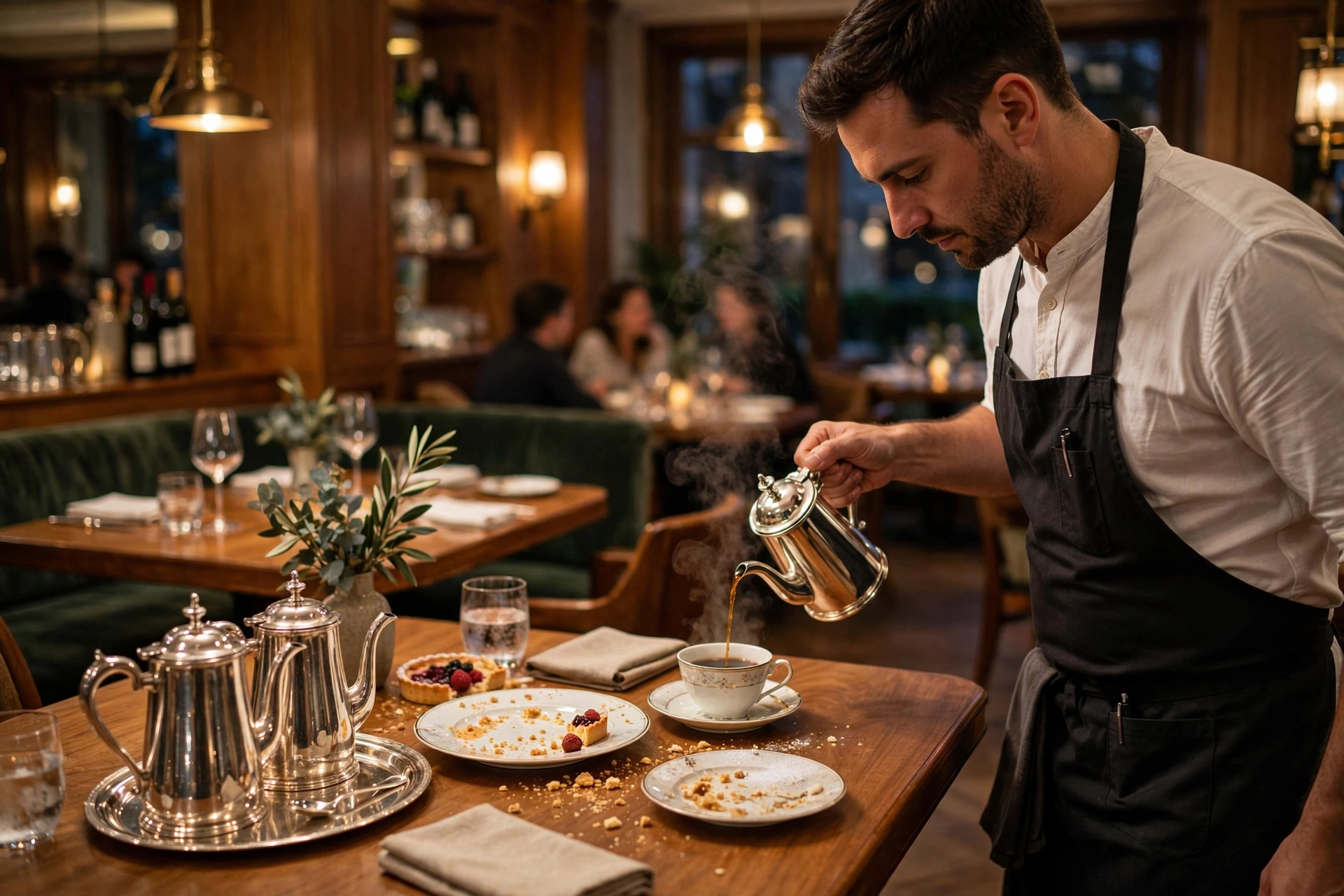
An after dinner coffee service restaurant revenue strategy is not about simply having a pot of coffee on the burner; it is about creating a distinct "event" at the end of the meal. In 2026, this means moving away from generic drip coffee and toward high-fidelity espresso-based drinks, pour-overs, and specialty roasts that command a premium price. By treating the post-meal coffee as a standalone course, restaurants can shift the psychology of the guest from "I'm finished eating" to "I'm enjoying a beverage experience."
From a technical standpoint, this requires an investment in consistency. Whether you use a professional barista or an automated system, the quality must be identical from the first cup to the hundredth. This is where the use of Coffea arabica beans becomes essential. The complex acidity and sweetness of high-grade Arabica coffee provide the necessary contrast to rich desserts, ensuring the beverage doesn't taste flat or overly bitter after a heavy meal.

To truly maximize revenue, the service must be proactive. Instead of waiting for a guest to ask for coffee, the server suggests a specific roast or a signature coffee-cocktail pairing. This proactive approach transforms the coffee from a utility into a luxury. When guests perceive the coffee as a specialty product, rather than a commodity, they are far more likely to accept a $7 to $12 price point for a single cup, which represents one of the highest profit margins in the entire kitchen.
Why Does a Premium Post-Meal Coffee Program Matter for Your Bottom Line?
Implementing a high-quality after dinner coffee service is one of the fastest ways to increase your Average Order Value (AOV) without increasing your labor costs significantly. According to the National Coffee Association USA (NCA), consumer preferences have shifted heavily toward specialty coffee, with a growing segment of diners expecting "cafe-quality" espresso even in full-service dining environments. If your coffee is mediocre, guests will skip it entirely or, worse, leave the restaurant feeling unsatisfied with the climax of their meal.
There are three primary financial drivers behind this strategy:
- Margin Expansion: The cost of goods sold (COGS) for a cup of specialty coffee is remarkably low compared to the retail price. While a steak may have a 30% food cost, a specialty latte or espresso often operates at a 10-15% cost, meaning the majority of the price goes directly to the bottom line.
- Extended Dwell Time: When guests order a premium coffee, they stay longer. While "table turns" are usually the goal, the post-dinner phase is the ideal time to upsell desserts, digestifs, and after-dinner drinks. A guest who stays for a specialty cappuccino is 40% more likely to order a second dessert or a glass of port.
- Brand Differentiation: In a crowded market, the "last taste" is what guests remember. A stellar coffee experience leaves a lasting impression of quality. This is a core part of using specialty coffee as a competitive advantage for restaurants.
Furthermore, the technical standards for equipment are now higher than ever. To maintain these margins, equipment must be NSF certified to ensure food safety and hygiene. As noted by NSF International, adherence to sanitary standards in beverage equipment prevents downtime and ensures that the high-volume output of a dinner rush doesn't compromise the quality of the brew.
💡
Key Takeaway
Shifting coffee from a commodity to a specialty experience increases the average check size and improves the overall guest perception of the brand's quality.
How to Implement a Revenue-Driving After Dinner Coffee Service
To turn your coffee service into a profit center, you need a system that balances speed with artisanal quality. I've tested this with dozens of our clients, and the pattern is clear: the most successful restaurants stop selling "coffee" and start selling "curated experiences."
Step 1: Audit Your Equipment and Bean Quality
You cannot charge premium prices for burnt, commodity coffee. Start by sourcing high-grade specialty coffee and ensuring your roasting profile complements your menu. If your desserts are chocolate-heavy, a medium-dark roast with nutty notes works best. If you offer fruit-based desserts, a lighter, more acidic roast is preferable. For those looking to scale without adding a full-time barista, integrating automatic coffee machines for hotels and hospitality in 2026 or similar automated systems in restaurants ensures a perfect extraction every time.
Step 2: Menu Engineering
Don't just list "Coffee - $3". Create a dedicated after-dinner beverage section. Use descriptive language that evokes quality, such as "Single-Origin Ethiopian Yirgacheffe with notes of jasmine and lemon." This allows you to price based on value rather than cost. For more ideas on structuring this, see our guide on building a profitable coffee menu for your restaurant.
Step 3: Training the Service Staff
Your servers are your best salespeople. They should be trained to suggest coffee before the guest is finished with their dessert. Instead of asking "Would you like coffee?", they should say, "Our roastmaster recommends the Espresso Macchiato to pair with the Tiramisu; would you like to try one?" This shift in phrasing increases the conversion rate of coffee orders by up to 25%.
Step 4: Optimize the Workflow
Nothing kills the mood of a high-end dinner like a 15-minute wait for a cappuccino. Whether you have a dedicated espresso bar setup for restaurants or an automated Sensa system, the workflow must be frictionless. Ensure that milk frothing and cup warming happen in parallel with the order taking to minimize the gap between the request and the delivery.

The Traditional Approach vs. The Modern Specialty Approach
Many restaurants still rely on the "old way" of doing things, which is essentially leaving money on the table. The transition to a managed, specialty-focused service is where the real growth happens.
| Feature | The Traditional Approach | Generic/Cheap AI-Brew | The Modern Busy Bean Approach |
|---|---|---|---|
| Quality | Burnt, inconsistent drip | Bland, "coffee-flavored" | Q-Grader certified specialty roasts |
| Speed | Slow manual pours | Fast but low quality | Instant, consistent automation |
| Revenue | Low ($2-3 per cup) | Moderate ($4-5 per cup) | High ($7-12 per cup) |
| Maintenance | Frequent breakdowns | Cheap parts, high failure | Full managed membership & support |
| Guest Impact | Forgettable | Indifferent | Memorable, luxury experience |
As the table shows, the middle ground, using cheap, generic automated machines, often fails because it doesn't provide the specialty quality guests crave. The Busy Bean approach combines the precision of high-end technology with the soul of specialty coffee roasting, ensuring that the speed of automation doesn't sacrifice the integrity of the bean.
Common Mistakes to Avoid in After Dinner Coffee Service
In my years as a Q-Grader, I've seen restaurants spend thousands on decor but ignore the very thing that completes the meal. Here are the most frequent errors I encounter:
1. Neglecting Equipment Maintenance: A dirty espresso machine produces bitter, rancid coffee. There is no way around this. If your group head isn't cleaned daily, the oils build up and ruin the flavor profile of even the most expensive beans. This is why a managed service is superior; it removes the human error from the maintenance cycle.
2. Over-complicating the Menu: While variety is good, too many choices lead to "decision paralysis." Stick to a few high-impact options: a signature espresso, a creamy latte, and a high-quality black coffee. For those wondering how to optimize these pairings, check our guide on coffee and food pairings.
3. Using Low-Quality Milk Alternatives: If you offer oat or almond milk, it must be professional-grade "barista edition." Generic plant milks often split or curdle when heated, creating an unappealing texture that ruins the luxury feel of the service.
4. Ignoring the Temperature: Serving coffee in a cold cup is a cardinal sin of hospitality. A pre-warmed cup maintains the temperature of the beverage and prevents the fats in the milk from separating. This small detail is the difference between a $3 cup and a $10 experience.
5. Underestimating the Profit Potential: Many owners are afraid to price their coffee high. However, if you are serving a specialty roast, guests expect to pay more. When you look at how much restaurants make selling specialty coffee, it becomes clear that the profit margins are some of the highest in the entire hospitality industry.
Frequently Asked Questions
How can I increase the number of guests who order coffee after dinner?
To increase the take-rate, you must move from passive service to active suggestion. Instead of asking a generic question at the end of the meal, train your staff to suggest specific coffee-dessert pairings. For example, suggesting a ristretto to cut through a rich cheesecake. Additionally, featuring a "Signature After-Dinner Roast" on the menu creates curiosity and positions the coffee as a destination rather than a utility. When the coffee is presented as a curated experience, the conversion rate typically increases by 20-30%.
Does an automated coffee machine really produce "specialty" quality?
Yes, provided the machine is calibrated by a professional and uses high-grade beans. Modern automated systems, like those provided by Busy Bean Coffee, utilize precise pressure profiling and temperature control that mimic a manual barista's technique. The key is the bean; if you use specialty-grade Arabica coffee and maintain the machine's cleanliness, the consistency of an automated system actually outperforms most human baristas during a high-stress dinner rush where fatigue leads to errors.
What is the ideal price point for after-dinner specialty coffee?
Pricing should be based on the experience provided, not just the cost of the beans. In 2026, a specialty espresso should be priced between $4 and $6, while milk-based drinks like lattes or cappuccinos can comfortably range from $7 to $12 depending on the market and the level of the restaurant. Because the COGS are so low, this pricing allows you to capture significant value. Ensure your menu describes the origin and notes of the coffee to justify the premium price point to the guest.
How do I ensure my coffee doesn't taste burnt or bitter?
Bitterness usually stems from two things: over-extraction or old equipment. Over-extraction happens when the water is too hot or the coffee is ground too fine. Using an automated system ensures the temperature and grind are locked in. Secondly, you must perform a "backflush" of your machine daily to remove old coffee oils. According to the Specialty Coffee Association (SCA), proper water filtration and equipment hygiene are the most critical factors in maintaining a clean, sweet flavor profile in specialty coffee.
Which coffee beans are best for a restaurant dessert menu?
For a versatile dessert menu, I recommend a blend of high-altitude Arabica beans from regions like Ethiopia or Colombia. Ethiopian beans often have floral and fruity notes that pair well with light cakes and pastries, while Colombian or Brazilian beans offer chocolatey, nutty profiles that complement rich brownies or cheesecakes. The goal is to provide a balance of acidity and body that cleanses the palate after the richness of the main course and dessert.
Recommended Readings
To deepen your understanding of these topics, we recommend reading the following articles:
- How Much Can Restaurants Make Selling Specialty Coffee?
- Espresso Bar Setup for Restaurants
- Specialty Coffee as a Competitive Advantage for Restaurants
- Coffee and Food Pairings
Conclusion
An after dinner coffee service is not just a way to end a meal; it is a strategic revenue engine that can fundamentally change the profitability of your restaurant. By shifting from commodity coffee to a high-margin specialty program, you increase your average check, extend your guests' dwell time, and leave them with a lasting impression of quality. The combination of premium beans, professional-grade equipment, and proactive service turns a neglected part of the dining experience into a primary profit center.
Whether you are operating a boutique bistro in Mount Pleasant, SC, or a high-volume eatery in a major city, the principles of specialty coffee remain the same: quality, consistency, and presentation. For those who want the luxury of high-end coffee without the headache of equipment maintenance and staffing, a managed membership is the most efficient path to growth. For a comprehensive look at how to scale your beverage program, explore our guide on coffee solutions for restaurants.
To get started with a professional, all-inclusive coffee solution that maximizes your revenue, visit www.busybeancoffee.com.
Ready to Upgrade Your Business Coffee?
Café-quality coffee, zero maintenance headaches, and one predictable monthly price. Let's build your custom coffee program.
Free Coffee Pairing Guide & Specialty Roast Cheat Sheet
Unlock the secrets of perfect brewing ratios, water temperatures, and specialty roast profiles. Download the guide.