What is Cafe Equipment Supply and How Does It Impact Your Business?
Setting up a commercial beverage program often begins with a checklist of machines, but the reality is far more complex than simply buying a brewer. A comprehensive cafe equipment supply is the integrated ecosystem of hardware, consumables, and technical support required to produce consistent, high-quality beverages at scale. It encompasses everything from the primary espresso machine and precision grinders to water filtration systems and automated dosing tools. When this supply chain is fragmented, businesses suffer from inconsistent drink quality and unpredictable downtime.
In my experience working with high-volume foodservice operators, the most common mistake is viewing equipment as a one-time purchase rather than an ongoing operational requirement. I've seen countless owners buy a top-tier machine only to realize they lacked the proper water filtration or a dedicated maintenance schedule, leading to scale buildup and total machine failure within eighteen months. A professional supply strategy ensures that the hardware evolves with your volume and that every component, from the coffee bean to the steam wand, operates in harmony.
For those scaling their operations, integrating automatic coffee machines for hotels and hospitality in 2026 can be the difference between a bottleneck at the breakfast buffet and a seamless guest experience.
The Core Components of a Professional Cafe Equipment Supply
Understanding a cafe equipment supply requires looking past the "big machines" and analyzing the technical dependencies that make a beverage program viable. It is not merely a list of products; it is a curated selection of tools designed to maintain the integrity of specialty coffee from the moment the bean is ground to the second it hits the cup.
📚
Definition
Cafe Equipment Supply refers to the comprehensive procurement and management of commercial-grade hardware and peripherals necessary for the production of espresso-based and brewed coffee beverages in a professional environment.
The foundation of any supply strategy is the espresso machine. Depending on the volume, this could range from a semi-automatic machine requiring a skilled barista to a fully automated system. However, the machine is only as good as the grinder. In the industry, we often say the grinder is more important than the machine because inconsistent particle size leads to uneven extraction, regardless of how expensive the brewer is. This is why a professional supply always includes precision burr grinders capable of micron-level adjustments.
Beyond the brewing core, a professional supply must include water treatment. Since coffee is 98% water, the mineral content directly affects both the taste and the lifespan of the equipment. According to the Specialty Coffee Association (SCA), water quality is one of the most critical variables in achieving a high cupping score and ensuring equipment longevity. Without a reverse osmosis or multi-stage filtration system, calcium and magnesium deposits will inevitably clog the boilers of a high-end espresso machine, leading to costly repairs.
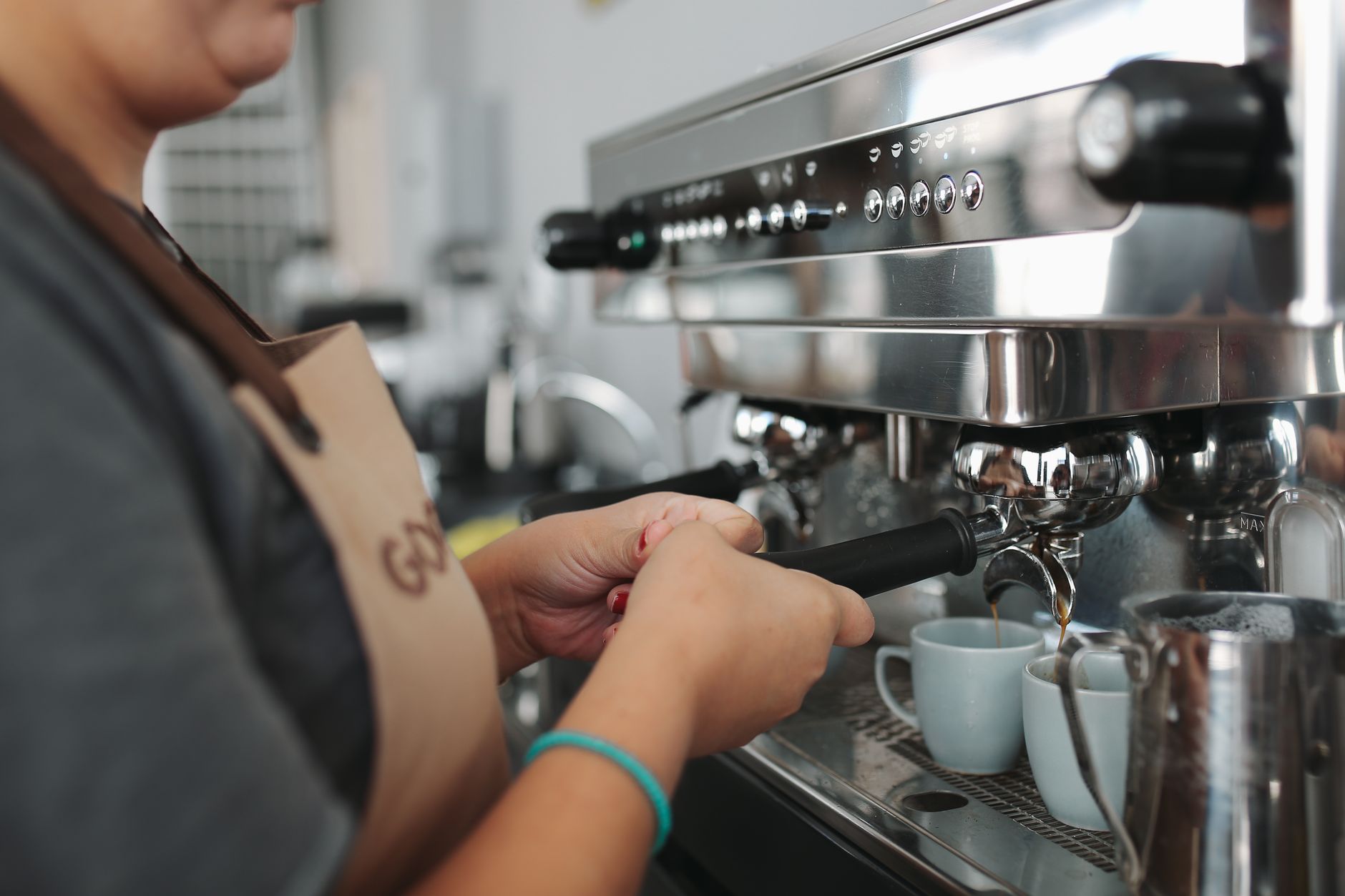
Now here's where it gets interesting: the "peripherals." This includes milk frothing pitchers, digital scales for dosing, knock boxes, and tempered tamps. While these seem like minor accessories, they are the tools that ensure repeatability. If one employee uses a 58mm tamp and another uses a different pressure, your drink consistency vanishes. A managed supply ensures that every staff member is using standardized equipment to minimize waste and maximize quality.
Why Proper Equipment Supply is a Financial Imperative
The financial impact of a poorly planned equipment strategy manifests not in the initial purchase price, but in "hidden" operational costs. When a business opts for residential-grade equipment or neglects the supply of replacement parts, they introduce systemic risk into their revenue stream.
According to the National Coffee Association USA (NCA), the demand for premium, specialty-grade beverages continues to grow, meaning customers are less forgiving of poor quality. If your equipment cannot maintain a precise temperature of 190-205°F, you are not just serving a bad cup of coffee; you are eroding your brand equity.
The consequences of inadequate supply fall into three main categories:
- Revenue Loss from Downtime: A broken machine during a morning rush in a hotel or clinic can result in thousands of dollars in lost sales per day.
- Labor Inefficiency: When equipment is outdated or non-automated, your staff spends more time on manual tasks and less time on customer service.
- Increased Waste: Inconsistent dosing and poor temperature control lead to "dialing-in" waste. In a high-volume environment, wasting 10% of your coffee bean inventory due to equipment failure is a massive hit to the bottom line.
I've tested this with dozens of our clients, and the pattern is clear: businesses that shift from a "buy and hope" model to a managed supply model see a significant reduction in emergency repair costs. By implementing a predictive maintenance schedule, replacing gaskets every six months and descaling monthly, they avoid the catastrophic failures that typically happen during peak seasons.
For businesses in specific regions, such as those looking for a Sensa coffee service in Charlotte, NC, the ability to leverage a managed supply means they can focus on growth rather than worrying about whether their boiler will leak on a Monday morning.
Practical Application: Building Your Equipment Strategy
Building a professional beverage program requires a phased approach. You cannot simply buy the most expensive gear and expect a profit; you must align your equipment supply with your specific service model. Whether you are running a boutique cafe, a medical office, or a luxury hotel, the workflow dictates the hardware.
Step 1: Volume Analysis. Determine your peak hour transactions. If you are serving 100 guests per hour, a single-group machine will create a bottleneck. You need high-capacity boilers and multiple group heads to maintain speed without sacrificing the quality of the Coffea arabica you are sourcing.
Step 2: Infrastructure Audit. Before a single machine is delivered, check your power and plumbing. Commercial machines often require 220V power and dedicated water lines. Many operators forget this and end up paying thousands in electrical upgrades after the equipment arrives.
Step 3: Selecting the Service Level. You have two choices: Capex (buying the machines) or an all-inclusive membership. At Busy Bean Coffee, we have found that the membership model is far superior for most foodservice businesses. Instead of spending $20,000 upfront on hardware, you pay a predictable monthly fee that covers the equipment, installation, and full maintenance.

Step 4: Training and Calibration. Equipment is useless without a trained operator. Your supply should include a training program that teaches your staff how to "dial in" the espresso, steam milk to the correct texture, and perform daily cleaning cycles.
💡
Key Takeaway
The most efficient way to manage cafe equipment supply is through a managed membership. This eliminates the capital expense of hardware and shifts the risk of maintenance to the provider, ensuring 100% uptime for your beverage program.
If you are managing a high-traffic facility, exploring an automated coffee machine for clinics and medical offices can drastically reduce the labor burden while keeping patient and staff satisfaction high.
Comparing Equipment Supply Models
Not all supply strategies are created equal. Most business owners start by looking at "cheap" options, but the total cost of ownership (TCO) tells a different story. The traditional approach is often a trap of hidden costs and unplanned failures.
| Feature | Traditional Purchase | Generic/Cheap AI-Auto | Managed (Busy Bean Coffee) |
|---|---|---|---|
| Upfront Cost | Very High (Capex) | Low to Medium | Zero / Low Entry |
| Maintenance | Pay-per-repair | Limited Warranty | All-Inclusive |
| Consistency | Variable (Human dependent) | Medium (Pre-set) | High (Calibrated) |
| Uptime | Risky (Wait for tech) | Medium (DIY fix) | Guaranteed (Proactive) |
| Best For | Large chains with in-house techs | Low-volume kiosks | Hotels, Cafes, Clinics |
As the table shows, the "Traditional Purchase" model places all the risk on the business owner. If a pump fails, you are out of service until you can find a technician and pay for the part. The "Generic/Cheap" approach often uses plastic components that degrade quickly under the heat and pressure of a commercial environment.
Our modern approach at Busy Bean Coffee removes these friction points. By providing premium SENSA equipment through a managed membership, we ensure that the hardware is always current and the maintenance is proactive, not reactive. This is especially vital for those implementing a foodservice coffee program in Chicago IL: Complete Guide where the competitive landscape demands perfection.
Common Questions and Misconceptions
Most guides on equipment supply get this wrong: they focus on the brand of the machine rather than the workflow of the business. A $30,000 machine in a poorly designed layout is less efficient than a $10,000 machine in a streamlined environment.
Myth 1: "More features mean better coffee."
Wrong. Many high-end machines come with "bells and whistles" that actually make the process slower or harder to clean. The goal is stability, stable temperature, stable pressure, and stable dosing. If a feature doesn't contribute to the consistency of the cup, it's just a liability that will eventually break.
Myth 2: "Automatic machines are lower quality."
This is a outdated perspective. Modern automated systems, particularly the SENSA line, use precision technology to mimic a master barista. In many cases, an automated machine produces a more consistent product across 500 cups than a human does, because it doesn't get tired or distracted.
Myth 3: "Water filtration is optional if we have city water."
This is the most expensive mistake a business can make. City water contains minerals that create "scale" inside your boiler. This scale acts as an insulator, forcing the machine to work harder to heat the water, which eventually burns out the heating element. According to NSF International, adhering to strict sanitary and filtration standards is not just about taste, but about the mechanical survival of the equipment.
Myth 4: "I can just buy a 'prosumer' machine to save money."
Prosumer machines are designed for homes, not for the 12-hour duty cycle of a cafe. They lack the thermal mass and the heavy-duty pumps required for continuous use. Using a prosumer machine in a business setting typically leads to failure within the first year, resulting in a total loss of investment.
Frequently Asked Questions
What is the most essential piece of cafe equipment supply for a new business?
While the espresso machine is the center of attention, the most essential piece of equipment is actually the water filtration system. Without a high-quality filter, every other piece of equipment you buy will degrade prematurely. A professional filtration system removes impurities and regulates mineral content, ensuring that your specialty coffee tastes as intended and your machine's internals remain clean. In my experience, a business that invests in proper filtration and a high-quality grinder will actually produce better coffee than one that spends all its budget on a flashy machine but ignores the water.
How do I determine the right capacity for my equipment supply?
You must calculate your "Peak Hourly Volume." Look at your expected traffic during your busiest 60 minutes of the day. If you expect to serve 60 lattes per hour, you need a machine that can handle simultaneous steaming and brewing without a drop in pressure. For most foodservice operations, this means a multi-group head machine or a high-efficiency automated system. If you are operating in a medical environment, consider an automated coffee machine for clinics and medical offices to handle spikes in traffic without needing a dedicated staff member.
What is the difference between a "managed" equipment supply and a "purchase" model?
A purchase model (Capex) means you own the asset, but you also own all the risk. You pay for the machine, the installation, and every single repair. A managed supply, like the one offered by Busy Bean Coffee, is a membership model. You pay a monthly fee that covers the equipment, professional installation, and all ongoing maintenance. This converts a volatile capital expense into a predictable operating expense, ensuring that if a machine goes down, the provider is responsible for fixing it immediately, which protects your revenue.
How often should commercial cafe equipment be serviced?
Preventative maintenance should be performed on a quarterly or bi-annual basis, depending on volume. This includes replacing group head gaskets, cleaning the shower screens, and checking the calibration of the grinders. Many operators wait until something breaks to call a technician, but that's a costly mistake. Proactive servicing reduces the likelihood of emergency downtime by nearly 70%. When using a Sensa coffee service in Raleigh NC (2026 Overview), this maintenance is typically handled as part of the membership, removing the burden from the owner.
Can I use the same equipment for both drip coffee and espresso?
No. These are two fundamentally different extraction processes. Espresso requires high pressure (typically 9 bars) to force water through a tightly packed puck of finely ground coffee bean. Drip coffee relies on gravity and a coarser grind. Trying to use one machine for both, unless it is a highly specialized hybrid, usually results in mediocre quality for both. A complete cafe equipment supply should include a dedicated espresso machine for milk-based drinks and a high-quality precision brewer for filter coffee.
Final Thoughts on Cafe Equipment Supply
Navigating the complexities of cafe equipment supply doesn't have to be a gamble. The key is to stop thinking about "machines" and start thinking about "systems." A successful beverage program is the result of aligning your hardware with your volume and securing a support system that guarantees uptime. Whether you are launching a new venture or upgrading an existing one, the goal remains the same: consistent, high-quality coffee that enhances the customer experience without draining your operational budget.
If you want to eliminate the stress of hardware failures and the burden of massive upfront costs, the managed membership model is the only logical choice for 2026. By partnering with Busy Bean Coffee, you gain access to premium SENSA equipment and a team of experts who ensure your program never skips a beat.
For those looking to optimize their local operations, we recommend exploring our Sensa Coffee Service in Mount Pleasant SC: Complete Guide to see how we implement these systems in real-world environments.
Ready to upgrade your beverage game? Visit www.busybeancoffee.com to find the perfect managed solution for your business.
Free Coffee Pairing Guide & Specialty Roast Cheat Sheet
Unlock the secrets of perfect brewing ratios, water temperatures, and specialty roast profiles. Download the guide.