Where Should You Source Professional Automated Coffee Machines?
The biggest mistake I see business owners make is treating high-volume beverage equipment like a household appliance. If you are looking for professional-grade automated coffee machines, the answer isn't a big-box retailer or a generic e-commerce site; it is through specialized managed service providers or direct B2B hospitality distributors. For most hotels, clinics, and corporate offices in 2026, the most sustainable "where" is a managed membership model that combines the hardware, the specialty coffee beans, and the technical maintenance into a single operational expense.
Sourcing from a retail store leaves you with a "dead" machine the moment a heating element fails or a pump loses pressure, as consumer warranties rarely cover commercial use. Instead, businesses should look toward integrated solutions like those provided by Busy Bean Coffee, where the equipment is paired with a service agreement to ensure 99% uptime. For those scaling their operations, exploring Automatic Coffee Machines for Hotels and Hospitality in 2026 is a strategic first step in identifying the right environment for these machines.
What Defines a Professional Automated Coffee System?
When we talk about "where" to find these machines, we first have to define what actually constitutes a professional system versus a high-end home machine. A professional system is designed for duty cycles that would melt the plastic internals of a consumer model. These machines are engineered to produce hundreds of cups per day without a drop in temperature or pressure consistency.
📚
Definition
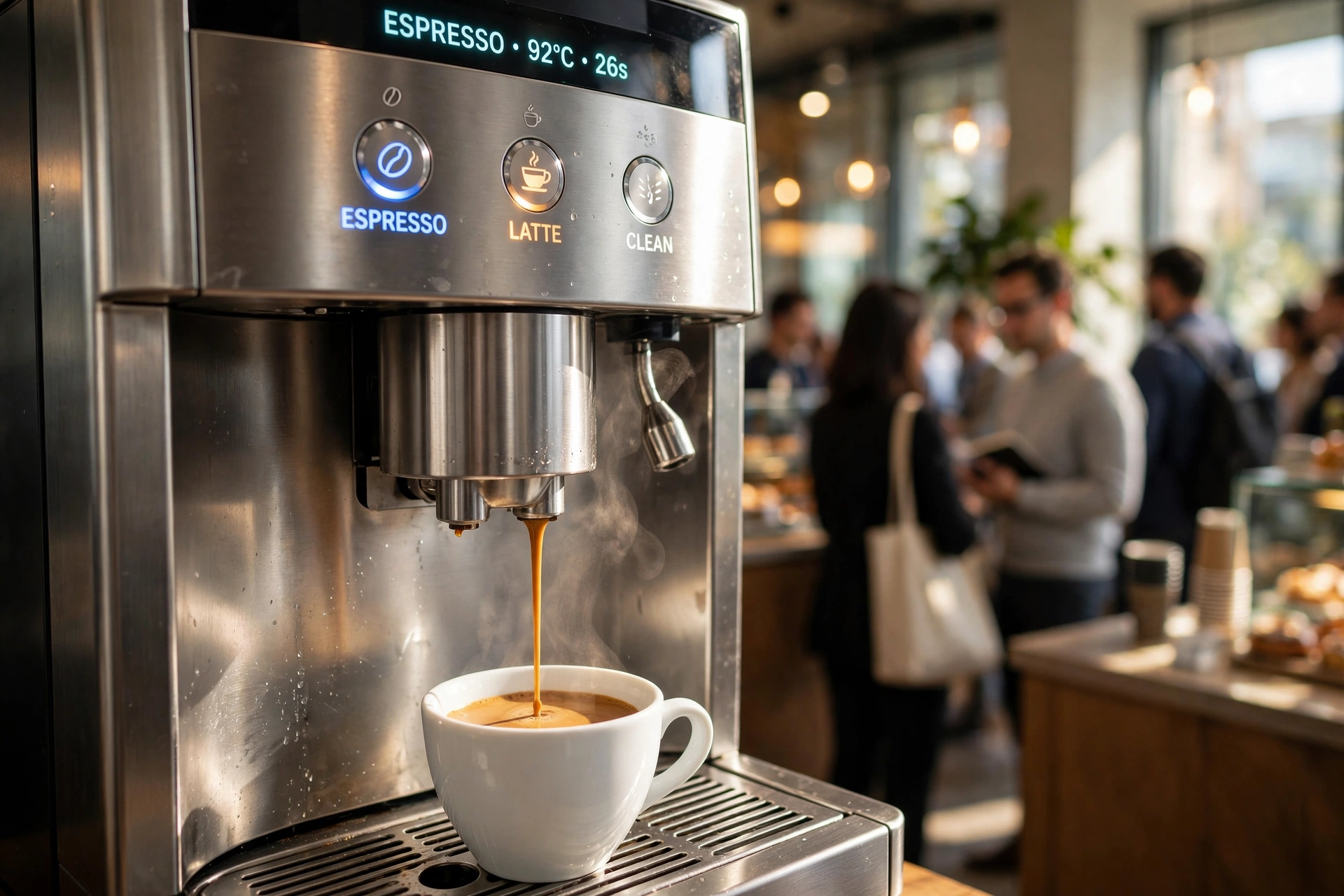
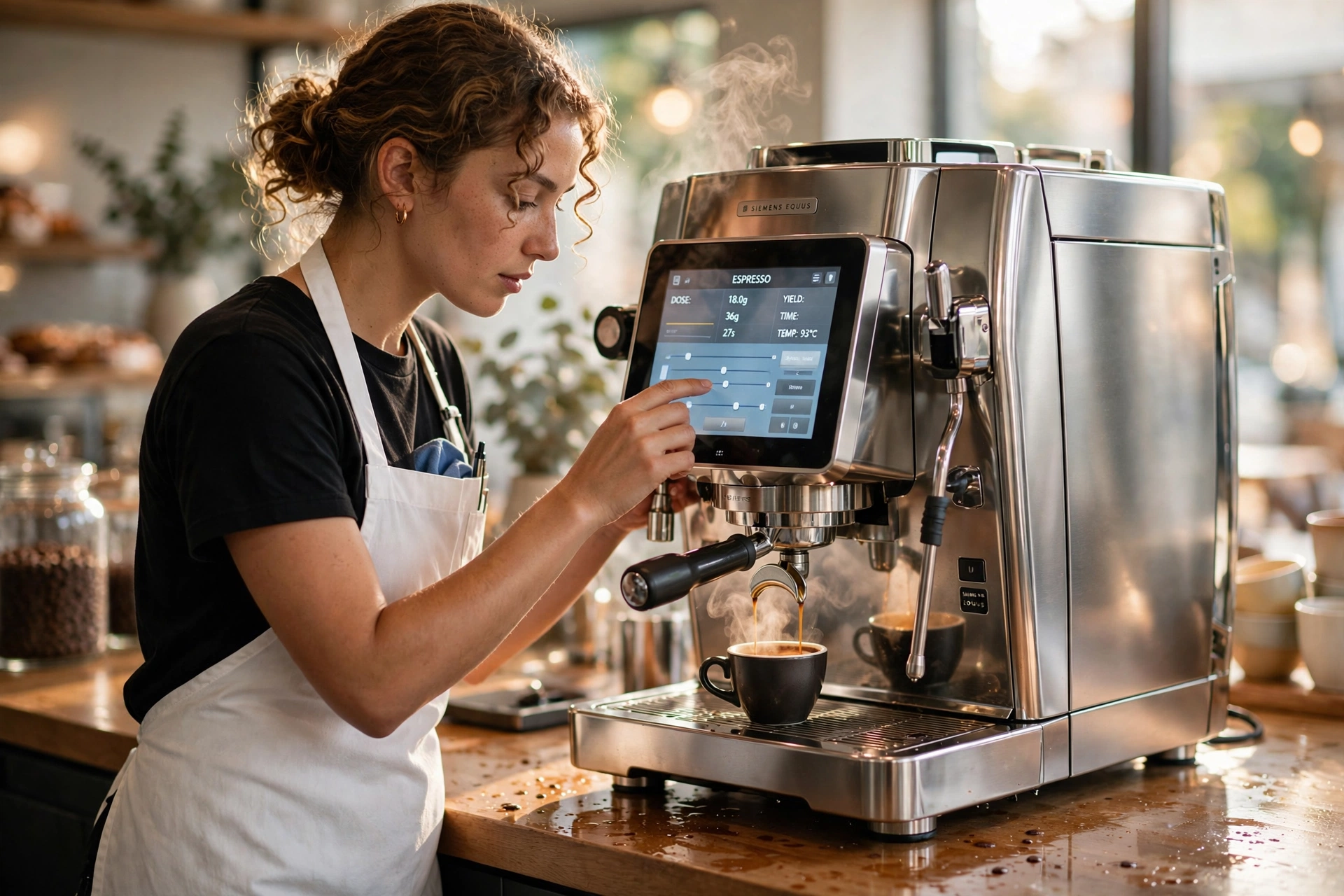
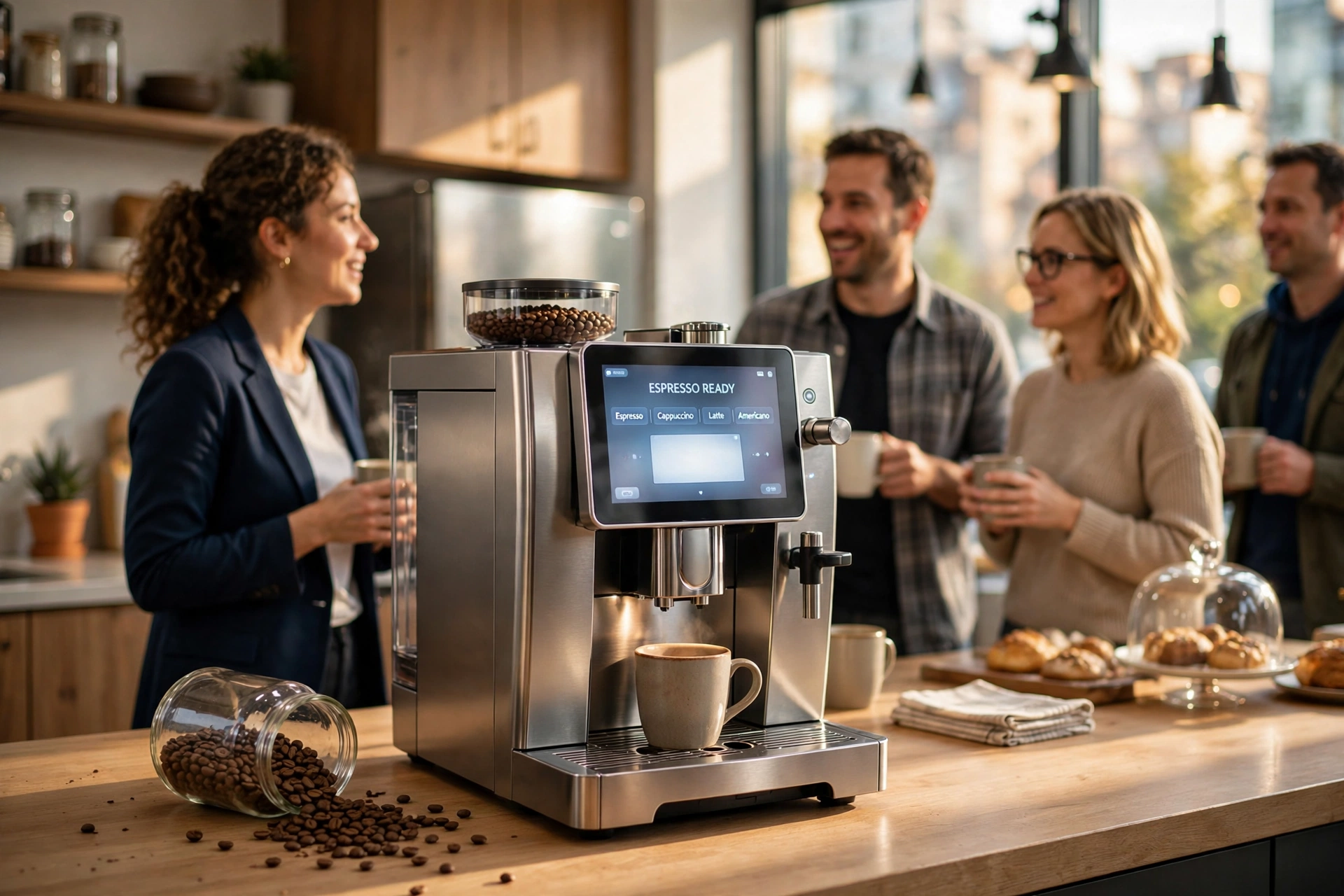
Automated coffee machines, in a commercial context, are "super-automatic" systems that handle the entire process, grinding, tamping, brewing, and frothing, with a single touch, utilizing industrial-grade boilers and precision burr grinders.
In my experience working with foodservice operators, the difference comes down to the "group head" and the boiler capacity. A professional machine maintains a steady thermal mass, ensuring that the 100th espresso of the morning tastes exactly like the first. This is a requirement for any business that wants to maintain brand standards. According to the Specialty Coffee Association (SCA), the technical standards for brewing require precise water temperature control, usually between 195°F and 205°F, to avoid over-extraction and bitterness, a feat only possible with commercial-grade automated hardware.

If you are sourcing for a medical environment, the requirements shift toward hygiene and speed. This is why we recommend looking specifically at Automated Coffee Machines for Clinics and Medical Offices, where the focus is on antimicrobial surfaces and rapid-cycle cleaning to meet health safety codes.
Why the Sourcing Channel Impacts Your Bottom Line
The channel you choose to acquire your equipment determines your long-term Total Cost of Ownership (TCO). Many managers fall into the trap of looking for the "cheapest" machine on a wholesale marketplace, only to realize that the cost of independent technicians and replacement parts exceeds the original price of the machine within 24 months.
Data shows that unplanned equipment downtime in the hospitality sector can lead to a significant loss in ancillary revenue. According to research from the National Coffee Association USA (NCA), coffee remains one of the highest-margin items in foodservice. When a machine goes down, you aren't just losing the cost of a cup of coffee; you are losing the customer's overall experience and potential for additional sales.
Now, here's where it gets interesting: the shift toward "Equipment as a Service" (EaaS). Instead of a capital expenditure (CapEx) where you pay $15,000 upfront for a machine, the modern approach is an operational expenditure (OpEx). By utilizing a membership, you shift the risk of mechanical failure to the provider. This is the model we've perfected at Busy Bean Coffee, ensuring that if a sensor fails, a technician is dispatched immediately without a separate invoice for every visit.
For businesses in specific hubs, this regional support is vital. For example, those seeking a Sensa Coffee Service in Charlotte, NC benefit from local technicians who can arrive within hours, rather than days, which is a stark contrast to the "buy it and forget it" retail model.
How to Implement an Automated Coffee Program Step-by-Step
If you've decided that a managed provider is the right "where" for your business, the implementation process should follow a specific technical sequence to avoid operational friction.
First, conduct a volume audit. You need to know exactly how many cups are served during your peak hour. A machine that handles 30 cups an hour will fail miserably in a hotel lobby during 8:00 AM check-outs. I've seen businesses install a mid-range machine only to have it "lock up" due to waste bin overflows every twenty minutes because they underestimated their peak flow.
Second, evaluate your water quality. This is the most overlooked part of the process. Hard water leads to calcium buildup (scale) that destroys boilers. Any professional installation must include a commercial-grade filtration system. According to NSF International, equipment must meet strict sanitary standards to prevent bacterial growth in water lines, making professional plumbing integration non-negotiable.
Third, select your roast profile. Automated machines are sensitive to the oil content of the coffee bean. Using a very dark, oily roast in a machine designed for specialty coffee can clog the grinders. We help our clients align their bean selection with their hardware to ensure longevity.
💡
Key Takeaway
Never buy a commercial machine without a documented maintenance schedule and a water filtration plan; without these, you are essentially buying a very expensive piece of scrap metal.
For businesses in South Carolina, we often implement these programs through localized hubs, such as our Sensa Coffee Service in Greenville SC: Complete Guide, ensuring that the installation is tailored to the local water chemistry and power grid stability.
Comparing Sourcing Options: Retail vs. Wholesale vs. Managed Service
When deciding where to find your equipment, you generally face three paths. Most guides will tell you to just "shop around," but that ignores the operational reality of running a business.
| Feature | Retail/E-commerce | Wholesale Distributor | Managed Membership (Busy Bean) |
|---|---|---|---|
| Upfront Cost | Medium | High | Zero to Low |
| Maintenance | DIY / Third Party | Paid Per Visit | Included in Monthly Fee |
| Technical Support | Generic Call Center | Dealer Dependent | Dedicated Account Mgr |
| Coffee Quality | Variable/Generic | Bulk Commodity | Premium Specialty Coffee |
| Best For | Home/Small Office | Large Capital Budgets | Scale-focused Hospitality |
The "Generic AI" or cheap wholesale approach often leads to "equipment orphans", machines that are sold without a local technician who knows how to fix them. If you buy a machine from an overseas wholesaler, you might save 20% on the sticker price, but you'll spend 200% more in lost revenue when you can't find a replacement gasket in your zip code.
That said, for those in larger metros, the options expand. If you are looking for a Sensa Coffee Service in Atlanta GA: Complete Guide, you'll find that the managed model is becoming the gold standard for corporate headquarters that want to provide a "cafe experience" without hiring a full-time barista staff.

Common Questions and Misconceptions
Most guides get the "automation" part wrong. They suggest that automated coffee machines are a compromise on quality. That is a myth from twenty years ago.
Myth 1: "Automated coffee doesn't taste as good as manual espresso."
This is simply untrue when using modern super-automatics. The precision of the grind and the stability of the temperature in high-end machines often produce a more consistent cup than a tired barista who has been working a 12-hour shift. The key isn't the automation; it's the quality of the coffee bean and the calibration of the machine.
Myth 2: "Buying the machine outright is cheaper in the long run."
This ignores the "hidden" costs of depreciation and maintenance. A commercial machine is a depreciating asset. By the time you've paid it off, the technology is obsolete, and the seals are leaking. A managed service transforms a shrinking asset into a consistent service level.
Myth 3: "Any 'commercial' machine is suitable for any environment."
Wrong. A machine for a clinic is different from a machine for a hotel. In a medical setting, the "where" includes a need for extreme ease of cleaning and rapid output. In a hotel, the "where" requires a focus on variety, lattes, cappuccinos, and americanos, to satisfy a global guest base. This is why we provide specific frameworks, such as our Sensa Coffee Service in Mount Pleasant SC: Complete Guide, to match the machine to the local demographic.
Frequently Asked Questions
Where is the best place to buy automated coffee machines for a high-traffic hotel?
The best place is through a managed beverage partner rather than a retail store. Hotels require "uptime" above all else. A managed service provider like Busy Bean Coffee provides the hardware and a guaranteed maintenance contract, ensuring that your guest experience isn't ruined by a "Out of Order" sign. Look for providers who offer an all-inclusive membership that covers installation, professional calibration, and emergency repairs, which removes the operational headache from your management team.
How do I know if a machine is actually "commercial grade"?
Check for NSF/ANSI certification. If a machine doesn't have an NSF mark, it isn't designed for a professional kitchen or a public-facing environment. Additionally, look at the boiler material; professional machines use high-grade stainless steel or copper, not aluminum or plastic. A true commercial machine will also have a dedicated drainage connection rather than just a drip tray, allowing it to handle hundreds of cycles without manual emptying.
Can I find automated coffee machines that don't require a monthly contract?
Yes, you can buy them from wholesale distributors, but this is often a risky move for non-experts. Without a service contract, you are responsible for the "preventative maintenance" (PM) schedule. This includes replacing O-rings, descaling the boiler, and calibrating the grinder every few months. If you miss one PM cycle, you risk a catastrophic failure that could cost thousands in repairs. This is why we steer clients toward Sensa Coffee Service in Raleigh NC (2026 Overview) for a more predictable cost structure.
What is the difference between "bean-to-cup" and "pod" automated machines?
Bean-to-cup machines grind fresh Coffea arabica beans for every single serving, providing a vastly superior flavor profile and lower cost per cup. Pod machines are convenient but create massive amounts of plastic waste and have a much higher cost per serving. For any professional business looking to project quality and sustainability in 2026, bean-to-cup is the only viable option. It allows you to serve true specialty coffee while maintaining the speed of automation.
Where can I get technical support if I buy a machine independently?
You would need to find a certified independent coffee technician in your local area. However, be warned: many technicians specialize in manual machines and may not be certified in the proprietary software used by modern super-automatics. This is why sourcing your machine from a provider who also handles the service, like our Sensa Coffee Service in Jacksonville, FL, is the safest route to ensure you have a technician who actually knows your specific model.
Final Thoughts on Automated Coffee Machines
Finding the right place to source your equipment is the difference between a profit center and a maintenance nightmare. If you are searching for where to find automated coffee machines that actually perform under pressure, stop looking at catalogs and start looking at partnerships. The move toward managed memberships is not just a trend; it is a response to the complexity of modern specialty coffee technology.
Whether you are managing a boutique hotel, a medical plaza, or a corporate office, your goal is consistency. When you remove the variables of equipment failure and bean inconsistency, you create a better experience for your clients and a smoother operation for your staff. If you're ready to upgrade your beverage program without the capital risk, we invite you to explore the all-inclusive solutions at Busy Bean Coffee Blog.
For those expanding their footprint in the Southeast, we recommend reviewing our regional guides, such as the Sensa Coffee Service in Savannah GA: Complete Guide | Busy Bean Coffee, to see how we tailor our deployment to different business environments.
Ready to Upgrade Your Business Coffee?
Café-quality coffee, zero maintenance headaches, and one predictable monthly price. Let's build your custom coffee program.
Free Coffee Pairing Guide & Specialty Roast Cheat Sheet
Unlock the secrets of perfect brewing ratios, water temperatures, and specialty roast profiles. Download the guide.