Introduction
Why do some restaurants see coffee as a profit center while others treat it as an afterthought? The answer lies in restaurant coffee solutions that transform a simple cup of joe into a high-margin revenue stream. In my years working with foodservice businesses, I've seen coffee programs generate gross margins north of 80% when done right. That's not an accident—it's a deliberate strategy. The question isn't whether you should serve coffee; it's how you can turn that beverage into a consistent profit contributor.
What Are Restaurant Coffee Solutions and Why Should You Care?
📚
Definition
Restaurant coffee solutions encompass the equipment, sourcing, training, and service agreements that enable a foodservice business to deliver consistent, high-quality coffee to its customers.
At their core, these solutions go beyond a drip machine and bag of beans. They include everything from commercial espresso machines and grinders to managed procurement, preventive maintenance, and barista training. The goal is to eliminate the guesswork and chaos that often plague restaurant coffee programs—inconsistent taste, broken equipment, and employee confusion.
According to the National Coffee Association's 2023 Coffee Trends Report, 66% of Americans drink coffee daily, with half of those preferring specialty coffee like lattes, cappuccinos, and cold brews. For restaurants, this means a ready-made demand that can be exploited with the right setup. The difference between a profitable coffee program and a loss leader often hinges on the choice of restaurant coffee solutions.
In my experience, the restaurants that treat coffee as an afterthought—buying cheap beans and using old equipment—are leaving significant money on the table. On the flip side, those that invest in a complete solution see not only higher beverage sales but also increased customer visit frequency and larger average check sizes.
Why Restaurant Coffee Solutions Drive Profitability
The numbers speak for themselves. McKinsey's 2024 Foodservice Profitability Report found that beverages in general carry a 25–35% higher profit margin than food items. Coffee, specifically, can achieve gross margins of 70–85% depending on the drink. A latte that costs $0.50 in materials can easily sell for $4.50, generating an 89% gross margin. Multiply that by 50 cups a day, and you're looking at $200 daily profit from coffee alone.
But margins are only part of the story. Coffee also drives incremental sales. A customer who comes in for a morning coffee often adds a pastry or breakfast sandwich. A Harvard Business Review study on customer retention noted that increasing customer loyalty by just 5% can increase profits by 25% to 95%. A great coffee experience is a powerful loyalty driver—it keeps people coming back and increases their lifetime value.
Here's where the consequences of not acting become clear. If you ignore your coffee program, you're not just missing profit—you're directly handing customers to competitors. Deloitte's 2024 Foodservice Outlook stated that 43% of diners consider coffee quality a deciding factor when choosing where to eat breakfast or brunch. Serve bad coffee, and you're actively pushing customers toward Starbucks or the diner down the street.
The Hidden Costs of DIY Coffee Programs
Many restaurant owners assume they can save money by buying a commercial machine, ordering beans from a wholesale supplier, and training staff themselves. In theory, that approach works. In practice, it's a recipe for inconsistency and hidden costs.
- Equipment downtime: When a machine breaks, repair costs can range from $200 to $800, plus lost revenue during the outage.
- Bean spoilage: Without proper storage, coffee beans stale quickly. I've seen restaurants throw away 10–20% of their coffee inventory monthly.
- Staff turnover: High turnover in restaurants means constantly retraining baristas. Inconsistent drink quality drives customers away.
How to Implement a Profitable Restaurant Coffee Program
Turning coffee into a profit center doesn't require a massive upfront investment. Here's a step-by-step approach that I've used with dozens of restaurants.
Step 1: Assess Your Volume and Capacity
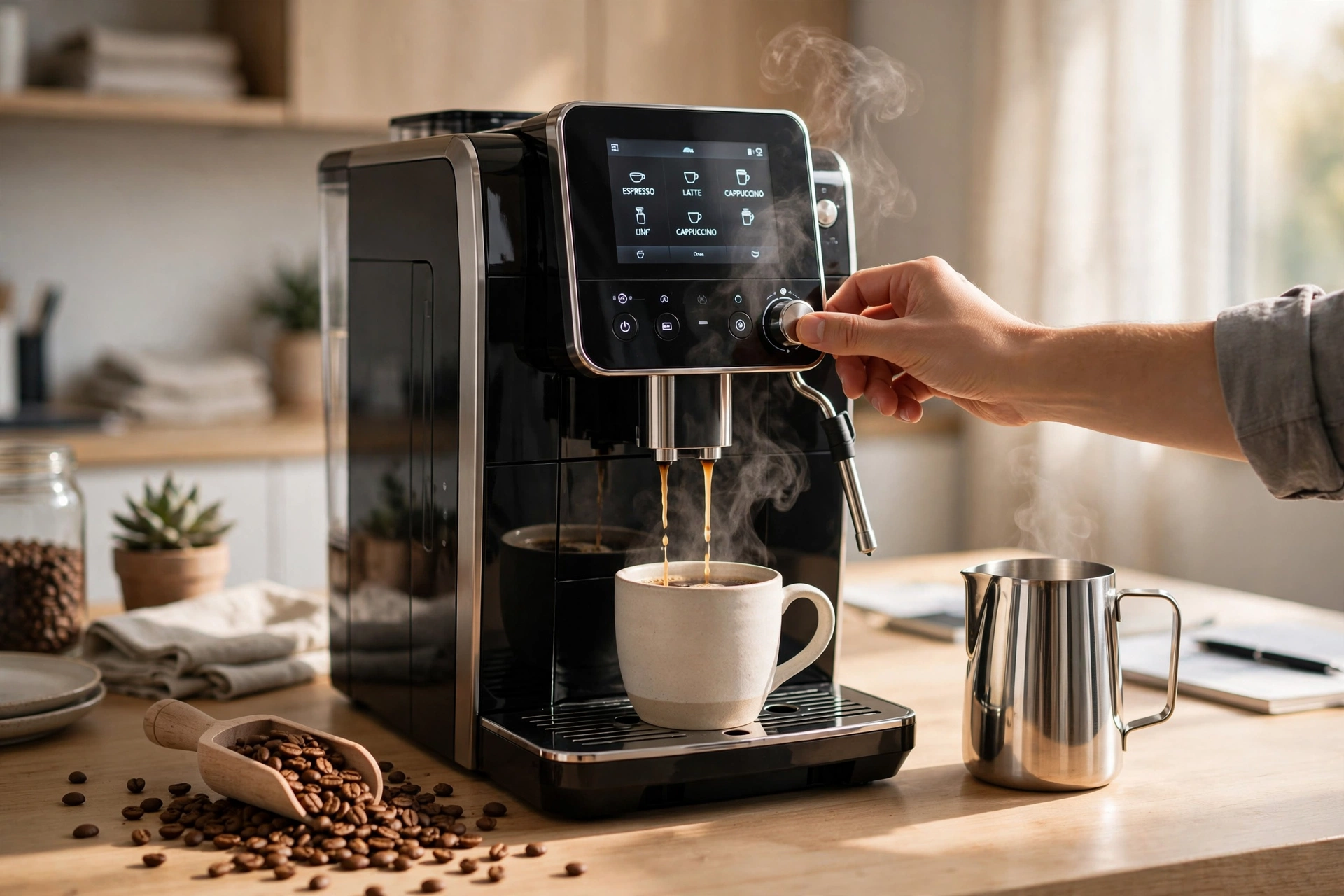
Calculate your current daily coffee sales (or estimate based on foot traffic). If you're serving fewer than 50 cups a day, a super-automatic espresso machine may be sufficient. Above that, you'll need a commercial-grade espresso machine with dual boilers and a grinder.
Step 2: Choose Your Sourcing Strategy
Decide between buying beans on the open market or partnering with a managed service that handles sourcing. The latter often provides better pricing and consistency. For example, Busy Bean Coffee offers all-inclusive managed coffee memberships that bundle premium equipment, installation, maintenance, and exclusive bean pricing into one predictable monthly fee.
Step 3: Invest in Training
Even the best equipment fails without proper training. Schedule regular sessions for your staff—ideally monthly—to calibrate grind settings, perfect milk steaming, and maintain cleanliness. A single well-executed latte art can justify a higher price point.
Step 4: Menu Engineering
Create a coffee menu that highlights high-margin items: lattes, cappuccinos, cold brews, and specialty drinks (e.g., caramel macchiatos). Use upselling techniques: "Would you like to make that a large for an extra dollar?" This can increase average order value by 15–20%.
Step 5: Monitor and Optimize
Track coffee sales, waste, and customer feedback. If a specific drink isn't selling, replace it. If customers complain about bitterness, adjust your grind. Tools like Busy Bean Coffee's managed service often include analytics that show you exactly where your coffee program stands.
💡
Key Takeaway
A profitable restaurant coffee program isn't about selling the cheapest cup—it's about consistency, training, and smart menu design. Managed services eliminate the complexity so you can focus on what's on the plate.
Comparing Coffee Program Models: DIY vs. Rental vs. Managed Service
| Model | Pros | Cons | Best For |
|---|---|---|---|
| DIY (buy own equipment and beans) | Full control, no monthly fees | High upfront cost ($5k–$15k), repair expenses, staff training burden, bean spoilage risk | High-volume operations with dedicated capital and in-house expertise |
| Rental/Lease from supplier | Lower upfront cost, often includes basic maintenance | Limited equipment selection, long-term contract, may not cover full repair costs | Restaurants that want predictable monthly cost but are willing to manage bean inventory |
| Managed Coffee Service (like Busy Bean Coffee) | All-inclusive: premium equipment, installation, full maintenance, exclusive bean pricing, no capital outlay | Monthly fee may be higher than rental alone if you don't use the service fully | Restaurants that want to maximize profit without operational headaches—ideal for most |
In my experience, the managed service model consistently wins for 80% of restaurants. It removes the three biggest profit killers: equipment downtime, inconsistent bean quality, and untrained staff. When you have a single point of accountability for everything coffee-related, your team can focus on serving customers, not fixing machines.
Common Questions & Misconceptions About Restaurant Coffee Solutions
"Coffee is too expensive to offer—it eats into my margins."
That's a myth perpetuated by outdated thinking. Specialty coffee's gross margin is among the highest in any restaurant category. Even with premium beans and proper equipment, a $4.00 latte costs roughly $0.60 in materials (coffee, milk, cup, lid). That's an 85% margin. Compare that to a burger: $2.00 cost for a $10.00 burger yields an 80% margin—slightly lower, and burgers require more labor and cooking time.
"Our customers don't care about coffee quality—they just want caffeine."
This misconception overlooks the fact that a large portion of diners actively seek out great coffee. According to the National Coffee Association, 31% of specialty coffee drinkers say they would choose a restaurant based on coffee quality alone. Even if your regulars don't complain about weak coffee, they may be leaving without telling you. Quality builds loyalty.
"We don't have the space for an espresso machine."
Modern super-automatic machines are compact. Many countertop models fit in a 15" x 20" footprint—smaller than a microwave. If you have room for a water cooler or a toaster, you have room for a commercial espresso machine. Some managed service providers even offer wall-mounted dispensing systems for tight spaces.
Frequently Asked Questions
How much does a restaurant coffee solution cost?
Costs vary widely depending on volume and equipment. A DIY setup can run $5,000–$15,000 upfront for a decent commercial espresso machine and grinder, plus ongoing bean costs ($6–$12 per pound). A managed service like Busy Bean Coffee starts at a low monthly fee that includes premium equipment, installation, full maintenance, and exclusive bean pricing—with zero upfront capital expenditure. Over three years, the managed option often proves cheaper than DIY when factoring in repairs and waste.
What is the ROI of upgrading my coffee program?
Restaurants that switch from basic drip coffee to a specialty coffee program typically see a 20–40% increase in coffee beverage sales within the first three months. With a gross margin of 80%, even 20 extra cups a day at $4.00 each generates $28,000 in annual gross profit. Many restaurants recoup their investment within six months.
Do I need trained baristas to make good espresso?
Yes and no. While a skilled barista can produce superior results, modern super-automatic machines can grind, tamp, brew, and steam milk with one button—eliminating the need for advanced training. However, you still need staff who understand basic maintenance (cleaning the steam wand, descaling). Managed services often include staff training as part of the package.
How often should I have my coffee equipment serviced?
Commercial espresso machines need daily cleaning (backflushing, wiping) and professional preventive maintenance every 3–6 months. Failure to maintain leads to scale buildup, inconsistent temperature, and eventual breakdown. A managed service covers all maintenance, so you never have to worry about a surprise repair bill.
Can a managed coffee service really save me money?
Yes, by eliminating three major cost centers: equipment repairs, bean waste, and staff retraining. According to Restaurant Business Magazine, the average cost per coffee-related service call is $350. Over a year, that can easily exceed $1,000. A managed service bundles all that into a flat monthly fee that's often less than what you'd pay for repairs and replacement beans alone.
Summary + Next Steps
The bottom line is clear: restaurant coffee solutions are not an expense—they're an investment in profitability, customer loyalty, and operational simplicity. The restaurants that treat coffee as a strategic part of their menu consistently outperform those that don't. Whether you choose a managed service like Busy Bean Coffee or a DIY approach, the key is intentionality. Don't leave your coffee program to chance.
If you're ready to turn your coffee program into a profit center, explore our managed coffee services and see how we help restaurants like yours serve better coffee for less hassle. For more details on costs, check out how much does craft coffee cost or read about what are corporate cafe solutions for a deeper understanding of managed models.
Recommended Readings
To deepen your understanding of these topics, we recommend reading the following articles:
- Ultimate Guide to Automated Coffee Machines for Business
- Ultimate Guide to Specialty Coffee Equipment for Business
- Ultimate Guide to Coffee Syrups for Foodservice Businesses
- Ultimate Guide to Wholesale Barista Equipment for Businesses
About the Author
Travis Estes is the Founder of Busy Bean Coffee. With over a decade of experience in foodservice beverage programs, Travis has helped hundreds of restaurants, hotels, and corporate cafés increase their coffee revenue and simplify operations through all-inclusive managed coffee solutions. He writes about coffee profitability, equipment, and sourcing to help businesses make smarter decisions.
Free Coffee Pairing Guide & Specialty Roast Cheat Sheet
Unlock the secrets of perfect brewing ratios, water temperatures, and specialty roast profiles. Download the guide.