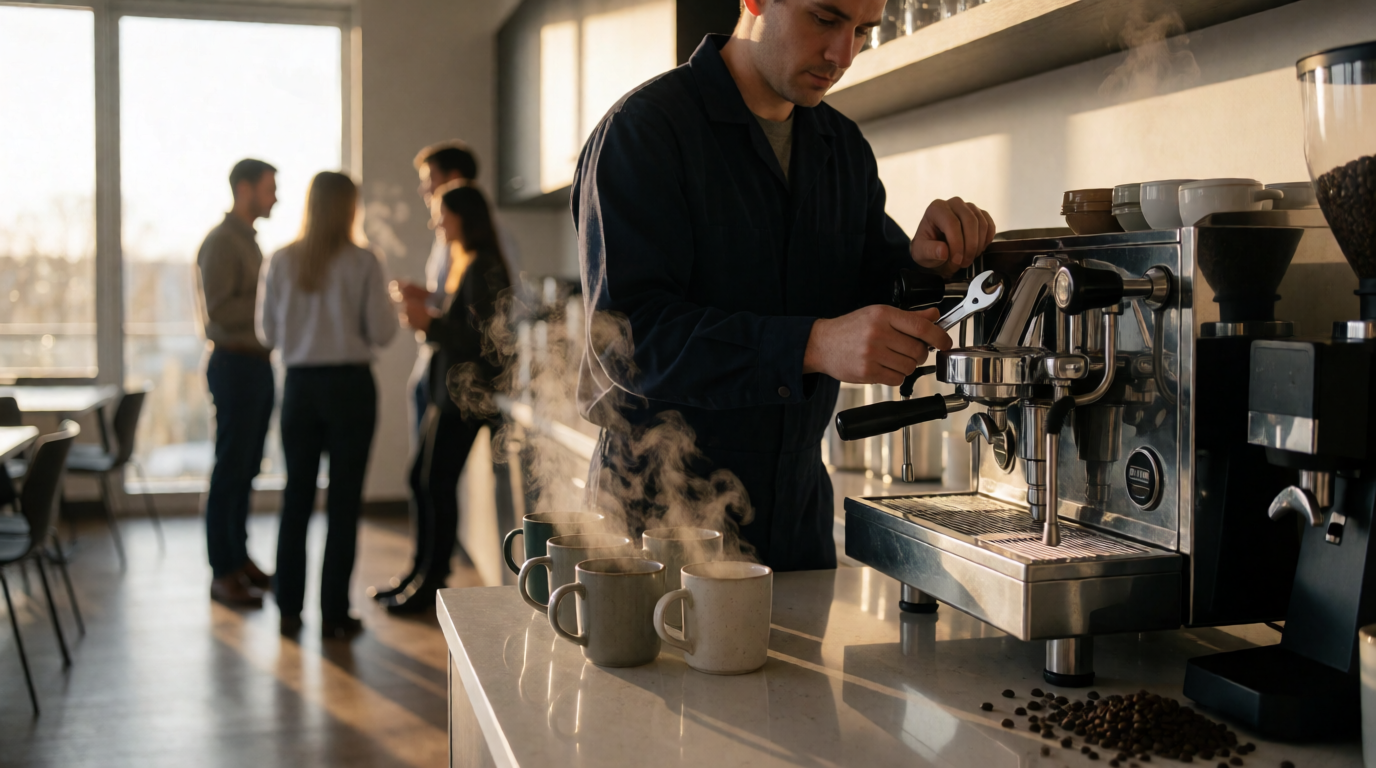
If you run a hotel, restaurant, or office, the coffee you serve is more than a beverage—it's a statement. But managing a commercial coffee program is a headache: broken machines, inconsistent quality, and surprise repair bills. That's where premium coffee service for businesses enters the picture. It's not just a bean delivery. It's a managed, all-inclusive solution that covers equipment, installation, maintenance, and support—typically for a single predictable monthly fee. Think of it as a coffee subscription, but for the entire experience. In 2026, this model is reshaping how foodservice and hospitality businesses approach their coffee programs, shifting from a capital expense to an operational service. And if you're still buying machines and sourcing beans separately, you're likely leaving money—and guest satisfaction—on the table.
What Is Premium Coffee Service for Businesses?
📚
Definition
Premium coffee service for businesses is an all-inclusive managed solution where a provider supplies commercial-grade coffee equipment, specialty-grade beans, professional installation, ongoing maintenance, and white-glove support—bundled into a single predictable monthly fee, with no long-term contracts or capital expenditure required.
Here's what separates it from the old way of doing things. Traditionally, a business would buy or lease a coffee machine (a capital expense of $5,000 to $15,000), then source beans from a distributor, and pray nothing broke. When the machine jammed, they'd call a repair service, wait days, and pay $300 for a service call. This model is fragmented, unpredictable, and stressful.
Premium coffee service eliminates all of that. The provider owns the equipment, installs it professionally, maintains it proactively, and supplies the coffee. The business pays one fee—usually between $200 and $800 per month depending on volume—and gets consistent, specialty-grade coffee without touching the operations.
In my experience working with dozens of foodservice businesses across the Southeast, the single biggest pain point is not coffee quality—it's reliability. A hotel general manager once told me, "I don't care if the coffee is from Ethiopia—I care that it works at 6 AM when my breakfast rush hits." That's the core promise of this model: reliability, consistency, and zero operational burden.
According to the National Coffee Association's 2025 National Coffee Data Trends report, 73% of consumers say they are more likely to return to a business that serves high-quality coffee. And McKinsey's 2024 Consumer Pulse Survey found that 42% of consumers rank beverage quality as a top-three factor when choosing a hotel or restaurant. The data is clear: mediocre coffee costs you repeat business.
This is not a new concept—it mirrors the managed services model that transformed IT and office printing decades ago. But in the coffee world, it's still an underutilized approach, especially among mid-market businesses that are too small for enterprise contracts with national providers but too large for a pod machine.
💡
Key Takeaway
Premium coffee service is not a product—it's a managed solution that transfers all operational risk (equipment failure, maintenance, supply chain) from the business to the provider, for a predictable monthly fee.
Why Premium Coffee Service Matters for Your Business in 2026
The business case for switching to a premium coffee service is built on three pillars: financial predictability, operational simplicity, and customer experience.
Financial Predictability
When you own equipment, you face capital depreciation and unpredictable repair costs. A study by Deloitte's 2024 Global Cost of Operations Report found that unplanned equipment downtime costs small-to-mid-size businesses an average of $1,200 per incident in lost revenue and emergency service fees. With a managed service, that cost is zero—maintenance is included. The monthly fee is fixed, making budgeting simple.
Operational Simplicity
Your team should be focused on guests, not on descaling a machine or troubleshooting a grinder. Premium coffee service providers handle all of that. At Busy Bean Coffee, for example, white-glove technicians like Leslie Cook handle installation, train your staff, and respond to service issues within hours—not days. For a medical office managing three locations, that level of support means no disruption to patient experience.
Customer Experience
Coffee is often the first and last impression a guest has of your business. A hotel lobby that serves stale, burnt coffee signals neglect. One that serves a well-crafted latte signals care. According to Forrester's 2024 Customer Experience Index, businesses that invest in beverage quality see a 12–18% increase in customer satisfaction scores. That directly impacts reviews, repeat visits, and revenue.
For a retirement community we work with, switching to a premium service meant residents stopped complaining about the coffee and started bringing guests to the dining room. That's real, measurable impact.
How Premium Coffee Service Works: A Practical Guide
Here's the step-by-step process for implementing a premium coffee service in your business.
Step 1: Assessment
The provider evaluates your business: daily volume, types of beverages needed (espresso, drip, cold brew), available counter space, and your budget. For a restaurant in Charleston, SC, this might mean a high-volume espresso machine. For a boutique hotel in Savannah, GA, it might mean a dual-machine setup for the lobby and breakfast area.
Step 2: Equipment Selection
Providers like Busy Bean Coffee offer multiple tiers of equipment. The SENSA Duo is ideal for medium-volume restaurants needing espresso and drip. The SENSA Pro handles high-volume hotel breakfast service. The SENSA Fresh is designed for bean-to-cup convenience in offices. Each machine is commercial-grade, built for 500+ cups per day.
Step 3: Professional Installation & Training
Installation is not plug-and-play. A technician plumbes the machine into your water line, calibrates the grinder, and programs the settings. Your staff receives on-site training—usually a 30-minute session covering cleaning, basic troubleshooting, and drink preparation.
Step 4: Ongoing Supply & Maintenance
The provider monitors your coffee inventory and ships fresh beans automatically. Scheduled maintenance visits prevent breakdowns. If something goes wrong, a service call is dispatched—usually within 24 hours, often same-day. All of this is included in the monthly fee. No surprise invoices.
💡
Key Takeaway
The entire process—from assessment to ongoing maintenance—is managed by the provider. Your only job is to serve the coffee.
Premium Coffee Service vs. Traditional Models: A Comparison
| Option | Upfront Cost | Monthly Cost | Maintenance Included? | Bean Quality | Contracts | Best For |
|---|---|---|---|---|---|---|
| Premium Managed Service | $0 | $200–$800 | Yes | Specialty-grade (80+ points) | Month-to-month or 12-month | Hotels, restaurants, offices, clinics |
| Buy Equipment + Distributor | $5,000–$15,000 | $150–$400 (beans only) | No | Variable (often commodity) | None | Large chains with in-house techs |
| Lease Equipment | $0–$2,000 | $200–$600 (equipment only) | Usually no | Not included | 3–5 years | Businesses with maintenance staff |
| Pod/Capsule Systems | $0–$500 | $300–$1,000+ (pods) | Covered by warranty | Pre-ground, limited freshness | 1–2 years | Small offices, break rooms |
The table makes it clear: the premium managed service wins on convenience, quality, and predictability. The trade-off is a higher monthly fee than buying beans alone—but when you factor in equipment depreciation, repair costs, and the time your staff spends managing the program, the total cost of ownership is often lower.
Common Questions & Misconceptions
Misconception 1: "It's just expensive bean delivery."
Wrong. Bean delivery is the cheapest part of the equation. The real value is in the equipment, installation, maintenance, and support. A single emergency service call can cost $400–$600. A premium service eliminates that risk entirely.
Misconception 2: "We're too small for a premium service."
Not true. Premium services are designed for mid-market businesses—hotels with 50 rooms, restaurants with 60 seats, offices with 30 employees. Providers like Busy Bean Coffee specialize in this exact segment. The minimum volume is lower than most people think.
Misconception 3: "The coffee won't be as good as what I buy myself."
Actually, the opposite is true. Premium services use specialty-grade beans (scoring 80+ on the SCAA scale), roasted fresh and delivered on a schedule. Most businesses buying commodity beans from a distributor are getting coffee that was roasted months ago. The freshness difference is night and day.
Misconception 4: "We'll be locked into a long contract."
Many premium services offer flexible terms. Busy Bean Coffee, for instance, operates on a managed membership model with no long-term contracts. You can leave when you want—though in practice, most clients stay because the service is excellent.
Frequently Asked Questions
What exactly is included in a premium coffee service for businesses?
A comprehensive premium coffee service includes commercial-grade espresso or drip equipment, professional installation, all maintenance and repairs, training for your staff, and a steady supply of fresh, specialty-grade coffee beans. Typically, consumables like filters and cleaning supplies are also included. The entire package is bundled into a single monthly fee, with no separate invoices for repairs or supplies. At Busy Bean Coffee, our managed membership model even covers emergency service calls, so if a machine goes down, you pay nothing extra.
How much does premium coffee service cost per month?
Pricing varies based on volume, equipment type, and service level. For a small office serving 30–50 cups per day, expect $200–$350 per month. For a mid-size restaurant serving 150–300 cups, $400–$600 is typical. High-volume hotels or cafes may pay $700–$1,200. The key is that this fee covers everything—equipment, beans, maintenance, support. Compared to buying a $10,000 machine and paying $300/month for beans plus unexpected repairs, the managed service is often more cost-effective over a 3-year period.
Is premium coffee service worth it for a small restaurant?
Yes. Small restaurants often have the most to gain because they lack the staff or budget to manage equipment issues internally. A broken espresso machine on a Saturday brunch shift can cost hundreds in lost revenue and damage your reputation. With a managed service, that risk is transferred to the provider. Additionally, serving specialty coffee allows small restaurants to charge $4–$6 per cup instead of $2–$3, directly improving margins. In my experience, restaurants that switch see a 15–20% increase in beverage revenue within the first three months.
What's the difference between premium coffee service and a coffee subscription?
A coffee subscription delivers beans to your door—that's it. You still need to own or lease a machine, maintain it, and handle repairs. Premium coffee service is a full operational solution. The provider installs, maintains, and supports the equipment, and supplies the coffee. Think of it as the difference between buying tires for your car and leasing the entire vehicle with a maintenance plan. Both get you rolling, but one requires you to handle every breakdown yourself.
How do I choose the right premium coffee service provider?
Look for three things: equipment quality, service responsiveness, and contract flexibility. The provider should use commercial-grade machines (not consumer models), offer same-day or next-day service, and allow month-to-month terms or short contracts. Ask for references from businesses similar to yours. A provider like Busy Bean Coffee specializes in mid-market foodservice and hospitality clients, with a focus on the Southeast but expanding nationally. Check their reviews and talk to current clients. The best providers will offer a free assessment before you commit.
Summary + Next Steps
Premium coffee service for businesses is the smartest way to serve great coffee without the operational headache. It replaces fragmented equipment ownership, bean procurement, and reactive maintenance with a single, predictable monthly partnership. In 2026, as labor costs rise and guest expectations increase, this model is not just convenient—it's essential for staying competitive.
If you're ready to explore how a premium managed coffee service can transform your business, visit Busy Bean Coffee for a free consultation. We've been serving businesses since 2014, and our white-glove team is ready to handle everything. For more on how coffee service works in specific settings, check out our guides on Hotel Coffee Service in Savannah GA and Restaurant Coffee Service in Charleston SC.
Recommended Readings
To deepen your understanding of these topics, we recommend reading the following articles:
About the Author
the author is the founder of Busy Bean Coffee, a specialty coffee equipment and managed service provider serving the foodservice industry since 2014. With deep experience in commercial coffee operations, he helps hotels, restaurants, and offices build profitable, hassle-free coffee programs.