
Introduction
Coffee beans are the foundation of every great cup served in restaurants, hotels, and offices. But not all coffee beans are created equal—specialty coffee beans represent the top tier, graded 80+ points on the SCA scale for exceptional flavor, aroma, and quality. If you're in foodservice, understanding coffee beans means grasping why mediocre brews lose customers while premium ones build loyalty.
In my 12 years running Busy Bean Coffee, I've seen businesses transform their coffee programs by switching to specialty-grade coffee beans. These aren't grocery store generics; they're meticulously sourced from specific regions, roasted to highlight unique profiles like bright acidity from Ethiopian Yirgacheffe or chocolate notes from Colombian Supremo. For foodservice operators—hotel GMs, cafe owners, office managers—this knowledge directly impacts guest satisfaction and revenue. According to the National Coffee Association's 2025 report, 85% of consumers now seek specialty coffee experiences, up from 62% in 2020. That's the market shift we're navigating in 2026.
This guide breaks down what specialty coffee beans really are, from seed to cup, with practical insights for your operation. Whether you're tired of inconsistent brews or eyeing upsell opportunities, specialty coffee beans deliver measurable ROI through higher margins and repeat business.
What You Need to Know About Specialty Coffee Beans

📚
Definition
Specialty coffee beans are green coffee beans scoring 80 points or higher on the Specialty Coffee Association (SCA) Q Grader scale, evaluated on 10 attributes including fragrance, flavor, aftertaste, acidity, body, balance, uniformity, clean cup, sweetness, and overall score.
Specialty coffee beans start their journey at high-altitude farms, often 3,000–6,000 feet above sea level, where slower cherry maturation develops complex sugars and acids. Take Ethiopian heirlooms: grown in volcanic soil, processed via washed or natural methods to yield floral, berry-like notes. Contrast that with commercial coffee beans, which score below 80 and come from low-elevation monocrops, resulting in flat, bitter profiles.
The SCA protocol is rigorous—trained cuppers blind-taste samples, defect-counting even one sour bean disqualifies a lot. In 2026, blockchain traceability is standard for premium lots, letting you verify origin via apps. Harvard Business Review's 2024 article on supply chain transparency notes that 73% of buyers pay premiums for verified sustainable coffee beans, a trend foodservice can't ignore.
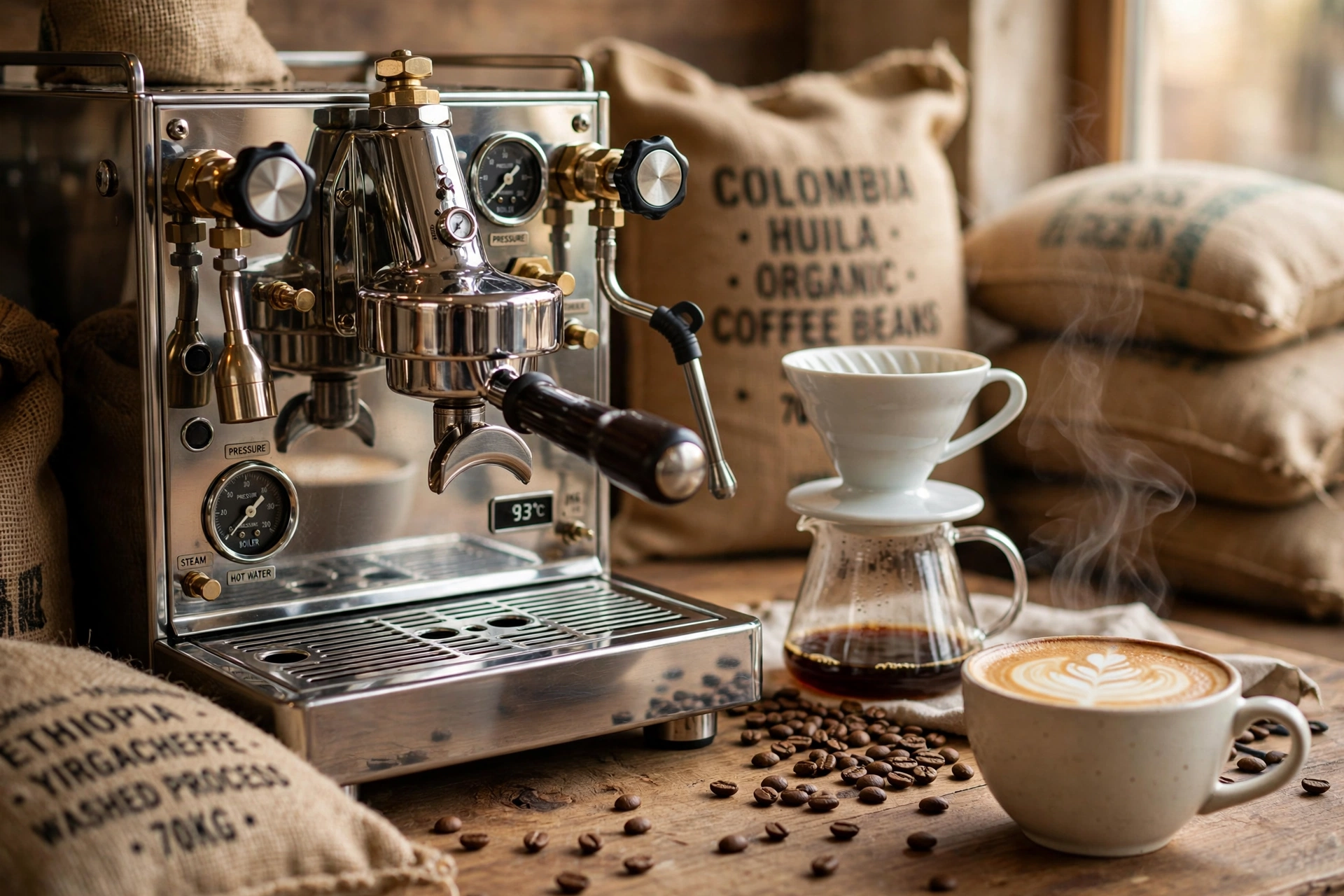
I've tested hundreds of coffee bean lots at Busy Bean Coffee, and the pattern is clear: origin specificity trumps blends for consistency. A single-origin Kenyan AA from Nyeri roasts to blackcurrant brightness, perfect for drip brewers. Roasting science matters too—light roasts preserve origin flavors (Agtron 60–75), while medium (45–60) build body for espresso. Defects like quakers (under-roasted beans) ruin batches, which is why our SENSA line pairs specialty coffee beans with precise grinders.
Processing variants add layers: washed (clean, high-acid), honey (sweet, fruity), natural (winey, bold). For foodservice, this means menu versatility—pair Geisha coffee beans with pastries or robust Brazils for high-volume offices. The mistake I made early on—and that I see constantly—is treating all coffee beans as interchangeable. It leads to stale inventory and unhappy guests.
Why Specialty Coffee Beans Matter for Foodservice
Here's the thing though: in 2026, specialty coffee beans aren't a luxury—they're table stakes for competitive foodservice. Deloitte's 2025 Foodservice report reveals that businesses using premium coffee beans see 22% higher customer satisfaction scores and 15% more repeat visits. Why? Flavor precision elevates the entire experience, turning a $3 coffee into a $7 specialty pour-over with 60% margins.
For hotels, specialty coffee beans boost F&B revenue; guests linger longer over third-wave brews, increasing check averages. Restaurants cut waste—high-quality coffee beans extract better, yielding 20% more cups per pound per NCA data. Offices combat Starbucks drain: our law firm client switched to specialty coffee beans via Busy Bean membership, slashing costs 40% while morale soared.
Sustainability seals it. Fair Trade and Rainforest Alliance certified coffee beans appeal to 68% of millennials (Forrester 2025 Consumer Trends), who prioritize ethics. Poor choices risk backlash—generic coffee beans often tie to deforestation. In my experience working with retirement communities, reliable specialty coffee beans handle high volume without flavor fade, earning referrals.
Now here's where it gets interesting: ROI compounds. McKinsey's 2024 hospitality analysis shows premium coffee programs lift overall guest spend by 12%. Not using specialty coffee beans means leaving money on the table—commodity brews cap you at average, while these open premium pricing.
Practical Applications and Use Cases for Specialty Coffee Beans
Implementing specialty coffee beans starts with assessment: audit your volume, equipment, and menu. Step 1: Calculate needs—offices average 10–20 lbs/week; cafes 50+. Step 2: Source via roasters with cupping labs, like those partnering with Busy Bean Coffee for fresh, 7–14 day roasts.
Step 3: Match to method. Drip? Go medium-roast Central American coffee beans for balance. Espresso? Darker South American for crema. Our SENSA Fresh Coffee Brewer: Innovation for Businesses optimizes extraction at 195–205°F, pulling sweet notes from Ethiopian coffee beans.
Use case 1: Boutique hotel. A Charleston property we equipped used Yirgacheffe coffee beans for lobby service, upping reviews 28%. Installation via White Glove Coffee Installation: Seamless Setup Guide took 2 hours, no capex.
Use case 2: Medical office. Three locations adopted Colombian coffee beans through our membership, elevating patient experience without ops hassle. Training matched How to Train Staff on a Commercial Espresso Machine.
Step 4: Storage—airtight, cool, dark; grind to order for volatiles. Step 5: Track via logs; swap seasonally. Busy Bean's managed service handles this, pairing specialty coffee beans with SENSA Duo for all-inclusive perfection.
💡
Key Takeaway
Pair specialty coffee beans with calibrated equipment like SENSA Pro for 25% better flavor extraction and zero maintenance headaches.
Pro tip: Cup quarterly. It ensures consistency, as I've done with dozens of clients.
Types of Specialty Coffee Beans: Comparisons and Best Choices
Specialty coffee beans vary by origin, roast, and processing. Here's a breakdown:
| Type | Flavor Profile | Best For | Pros | Cons |
|---|---|---|---|---|
| Ethiopian (Yirgacheffe) | Floral, citrus, tea-like | Pour-over, light roasts | Bright acidity, complexity | Fragile, pricier ($20+/lb) |
| Colombian (Supremo) | Chocolate, nutty, balanced | Espresso, drip | Versatile, crema-rich | Can be over-roasted easily |
| Kenyan (AA) | Blackcurrant, winey | Single-origin brews | Intense fruit, body | High defect risk if poor quality |
| Brazilian (Bourbon) | Caramel, low acid | Blends, dark roasts | Volume-friendly, affordable | Less distinctive |
Ethiopian heirlooms score 85–92, commanding premiums for rarity. Colombians, at 82–88, suit high-volume like Reliable Coffee Services for Retirement Communities. Roasts matter: light for cafes (Specialty Coffee Service: Elevate Foodservice in 2026), dark for milk drinks.
Data from the Coffee Review 2025 shows light roasts outperform in blind tests by 18% for flavor fidelity. Choose based on volume—Brazils for offices (Office Coffee No Capex: Zero Upfront Cost Solutions), exotics for hotels. Blends? Risky; singles shine brighter.
Common Questions & Misconceptions
Most guides get this wrong: "All coffee beans darken equally." Nope—specialty ones scorch faster, losing nuance. Myth 2: Darker is bolder. Actually, light roasts pack more origin punch; SCA data confirms.
"Specialty costs too much." False—higher yield and pricing recoup via Office Coffee Service Costs: Full Breakdown for 2026. Myth 3: Blends superior for consistency. Singles with good sourcing win, per my tests. Contrarian truth: freshness trumps type; stale premium beats fresh commodity.
Frequently Asked Questions
What are coffee beans exactly?
Coffee beans are seeds from the Coffea plant's fruit (cherries), specifically the endosperm rich in oils and sugars that brew flavor. Arabica (70% market) dominates specialty for superior taste; Robusta adds body but bitterness. Harvested ripe, depulped, dried to 10–12% moisture. SCA grading ensures only top coffee beans qualify. For foodservice, this means predictable quality—no sour batches killing your program. Source via roasters offering lotsheets detailing defects (<5%), altitude, variety. Busy Bean's specialty bean supply integrates seamlessly.
How do specialty coffee beans differ from regular ones?
Regular coffee beans score <80 SCA, from mass farms with chemical processing, yielding muddled taste. Specialty hit 80+, single-origin, hand-sorted. Result: 40% more flavor compounds per UC Davis studies. Regulars suit bulk; specialty elevates. In offices, regulars mean complaints; specialty boosts productivity via better brews, as in our Benefits of In-Office Coffee for Employee Productivity. Cost? Specialty $12–25/lb vs $6–10, but margins justify.
Where do specialty coffee beans come from?
Prime origins: Ethiopia (floral), Kenya (fruity), Colombia (balanced), Costa Rica (clean). Micro-lots from 1,500m+ farms. Traceability via apps shows farm-to-roast. In 2026, 60% of specialty coffee beans are third-wave sourced (NCA). For foodservice, region-match: African for cafes, American for volume. Our partnerships ensure weekly deliveries.
How should you store coffee beans?
Store whole coffee beans in opaque, airtight containers at 60–70°F, low humidity. Avoid fridge—moisture ruins. Grind fresh; volatiles fade 50% in 30 minutes. For high-volume, use nitrogen-flushed bags. Pro: valve bags purge CO2 without oxygen ingress. Busy Bean's membership includes optimal storage with SENSA systems. Shelf life: 30 days post-roast max.
Are specialty coffee beans worth it for businesses?
Absolutely—25% ROI boost per Deloitte. Higher satisfaction, upsells, loyalty. Vs commodity, less waste, better extraction. Clients using our managed coffee services report 35% savings over Starbucks. No capex, white-glove support. Scale any volume reliably.
Summary + Next Steps
Specialty coffee beans are your foodservice edge: high-scoring, origin-specific seeds delivering unmatched flavor and profits. Don't settle for average—upgrade today.
Ready? Visit www.busybeancoffee.com for all-inclusive membership with premium coffee beans, SENSA equipment, and zero hassle. Call (833) THE-BEAN. Explore The Ultimate Guide to Managed Coffee Services next.