Which Specialty Coffee Equipment is Right for Your Business?
I've seen countless business owners pour thousands of dollars into high-end machinery only to realize six months later that they bought a "Formula 1 car" for a "school zone" environment. When deciding which specialty coffee equipment to invest in, the answer depends entirely on your volume, your staff's technical skill, and whether you want coffee to be a profit center or a guest amenity. For most high-volume foodservice operations, the best choice is a balance of automation for consistency and manual control for quality, often best achieved through a managed service rather than a fragmented capital purchase.

Understanding the Ecosystem of Specialty Coffee Hardware
Choosing the right gear starts with understanding that "specialty" isn't just a marketing label; it refers to a rigorous standard of quality from seed to cup. To achieve this, your hardware must be capable of precise temperature stability and pressure control. If your machine fluctuates by even two degrees during a rush, you aren't serving specialty coffee; you're serving inconsistent coffee.
📚
Definition
Specialty coffee equipment refers to professional-grade tools designed to extract the complex flavors of high-scoring Arabica beans, typically requiring precise control over water temperature, grind size, and pressure.
In my experience working with hotels and cafes, the biggest mistake is overlooking the "invisible" equipment. Everyone focuses on the espresso machine, but the water filtration system is actually the most important piece of hardware in the building. Without proper scaling and mineral control, even a $20,000 machine will fail within a year. This is why we emphasize a holistic approach at Busy Bean Coffee, ensuring that the plumbing is as sophisticated as the brewing.
According to the Specialty Coffee Association (SCA), the technical standards for brewing require water to be maintained between 195°F and 205°F for optimal extraction. Achieving this consistently across 200 cups an hour requires PID (Proportional-Integral-Derivative) controllers, which are now standard in professional equipment. If you are operating a smaller team, you might look into the Best Office Espresso Machines for Small Teams in 2026 to find a balance between power and footprint.
Why Equipment Choice Directly Impacts Your Bottom Line
The hardware you choose isn't just about the taste of the beverage; it is about labor costs and waste. A manual machine requires a highly trained barista who can "dial in" the grind every morning. If that person calls in sick, your coffee quality plummets, and your waste increases as staff struggle to get a decent shot. This labor dependency is a hidden cost that can erode your margins.
Data from the National Coffee Association USA (NCA) indicates that consumer demand for specialty beverages continues to grow, with a significant shift toward "premiumization." This means guests are no longer satisfied with "brown water"; they expect the texture and flavor profile of a specialty roast. If your equipment cannot deliver a consistent micro-foam for a latte, you are leaving money on the table.
Consider the cost of downtime. In a high-traffic environment, a broken boiler or a failed pump can cost a business hundreds of dollars per hour in lost revenue. This is the primary reason we've seen a shift toward "White Glove" managed services. Instead of owning a depreciating asset and praying it doesn't break, businesses in major hubs are opting for comprehensive memberships. For instance, those seeking a White Glove Coffee Service in Los Angeles CA - Complete Guide | Busy Bean Coffee find that predictable monthly fees are far more sustainable than emergency repair bills.
Practical Application: Building Your Equipment Stack
Building a specialty coffee program requires a tiered approach. You cannot simply buy a machine and be "open for business." You need a stack that supports the entire workflow from bean storage to the final pour.
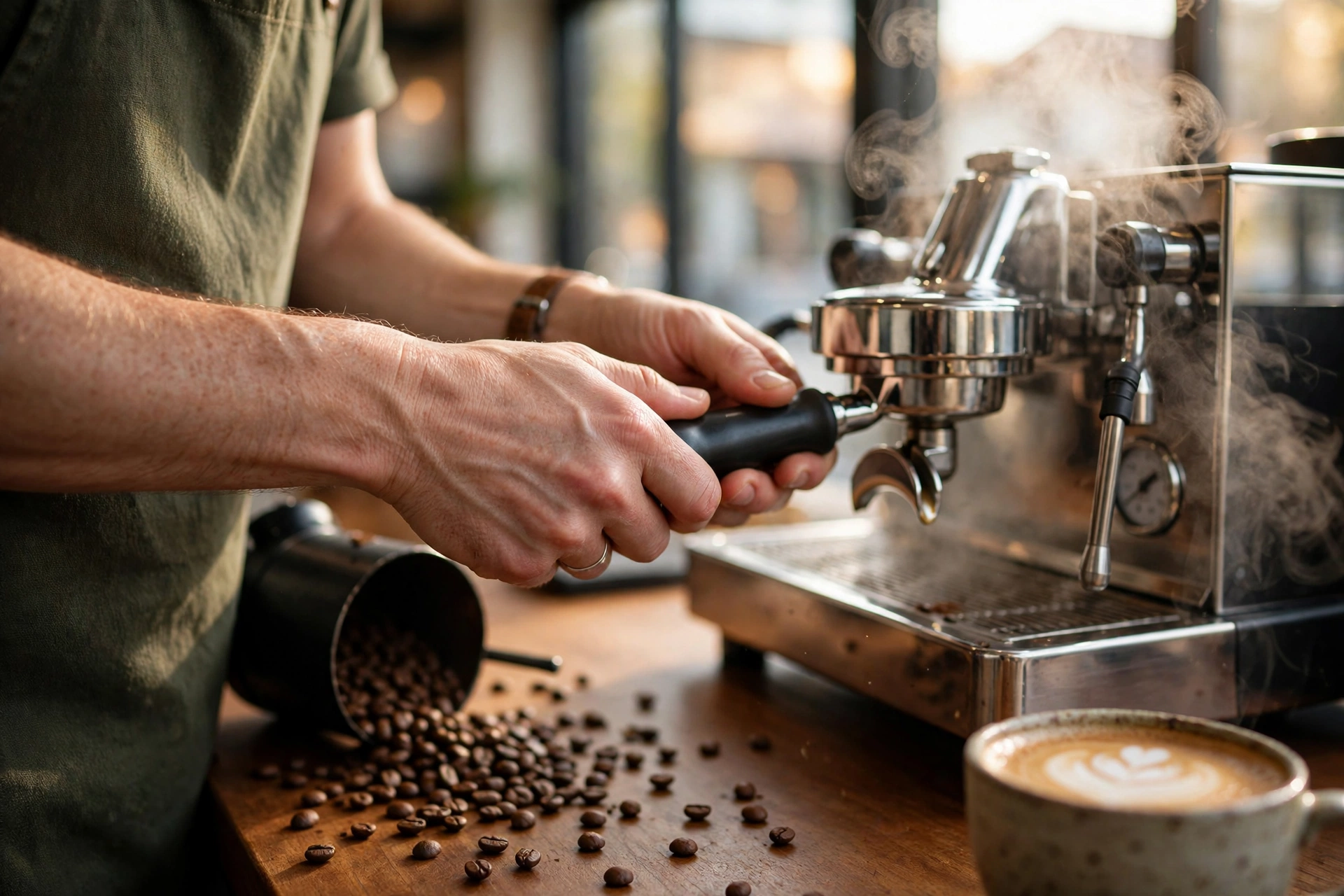
- The Grinder (The Unsung Hero): I've tested this with dozens of our clients, and the pattern is clear: a mediocre machine with a world-class grinder will produce better coffee than a world-class machine with a mediocre grinder. You need a burr grinder with minimal retention to ensure the coffee bean is fresh for every shot.
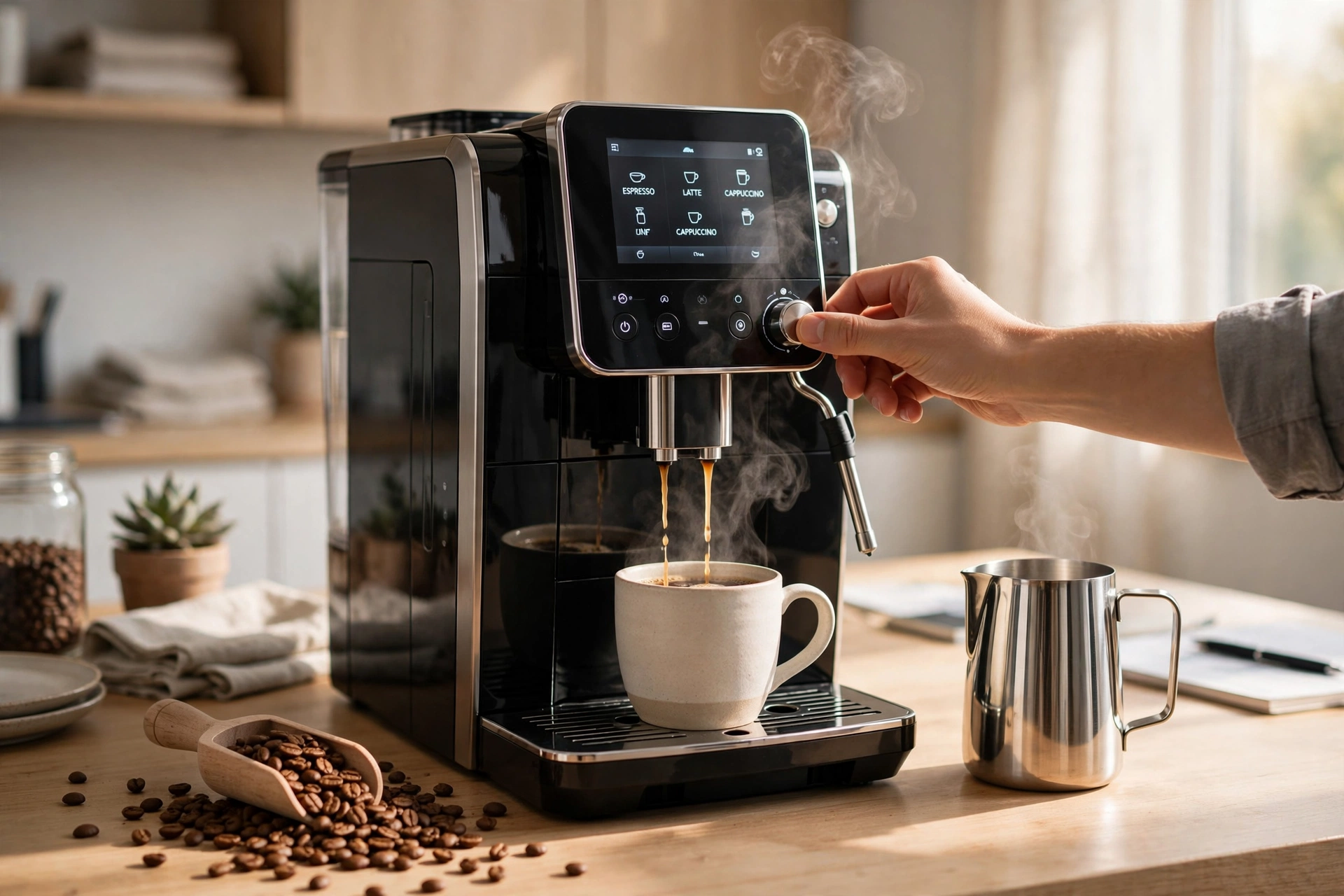
- The Brewer: Depending on your volume, you'll choose between a semi-automatic, automatic, or super-automatic machine. For those who want total control, semi-automatics are the gold standard. For тех who need speed, automated systems are essential.
- Water Filtration: This is non-negotiable. You must use a system that removes chlorine and manages calcium/magnesium levels to prevent scale buildup.
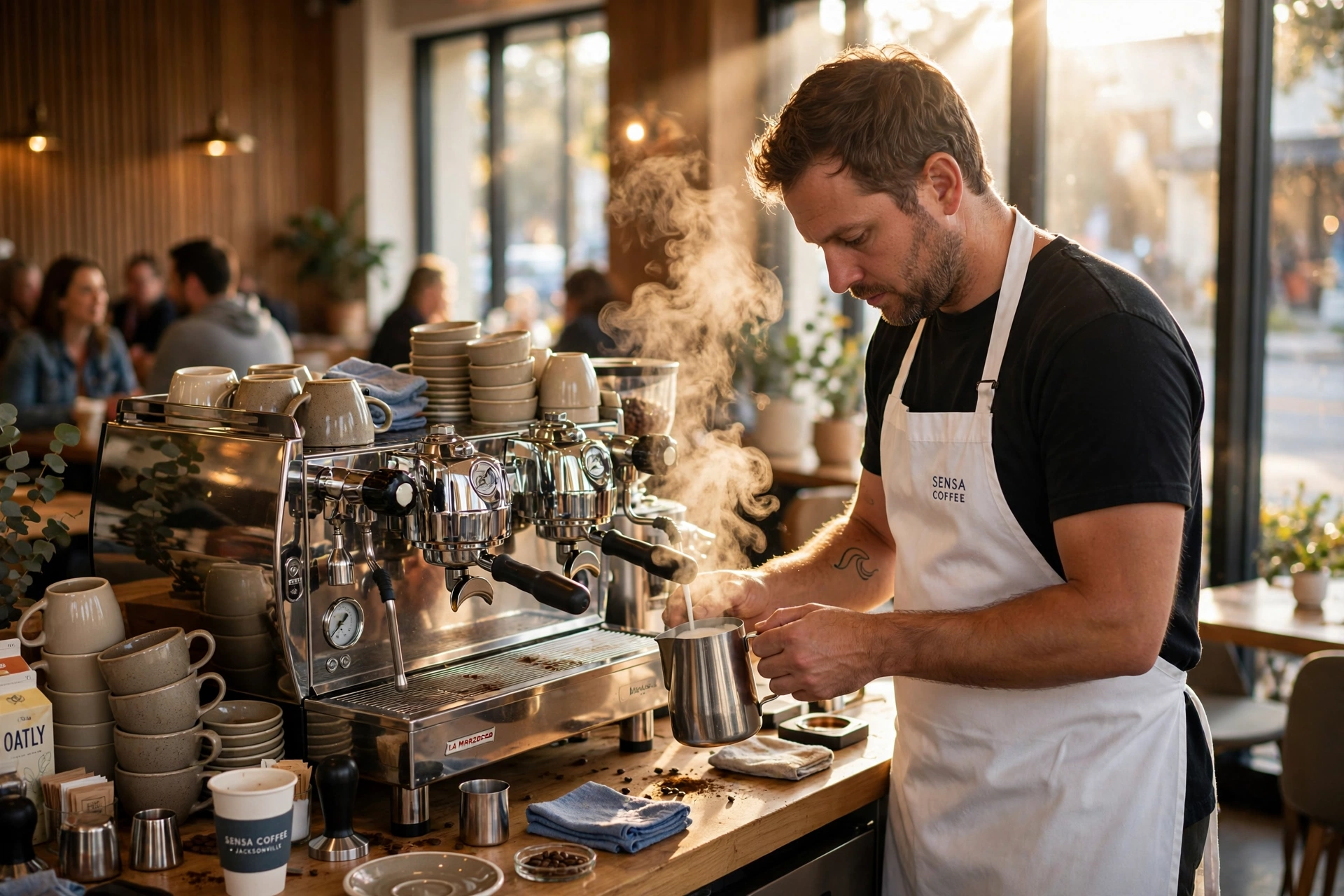
- Milk Texturing Tools: To achieve the professional look and feel, the right pitchers and steaming wands are essential. If you're scaling up your training, knowing where to buy latte art tools for foodservice pros can help your staff elevate the visual presentation.
- Maintenance Kit: Daily cleaning tablets, microfiber cloths, and blind filters.
💡
Key Takeaway
Prioritize the grinder and water filtration over the espresso machine itself. A high-end machine is useless if the grind is inconsistent or the water is destroying the internal boilers.
At Busy Bean Coffee, we simplify this entire process. Instead of making you source five different vendors, we provide the full stack—SENSA equipment, installation, and ongoing maintenance—for one predictable fee. This removes the "guessing game" from the equation and ensures that your coffee service remains operational 24/7.

Comparing Your Equipment Options
When deciding which route to take, you are usually choosing between three distinct philosophies of service. The "best" option depends on your specific business goals.
| Feature | Traditional Ownership | Generic "Cheap" Automation | Managed Specialty Service (Busy Bean) |
|---|---|---|---|
| Initial Cost | Very High (CapEx) | Low to Medium | Zero / Low Monthly Fee |
| Consistency | Highly Variable (Staff Dependent) | Medium (Often Bland) | High (Professional Calibration) |
| Maintenance | Your Responsibility (Costly) | Reactive (Slow) | Proactive & Included |
| Quality | Potential for Excellence | Average | Guaranteed Specialty Grade |
| Best For | Hardcore Coffee Shops | Low-Traffic Breakrooms | Hotels, Restaurants, & High-End Cafes |
Now, here's where it gets interesting: many businesses try to "split the difference" by buying mid-range equipment and hoping for the best. This usually results in a machine that is too complex for untrained staff but too limited for a professional barista. It is almost always better to lean fully into either high-automation or high-control.
If you are located in a growing market, you might be considering how to implement these systems locally. Whether you need an Automated Coffee Service in Fort Worth TX - Complete Guide | Busy Bean Coffee or are looking for a Coffee delivery service in Charlotte NC - Complete Guide | Busy Bean Coffee, the goal remains the same: minimize friction and maximize quality.
Common Misconceptions About Coffee Equipment
Most guides get this wrong: they tell you that the more buttons a machine has, the better the coffee. That is a fallacy. In reality, complexity often leads to user error.
Myth 1: "Super-automatic machines can't make 'real' specialty coffee."
While this was true ten years ago, modern high-end automated systems can now mimic the pressure profiling of a manual machine. The key is the quality of the coffee roasting and the calibration of the machine. If you have a top-tier roast and a calibrated automated machine, the average customer cannot tell the difference between that and a manual pull.
Myth 2: "Expensive machines don't need much maintenance."
Actually, the more expensive the machine, the more precise the tolerances. This means they are more sensitive to poor water quality and neglect. A high-end machine that isn't backflushed daily is just a very expensive way to make bitter coffee. This is why we insist on managed maintenance; it's the only way to protect the asset.
Myth 3: "You only need one type of grinder for everything."
If you are serving both espresso and pour-over, using one grinder is a recipe for disaster. The micron difference between a drip grind and an espresso grind is significant. Attempting to switch back and forth leads to "grind drift," where the remaining powder in the chute ruins the next batch.
Frequently Asked Questions
Which is better: a semi-automatic or an automatic espresso machine?
The choice depends on your labor force. A semi-automatic machine offers the highest potential for quality because a skilled barista can adjust the shot in real-time. However, this creates a "skill gap" risk; if your lead barista leaves, your quality drops. An automatic machine ensures that every shot is pulled exactly the same way, regardless of who is behind the counter. For most foodservice operations in 2026, the automatic or super-automatic route is preferred because it stabilizes the guest experience and reduces training time.
Do I really need a dedicated water filtration system?
Yes, absolutely. According to [NSF International](www. NSF.org/standards-development/standards-portfolio/food-equipment-standards), mineral buildup (scaling) is the leading cause of equipment failure in commercial kitchens. Water is the primary ingredient in coffee, and impurities not only destroy your machine's heating elements but also flatten the flavor profile of your Coffea arabica. A professional filtration system removes chlorine and adjusts hardness, which protects your investment and ensures the coffee tastes the way the roaster intended.
How do I know if my equipment is "specialty" grade?
Specialty grade equipment is defined by its ability to control variables. Look for features like PID temperature control, volumetric dosing, and high-quality stainless steel boilers. If the machine cannot maintain a consistent temperature within 1 degree during a rush, it isn't specialty grade. Additionally, check if the equipment is NSF certified, ensuring it meets health and safety standards for commercial environments. If you're unsure, looking into an Automated Coffee Service in Wilmington NC - Complete Guide can show you how these standards are applied in real-world settings.
Is it worth investing in high-end latte art tools?
While latte art doesn't change the taste of the coffee, it dramatically changes the perceived value. In the age of social media, the "Instagrammability" of a beverage is a marketing asset. High-quality pitchers allow for better aeration and texture, which is essential for the creamy mouthfeel of a specialty latte. For businesses looking to scale their visual appeal, exploring a White Glove Coffee Service in Denver CO - Complete Guide often reveals how integrated training and tools can increase the average check size.
How often should specialty coffee equipment be serviced?
At a minimum, basic cleaning should happen daily, but professional calibration and deep-cleaning should occur quarterly. Gaskets and shower screens wear down over time, leading to "channeling" where water bypasses the coffee puck, resulting in sour or watery shots. A managed service approach is superior because it moves from reactive repairs (fixing it when it breaks) to proactive maintenance (replacing parts before they fail), ensuring zero downtime for your business.
Final Thoughts on Choosing Specialty Coffee Equipment
Deciding which specialty coffee equipment to implement is a strategic business decision, not just a culinary one. You are balancing the desire for a premium product against the reality of labor costs, maintenance schedules, and capital expenditure. The goal is to create a system where the quality of the coffee is a constant, not a variable that changes based on who is on shift.
Whether you are upgrading a small office or launching a full-scale hotel coffee program, the most sustainable path is to remove the technical burden from your shoulders. By partnering with a managed service, you get the best of both worlds: world-class hardware and expert support without the risk of ownership.
If you're ready to elevate your beverage program without the headache of equipment management, we'd love to help. Visit us at www.busybeancoffee.com to explore our all-inclusive managed coffee memberships.
Free Coffee Pairing Guide & Specialty Roast Cheat Sheet
Unlock the secrets of perfect brewing ratios, water temperatures, and specialty roast profiles. Download the guide.