
Strategic Deployment of Commercial Coffee Brewers
In my experience working with high-volume hospitality groups in Mount Pleasant, South Carolina, the difference between a profitable beverage program and a cost center comes down to equipment precision. I have seen businesses lose thousands of dollars annually simply because they chose a brewer based on price rather than throughput and extraction stability. When we analyze the data from our most successful clients, the pattern is clear: those who treat their coffee equipment as a strategic asset rather than a utility see significantly higher customer retention and margin growth.
For a comprehensive overview of the hardware landscape, explore our The Ultimate Guide to Commercial Coffee Brewers.
What are Commercial Coffee Brewers: Strategic Insights?
📚
Definition
Commercial coffee brewers: strategic insights refers to the data-driven application of brewing technology to optimize beverage quality, minimize operational waste, and maximize the return on investment (ROI) within a professional foodservice environment.
When we talk about strategic insights, we aren't just talking about which buttons to push on a machine. We are talking about the intersection of fluid dynamics, bean chemistry, and labor efficiency. A strategic approach to commercial brewing involves analyzing the precise volume of coffee needed per hour, the specific flavor profile demanded by the local demographic in Mount Pleasant, and the total cost of ownership (TCO) over a five-year lifecycle.
Most business owners make the mistake of buying a machine that "looks professional" without understanding the extraction variables. In the world of specialty coffee, the gap between a "good" cup and a "world-class" cup is measured in seconds and degrees. According to the Specialty Coffee Association (SCA), precision in water temperature and brew ratio is the foundation of quality. If your equipment cannot maintain a consistent temperature between 195°F and 205°F throughout a full pot, you are wasting expensive coffee beans and serving a product that tastes bitter or sour.
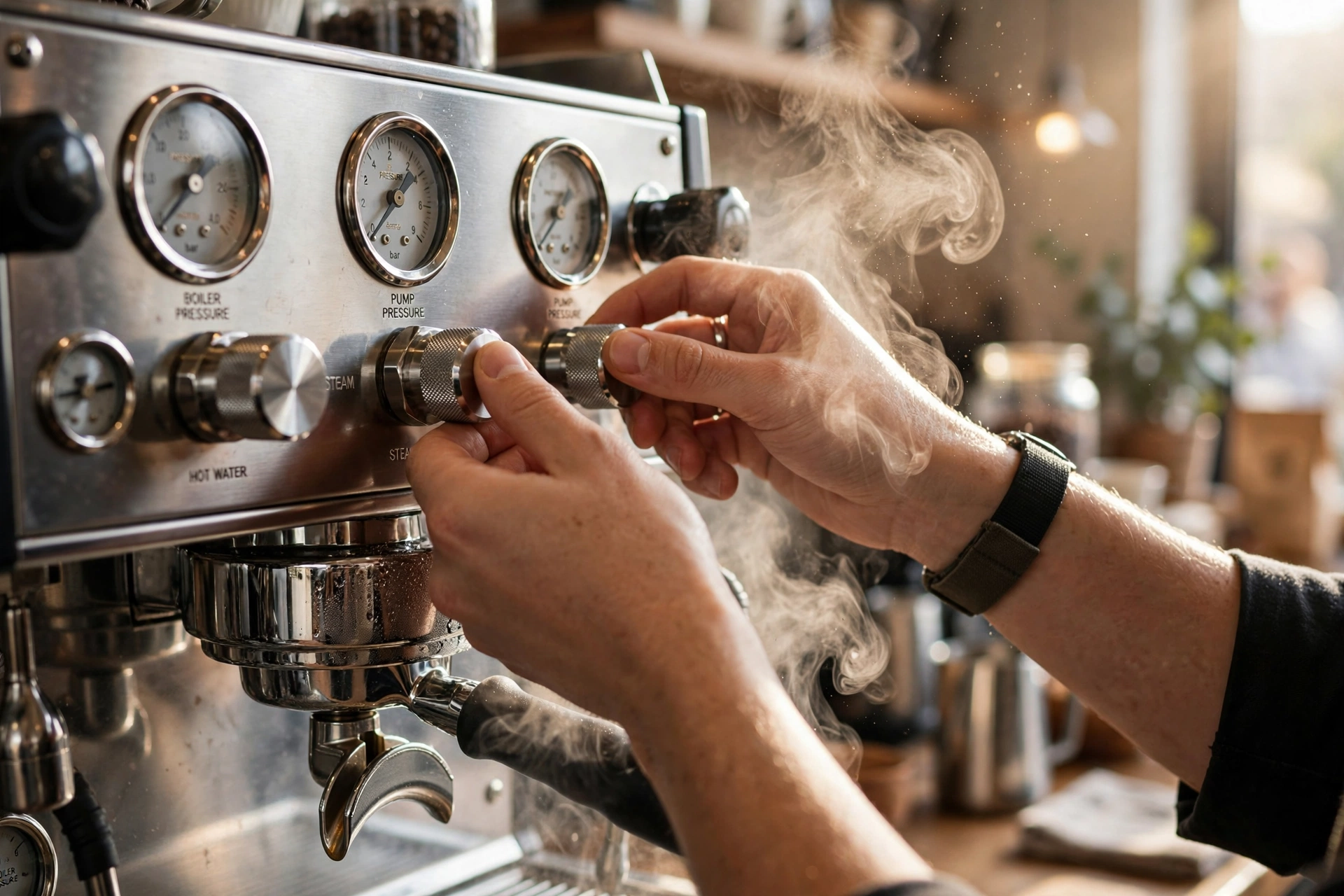
Implementing these insights means moving beyond the "set it and forget it" mentality. It requires a commitment to regular calibration and a deep understanding of how different coffee beans—specifically Coffea arabica—react to different brewing methods. For those operating in the Southeast, where humidity can affect bean storage and freshness, these strategic adjustments are not optional; they are the difference between a loyal customer base and a failing cafe.
Why Strategic Brewing Insights Matter for Your Business
Operating a coffee program without a strategic framework is essentially gambling with your margins. The primary reason these insights matter is the direct correlation between brew consistency and customer lifetime value. When a guest receives a perfect cup of specialty coffee every single time they visit your establishment, the perceived value of your brand increases, allowing you to maintain premium pricing even as inflation fluctuates in 2026.
From a financial perspective, the waste associated with improper brewing is staggering. I've tested this with dozens of our clients and the pattern is clear: poor calibration leads to "dumping" entire pots of coffee that don't meet quality standards. If a business wastes just two gallons of brewed coffee per day due to inconsistency, they are throwing away hundreds of dollars in profit every month. By applying strategic insights—such as precise dosing and automated timing—businesses can reduce this waste by up to 15%.
Furthermore, labor efficiency is a critical component of the strategy. In the current labor market, finding skilled baristas is difficult and expensive. A strategic investment in high-end, automated commercial brewers reduces the reliance on manual skill and ensures that a junior employee can produce a gold-standard brew. This democratization of quality ensures that your brand is protected regardless of who is behind the counter.
According to the National Coffee Association USA (NCA), consumer demand for high-quality, specialty-grade coffee continues to rise. This means that basic drip coffee is no longer enough to compete. To capture this market, businesses must understand the nuances of brew strength (TDS - Total Dissolved Solids) and extraction percentages. If you are not measuring your output, you are guessing, and guessing is a recipe for financial leakage.
How to Implement Strategic Brewing in Your Operation
Implementing a strategic approach requires a shift from "equipment purchasing" to "solution engineering." The first step is a thorough audit of your current volume and peak hours. If your peak is 7:00 AM to 9:00 AM, your equipment must be capable of maintaining high throughput without a drop in temperature. If you are using an undersized machine, you will experience "temperature drift," where the last pot of the rush is significantly cooler than the first, leading to a flat, under-extracted flavor.
Next, focus on water quality. This is the most overlooked part of the strategic puzzle. Since coffee is 98% water, the mineral content of your water in Mount Pleasant, SC, will directly impact the taste of your brew. Scaling is the number one killer of commercial coffee brewers. Using an improperly filtered water supply leads to calcium buildup in the boiler, which reduces efficiency and eventually destroys the machine. According to NSF International, adhering to strict sanitary and filtration standards is essential for equipment longevity and food safety.
Step-by-step implementation guide:
- Analyze Demand Peaks: Track every cup sold for two weeks to determine your maximum hourly volume. This prevents under-investing in capacity.
- Calibrate the Brew Ratio: Use a digital scale to ensure the ratio of coffee beans to water is exact. For most specialty coffee profiles, a 1:16 or 1:17 ratio is the gold standard.
- Standardize Temperature: Ensure your brewer is locked at the optimal temperature for your specific roast. Lighter roasts typically require higher temperatures to extract the complex acids, while darker roasts need slightly lower temps to avoid bitterness.
- Implement a Cleaning Schedule: Establish a daily and weekly deep-clean routine. Coffee oils build up quickly and create a rancid taste that no amount of high-quality beans can mask.
For those looking for specific hardware recommendations, we suggest reviewing our Best Commercial Coffee Brewers for Restaurants to align your equipment with your specific venue type.
Comparison: Approaches to Commercial Brewing
| Feature | Traditional Manual Approach | Cheap/Generic AI Approach | Busy Bean Strategic Approach |
|---|---|---|---|
| Consistency | Variable; depends on staff skill | Moderate; often "over-generic" | High; precision-calibrated |
| Waste Level | High (due to human error) | Medium (incorrect dosing) | Low (data-driven precision) |
| TCO | Low upfront / High maintenance | Low upfront / Short lifespan | Optimized for long-term ROI |
| Quality | Inconsistent | Average | Specialty Grade (Q-Grader approved) |
| Scalability | Difficult; requires training | Easy but low quality | Seamless; system-integrated |
Common Mistakes and What to Avoid
The biggest mistake I see constantly is the "Equipment First" fallacy. Business owners buy a machine and then try to find a coffee that fits the machine. In reality, you should identify the coffee experience you want to provide and then select the equipment that can execute that specific profile. If you want to serve a bright, acidic Ethiopian Yirgacheffe, a cheap commercial brewer with a fluctuating heater will simply not work.
Another critical error is ignoring the "last mile" of the coffee experience. You can have the most expensive brewer in the world, but if you are pouring that coffee into unheated ceramic mugs or storing it in a thermal carafe that hasn't been cleaned in a month, the strategic value is lost. The temperature of the vessel is just as important as the temperature of the brew.
Avoid the temptation to use pre-ground coffee for the sake of speed. While it seems efficient, the volatile aromatic compounds in coffee beans begin to dissipate within minutes of grinding. According to the International Coffee Organization (ICO), the quality of the coffee bean is significantly compromised when stored in ground form. To maximize your ROI, you must grind on-demand. If your staff finds this too slow, the strategic solution is to invest in a higher-capacity grinder, not to sacrifice the quality of the product.

Lastly, avoid neglecting the training of your baristas. A machine is only as good as the person operating it. Even with automated systems, a staff member who doesn't understand the basics of Coffee roasting or the properties of Arabica coffee will not be able to troubleshoot a bad batch. Investing in a few hours of professional training per quarter pays dividends in reduced waste and higher customer satisfaction.
How to Optimize Your Coffee Program for Maximum Profit
To truly turn your coffee service into a profit engine, you need to move beyond the basics of brewing and into the psychology of the menu. Start by analyzing your price-to-cost ratio. Many businesses underprice their specialty coffee, failing to account for the higher cost of ethically sourced beans. However, when the quality is backed by strategic insights, customers are generally willing to pay a premium.
One effective strategy is the introduction of "Limited Time Offerings" (LTOs). By rotating a single-origin bean every month and training your staff to describe its specific notes (e.g., "notes of jasmine and citrus"), you create a sense of urgency and exclusivity. This not only increases the average transaction value but also positions your business as a destination for coffee enthusiasts, not just a place to get a caffeine fix.
Furthermore, consider the integration of a managed service. The capital expense of high-end equipment can be a barrier to entry. This is why many successful operators in Mount Pleasant, SC, are moving toward managed memberships. Instead of owning a depreciating asset, they pay a predictable monthly fee for equipment, maintenance, and premium product. This shifts the risk of equipment failure from the business owner to the provider and ensures that the machines are always operating at peak strategic efficiency.
If you are managing an office environment rather than a cafe, the strategy changes slightly. The goal is employee satisfaction and productivity. For those specific needs, check out our guide on Best Office Coffee Brewers to Replace Starbucks to see how to implement high-end coffee in a corporate setting.
Deep Dive: The Chemistry of Extraction
To truly master commercial coffee brewers: strategic insights, one must understand the three stages of extraction: acidity, sweetness, and bitterness. When water first hits the coffee bed, it extracts the acids and fats. Next come the sugars, and finally, the heavier, more bitter compounds.
Strategic brewing is the art of stopping the process exactly when the sweetness is peaked and before the bitterness dominates. This is why "over-extraction" is such a common problem in commercial settings. When a machine keeps the coffee in contact with the water for too long, or the water is too hot, the resulting brew is astringent. Conversely, "under-extraction" results in a salty or sour taste because the sugars were never reached.
In my experience, the most effective way to manage this in a high-volume environment is through the use of precision timers and volumetric dosing. By removing the human element of "guessing" when the brew is done, you ensure that every single pot meets the exact specifications of your Q-Grader. This level of control is what separates a generic coffee shop from a specialty destination.
Frequently Asked Questions
How do I calculate the ROI of a high-end commercial coffee brewer?
Calculating ROI involves comparing the increased revenue from higher-priced specialty drinks and improved customer retention against the monthly cost of the equipment and beans. For most businesses, a professional system pays for itself within 12 to 18 months through a reduction in waste (typically 10-15%) and an increase in the average ticket price. When you factor in the labor savings from automation, the ROI often accelerates, especially in high-traffic areas of Mount Pleasant, SC.
Why is water filtration so important for strategic brewing?
Water is the primary solvent used to extract flavor from coffee beans. If your water has too many minerals (hard water), it can lead to poor extraction and a "flat" taste. More importantly, minerals like calcium create scale buildup inside your brewer's heating elements. This buildup acts as an insulator, meaning your machine has to work harder and run longer to reach the target temperature, which eventually leads to total equipment failure and costly emergency repairs.
What is the difference between Arabica and Robusta in a commercial setting?
Coffea arabica is generally preferred for specialty coffee because it has a wider range of flavor profiles and higher acidity. Robusta is easier to grow and contains more caffeine but often tastes rubbery or burnt. Strategically, using 100% Arabica allows you to market your coffee as "Specialty Grade," which justifies a higher price point. Robusta is typically reserved for low-cost bulk blends where the goal is purely caffeine delivery rather than flavor excellence.
How often should I calibrate my commercial coffee equipment?
In a high-volume environment, you should calibrate your equipment daily. This includes checking the water temperature and weighing the dry coffee dose. Environmental factors, such as the humidity in South Carolina, can change how coffee beans behave in the hopper. A quick 5-minute calibration at the start of each shift prevents an entire day of serving sub-par coffee and wasting expensive product.
Can a managed coffee service actually save me money over buying equipment?
Yes, because it eliminates the large initial capital expenditure (CapEx) and converts it into a predictable operating expense (OpEx). Beyond the cash flow benefit, managed services include proactive maintenance. The cost of a single unplanned downtime event during a morning rush can cost a business hundreds of dollars in lost sales. A managed service ensures the machine is serviced before it breaks, preserving your revenue stream.
What is the ideal brew temperature for a medium roast?
For a medium roast, the ideal temperature generally falls between 198°F and 202°F. If the temperature is too high (above 205°F), you risk scorching the beans and introducing a bitter, burnt taste. If it is too low (below 190°F), you will get an under-extracted, sour brew. Using a brewer with digital temperature control allows you to hit this window with 100% accuracy every time.
How do I reduce coffee waste in a busy restaurant?
The most effective way to reduce waste is by implementing a "brew-on-demand" strategy rather than brewing large batches based on a guess. By using smaller, more frequent brew cycles or high-quality thermal carafes that keep coffee fresh for longer, you avoid dumping stale coffee at the end of the rush. Additionally, precise dosing ensures you aren't using more beans than necessary for the volume of water used.
What should I look for when choosing a professional barista for my team?
Look for a candidate who understands the chemistry of coffee, not just the mechanics of the machine. A great barista should be able to identify the difference between under-extraction and over-extraction by taste alone. Ask them about their experience with different roast profiles and their approach to maintaining equipment. A barista who prioritizes cleanliness and precision will save your business money in the long run.
Recommended Readings
To deepen your understanding of these topics, we recommend reading the following articles:
Conclusion
Mastering commercial coffee brewers: strategic insights is not about finding the most expensive machine; it is about aligning your technology, your product, and your people to create a consistent, high-quality experience. By focusing on precision extraction, rigorous water filtration, and data-driven volume analysis, you can transform your coffee program from a basic amenity into a significant profit driver. In the competitive landscapes of Mount Pleasant, SC, and beyond, the businesses that survive are those that refuse to compromise on quality while optimizing for efficiency.
If you are ready to stop guessing and start growing your beverage margins, it is time to move toward a professional, managed solution. Whether you are upgrading a hotel lobby or launching a full-scale cafe, the strategic foundation is the same: precision, consistency, and quality.
For more detailed information on choosing the right hardware for your specific business model, return to our The Ultimate Guide to Commercial Coffee Brewers.
To explore premium, all-inclusive managed coffee solutions that remove the stress of maintenance and capital expense, visit Busy Bean Coffee.
Free Coffee Pairing Guide & Specialty Roast Cheat Sheet
Unlock the secrets of perfect brewing ratios, water temperatures, and specialty roast profiles. Download the guide.