How Does Modern Cafe Equipment Supply Actually Work?
Establishing a specialty coffee program requires more than just buying a machine; it requires a strategic alignment of hardware, technical support, and raw material logistics. Professional cafe equipment supply operates as an ecosystem where the provider ensures that the espresso machine, grinders, and brewing systems are calibrated to the specific roast profile of the coffee bean being served. For most business owners, the "how" boils down to moving from a capital-expenditure model, where you buy everything upfront, to a managed service model that integrates installation, preventative maintenance, and a consistent supply of high-grade specialty coffee.
In my experience working with dozens of high-volume cafes in Mount Pleasant, SC, the most common failure isn't the quality of the coffee, but the breakdown of the supply chain. When a boiler fails on a Friday morning and the owner doesn't have a service agreement, the business loses thousands in revenue. That is why the modern approach to cafe equipment supply has shifted toward "all-inclusive managed solutions" rather than simple retail transactions.

Understanding the Infrastructure of Cafe Equipment Supply
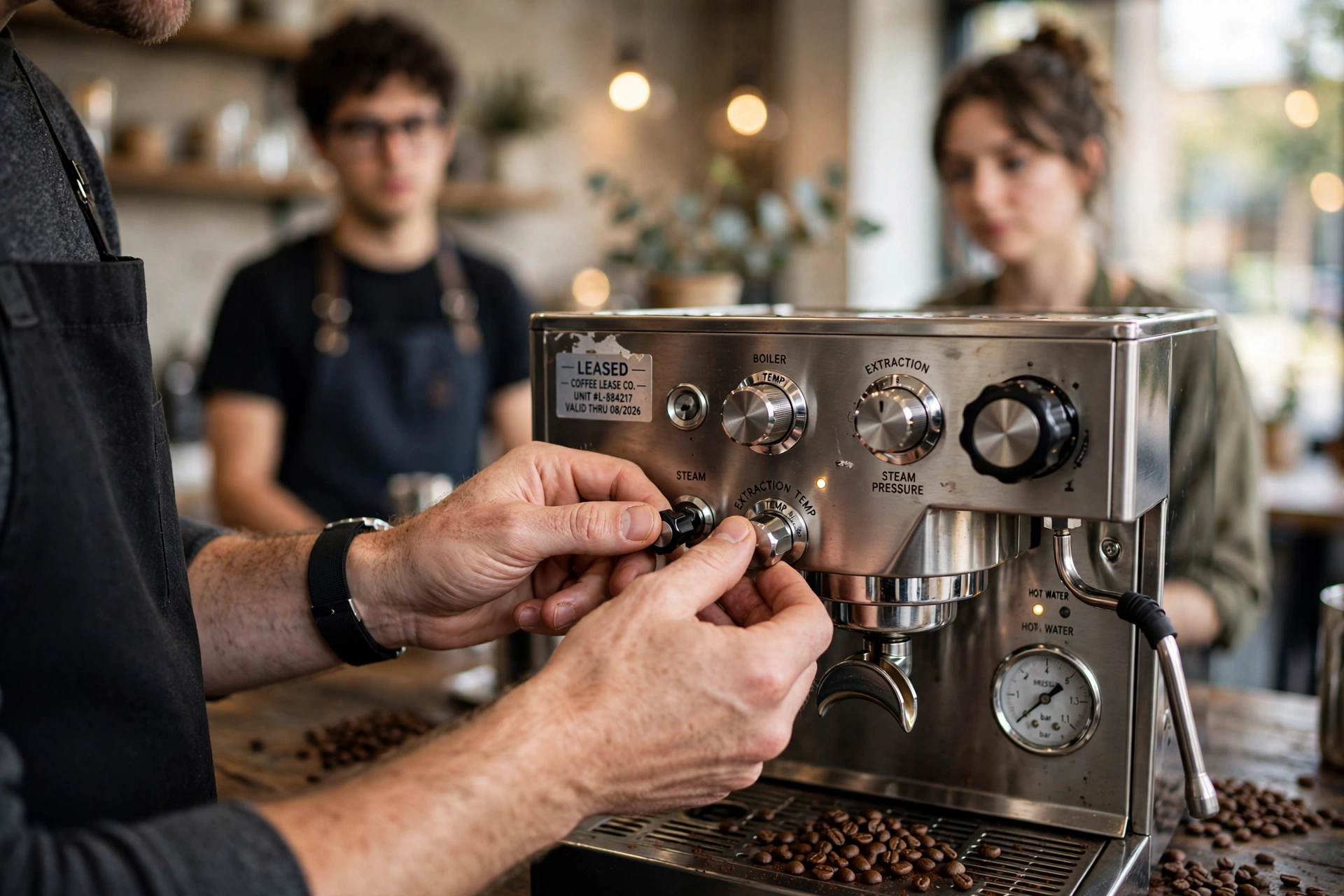
To understand how the supply process works, one must first understand that commercial beverage service is an industrial operation. You aren't just buying a kitchen appliance; you are installing a piece of precision engineering that must maintain temperature stability within 0.1 degrees to extract the complex sugars of Coffea arabica.
📚
Definition
Cafe equipment supply refers to the end-to-end procurement, installation, and lifecycle management of commercial coffee hardware and the recurring delivery of specialty coffee products.
The process typically begins with a "Capacity Analysis." A supplier doesn't just ask how many machines you want; they calculate your peak hour transactions. If you expect 60 customers per hour during a morning rush, a single-group machine will create a bottleneck that kills your customer experience. A professional supply partner analyzes your projected volume to determine the necessary group head count and boiler capacity.
According to the Specialty Coffee Association (SCA), precision in brewing, which depends entirely on the calibration of the equipment, is the only way to consistently achieve a "specialty" score. This means the supply chain must include not only the machine but also the water filtration system. In many regions, including Mount Pleasant, the mineral content of the water can destroy a machine's heating element through limescale buildup within months if a proper filtration system is not integrated into the supply package.
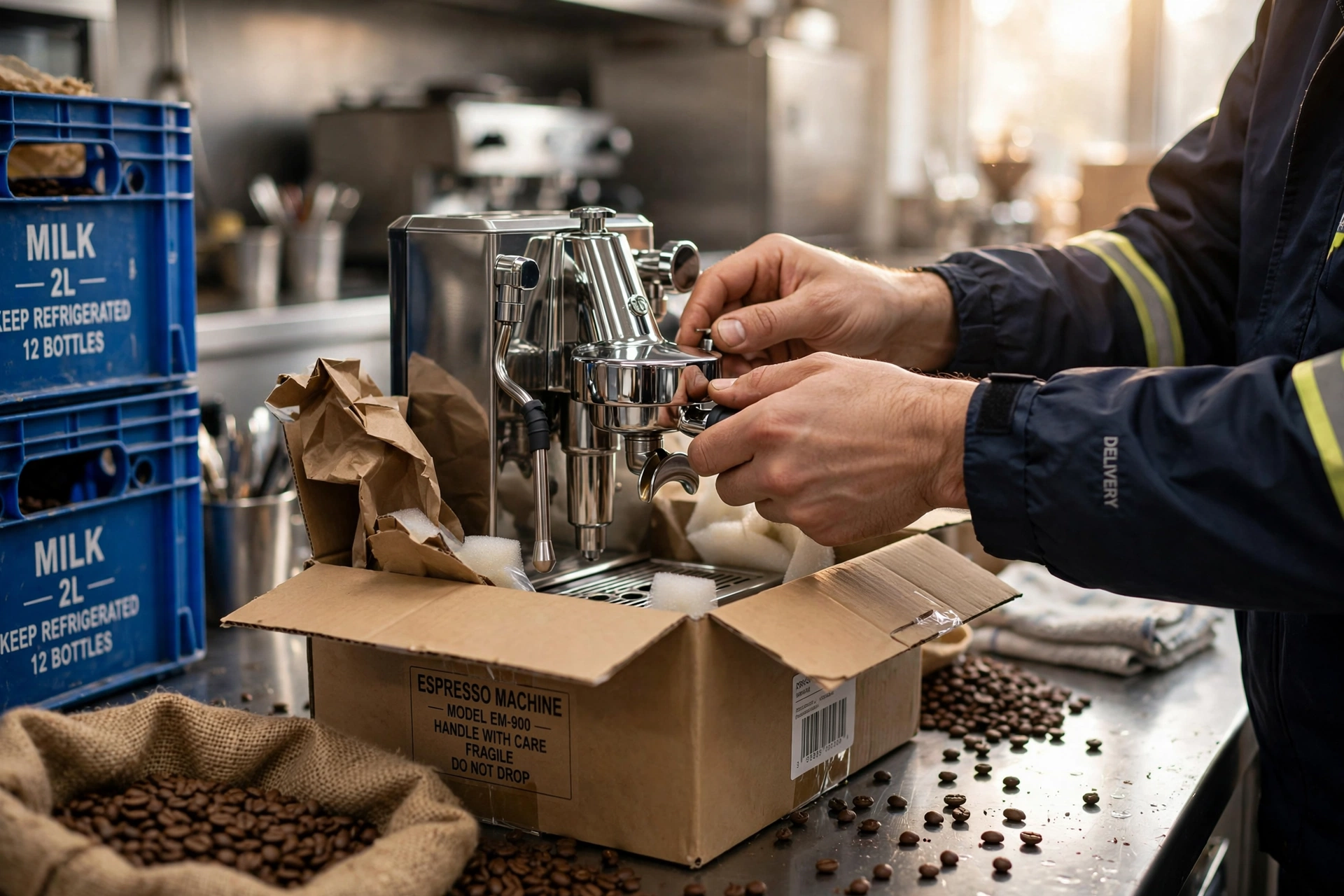
The supply chain also encompasses the "Cold Chain" for milk and the "Freshness Chain" for roasted beans. A true supply partner coordinates these timelines so that the barista has the equipment dialed in exactly when the first shipment of roasted beans arrives.
Why Strategic Equipment Sourcing Directly Impacts Your Bottom Line
The financial implications of how you source your equipment are staggering. Many owners make the mistake of buying the cheapest equipment available on the open market, only to find that the "total cost of ownership" (TCO) is three times higher than a premium managed solution.
When equipment fails, the cost isn't just the repair bill; it is the "Opportunity Cost of Downtime." According to the National Coffee Association USA (NCA), the specialty coffee segment continues to grow, meaning consumer expectations for quality are higher than ever. A customer who encounters a "machine down" sign is 60% more likely to switch to a competitor permanently.
The impact of poor supply choices manifests in three specific areas:
- Energy Efficiency: Older or cheaper machines often lack PID (Proportional-Integral-Derivative) controllers. A machine without precise temperature control wastes significant electricity and produces inconsistent shots, leading to wasted milk and coffee beans.
- Labor Costs: Inefficient equipment increases the workload on the barista. If a grinder lacks an on-demand dosing system, the staff spends more time measuring and less time engaging with customers.
- Sanitation Risks: Commercial equipment must meet strict health codes. According to NSF International, equipment that is not designed for easy cleaning (NSF/ANSI 4 standards) leads to biofilm buildup, which can result in health department fines or foodborne illness.
Now, here's where it gets interesting: the shift toward "Managed Memberships." Instead of spending $20,000 upfront on a top-tier setup, businesses are moving toward a monthly fee that covers the equipment, the maintenance, and the coffee. This transforms a massive capital expense (CapEx) into a predictable operating expense (OpEx), significantly improving the business's cash flow and agility.
A Step-by-Step Guide to Implementing a Professional Coffee Service
If you are starting from scratch or upgrading an existing setup, the process of securing your cafe equipment supply should follow a specific logical sequence. Skipping any of these steps usually results in expensive modifications later.
Step 1: Volume Mapping and Workflow Design
Before looking at brands, map your customer flow. Where does the customer stand? Where does the barista move? The distance between the grinder and the espresso machine should be minimal to reduce physical fatigue and speed up service. In my experience, a poorly designed workflow can slow down a drink's production time by 15 to 30 seconds, which, over a thousand drinks a day, represents a massive loss in efficiency.
Step 2: Water Quality Testing
You cannot install a machine without testing the water. The minerals in your local water supply determine whether you need a simple carbon filter or a complex reverse osmosis (RO) system. Installing a high-end machine on unfiltered water is like putting low-grade fuel in a Ferrari; it will eventually break, and the manufacturer's warranty will likely be voided.
Step 3: Equipment Selection and Calibration
Select equipment that matches your roast profile. If you are serving a light-roast specialty coffee, you need a machine with extreme temperature stability. This is where Busy Bean Coffee excels. We don't just ship a box; we provide a managed membership that includes professional installation and calibration. We ensure the machine is "dialed in" to the specific roast of the bean, ensuring the first cup served is as perfect as the thousandth.
Step 4: Staff Training (The Human Element)
The most expensive equipment in the world is useless if the operator doesn't understand the "golden ratio" of extraction. Training must cover not only how to pull a shot but how to perform daily maintenance, such as backflushing the group heads.

💡
Key Takeaway
The most successful cafes treat their equipment as a service, not a product. By integrating maintenance and supply into one membership, you eliminate the risk of downtime and ensure consistent quality.
Comparing Supply Models: Retail vs. Managed Service
When deciding how to handle your cafe equipment supply, you generally have three paths. Most guides tell you to just "buy the best," but they ignore the operational reality of running a business.
| Feature | Traditional Retail Purchase | Budget/Cheap AI-Driven Setup | Busy Bean Managed Membership |
|---|---|---|---|
| Upfront Cost | Extremely High (CapEx) | Moderate | Zero to Low |
| Maintenance | Pay-per-visit (Expensive) | Reactive (Wait until it breaks) | Proactive & Included |
| Quality Control | Variable (Depends on staff) | Low (Inconsistent results) | Expertly Calibrated |
| Scalability | Slow (Requires more capital) | Difficult (Gear wears out) | Rapid (Managed growth) |
| Risk Level | High (Equipment failure = loss) | Very High (Low reliability) | Low (Full coverage) |
As the table shows, the traditional retail model places all the risk on the business owner. If a pump fails, you pay for the part and the labor, and you lose revenue while waiting. The "Budget" approach is even worse; it often involves residential-grade equipment that cannot handle the thermal stress of a commercial environment.
The modern approach, the one we champion at Busy Bean Coffee, is the Managed Membership. By bundling the equipment, the coffee roasting expertise, and the technical support into one predictable monthly fee, we remove the friction from the operation. You focus on the customers; we focus on the pressure gauges and the roast profiles.
Common Questions and Misconceptions About Equipment Supply
There are several myths that persist in the industry, often perpetuated by salespeople who want to sell you a machine rather than a solution.
Myth 1: "Automatic machines are just as good as manual ones."
Most guides get this wrong by claiming "convenience is king." In a true specialty coffee environment, "super-automatic" machines often lack the precision required for a perfect extraction. While they are great for low-traffic offices, a high-end cafe needs a semi-automatic machine that allows a trained barista to make micro-adjustments to the grind and dose.
Myth 2: "More group heads always mean more speed."
This is a common fallacy. Adding a third group head to your espresso machine doesn't help if your grinder can't keep up with the dose speed. The bottleneck is almost always the grinder, not the machine. I've seen shops buy massive 4-group machines but use a single, slow-dose grinder, resulting in a wasted investment and slow service.
Myth 3: "Maintenance is something you do once a year."
This is a dangerous misconception. Commercial coffee equipment requires daily and weekly maintenance. If you aren't cleaning your steam wands every few hours and backflushing your machines daily, you are creating a buildup of coffee oils that will make your espresso taste bitter and rancid. A professional supply partner integrates these maintenance schedules into their service agreement.
Frequently Asked Questions
How do I determine the right size of cafe equipment supply for my business?
The determination is based on "Peak Hourly Volume." You must calculate the maximum number of drinks you expect to serve during your busiest 60-minute window. For example, if your peak is 80 drinks per hour, you likely need a 2-group or 3-group machine and at least two high-speed grinders. Relying on "average" daily volume is a mistake because it ignores the stress put on the machine during the morning rush, which is when equipment failure is most likely to occur.
Is it better to lease equipment or buy it outright?
For most growing businesses, a managed membership or lease is superior to buying. Buying requires a massive upfront capital outlay that could be better spent on marketing or interior design. Furthermore, coffee technology evolves. If you buy a machine outright, you are stuck with that hardware for a decade. A managed service allows you to upgrade and ensures that the equipment is always maintained to the highest standard without you having to manage a separate repair budget.
What is the most common cause of equipment failure in professional cafes?
Water quality is the primary culprit. In areas with hard water, calcium and magnesium deposits build up inside the boiler and heat exchangers, leading to "scale." This scale acts as an insulator, forcing the machine to work harder to reach temperature, eventually burning out the heating element. This is why we insist on professional water filtration as the first step of any cafe equipment supply installation.
How does a managed coffee membership differ from a standard supplier?
A standard supplier sells you the machine and the beans, then disappears until you place another order. A managed membership, like the one offered by Busy Bean Coffee, is a partnership. We provide the SENSA equipment, handle the professional installation, provide full maintenance coverage, and ensure your specialty coffee supply is consistent. It is the difference between owning a tool and having a guaranteed outcome of high-quality coffee.
How often should commercial espresso machines be professionally serviced?
While daily cleaning is the staff's responsibility, a professional technician should perform a deep-service every 3 to 6 months. This includes replacing gaskets, checking pump pressure, and descaling the boilers. Waiting for the machine to break before calling a technician is the most expensive way to run a cafe. Proactive maintenance reduces the likelihood of catastrophic failure during a holiday rush by nearly 80%.
Final Thoughts on Cafe Equipment Supply
Navigating the complexities of cafe equipment supply can be overwhelming for a new entrepreneur. The temptation to simply buy the most expensive-looking machine is strong, but true success in the coffee industry comes from the synergy between hardware, water quality, and the roast profile of the coffee bean.
When you shift your perspective from "buying gear" to "managing a beverage program," you eliminate the most common risks associated with the industry. Whether you are opening a boutique shop in Mount Pleasant or expanding a regional chain, the goal remains the same: consistency. By leveraging a managed service, you ensure that your barista has the tools they need and your customers receive a world-class cup of coffee every single time.
If you are ready to stop worrying about equipment failure and start focusing on your growth, explore the all-inclusive solutions at Busy Bean Coffee. We provide the equipment, the expertise, and the specialty roasts you need to thrive.
Free Coffee Pairing Guide & Specialty Roast Cheat Sheet
Unlock the secrets of perfect brewing ratios, water temperatures, and specialty roast profiles. Download the guide.