📖This article is part of the complete guide to Bean to Cup Coffee Machines.
Most business owners assume a bean to cup machine is just a fancy espresso maker with a built-in grinder, but the actual engineering is far more complex. In my experience working with hotels and high-traffic cafes, the difference between a mediocre cup and a specialty-grade beverage comes down to how the machine manages the 'Golden Ratio' of water temperature, pressure, and grind consistency in a matter of seconds. For a comprehensive overview of the hardware available, explore our guide on bean to cup coffee machines.
What is the Internal Process of a Bean to Cup Machine?
📚
Definition
A bean to cup machine is an automated coffee maker that integrates the entire process of grinding whole coffee beans, tamping the grounds, and brewing the espresso into a single, streamlined operation.
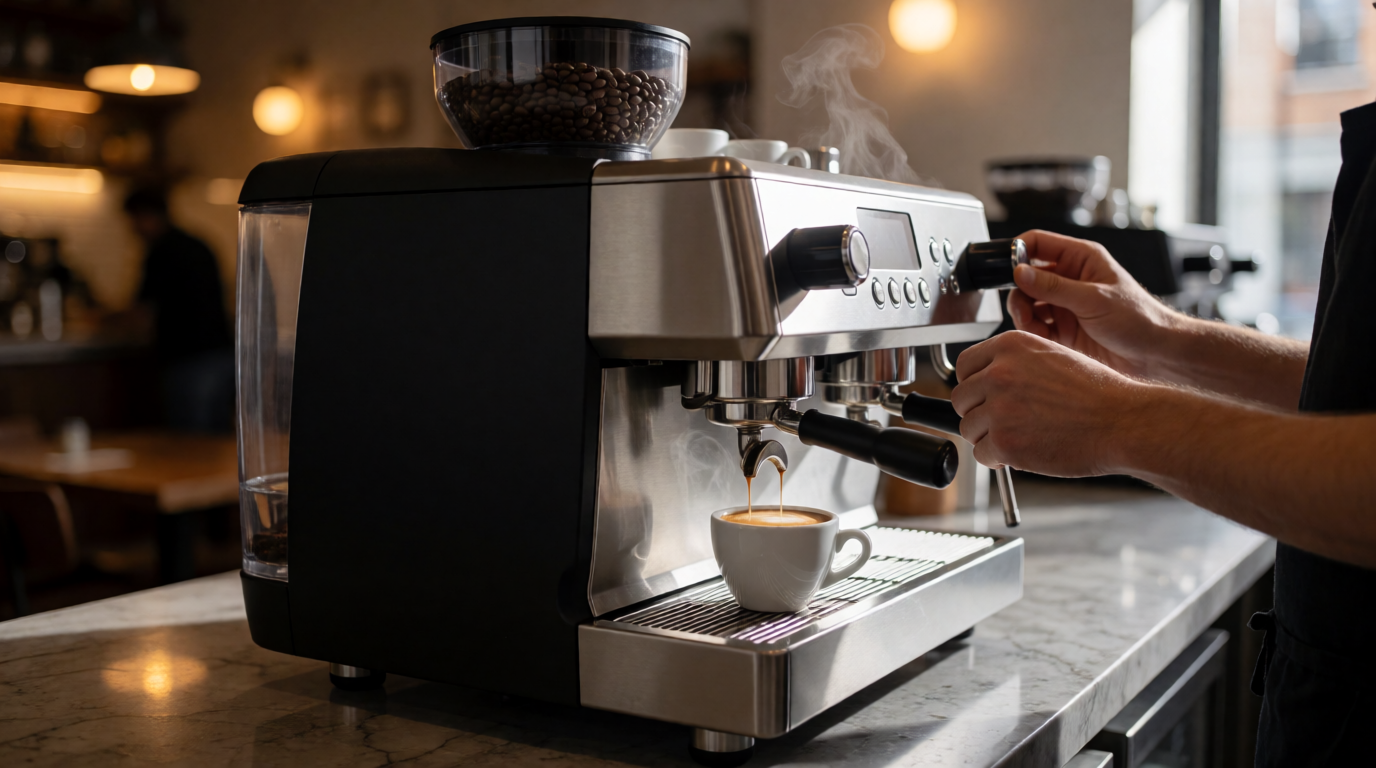
How bean to cup coffee machines work is essentially a sequence of precisely timed mechanical events. The process begins the moment a user selects a drink. The machine triggers the hopper to release a specific weight of whole beans into the integrated grinder. These grinders, typically conical or flat burrs, crush the beans into a uniform powder. This is a critical stage; if the grind is too coarse, the water rushes through too fast (under-extraction), and if it is too fine, the machine may choke (over-extraction).
Once ground, the coffee is moved into a brewing unit, often called the 'brew group.' This is where the magic happens. A mechanical piston compresses the grounds into a tight 'puck,' simulating the manual tamping a barista would do. Then, a high-pressure pump forces heated water through this puck. According to the Specialty Coffee Association (SCA), the precision of water temperature and pressure is what separates a standard cup from a specialty coffee experience. In a professional bean to cup system, this pressure is usually maintained around 9 to 15 bars to ensure the oils and aromatics are fully extracted from the coffee bean.
Finally, the spent coffee puck is ejected into a waste container, and the system performs a quick rinse to prepare for the next cycle. This entire automation removes the human error associated with manual dosing and tamping, ensuring that the 100th cup of the day tastes exactly like the first.

Why Does This Mechanical Process Matter for Your Business?
The internal mechanics of these machines directly impact your bottom line by optimizing labor costs and ensuring consistent quality. When you rely on a manual espresso machine, you need a trained barista to manage the grind size, dose the portafilter, and steam the milk. In a fast-paced business environment, a slight deviation in any of these steps results in wasted product and unhappy customers.
By automating the 'bean to cup' sequence, you eliminate the need for a dedicated specialist for every shift. The machine handles the technical variables, allowing your staff to focus on customer service rather than the physics of extraction. Furthermore, using whole beans instead of pre-ground coffee or pods drastically increases the perceived value of your offering. Whole beans preserve the volatile aromatic compounds that vanish shortly after grinding. This is why customers describe the smell of fresh coffee as a primary draw for cafes and office breakrooms.
From a health and safety perspective, the closed-loop nature of these machines is a significant advantage. According to NSF International, equipment that meets sanitary standards (like NSF/ANSI 4) reduces the risk of contamination. Because bean to cup machines are designed for high-volume use, they often feature automated cleaning cycles that ensure the internal brew group remains free of rancid oils and mold, which is a common risk in manually cleaned equipment.
Another business advantage is the ability to customize the profile. Modern professional machines allow you to adjust the 'strength' (how many grams of coffee are used) and the 'intensity' (the water temperature and pressure). This flexibility means you can offer a range of drinks from a bold ristretto to a mild long black without changing the coffee bean you have in the hopper.
How to Optimize the Workflow for Maximum Efficiency?
To get the most out of the way bean to cup coffee machines work, you need to align your raw materials with the machine's capabilities. Many businesses make the mistake of buying expensive equipment and then filling it with low-grade, oily beans. This is a recipe for mechanical failure.
First, select the right bean. For these machines, a medium roast Arabica coffee is usually ideal. Darker roasts often contain more surface oils, which can clog the grinder burrs and leave a sticky residue in the brew group. If you prefer a darker profile, ensure you are using a high-quality roast that doesn't leave an oily sheen on the bean surface.
Second, manage your water quality. The heating elements in these machines (thermoblocks or boilers) are highly susceptible to limescale buildup. This is especially true in regions with hard water. I've seen machines in Mount Pleasant, SC, fail prematurely simply because the owners didn't use a proper filtration system. Limescale acts as an insulator, forcing the machine to work harder to reach the correct temperature, which eventually burns out the heating element and ruins the flavor of the coffee.
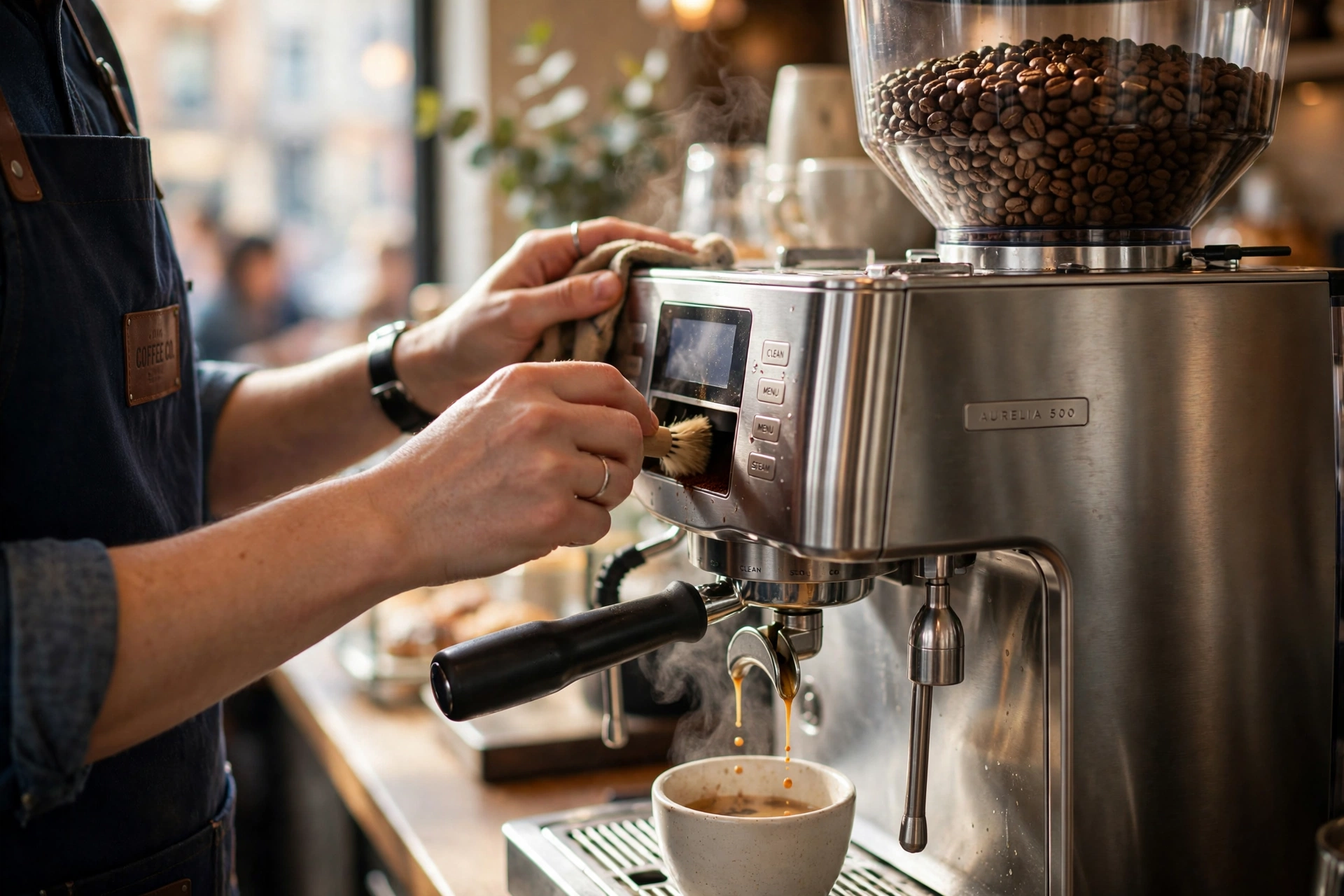
Third, implement a strict daily cleaning ritual. While many machines have 'auto-clean' functions, they cannot reach every corner. A daily wipe-down of the milk frother and a weekly deep clean of the brew group using approved detergents are essential. If you ignore the maintenance, the precision of the tamping process degrades, and you'll start seeing 'channeling'—where water finds a path of least resistance through the coffee puck, resulting in a watery, sour cup.
For those managing a larger team, consider the Best Bean to Cup Coffee Machines for Offices to ensure your hardware can handle the volume without overheating. When the machine is pushed beyond its capacity, the temperature of the group head drops, leading to under-extracted coffee that lacks the characteristic crema and body of a true espresso.
Bean to Cup vs. Manual Espresso Machines
Understanding the trade-offs between these two systems is essential for any business owner deciding on their beverage strategy. While a manual machine offers the 'art' of coffee, the bean to cup machine offers the 'science' of consistency.
| Feature | Manual Espresso Machine | Bean to Cup Machine | Modern Managed Service |
|---|---|---|---|
| Skill Required | High (Trained Barista) | Low (Push-Button) | Zero (Managed) |
| Consistency | Variable (Human Error) | High (Automated) | Absolute (Professional) |
| Speed of Service | Slow (Manual Steps) | Fast (Automated) | Instant (High-Capacity) |
| Maintenance | Manual / Intensive | Automated / Periodic | All-Inclusive Managed |
| Waste Level | High (Dialing in) | Low (Precise Dosing) | Optimized (Zero Waste) |
As seen in the table, the traditional manual approach is often too slow and volatile for a business that isn't a dedicated specialty cafe. On the other hand, cheap 'consumer-grade' bean to cup machines often lack the pressure stability required for true espresso, leading to a 'coffee-like' drink rather than a professional beverage. The modern approach, such as the managed solutions provided by Busy Bean Coffee, combines the high-end hardware of a professional machine with a service model that removes the maintenance burden entirely.

Common Mistakes to Avoid When Using Bean to Cup Systems
One of the most frequent errors I see is the use of flavored beans. While they smell great, the artificial oils in flavored coffee beans are catastrophic for the grinders in bean to cup machines. These oils gum up the burrs, causing the grinder to jam or produce an inconsistent grind size. This fundamentally breaks how bean to cup coffee machines work, as the dosing becomes erratic.
Another common mistake is ignoring the 'bean hopper' level. When the hopper runs low, the machine may suck in air or fragmented 'dust' from the bottom of the bin, leading to a weak cup. More importantly, leaving beans in a hopper for weeks at a time exposes them to oxygen and light, leading to oxidation. This turns a premium Arabica coffee into a stale, bitter product. For the best results, only fill the hopper with what you expect to use in 3 to 5 days.
Finally, many businesses fail to calibrate the grind setting to the specific bean they are using. Not all beans are created equal; a light roast from Ethiopia requires a different grind size than a dark roast from Brazil. If your coffee tastes too sour, the grind is likely too coarse. If it tastes burnt or overly bitter, it is too fine. Taking five minutes to 'dial in' your machine after changing bean bags can improve the quality of your office coffee service significantly.
If you find the technical side overwhelming, it might be worth exploring our Bean to Cup Coffee Machine Buying Guide for Businesses to find a machine with intuitive settings that simplify this process for your staff.
Frequently Asked Questions
How does a bean to cup machine ensure the coffee is fresh?
Bean to cup machines ensure freshness by grinding the beans immediately before the brewing process begins. Once coffee is ground, its surface area increases exponentially, exposing it to oxygen and causing the aromatic oils to evaporate. By keeping the coffee in whole bean form until seconds before extraction, the machine preserves the complex flavor profiles of the Coffea arabica species. This process ensures that the volatile compounds are captured in the cup rather than lost to the air, providing a superior taste compared to pre-ground options.
Why is the 'tamping' process important in an automatic machine?
Tamping is the process of compressing the coffee grounds into a level, compact puck. In a manual machine, a barista does this with a hand tamper. In a bean to cup machine, a mechanical piston performs this task. Proper tamping is essential because it creates a uniform resistance for the water to push against. Without a tight puck, water will 'channel'—meaning it finds a path of least resistance and rushes through a small part of the coffee, leaving the rest unextracted. This results in a cup that is simultaneously sour and watery.
Can I use any type of coffee bean in these machines?
While you can technically use any bean, it is strongly recommended to use medium-roast, specialty coffee beans that are not oily. Very dark roasts, often found in commercial 'Italian' blends, have high oil content that can coat the grinder burrs and the internal sensors, leading to malfunctions and inconsistent dosing. Additionally, flavored beans should be avoided entirely as the syrups and oils used in flavoring can permanently damage the internal brewing unit and contaminate future batches of coffee.
How does the machine handle milk frothing automatically?
Automatic milk systems work by drawing milk from a container or a refrigerated line and forcing it through a steam vent or a Venturi-effect mixing chamber. The machine injects high-pressure steam or hot air into the milk to create micro-foam. Professional-grade machines use precise temperature sensors to ensure the milk reaches the ideal temperature (typically around 140-155°F) without scalding. This automation allows the machine to produce lattes and cappuccinos with a consistent foam density every time.
Why does my bean to cup machine need a water filter?
Water filters are essential because most tap water contains minerals like calcium and magnesium. When this water is heated to brewing temperatures, these minerals precipitate out and form 'scale' (calcium carbonate) inside the boiler and tubing. Scale restricts water flow, reduces heating efficiency, and can eventually cause the machine to fail entirely. Using a filter removes these minerals and also improves the taste of the coffee, as chlorine and other impurities in city water can mask the delicate notes of a high-quality coffee bean.
Recommended Readings
To deepen your understanding of these topics, we recommend reading the following articles:
- Best Coffee Beans for Bean to Cup Office Machines
- Benefits of Bean to Cup Machines in the Workplace
- Bean to Cup Machine Troubleshooting Guide
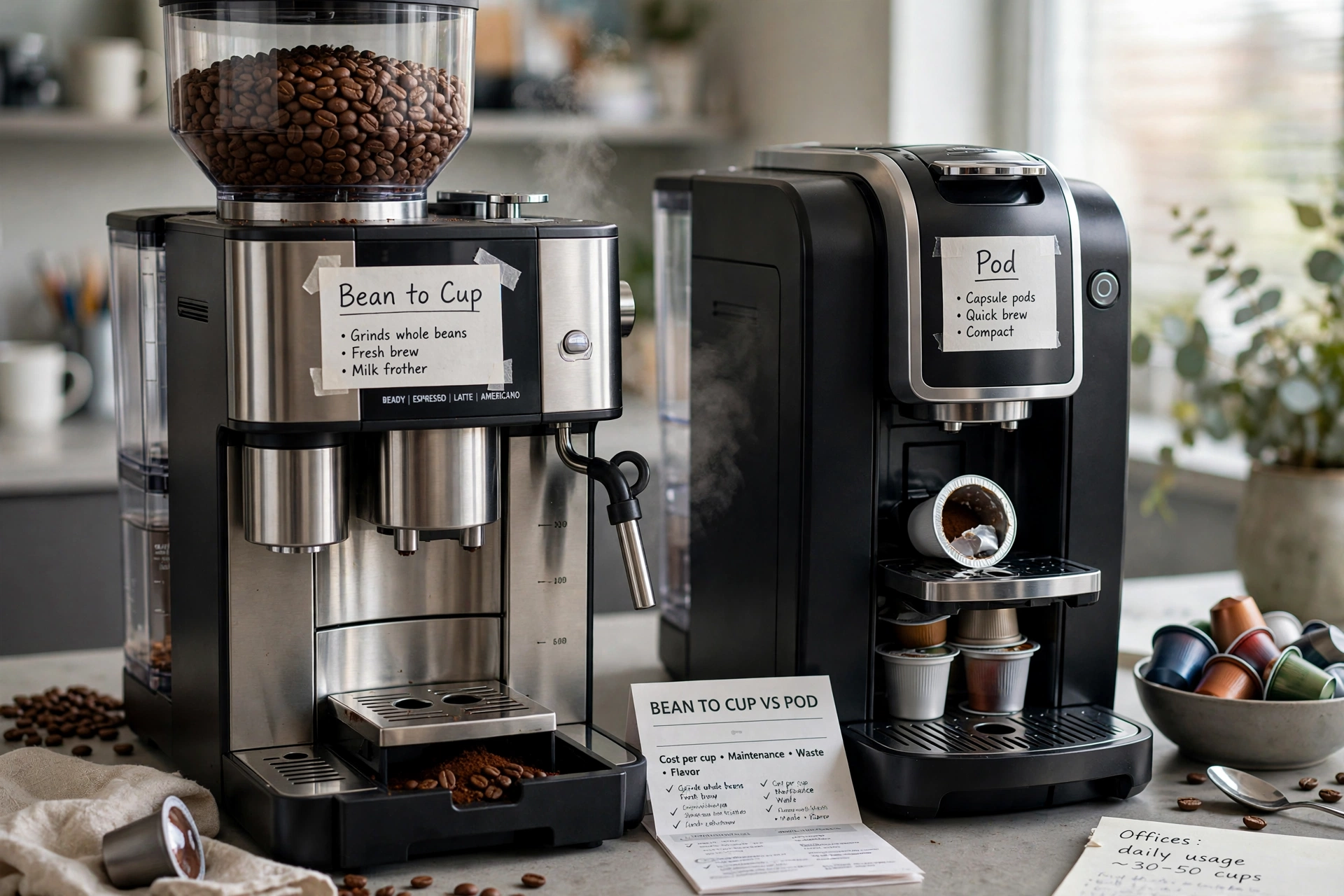
- Bean to Cup vs. Pod Coffee Machines for Offices
Reference Sources
For deeper context on this topic, these sources provide additional authoritative perspectives:
- Wikipedia — general knowledge reference
- GitHub — development and technology documentation
- The New York Times — news and journalistic updates
These references help establish a complete view of the subject matter.
Conclusion
Understanding how bean to cup coffee machines work reveals that these are not just appliances, but precision instruments designed to replicate the work of a professional barista. From the initial grind to the final extraction, every step is calibrated to maximize flavor and minimize waste. For a business, this means the ability to serve high-quality beverages without the overhead of specialized labor or the inconsistency of manual preparation.
Whether you are managing a corporate office, a boutique hotel, or a restaurant, the goal is always the same: a perfect cup of coffee every single time. When you move away from the friction of pods or the volatility of manual machines, you unlock a more sustainable and professional beverage experience. To see how you can integrate this technology into your business with zero hassle, explore our comprehensive guide on Bean to Cup Coffee Machines or visit us at www.busybeancoffee.com to learn about our managed coffee solutions.
Free Coffee Pairing Guide & Specialty Roast Cheat Sheet
Unlock the secrets of perfect brewing ratios, water temperatures, and specialty roast profiles. Download the guide.