Which Commercial Espresso Machines Should Your Business Choose in 2026?
Selecting the right equipment depends entirely on your daily volume, staff skill level, and desired beverage quality. For high-volume cafes requiring precision, a multi-group semi-automatic machine is the gold standard. For hotels or clinics where speed and consistency outweigh manual artistry, fully automatic super-automatic systems are the only viable choice. If you are balancing a medium-paced bistro environment, a volumetric machine provides the necessary middle ground.
In my experience working with dozens of hospitality clients, the most expensive mistake is buying a machine based on "max capacity" rather than "actual workflow." A machine that can pull 300 shots a day is useless if your staff can't maintain the temperature stability during a morning rush. When we deploy Automatic Coffee Machines for Hotels and Hospitality in 2026, we focus on the recovery time between shots; that is the real metric that determines if your customers are waiting five minutes for a latte or thirty seconds.
Understanding the Technical Architecture of Commercial Espresso Machines
To decide which machine fits your business, you first have to understand the engineering differences between the three primary categories of commercial equipment. The choice isn't just about buttons; it is about thermal mass, pressure profiling, and the way water is heated and delivered to the coffee bean puck.
📚
Definition
Commercial espresso machines are high-capacity beverage systems engineered to maintain precise temperature and pressure stability under continuous load, utilizing heavy-duty boilers and professional-grade pumps to extract concentrated coffee oils.
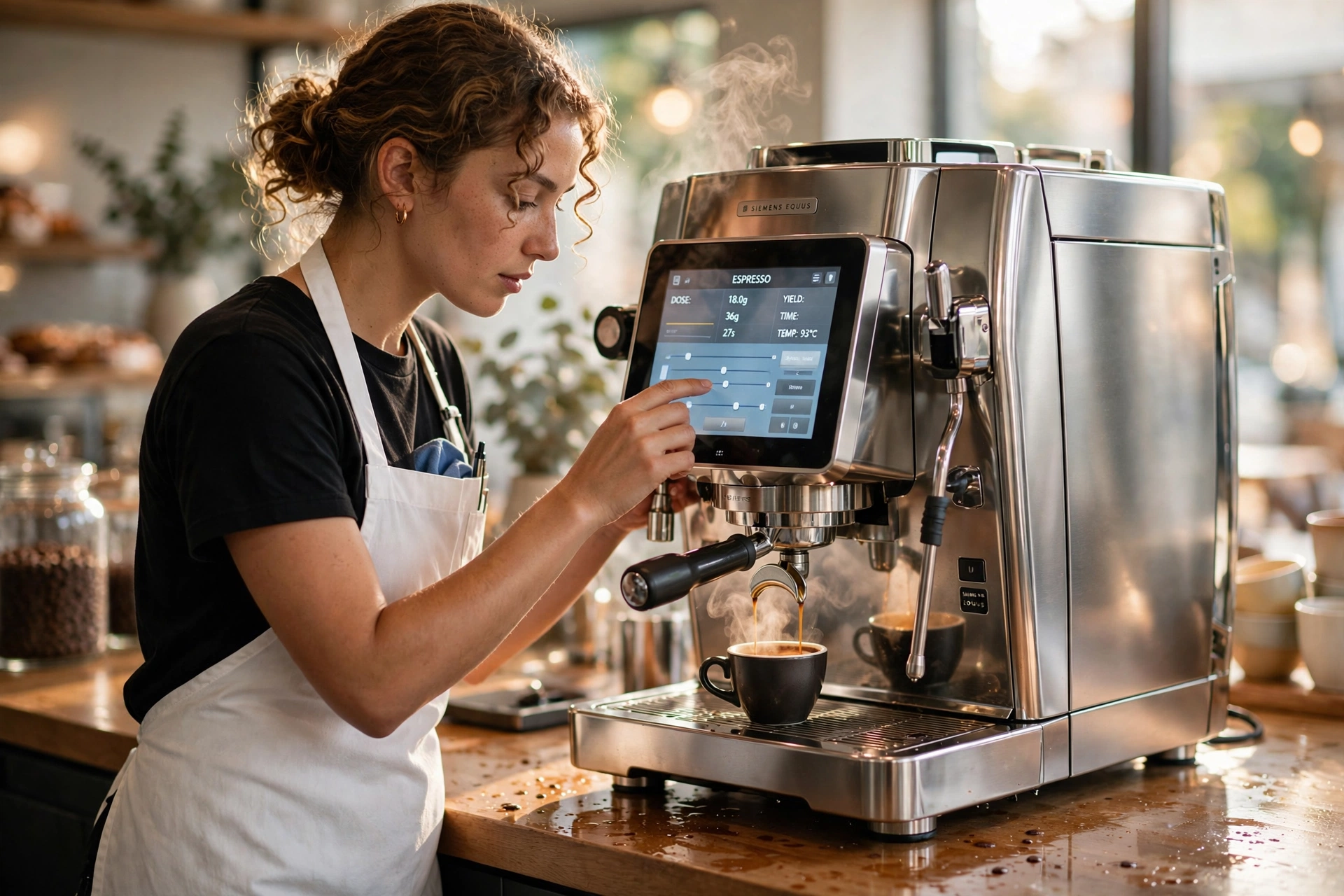
Semi-automatic machines are the hallmark of the specialty coffee shop. They require a trained barista to grind, tamp, and manually stop the shot. This allows for total control over the extraction, which is essential for those focusing on specialty coffee and high-scoring Coffea arabica. However, this precision comes with a steep learning curve and a higher risk of inconsistency if the staff isn't perfectly trained.
Volumetric machines automate the water delivery. Once the barista hits a button, the machine delivers a pre-set amount of water. This significantly reduces waste and ensures that every double shot is identical. According to the Specialty Coffee Association (SCA), standardization in brew ratios is a primary driver of quality consistency in commercial environments, making volumetric systems a favorite for expanding franchises.
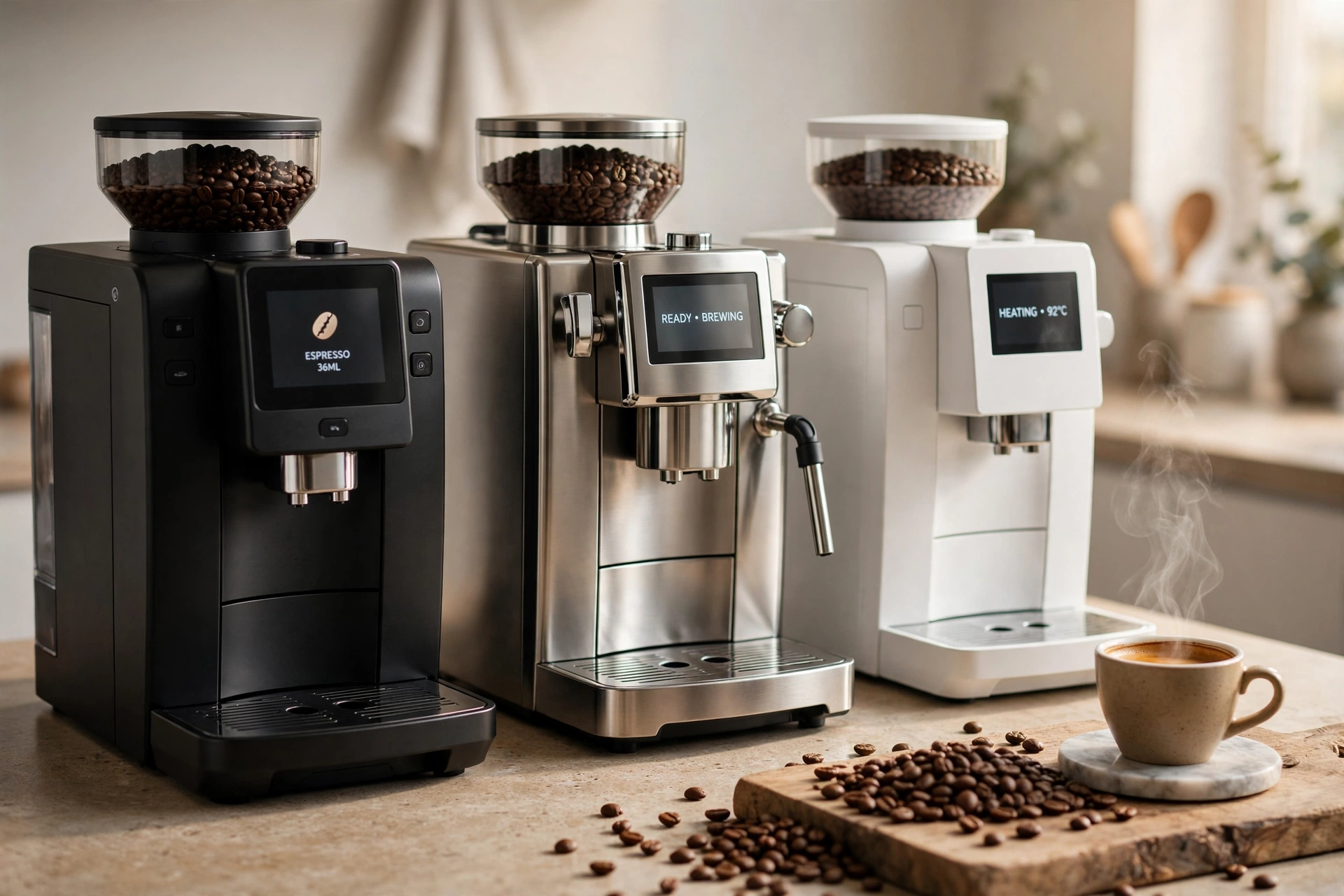
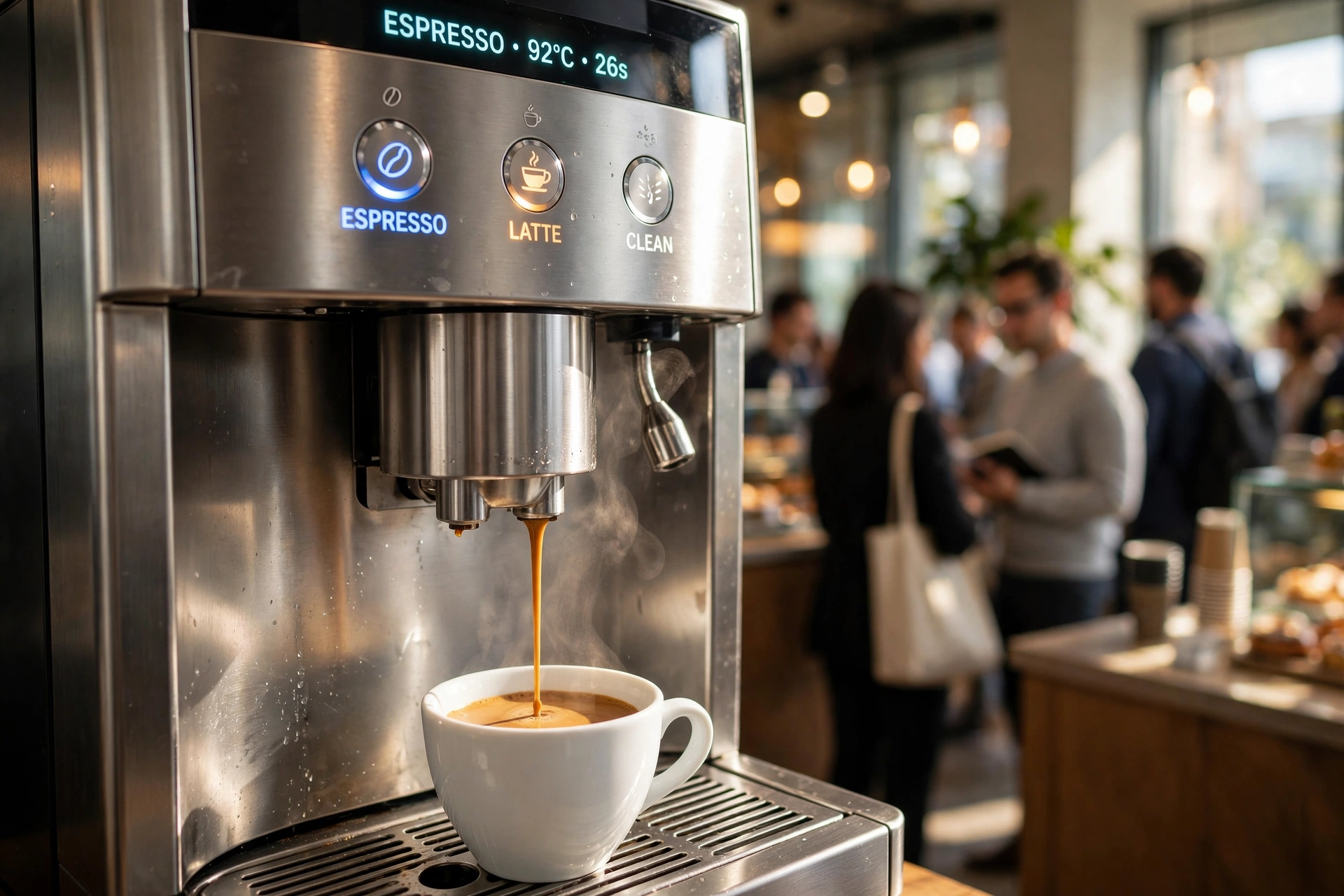
Super-automatic machines handle everything from grinding to frothing the milk. These are essentially "coffee robots." While they lack the nuance of a hand-pulled shot, they offer unmatched speed. For a Sensa Coffee Service in Charlotte, NC, these systems are often the best fit because they remove the "human error" variable entirely, ensuring a reliable cup of coffee regardless of who is operating the machine.

Why the Right Equipment Decision Impacts Your Bottom Line
The financial implications of choosing the wrong machine are far more severe than the initial purchase price. An improperly matched machine leads to three specific leaks: labor inefficiency, product waste, and equipment downtime. When a machine is undersized for its environment, the boiler cannot keep up with demand, leading to "temperature surfing" where the first shot is burnt and the fifth is sour.
From a data perspective, the cost of downtime in a high-traffic foodservice environment is staggering. According to research from the National Coffee Association USA (NCA), consumer expectations for beverage speed and quality have reached an all-time high, meaning a machine failure during a peak window can result in an immediate 15-20% loss in daily revenue for that specific period.
Furthermore, the waste associated with untrained staff using complex semi-automatic machines is a hidden cost. I've seen businesses waste up to 10% of their high-grade coffee bean inventory simply because the machines were too complex for the staff to dial in correctly. This is why we advocate for managed solutions. When you use a Sensa Coffee Service in Raleigh NC (2026 Overview), the equipment is matched to your specific volume, and maintenance is proactive rather than reactive.
Beyond the immediate P&L, there is the issue of sanitary compliance. Commercial machines must meet strict safety standards to avoid health department fines. The NSF International provides the gold standard for food equipment safety, specifically the NSF/ANSI 4 standard. Choosing a machine that isn't NSF certified is a risk that can lead to costly retrofits or operational shutdowns during inspections.
Practical Implementation: How to Match Machine to Use Case
If you are currently deciding which commercial espresso machines to invest in, you need a decision framework based on your specific operational model. You cannot apply a "one size fits all" logic to a medical clinic and a boutique cafe.
Step 1: Analyze Your Peak Volume.
Calculate the maximum number of drinks you expect to serve in a single 60-minute window. If you are serving more than 40 drinks per hour, a single-group machine will fail you. You need at least a 2-group machine to allow one barista to steam milk while another pulls shots. For clinics, where peaks are unpredictable but volume is lower, Automated Coffee Machines for Clinics and Medical Offices provide the best balance of quality and zero-effort operation.
Step 2: Evaluate Staff Skill Sets.
Be honest about your hiring pool. If you cannot find or afford a certified barista, do not buy a manual machine. You will end up with mediocre coffee and frustrated employees. In these cases, a super-automatic system is not a "compromise"; it is a strategic business decision to ensure quality.
Step 3: Assess Infrastructure.
Check your plumbing and electrical. Many high-end commercial machines require dedicated 220V circuits and direct water lines with filtration. If you are operating in a space with limited electrical capacity, you may need to look at specialized "plug-and-play" professional units. This is where Busy Bean Coffee excels; we handle the entire installation and infrastructure audit to ensure your machine doesn't trip the breakers during the morning rush.
Step 4: Define Your Quality Tier.
Are you selling a "beverage" or an "experience"? If your brand is built on the art of coffee roasting and the nuances of a light-roast Ethiopian bean, you need a machine with PID temperature control and programmable pressure profiling. If coffee is a complementary amenity for a hotel stay, a high-end automated system is the superior choice.
💡
Key Takeaway
The best machine is not the one with the most features, but the one that minimizes the gap between your staff's current skill level and the quality your customers expect.

Comparing Your Commercial Espresso Machine Options
To simplify the decision, I have categorized the most common professional paths. Most guides make this too simple by just listing "cheap vs. expensive." The real difference is in the operational trade-offs.
| Machine Type | Pros | Cons | Best For |
|---|---|---|---|
| Semi-Automatic | Total control, highest quality potential, "craft" appeal. | Requires high skill, slower output, higher waste. | Specialty Cafes, High-end Bistros. |
| Volumetric | Consistent dosing, faster training, reduced waste. | Less flexibility for "experimental" brews. | High-volume Cafes, Franchise Outlets. |
| Super-Automatic | Zero training needed, maximum speed, high consistency. | Higher initial cost, more complex internal cleaning. | Hotels, Clinics, Office Coffee Services. |
| Managed (Sensa) | No CapEx, full maintenance, predictable monthly cost. | Monthly membership fee instead of ownership. | Scaling businesses, Risk-averse owners. |
Now, here's where it gets interesting: most owners choose based on the "Pros" column without looking at the "Cons." I've seen a boutique hotel install a semi-automatic machine because it "looked the part," only to realize that their front-desk staff had no idea how to purge a steam wand. They ended up with a $15,000 piece of stainless steel that produced burnt coffee. This is why a Sensa Coffee Service in Mount Pleasant SC: Complete Guide is such a powerful alternative; we provide the equipment that actually fits the workflow, not the one that looks best in a brochure.
Common Questions & Misconceptions
Most industry guides get the "ranking" of machines wrong because they rank them by price rather than by efficiency. Here are the most common myths I encounter when consulting with new business owners.
Myth 1: "The more expensive the machine, the better the coffee."
This is a dangerous fallacy. A $20,000 manual machine will produce terrible coffee if the barista hasn't dialed in the grind size for the specific coffee bean being used. In many cases, a well-calibrated $5,000 super-automatic will produce a more consistent and pleasant cup for 95% of customers than a high-end machine operated by an amateur.
Myth 2: "Super-automatics are only for offices and don't belong in foodservice."
That said, the technology has shifted. Modern super-automatics can now handle specialty-grade beans and produce micro-foam that rivals a human barista. For those implementing a Foodservice Coffee Program in Chicago IL: Complete Guide, these machines are becoming the primary choice to combat the labor shortage in the hospitality sector.
Myth 3: "I can just buy a high-end home machine and use it for my small business."
I see this constantly, and it is a recipe for disaster. Home machines are not built for "back-to-back" shots. They lack the boiler capacity to maintain temperature for more than three or four drinks. Once the boiler dips, your extraction fails. Furthermore, home machines are not NSF certified, which can lead to immediate failure during a health inspection.
Myth 4: "Maintenance is just a matter of cleaning the group head."
Professional machines require deep descaling and gasket replacements every few months. If you ignore the internal mineral buildup, you are effectively killing your machine from the inside out. This is why we emphasize the "all-inclusive" nature of our memberships; we handle the technical maintenance so the owner can focus on the business.
Frequently Asked Questions
How do I determine if I need a 1-group or 2-group machine?
The decision depends on your "peak hour" volume and your staffing model. A 1-group machine is sufficient for low-volume environments or those where coffee is a secondary offering, such as a small clinic. However, if you are running a dedicated cafe or a busy hotel breakfast, a 2-group machine is essential. This allows one person to prepare the milk while another pulls the espresso shots simultaneously, effectively doubling your throughput. Without a second group, your bottleneck becomes the machine itself, leading to longer wait times and lost revenue during the morning rush.
What is the difference between a heat exchange and a dual boiler system?
A heat exchange system uses a single large boiler to steam milk, with a smaller pipe running through it to heat the brew water. It is more affordable but can suffer from temperature instability if used heavily. A dual boiler system has two completely separate boilers, one for brewing and one for steaming. This provides absolute temperature stability and allows you to steam milk and pull shots at the same time without any drop in pressure. For any business focusing on specialty coffee, a dual boiler is the professional requirement to ensure every shot meets SCA standards.
Do I really need a professional water filtration system for my commercial machine?
Absolutely. In fact, water quality is more important than the machine itself. Most tap water contains minerals like calcium and magnesium that cause "scale" buildup inside the boiler. Scale acts as an insulator, making your machine work harder to heat the water and eventually causing the heating element to burn out. According to FDA guidelines on food contact surfaces and equipment, maintaining clean, filtered water is essential for both equipment longevity and beverage safety. A professional filtration system is not an optional add-on; it is a requirement for operational survival.
How often should a commercial espresso machine be serviced?
A professional machine should undergo a basic "deep clean" daily and a professional technical service every 3 to 6 months. This includes replacing group gaskets, checking pump pressure, and descaling the boilers. If you wait until the machine breaks to call a technician, you are facing "emergency" rates and potential days of lost revenue. This is the core value of a managed service like those provided by Busy Bean Coffee, where we perform preventative maintenance to ensure your Sensa Coffee Service in Jacksonville, FL never experiences unplanned downtime.
Which machine is best for a "grab-and-go" kiosk model?
For a kiosk, speed and footprint are the primary drivers. A high-end super-automatic machine is almost always the best choice here. It allows a single employee to manage the entire operation without needing specialized barista training. Since space is limited and volume is often high, the ability to press one button and receive a perfectly layered latte in 45 seconds is a massive competitive advantage. We often recommend these systems for clients looking for a Sensa Coffee Service in Savannah GA: Complete Guide | Busy Bean Coffee because they maximize revenue per square foot.
Final Thoughts on Choosing Commercial Espresso Machines
Deciding which commercial espresso machines to integrate into your business is not about finding the "best" machine on a list, but about finding the one that solves your specific operational friction. If your friction is labor, go super-automatic. If your friction is quality perception, go semi-automatic. If your friction is capital risk and maintenance headaches, go with a managed membership.
The reality of the 2026 hospitality market is that coffee is no longer just a commodity; it is a key part of the customer experience. Whether you are running a boutique hotel or a medical practice, the quality of your coffee service directly reflects the quality of your brand.
Stop guessing your equipment needs and let the experts handle the engineering. Visit Busy Bean Coffee Blog to explore our all-inclusive managed coffee solutions. From premium SENSA equipment to full maintenance coverage, we provide the infrastructure so you can provide the experience. If you are in the Southeast, explore our local guides, such as the Sensa Coffee Service in Greenville SC: Complete Guide | Busy Bean Coffee, to see how we support businesses in your area.
Ready to Upgrade Your Business Coffee?
Café-quality coffee, zero maintenance headaches, and one predictable monthly price. Let's build your custom coffee program.
Free Coffee Pairing Guide & Specialty Roast Cheat Sheet
Unlock the secrets of perfect brewing ratios, water temperatures, and specialty roast profiles. Download the guide.