
📖This article is part of the complete guide to The Ultimate Guide to Coffee Service for Restaurants.
Scaling a beverage program in a high-traffic restaurant often reveals a critical bottleneck: the coffee station. In my experience working with high-volume venues, I have seen a single slow brewer turn a thriving breakfast rush into a logistical nightmare, causing guests to wait ten minutes for a simple drip coffee. When throughput fails, your average check value drops because customers stop ordering complex drinks to avoid the wait.
For a comprehensive overview of optimizing your beverage program, explore our guide on coffee service for restaurants.
What are Commercial Coffee Makers for Restaurants?
📚
Definition
Commercial coffee makers for restaurants are heavy-duty brewing systems engineered to produce large volumes of coffee consistently, maintaining precise temperature and flavor profiles under continuous use, unlike domestic machines that lack thermal stability.
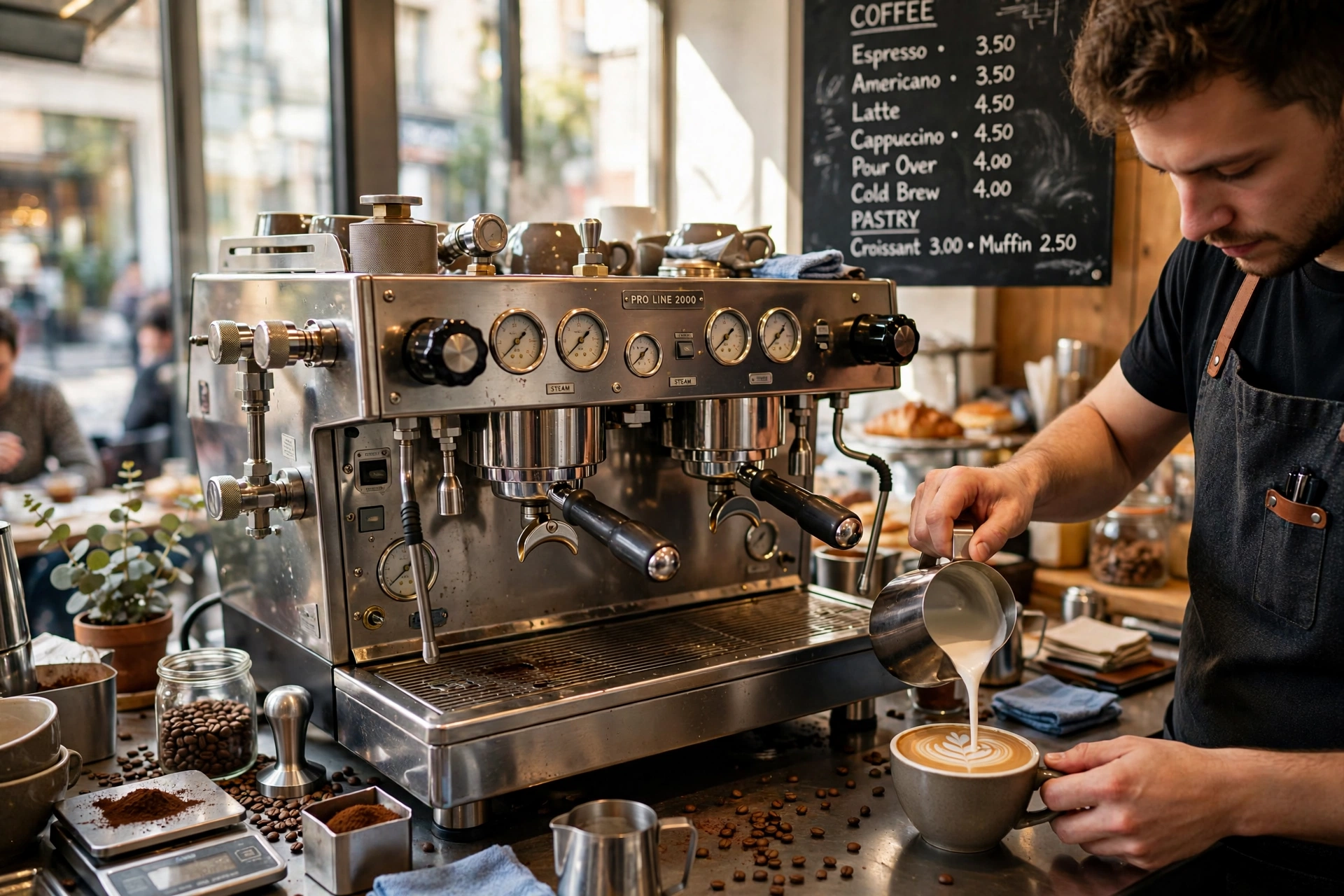
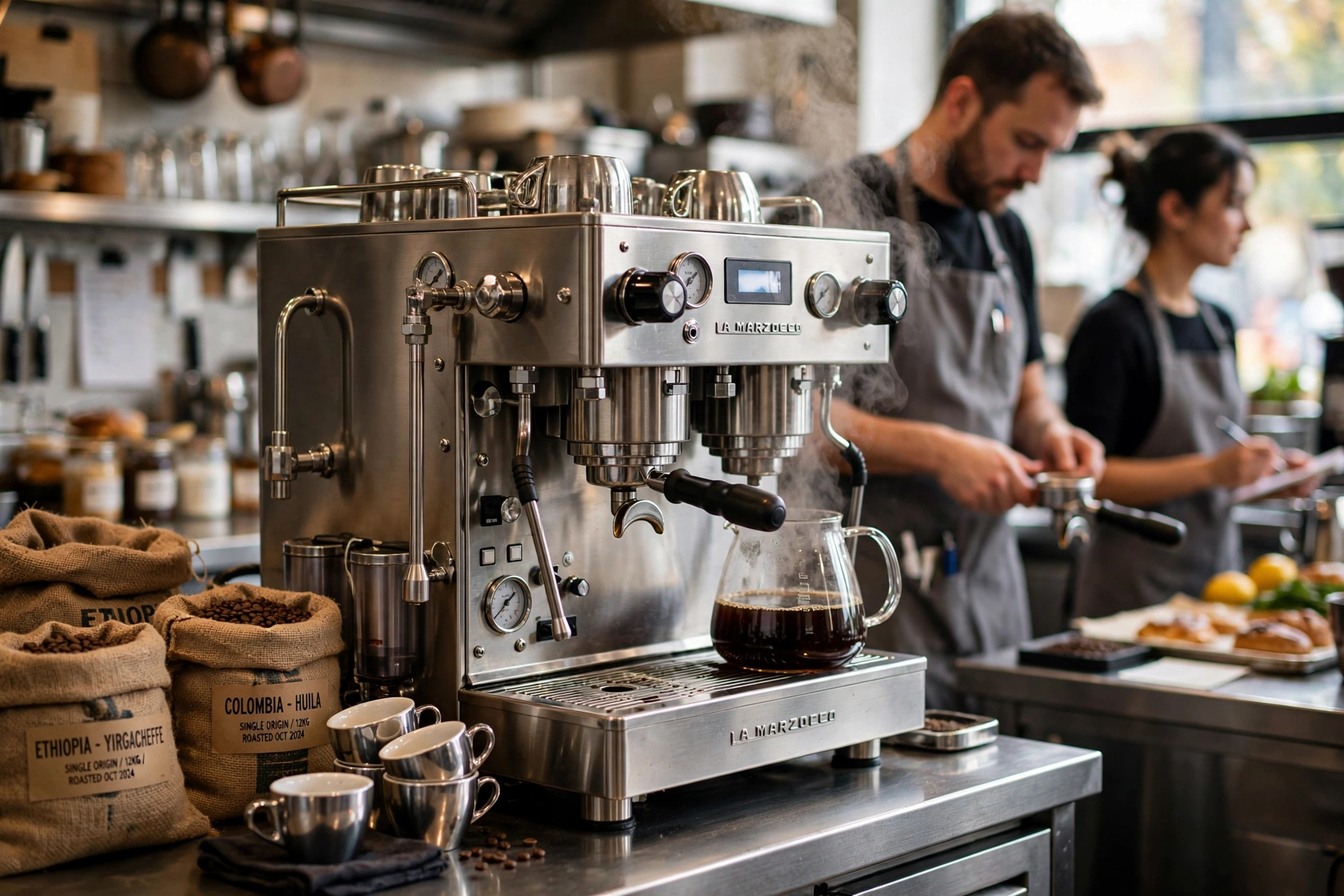
Commercial coffee makers for restaurants are specialized pieces of hardware designed to withstand the rigors of a professional kitchen. While a home machine might brew one pot every few hours, a commercial system is built for a 12-hour shift of nonstop production. These machines typically feature reinforced boilers, industrial-grade heating elements, and high-capacity water filtration systems to prevent scale buildup.
In the context of high-volume environments, these machines fall into three primary categories: batch brewers, super-automatic espresso machines, and pod-based commercial systems. Batch brewers focus on volume, producing gallons of coffee in minutes, while espresso machines prioritize the precision of the extraction process. To ensure food safety, these machines must adhere to strict standards. According to NSF International, equipment must be designed to prevent the accumulation of food debris and be easy to sanitize to meet NSF/ANSI 4 standards.
When we integrate systems at Busy Bean Coffee, we prioritize the synergy between the bean and the machine. Using a high-quality coffee bean requires a machine that can maintain a consistent temperature. If the water temperature fluctuates by even five degrees, you risk over-extracting the Coffea arabica beans, resulting in a bitter cup that ruins the guest experience. This is why industrial thermal carafes and heated dispensers are essential for high-volume settings, ensuring the coffee remains at the ideal serving temperature without scorching.
Why Choosing the Right High-Volume Brewer Matters for Your Business
Selecting the correct equipment is not just about the coffee; it is about operational efficiency and labor costs. The primary reason this matters is the direct correlation between brewing speed and table turnover. In a high-volume restaurant, a delay in the coffee service can stall the entire dining cycle, reducing the number of guests you can serve per shift.
Furthermore, the cost of waste in a poorly managed coffee program is staggering. According to the National Coffee Association USA, coffee consumption patterns are shifting toward premium, specialty coffee experiences. If your equipment cannot deliver a consistent, high-quality cup, you are essentially leaving money on the table. Guests who perceive the coffee as low-quality will not return for breakfast or brunch, which are often the highest-margin periods for many restaurants.
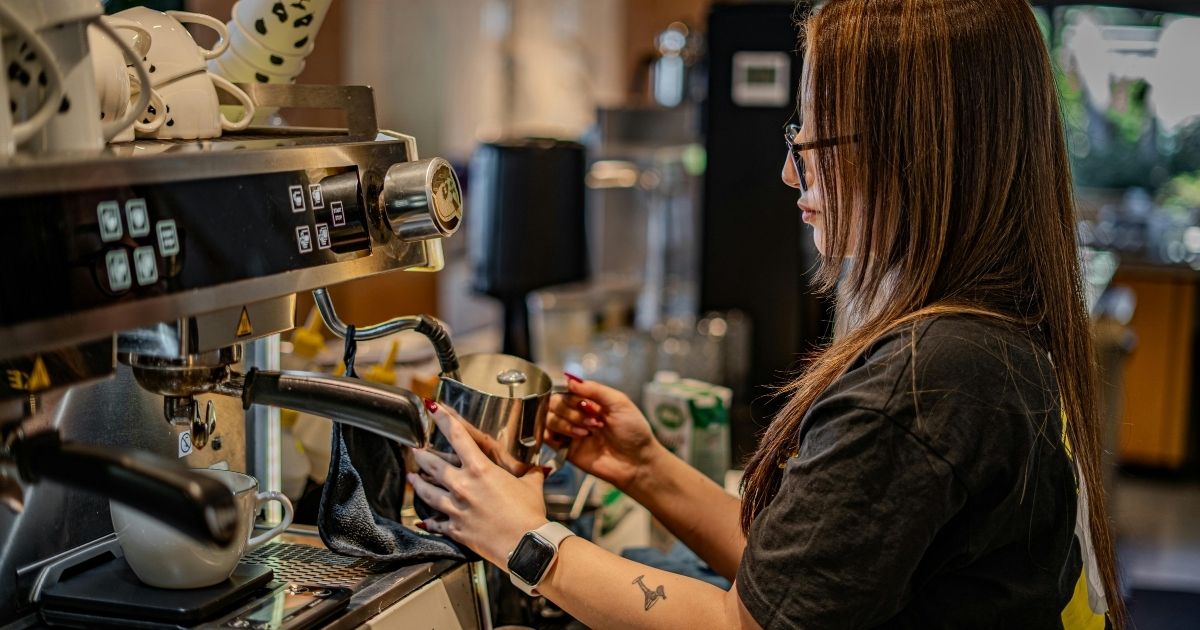
Consider the impact on your staff. A barista struggling with an underpowered machine experiences higher stress and a greater likelihood of error. When the equipment is reliable, the staff can focus on hospitality rather than troubleshooting a machine that cannot keep up with the queue. This operational stability is why many businesses are moving toward specialty coffee equipment for foodservice that offers automated precision.
Another factor is the long-term ROI. High-volume restaurants that invest in professional-grade machinery see a significant reduction in maintenance downtime. Cheap machines break under pressure, and a broken coffee maker during a Sunday morning rush can cost a restaurant hundreds of dollars in lost revenue in just two hours. Investing in a system designed for the load is a hedge against these costly interruptions.
How to Implement a High-Volume Coffee System Step-by-Step
Implementing a high-volume coffee system requires more than just plugging in a machine; it requires a strategic layout and a commitment to quality control. The first step is to conduct a volume audit. Calculate your peak-hour demand: how many cups per hour do you serve between 8:00 AM and 10:00 AM? This number determines whether you need a single-batch brewer or a multi-station system.
Once the volume is established, the next step is water filtration. Water makes up 98% of your coffee. Without professional filtration, minerals will build up in your espresso machine or brewer, leading to equipment failure and
Recommended Readings
To deepen your understanding of these topics, we recommend reading the following articles:
- Best Coffee Machines for Restaurants
- Costs of Coffee Service for Restaurants
- Specialty Coffee Equipment for Foodservice
- Managed Coffee Service Restaurants
Free Coffee Pairing Guide & Specialty Roast Cheat Sheet
Unlock the secrets of perfect brewing ratios, water temperatures, and specialty roast profiles. Download the guide.